A febre neutropénica é uma emergência médica definida como uma temperatura superior a 38,3 ℃ (100,9 ℉) ou > 38,0 ℃ (100,4 ℉) durante mais de 1 hora num doente com contagem absoluta de neutrófilos (CAN) < 500 células/μL or 500-1000 células/μL espera-se que diminua para < 500 células/µL nas próximas 48 horas. Esta patologia é uma complicação comum e ameaçadora de vida associada a neoplasias hematológicas e a doentes submetidos a quimioterapia. Geralmente, os doentes são assintomáticos, e o único sinal é a presença de febre. O diagnóstico deve incluir uma história clínica detalhada, exame objetivo e uma avaliação laboratorial de rotina, associadas à investigação dirigida aos sintomas com colheita de material para cultura. O tratamento inicial inclui a administração de antibióticos empíricos, ajustados posteriormente de acordo com a resposta clínica e os resultados das culturas.
A febre neutropénica é definida como uma temperatura oral única > 38,3 ℃ (100,4 ℉) ou uma temperatura > 38,0 ℃ (100,4 ℉) durante, pelo menos, 1 hora e, associadamente, uma contagem absoluta de neutrófilos (CAN) < 1500 células/µL ou uma CAN em que é expectável que diminua para < 500 células/µL durante as próximas 48 horas.
Epidemiologia
A neutropeniaNeutropeniaNeutrophils are an important component of the immune system and play a significant role in the eradication of infections. Low numbers of circulating neutrophils, referred to as neutropenia, predispose the body to recurrent infections or sepsis, though patients can also be asymptomatic. Neutropenia febril desenvolve-se em:
10%–50% dos doentes com tumores sólidos
80% dos doentes com tumores hematológicos
50% dos doentes irão desenvolver uma infeção.
A fonte da infeção é evidente em 20%–30% dos casos
O exame objetivo/cultura não deteta o foco infeccioso/patogénio em 30%–60% dos casos.
80% das infeções ocorrem a partir da flora normalmente benigna ou comensal do paciente.
Na maioria dos casos, a fonte da infeção é desconhecida (referida como febre de origem indeterminada (FOI)). A maioria das infeções documentadas são bacterianas.
As fontes maisMAISAndrogen Insensitivity Syndrome comuns de bacteremiaBacteremiaThe presence of viable bacteria circulating in the blood. Fever, chills, tachycardia, and tachypnea are common acute manifestations of bacteremia. The majority of cases are seen in already hospitalized patients, most of whom have underlying diseases or procedures which render their bloodstreams susceptible to invasion.Glycopeptides são:
Translocação de bactérias entéricas para a corrente sanguínea
Infeções da corrente sanguínea associadas ao cateter
Staphylococcus epidermidisStaphylococcus epidermidisA species of staphylococcus that is a spherical, non-motile, gram-positive, chemoorganotrophic, facultative anaerobe. Mainly found on the skin and mucous membrane of warm-blooded animals, it can be primary pathogen or secondary invader.Staphylococcus
StaphylococcusStaphylococcusStaphylococcus is a medically important genera of Gram-positive, aerobic cocci. These bacteria form clusters resembling grapes on culture plates. Staphylococci are ubiquitous for humans, and many strains compose the normal skin flora.Staphylococcus haemolyticus
Staphylococcus aureusStaphylococcus aureusPotentially pathogenic bacteria found in nasal membranes, skin, hair follicles, and perineum of warm-blooded animals. They may cause a wide range of infections and intoxications.Brain Abscess (incluindo o MRSAMRSAA strain of Staphylococcus aureus that is non-susceptible to the action of methicillin. The mechanism of resistance usually involves modification of normal or the presence of acquired penicillin binding proteins.Staphylococcus)
Enterococos (incluindo os resistentes à vancomicina)
Estreptococos do grupo Viridans
StreptococcusStreptococcusStreptococcus is one of the two medically important genera of gram-positive cocci, the other being Staphylococcus. Streptococci are identified as different species on blood agar on the basis of their hemolytic pattern and sensitivity to optochin and bacitracin. There are many pathogenic species of streptococci, including S. pyogenes, S. agalactiae, S. pneumoniae, and the viridans streptococci.Streptococcus pyogenes
StreptococcusStreptococcusStreptococcus is one of the two medically important genera of gram-positive cocci, the other being Staphylococcus. Streptococci are identified as different species on blood agar on the basis of their hemolytic pattern and sensitivity to optochin and bacitracin. There are many pathogenic species of streptococci, including S. pyogenes, S. agalactiae, S. pneumoniae, and the viridans streptococci.Streptococcus pneumoniae
Espécies deBacillusBacillusBacillus are aerobic, spore-forming, gram-positive bacilli. Two pathogenic species are Bacillus anthracis (B. anthracis) and B. cereus. Bacillus
Gram-negativos:
Escherichia coliEscherichia coliThe gram-negative bacterium Escherichia coli is a key component of the human gut microbiota. Most strains of E. coli are avirulent, but occasionally they escape the GI tract, infecting the urinary tract and other sites. Less common strains of E. coli are able to cause disease within the GI tract, most commonly presenting as abdominal pain and diarrhea. Escherichia coli
Pseudomonas aeruginosaPseudomonas aeruginosaA species of gram-negative, aerobic, rod-shaped bacteria commonly isolated from clinical specimens (wound, burn, and urinary tract infections). It is also found widely distributed in soil and water. P. Aeruginosa is a major agent of nosocomial infection.Pseudomonas
Espécies de KlebsiellaKlebsiellaKlebsiella are encapsulated gram-negative, lactose-fermenting bacilli. They form pink colonies on MacConkey agar due to lactose fermentation. The main virulence factor is a polysaccharide capsule. Klebsiella pneumoniae is the most important pathogenic species.Klebsiella
FusobacteriumFusobacteriumA genus of gram-negative, anaerobic, rod-shaped bacteria found in cavities of humans and other animals. No endospores are formed. Some species are pathogenic and occur in various purulent or gangrenous infections.Dog and Cat Bites
Espécies de AspergillusAspergillusA genus of mitosporic fungi containing about 100 species and eleven different teleomorphs in the family trichocomaceae.Echinocandins
Espécies de CandidaCandidaCandida is a genus of dimorphic, opportunistic fungi. Candida albicans is part of the normal human flora and is the most common cause of candidiasis. The clinical presentation varies and can include localized mucocutaneous infections (e.g., oropharyngeal, esophageal, intertriginous, and vulvovaginal candidiasis) and invasive disease (e.g., candidemia, intraabdominal abscess, pericarditis, and meningitis). Candida/Candidiasis
Vírus herpes simplexHerpes SimplexA group of acute infections caused by herpes simplex virus type 1 or type 2 that is characterized by the development of one or more small fluid-filled vesicles with a raised erythematous base on the skin or mucous membrane. It occurs as a primary infection or recurs due to a reactivation of a latent infection.Congenital TORCH Infections
CMV
Vírus influenzaInfluenzaInfluenza viruses are members of the Orthomyxoviridae family and the causative organisms of influenza, a highly contagious febrile respiratory disease. There are 3 primary influenza viruses (A, B, and C) and various subtypes, which are classified based on their virulent surface antigens, hemagglutinin (HA) and neuraminidase (NA). Influenza typically presents with a fever, myalgia, headache, and symptoms of an upper respiratory infection. Influenza Viruses/Influenza
Vírus parainfluenza
Adenovírus
Vírus sincicial respiratório
Outros agentes patogénicos comuns:
Strongyloides stercoralisStrongyloides stercoralisA species of parasitic nematode widely distributed in tropical and subtropical countries. The females and their larvae inhabit the mucosa of the intestinal tract, where they cause ulceration and diarrhea.Strongyloidiasis
Espécies de LeishmaniaLeishmaniaLeishmania species are obligate intracellular parasites that are transmitted by an infected sandfly. The disease is endemic to Asia, the Middle East, Africa, the Mediterranean, and South and Central America. Clinical presentation varies, dependent on the pathogenicity of the species and the host’s immune response. Leishmania/Leishmaniasis
Espécies de Trypanosoma
Fisiopatologia
A combinação dos seguintes fatores contribui para o desenvolvimento de febre neutropénica:
Supressão da medula óssea induzida por quimioterapia
Substituição metastática da medula óssea
Produção/depuração anormal de anticorpos por neoplasias produtoras de anticorpos (por exemplo, mieloma múltiplo, leucemia linfocítica crónica), culminando numa aspleniaAspleniaAsplenia is the absence of splenic tissue or function and can stem from several factors ranging from congenital to iatrogenic. There is a distinction between anatomic asplenia, which is due to the surgical removal of the spleen, and functional asplenia, which is due to a condition that leads to splenic atrophy, infarct, congestion, or infiltrative disease. Asplenia funcional
Produção e função anormais das células T (linfoma)
Lesão da mucosa induzida por quimioterapia
Presença de possíveis fontes de infeção (cateteres invasivos)
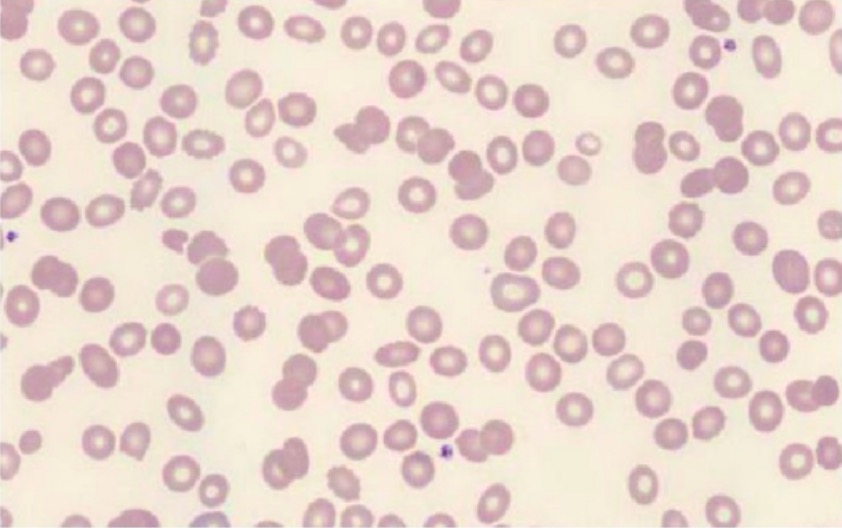
Esfregaço de sangue periférico com escassos neutrófilos
Imagem: “Peripheral blood smear” por Melissa Zhao. Licença: CC BY 4.0
A presença de neutropeniaNeutropeniaNeutrophils are an important component of the immune system and play a significant role in the eradication of infections. Low numbers of circulating neutrophils, referred to as neutropenia, predispose the body to recurrent infections or sepsis, though patients can also be asymptomatic. Neutropenia pode minimizar os sintomas e sinais da infeção:
A ativação dos neutrófilos é responsável por muitos dos sintomas inflamatórios numa infeção
NeutropeniaNeutropeniaNeutrophils are an important component of the immune system and play a significant role in the eradication of infections. Low numbers of circulating neutrophils, referred to as neutropenia, predispose the body to recurrent infections or sepsis, though patients can also be asymptomatic. Neutropenia → ↓ ativação dos neutrófilos → ↓ libertação de citocinas → ↓ sintomas inflamatórios
A presença de febre pode ser o único sinal da presença de uma infeção.
Os sintomas maisMAISAndrogen Insensitivity Syndrome comuns da neutropeniaNeutropeniaNeutrophils are an important component of the immune system and play a significant role in the eradication of infections. Low numbers of circulating neutrophils, referred to as neutropenia, predispose the body to recurrent infections or sepsis, though patients can also be asymptomatic. Neutropenia febril são:
Todos os doentes com neutropeniaNeutropeniaNeutrophils are an important component of the immune system and play a significant role in the eradication of infections. Low numbers of circulating neutrophils, referred to as neutropenia, predispose the body to recurrent infections or sepsis, though patients can also be asymptomatic. Neutropenia febril devem ser submetidos a uma história clínica e exame objetivo detalhados, bem como à realização de estudos diagnósticos.
História clínica
Uma história clínica detalhada deve incluir:
Revisão de aparelhos e sistemas para localizar o foco da infeção
Medicação atual
Tipo de neoplasia
Regime de quimioterapia atual
Revisão de qualquer exame laboratorial recente, em especial de estudos hematológicos.
Presença de alergias
Utilização de corticoides
Comorbilidades
História prévia de infeções
Profilaxia recente com antibióticos
Administração recente de fatores de crescimento hematopoiéticos
História prévia de transplante
Exame objetivo
Um exame objetivo completo deve incluir uma avaliação de:
Pele:
Eritema
Dor
Úlceras
Abcessos
Locais de inserção de cateteres centrais
Ectima gangrenoso (ocorre na infeção por P. aeruginosaP. aeruginosaA species of gram-negative, aerobic, rod-shaped bacteria commonly isolated from clinical specimens (wound, burn, and urinary tract infections). It is also found widely distributed in soil and water. P. Aeruginosa is a major agent of nosocomial infection.Pseudomonas)
Não realizar toque retal em doentes neutropénicos.
Área perineal:
Quisto pilonidal
Abcesso perirretal
Infeção vaginal/vulvar
Sistema neurológico:
Meningismo
Défice neurológico focal
Alteração do estado mental
Locais de inserção do cateter:
Eritema
Flutuação
Dor
Palpação de um cordão ao longo do trajeto da veia
Exames complementares de diagnóstico
Avaliação laboratorial:
Hemograma com contagem diferencial de leucócitos:
NeutropeniaNeutropeniaNeutrophils are an important component of the immune system and play a significant role in the eradication of infections. Low numbers of circulating neutrophils, referred to as neutropenia, predispose the body to recurrent infections or sepsis, though patients can also be asymptomatic. Neutropenia grave: CAN < 500 células/µL
NeutropeniaNeutropeniaNeutrophils are an important component of the immune system and play a significant role in the eradication of infections. Low numbers of circulating neutrophils, referred to as neutropenia, predispose the body to recurrent infections or sepsis, though patients can also be asymptomatic. Neutropenia profunda: CAN < 100 células/µL
Tipagem sanguínea
Estudos da coagulação
Parâmetros bioquímicos:
Função renal
Função hepática
Eletrólitos
Lactatos: Níveis elevados são sugestivos de sépsis.
Análise sumária de urina
PCRPCRPolymerase chain reaction (PCR) is a technique that amplifies DNA fragments exponentially for analysis. The process is highly specific, allowing for the targeting of specific genomic sequences, even with minuscule sample amounts. The PCR cycles multiple times through 3 phases: denaturation of the template DNA, annealing of a specific primer to the individual DNA strands, and synthesis/elongation of new DNA molecules.Polymerase Chain Reaction (PCR)
VS
Procalcitonina (PCT):
Pró-hormona da calcitonina, produzida na presença de uma infeção sistémica em resposta às toxinas microbianas e aos mediadores inflamatórios do hospedeiro
Pode ajudar a diferenciar as etiologias infeciosas e não infeciosas de febre:
Elevada nas infeções bacterianas
Elevada nas infeções fúngicas
Pode ajudar na seleção e duração do tratamento com antibióticos:
Quando elevada, reforça a importância de iniciar um antibiótico
Quando não está elevada, reforça a decisão de suspender ou protelar o início da antibioterapia
Ajuda na prevenção de uma terapêutica com antibiótico prolongada/desnecessária
Cultura:
Hemocultura:
Devem ser obtidos 2 sets de hemoculturas através da punção venosa periférica de 2 locais diferentes, bem como de qualquer cateter venoso invasivo.
1 set é composto por 2 garrafas (aeróbia e anaeróbia).
A urocultura deve ser obtida se:
Doente sintomático
Doente com história prévia de infeção do trato urinário
Presença de algaliação
Cultura dirigida ao foco
Microscopia e cultura de fezes na presença de diarreia (Clostridium difficileClostridium difficileA common inhabitant of the colon flora in human infants and sometimes in adults. The type species clostridioides difficile is formerly known as Clostridium difficile. It is a causative agent for clostridioides infections and is associated with pseudomembranous enterocolitis in patients receiving antibiotic therapy.Clostridia)
Microscopia e cultura da expetoração na presença de sinais de infeção respiratória
Zaragatoa cutânea/lesão
Imagiologia:
Deve obter-se uma radiografia do tórax ou tomografia computadorizada.
Quando clinicamente indicado, devem ser realizados estudos imagiológicos adicionais.
Score da Multinational Association for Supportive Care in Cancer (MASCC)
Adequação do doente para um tratamento ambulatório versus hospitalar
Adequação do doente para antibioterapia oral versus IV
Duração prevista do tratamento
Disponibilidade do cuidador
Doentes de baixo risco:
Duração da neutropeniaNeutropeniaNeutrophils are an important component of the immune system and play a significant role in the eradication of infections. Low numbers of circulating neutrophils, referred to as neutropenia, predispose the body to recurrent infections or sepsis, though patients can also be asymptomatic. Neutropenia ≤ 7 dias
Sem comorbilidades
Funções hepática e renal normais
Pontuação MASCC ≥ 21
Doentes de alto risco:
NeutropeniaNeutropeniaNeutrophils are an important component of the immune system and play a significant role in the eradication of infections. Low numbers of circulating neutrophils, referred to as neutropenia, predispose the body to recurrent infections or sepsis, though patients can also be asymptomatic. Neutropenia profunda (CAN ≤ 100 células/µL)
NeutropeniaNeutropeniaNeutrophils are an important component of the immune system and play a significant role in the eradication of infections. Low numbers of circulating neutrophils, referred to as neutropenia, predispose the body to recurrent infections or sepsis, though patients can also be asymptomatic. Neutropenia prolongada (≥ 7 dias)
A realizar profilaxia com uma fluoroquinolona
Pontuação MASCC < 21
Patologias comórbidas:
Dor abdominal de novo
Hipotensão
PneumoniaPneumoniaPneumonia or pulmonary inflammation is an acute or chronic inflammation of lung tissue. Causes include infection with bacteria, viruses, or fungi. In more rare cases, pneumonia can also be caused through toxic triggers through inhalation of toxic substances, immunological processes, or in the course of radiotherapy.Pneumonia
Alterações neurológicas
Evidência laboratorial de disfunção orgânica
Instabilidade hemodinâmica
O tratamento empírico deve ser iniciado na 1ª hora após a admissão.
Seleção dos antibióticos empíricos:
Ajustados à fonte de infeção conhecida/suspeita
Em doentes que já estão a realizar um tratamento profilático com uma fluoroquinolona, deve ser dado um antibiótico beta-lactâmico antipseudomónico
Se a fonte da infeção é desconhecida:
Cobertura de largo espectro
Considerar a avaliação por um especialista em doenças infecciosas.
Tabela: Score para o índice de risco da Multinational Association for Supportive Care in Cancer (MASCC)
Características
Pontuação
Carga da doença: assintomática ou sintomas ligeiros
5
Carga da doença: sintomas moderados
3
Carga da doença: sintomas graves
0
Ausência de hipotensão
5
Ausência de doença pulmonar obstrutiva crónica
4
TumorTumorInflammation sólido ou neoplasia hematológica sem infeção fúngica prévia
4
Ausência de desidratação com necessidade de fluidoterapia parentérica
3
Tratamento em ambulatório
2
Idade <60 anos
2
Doentes de baixo risco
Os doentes de baixo risco são tratados no ambulatório ou inicialmente em regime de internamento e, a seguir, são transferidos para o ambulatório com acompanhamento frequente (antibioterapia oral).
Inicialmente, não está recomendado nenhum tratamento antifúngico.
Quando a febre persiste por ≥ 4-7 dias, devem ser administrados antifúngicos de largo espectro.
Doentes de alto risco
Os doentes de alto risco devem ser tratados em regime de internamento (antibioterapia IV).
Ausência de alergia à penicilina:
Piperacilina–tazobactamTazobactamA penicillanic acid and sulfone derivative and potent beta-lactamase inhibitor that enhances the activity of other anti-bacterial agents against beta-lactamase producing bacteria.Cephalosporins
MeropenemMeropenemA thienamycin derivative antibacterial agent that is more stable to renal dehydropeptidase I than imipenem, but does not need to be given with an enzyme inhibitor such as cilastatin. It is used in the treatment of bacterial infections, including infections in immunocompromised patients.Carbapenems and Aztreonam
ImipenemImipenemSemisynthetic thienamycin that has a wide spectrum of antibacterial activity against gram-negative and gram-positive aerobic and anaerobic bacteria, including many multiresistant strains. It is stable to beta-lactamases. Clinical studies have demonstrated high efficacy in the treatment of infections of various body systems. Its effectiveness is enhanced when it is administered in combination with cilastatin, a renal dipeptidase inhibitor.Carbapenems and Aztreonam–cilastatina
CefepimeCefepimeA fourth-generation cephalosporin antibacterial agent that is used in the treatment of infections, including those of the abdomen, urinary tract, respiratory tract, and skin. It is effective against pseudomonas aeruginosa and may also be used in the empiric treatment of febrile neutropenia.Cephalosporins
Caso complicado ou resistência a antibióticos: Deve adicionar-se um aminoglicosídeo aos regimes acima.
Sob profilaxia com uma fluoroquinolona: aztreonamAztreonamThe carbapenems and aztreonam are both members of the bactericidal beta-lactam family of antibiotics (similar to penicillins). They work by preventing bacteria from producing their cell wall, ultimately leading to bacterial cell death. Carbapenems and AztreonammaisMAISAndrogen Insensitivity Syndrome vancomicina
Doentes com enterocolite neutropénica:
Piperacilina – tazobactamTazobactamA penicillanic acid and sulfone derivative and potent beta-lactamase inhibitor that enhances the activity of other anti-bacterial agents against beta-lactamase producing bacteria.Cephalosporins
CarbapenemCarbapenemThe carbapenems and aztreonam are both members of the bactericidal beta-lactam family of antibiotics (similar to penicillins). They work by preventing bacteria from producing their cell wall, ultimately leading to bacterial cell death. Carbapenems and Aztreonam
S. aureusS. aureusPotentially pathogenic bacteria found in nasal membranes, skin, hair follicles, and perineum of warm-blooded animals. They may cause a wide range of infections and intoxications.Staphylococcus resistente à meticilina:
Daptomicina
Linezolida
Vancomicina
Enterococos resistentes à vancomicina (VRE, pela sigla em inglês):
CarbapenemCarbapenemThe carbapenems and aztreonam are both members of the bactericidal beta-lactam family of antibiotics (similar to penicillins). They work by preventing bacteria from producing their cell wall, ultimately leading to bacterial cell death. Carbapenems and Aztreonam
Carbapenemase de Klebsiella pneumoniaeKlebsiella PneumoniaeGram-negative, non-motile, capsulated, gas-producing rods found widely in nature and associated with urinary and respiratory infections in humans.Aminoglycosides (KPC, pela sigla em inglês):
Polimixina B
Colistina
Tigeciclina
Indicações para a adição de vancomicina:
Instabilidade hemodinâmica
PneumoniaPneumoniaPneumonia or pulmonary inflammation is an acute or chronic inflammation of lung tissue. Causes include infection with bacteria, viruses, or fungi. In more rare cases, pneumonia can also be caused through toxic triggers through inhalation of toxic substances, immunological processes, or in the course of radiotherapy.Pneumonia
Hemoculturas positivas para bactérias gram-positivas
Colonização com MRSAMRSAA strain of Staphylococcus aureus that is non-susceptible to the action of methicillin. The mechanism of resistance usually involves modification of normal or the presence of acquired penicillin binding proteins.Staphylococcus, StreptococcusStreptococcusStreptococcus is one of the two medically important genera of gram-positive cocci, the other being Staphylococcus. Streptococci are identified as different species on blood agar on the basis of their hemolytic pattern and sensitivity to optochin and bacitracin. There are many pathogenic species of streptococci, including S. pyogenes, S. agalactiae, S. pneumoniae, and the viridans streptococci.Streptococcus resistente à penicilina
Tratamento antifúngico:
Indicações:
Doente instável e
A febre persiste > 4–7 dias
Fármacos:
Anfotericina B (aspergilose invasiva)
Voriconazol (aspergilose invasiva)
Itraconazol
Posaconazol
Caspofungina (candidíase)
Micafungina
Tratamento antivírico:
Indicações:
Doença vírica ativa por herpes simplexHerpes SimplexA group of acute infections caused by herpes simplex virus type 1 or type 2 that is characterized by the development of one or more small fluid-filled vesicles with a raised erythematous base on the skin or mucous membrane. It occurs as a primary infection or recurs due to a reactivation of a latent infection.Congenital TORCH Infections/varicela zoster
Transplante de medula óssea recente/atual
Fármacos
Aciclovir para o herpes simplexHerpes SimplexA group of acute infections caused by herpes simplex virus type 1 or type 2 that is characterized by the development of one or more small fluid-filled vesicles with a raised erythematous base on the skin or mucous membrane. It occurs as a primary infection or recurs due to a reactivation of a latent infection.Congenital TORCH Infections
Aciclovir para o varicela zoster
Inibidores da neuraminidaseNeuraminidaseAn enzyme that catalyzes the hydrolysis of alpha-2, 3, alpha-2, 6-, and alpha-2, 8-glycosidic linkages (at a decreasing rate, respectively) of terminal sialic residues in oligosaccharides, glycoproteins, glycolipids, colominic acid, and synthetic substrate.Antivirals for Influenza na infeção suspeita/confirmada por influenzaInfluenzaInfluenza viruses are members of the Orthomyxoviridae family and the causative organisms of influenza, a highly contagious febrile respiratory disease. There are 3 primary influenza viruses (A, B, and C) and various subtypes, which are classified based on their virulent surface antigens, hemagglutinin (HA) and neuraminidase (NA). Influenza typically presents with a fever, myalgia, headache, and symptoms of an upper respiratory infection. Influenza Viruses/Influenza
Duração do tratamento
Identificação da fonte de infeção:
Duração do tratamento ajustada consoante a infeção em específico e
CAN ≥ 500 células/µL
Fonte de infeção desconhecida:
Febre resolvida ≥ 48 horas e
CAN ≥ 500 células/µL
Tratamento de suporte
Fluidos IV
Não está recomendada a administração do fator estimulador de colónias (CSF, pela sigla em inglês)
Indicações para a remoção de cateteres invasivos:
Infeção do túnel ou da porta do cateter
Sépsis (se a fonte infecciosa for desconhecida)
Endocardite
Embolia séptica
Infeção que persiste há > 72 horas apesar da antibioterapia
Infeção causada por:
S. aureusS. aureusPotentially pathogenic bacteria found in nasal membranes, skin, hair follicles, and perineum of warm-blooded animals. They may cause a wide range of infections and intoxications.Staphylococcus
StreptococcusStreptococcusStreptococcus is one of the two medically important genera of gram-positive cocci, the other being Staphylococcus. Streptococci are identified as different species on blood agar on the basis of their hemolytic pattern and sensitivity to optochin and bacitracin. There are many pathogenic species of streptococci, including S. pyogenes, S. agalactiae, S. pneumoniae, and the viridans streptococci.Streptococcus
Fungos
Micobactérias não tuberculosas
Profilaxia
Indicações:
Doentes de alto risco
NeutropeniaNeutropeniaNeutrophils are an important component of the immune system and play a significant role in the eradication of infections. Low numbers of circulating neutrophils, referred to as neutropenia, predispose the body to recurrent infections or sepsis, though patients can also be asymptomatic. Neutropenia profunda
NeutropeniaNeutropeniaNeutrophils are an important component of the immune system and play a significant role in the eradication of infections. Low numbers of circulating neutrophils, referred to as neutropenia, predispose the body to recurrent infections or sepsis, though patients can also be asymptomatic. Neutropenia prolongada
Fármacos:
Levofloxacina
Ciprofloxacina
Azóis
Trimetoprim-sulfametoxazol (pneumoniaPneumoniaPneumonia or pulmonary inflammation is an acute or chronic inflammation of lung tissue. Causes include infection with bacteria, viruses, or fungi. In more rare cases, pneumonia can also be caused through toxic triggers through inhalation of toxic substances, immunological processes, or in the course of radiotherapy.Pneumonia por Pneumocystis jirovecii )
Diagnóstico Diferencial
Reação transfusional: complicação associada a tratamentos transfusionais (podem ser de derivados ou do sangue completo). Esta reação apresenta-se com febre, arrepios, urticária, prurido, dispneia, hipotensão e dificuldade respiratória. O diagnóstico baseia-se no surgimento de sintomas durante ou após a transfusão. O tratamento inclui a interrupção da transfusão, administração de fluidos IV, anti-histamínicos e antipiréticos.
Febre neoplásica: síndrome paraneoplásica causada por certas neoplasias (principalmente hematológicas). O único sintoma à apresentação é febre, sem sinais de infeção ou reação medicamentosa. A febre neoplásica é um diagnóstico de exclusão. A administração de naproxeno pode diminuir a temperatura. O tratamento inclui tratar a doença subjacente e o controlo dos sintomas com AINEs, paracetamolparacetamolAcetaminophen is an over-the-counter nonopioid analgesic and antipyretic medication and the most commonly used analgesic worldwide. Despite the widespread use of acetaminophen, its mechanism of action is not entirely understood.Acetaminophen e corticoides.
Referências
Nara, K., Yamamoto, T., Sato, Y. et al. Low pretherapy skeletal muscle mass index is associated with an increased risk of febrile neutropenia in patients with esophageal cancer receiving docetaxel + cisplatin + 5-fluorouracil (DCF) therapy. Support Care Cancer 31, 150 (2023). https://doi.org/10.1007/s00520-023-07609-6
Freifeld, A. G. et al. (2011). Clinical practice guideline for the use of antimicrobial agents in neutropenic patients with cancer: 2010 update by the Infectious Diseases society of America. Clinical Infectious Diseases 52(4):e56–e93. https://doi.org/10.1093/cid/cir073
Robinson, J. O., Lamoth, F., Bally, F., Knaup, M., Calandra, T., Marchetti, O. (2011). Monitoring procalcitonin in febrile neutropenia: what is its utility for initial diagnosis of infection and reassessment in persistent fever?. PloS One 6(4):e18886. https://doi.org/10.1371/journal.pone.0018886
¡Crea tu cuenta gratis o inicia una sesión para seguir leyendo!
A Lecturio Medical complementa o teu estudo através de métodos de ensino baseados em evidência, vídeos de palestras, perguntas e muito mais – tudo combinado num só lugar e fácil de usar.
User Reviews
Details
×
Obtenha Premium para testar os seus conhecimentos
Lecturio Premium dá-lhe acesso total a todos os conteúdos e características
Obtenha Premium para ver todos os vídeos
Verifique agora o seu e-mail para obter um teste gratuito.
Crie uma conta gratuita para testar os seus conhecimentos
Lecturio Premium dá-lhe acesso total a todos os conteúdos e características - incluindo o Qbank de Lecturio com perguntas actualizadas ao estilo do board-.