Domina Conceptos Médicos

Estudia para la escuela de medicina y tus examenes con Lecturio.

Retinopatía del Prematuro

La retinopatía del prematuro (ROP, por sus siglas en inglés) es una afección que se observa en los bebés prematuros de bajo peso al nacer que se caracteriza por una neovascularización progresiva y excesiva. En esta condición, la proliferación inapropiada de vasos sanguíneos y tejido fibrovascular detrás del cristalino impide el desarrollo de la retina. El resultado final es un déficit visual grave o incluso la ceguera del niño afectado. El tratamiento con fotocoagulación láser previene la pérdida de visión en el 95% de los casos.

Last updated: Dec 15, 2025

Editorial responsibility: Stanley Oiseth, Lindsay Jones, Evelin Maza

Descripción General

Epidemiología

  • La retinopatía del prematuro es la principal causa de ceguera en EN Erythema nodosum is an immune-mediated panniculitis (inflammation of the subcutaneous fat) caused by a type IV (delayed-type) hypersensitivity reaction. It commonly manifests in young women as tender, erythematous nodules on the shins. Erythema Nodosum los LOS Neisseria bebés.
  • La incidencia de la enfermedad es inversamente proporcional a:

Factores de riesgo

  • Bajo peso al AL Amyloidosis nacer
  • Baja edad gestacional
  • Terapia de oxígeno suplementario
  • Predisposición genética
  • Infecciones
  • Defectos cardíacos congénitos

Fisiopatología

Los LOS Neisseria bebés prematuros de bajo peso al AL Amyloidosis nacer tienen riesgo de desarrollar hiperoxia durante su cuidado; esto puede llevar a:
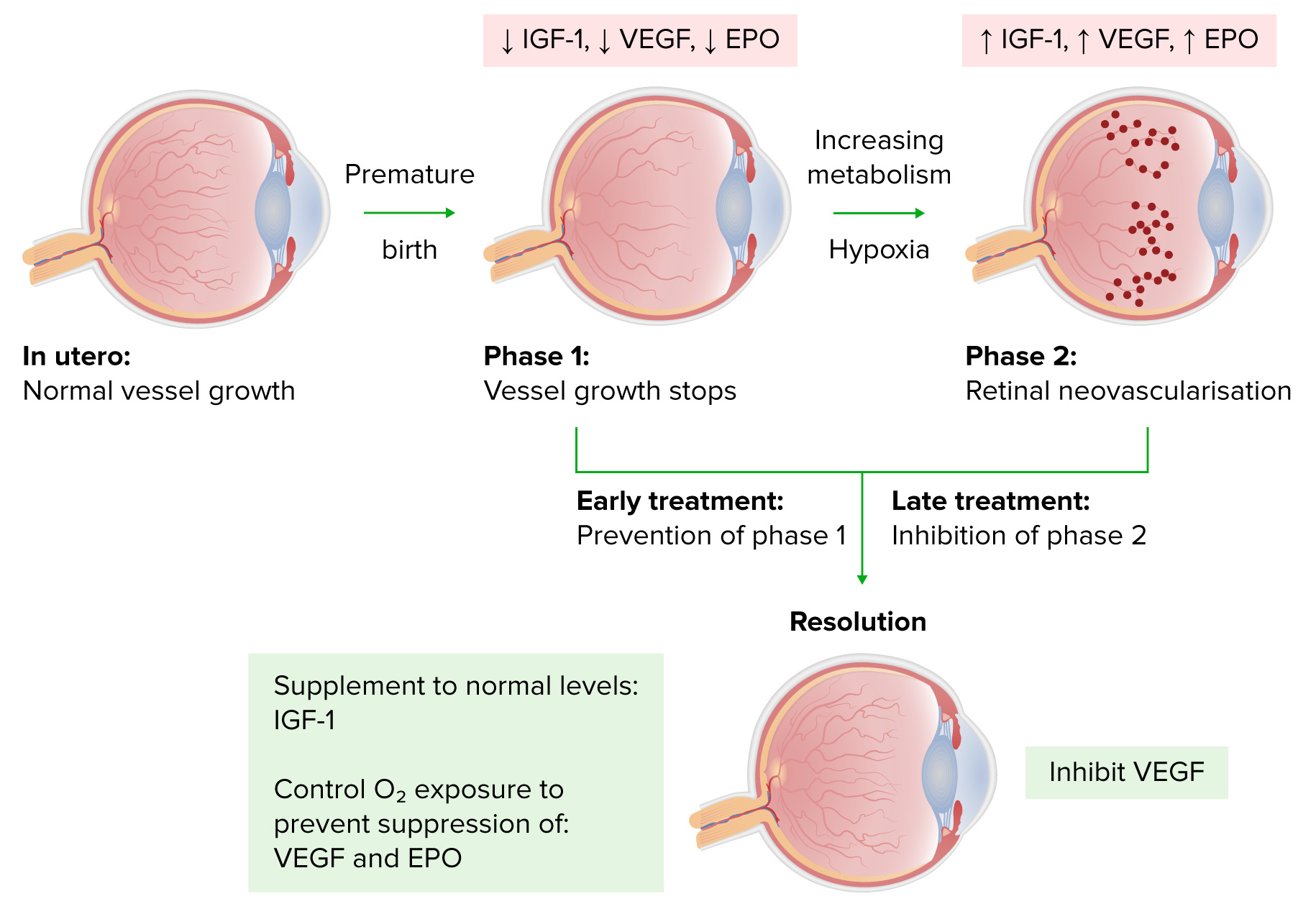
  • Producción de especies reactivas de oxígeno → causando daño a la retina Retina The ten-layered nervous tissue membrane of the eye. It is continuous with the optic nerve and receives images of external objects and transmits visual impulses to the brain. Its outer surface is in contact with the choroid and the inner surface with the vitreous body. The outermost layer is pigmented, whereas the inner nine layers are transparent. Eye: Anatomy
  • Producción anormal del factor de crecimiento endotelial vascular (VEGF, por sus siglas en EN Erythema nodosum is an immune-mediated panniculitis (inflammation of the subcutaneous fat) caused by a type IV (delayed-type) hypersensitivity reaction. It commonly manifests in young women as tender, erythematous nodules on the shins. Erythema Nodosum inglés) → causando neovascularización anormal
  • Los LOS Neisseria vasos recién formados son diferentes a los LOS Neisseria normales:
    • Anormalmente permeables
    • Crecen fuera de la retina Retina The ten-layered nervous tissue membrane of the eye. It is continuous with the optic nerve and receives images of external objects and transmits visual impulses to the brain. Its outer surface is in contact with the choroid and the inner surface with the vitreous body. The outermost layer is pigmented, whereas the inner nine layers are transparent. Eye: Anatomy
  • Se produce el desarrollo de tejido fibrovascular anormal y tira de la retina Retina The ten-layered nervous tissue membrane of the eye. It is continuous with the optic nerve and receives images of external objects and transmits visual impulses to the brain. Its outer surface is in contact with the choroid and the inner surface with the vitreous body. The outermost layer is pigmented, whereas the inner nine layers are transparent. Eye: Anatomy, lo que provoca un desprendimiento de retina Retina The ten-layered nervous tissue membrane of the eye. It is continuous with the optic nerve and receives images of external objects and transmits visual impulses to the brain. Its outer surface is in contact with the choroid and the inner surface with the vitreous body. The outermost layer is pigmented, whereas the inner nine layers are transparent. Eye: Anatomy.
Progresión de la retinopatía del prematuro

Progresión de la retinopatía del prematuro

Imagen por Lecturio.

Clasificación

La clasificación internacional de la retinopatía utiliza una serie de parámetros para describir la enfermedad:
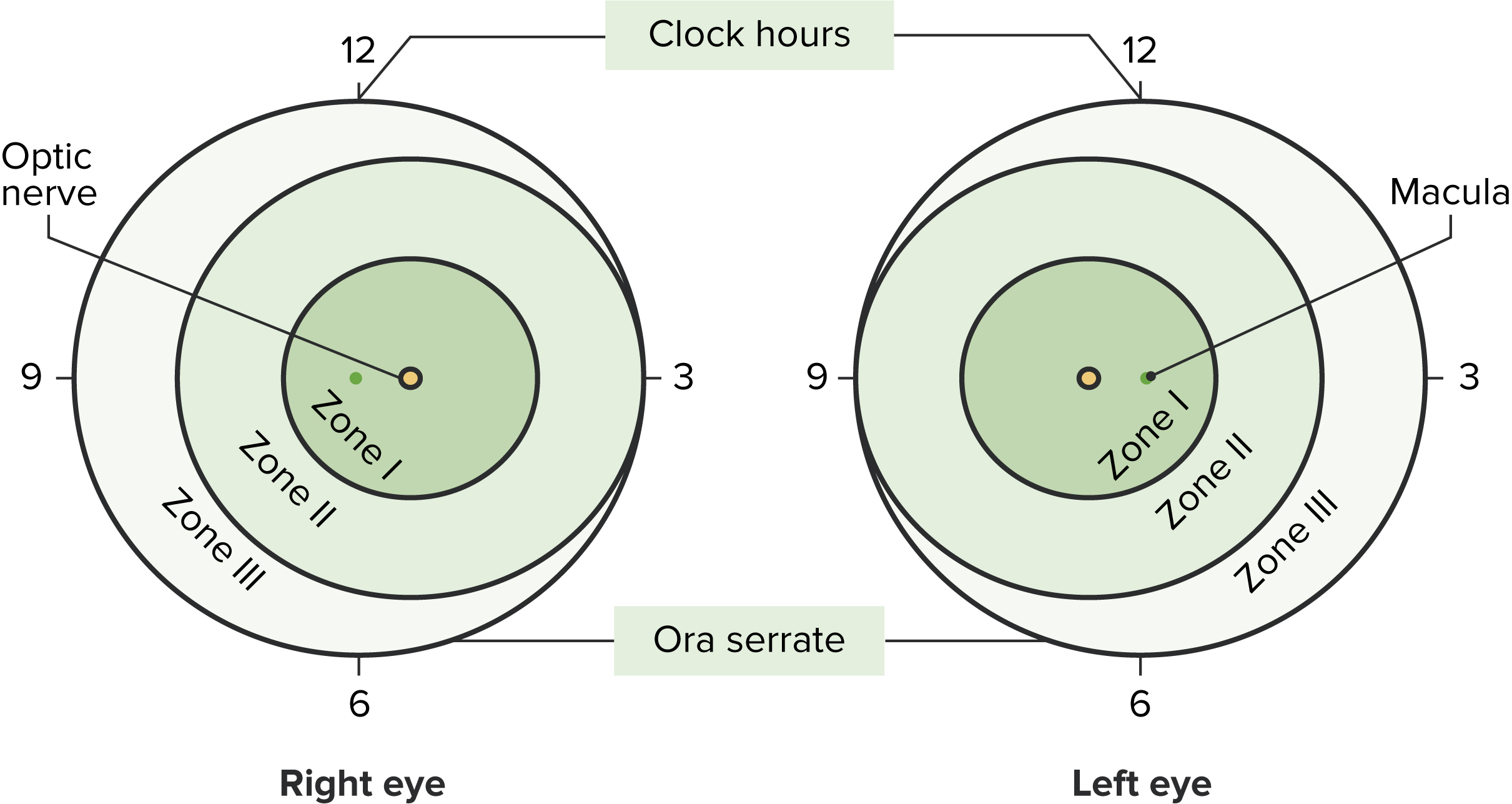
  • Definición de qué “zona” está involucrada
  • Definición de la “extensión” de la afectación retiniana (expresada como segmentos en EN Erythema nodosum is an immune-mediated panniculitis (inflammation of the subcutaneous fat) caused by a type IV (delayed-type) hypersensitivity reaction. It commonly manifests in young women as tender, erythematous nodules on the shins. Erythema Nodosum un reloj)
  • Definición de la gravedad de la enfermedad o “etapa” (consulte la tabla a continuación)
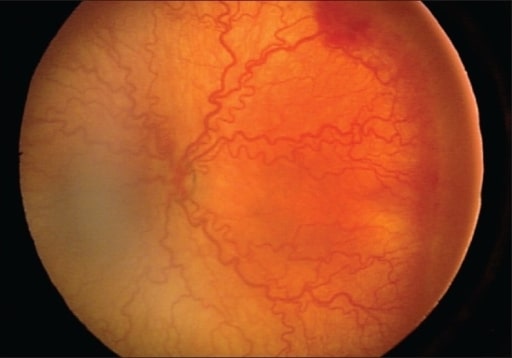
  • La presencia o ausencia de “enfermedad adicional” (e.g., dilatación venosa y tortuosidad arterial de los LOS Neisseria vasos retinales posteriores)
Clasificación de la retinopatía del prematuro

Representación de la clasificación de la retinopatía del prematuro

Imagen por Lecturio.
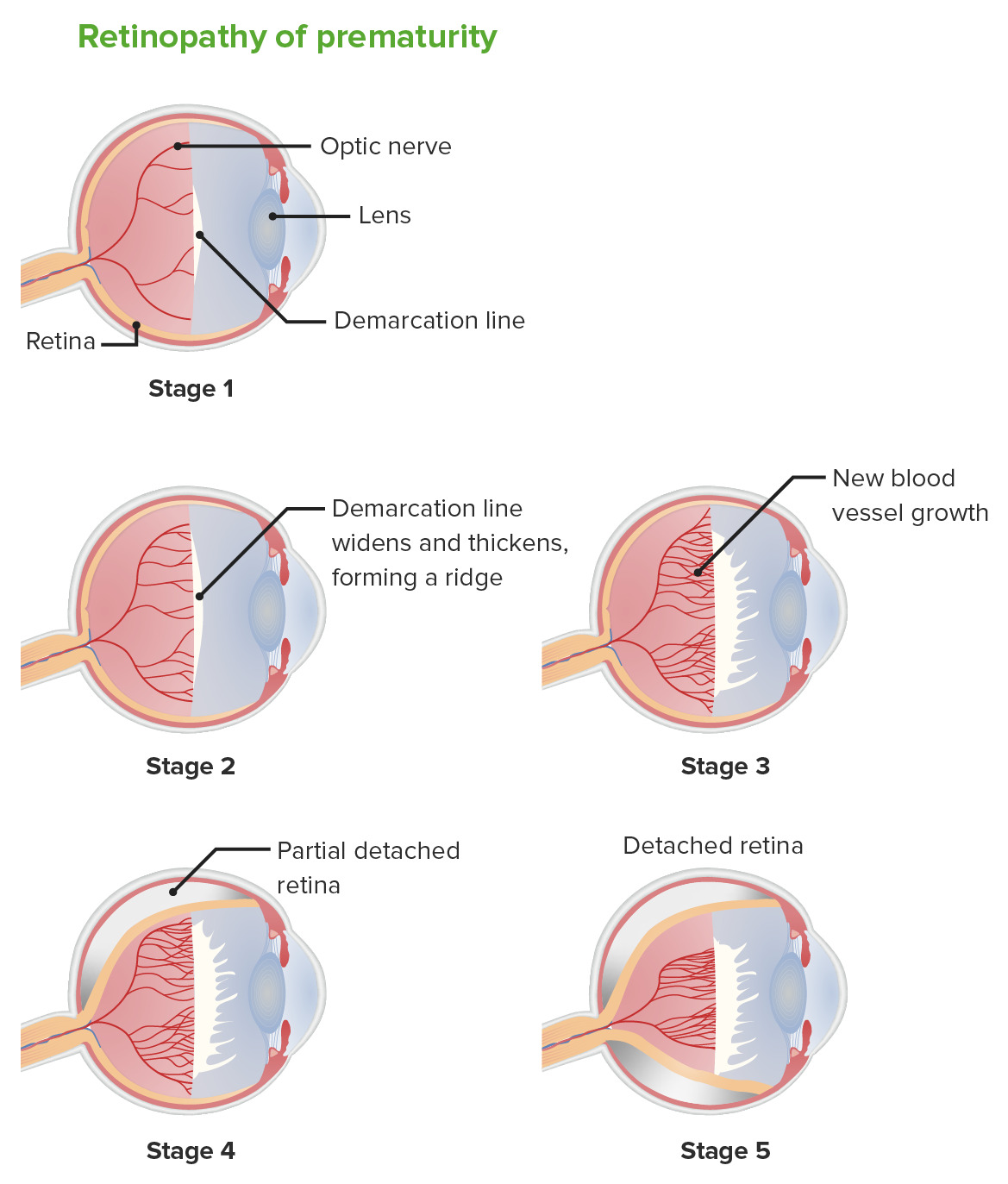
Tabla: Etapas de la retinopatía del prematuro
Etapas Características
1 Una línea de demarcación entre la retina Retina The ten-layered nervous tissue membrane of the eye. It is continuous with the optic nerve and receives images of external objects and transmits visual impulses to the brain. Its outer surface is in contact with the choroid and the inner surface with the vitreous body. The outermost layer is pigmented, whereas the inner nine layers are transparent. Eye: Anatomy vascular y avascular Avascular Corneal Abrasions, Erosion, and Ulcers
2 Una línea de demarcación crece hasta ocupar un volumen y se forma una cresta sobre el plano de la retina Retina The ten-layered nervous tissue membrane of the eye. It is continuous with the optic nerve and receives images of external objects and transmits visual impulses to the brain. Its outer surface is in contact with the choroid and the inner surface with the vitreous body. The outermost layer is pigmented, whereas the inner nine layers are transparent. Eye: Anatomy, que protruye hacia el vítreo.
3
  • Proliferación fibrovascular retinal
  • Formación de tejido fibrovascular; puede extenderse desde la cresta retiniana anormal hacia el vítreo
4 Desprendimiento de retina Retina The ten-layered nervous tissue membrane of the eye. It is continuous with the optic nerve and receives images of external objects and transmits visual impulses to the brain. Its outer surface is in contact with the choroid and the inner surface with the vitreous body. The outermost layer is pigmented, whereas the inner nine layers are transparent. Eye: Anatomy (parcial o subtotal)
  • Estadio 4A: sin afectación macular
  • Estadio 4B: con afectación macular
5
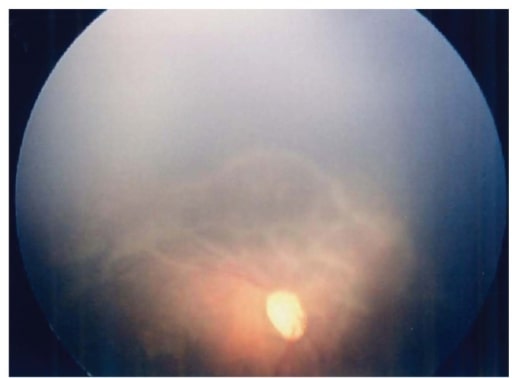
  • Hay un desprendimiento total de retina Retina The ten-layered nervous tissue membrane of the eye. It is continuous with the optic nerve and receives images of external objects and transmits visual impulses to the brain. Its outer surface is in contact with the choroid and the inner surface with the vitreous body. The outermost layer is pigmented, whereas the inner nine layers are transparent. Eye: Anatomy.
  • El paciente presenta leucocoria (reflejo pupilar blanco).
Ilustración de la retinopatía de la prematuridad

Retinopatía del prematuro: etapas

Imagen por Lecturio.
Tamizaje

Indicación de tamizaje

  • Todos los LOS Neisseria bebés de bajo peso al AL Amyloidosis nacer (< 1500 g)
  • Todos los LOS Neisseria bebés nacidos antes de las 30 semanas de edad gestacional
  • Bebés entre 1500 g y 2000 g de peso al AL Amyloidosis nacer y nacidos después de las 30 semanas de gestación que están expuestos a factores de riesgo potenciales (ver arriba)

Métodos de tamizaje

  • Cuando tamizar:
    • Para los LOS Neisseria bebés nacidos entre las semanas 22 y 26, cuando alcanzan las 30 semanas de edad gestacional corregida
    • Para bebés ≥ 27 semanas de edad gestacional, comenzando a las 4 semanas después del nacimiento
    • Exámenes de seguimiento semanales
  • Cómo tamizar:
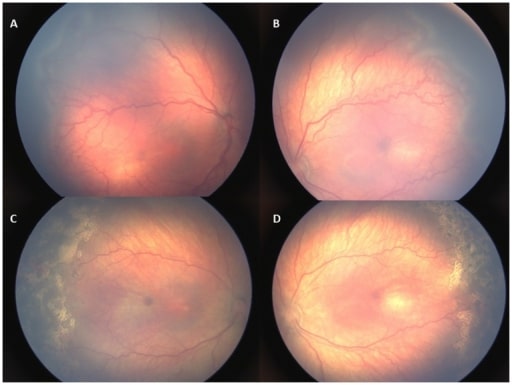
    • Utilizar oftalmoscopia indirecta o una cámara digital RetCam
    • El objetivo es buscar las características que estadifican la retinopatía.
    • Los pacientes se clasifican en 2 categorías:
      1. Bebés con bajo riesgo
      2. Bebés con retinopatía proliferativa que requieren tratamiento con láser
    • El riesgo de progresión está determinado por:
      • Aumento de peso
      • Niveles séricos del factor de crecimiento similar a la insulina 1 (IGF-1)
      • Grado de agresividad de la retinopatía

Tratamiento

  • Las primeras etapas (etapa 1 o 2 en EN Erythema nodosum is an immune-mediated panniculitis (inflammation of the subcutaneous fat) caused by a type IV (delayed-type) hypersensitivity reaction. It commonly manifests in young women as tender, erythematous nodules on the shins. Erythema Nodosum la zona I sin enfermedad adicional O etapa 3 en EN Erythema nodosum is an immune-mediated panniculitis (inflammation of the subcutaneous fat) caused by a type IV (delayed-type) hypersensitivity reaction. It commonly manifests in young women as tender, erythematous nodules on the shins. Erythema Nodosum la zona II sin enfermedad adicional) requieren un seguimiento estrecho sin intervención.
  • Indicaciones de tratamiento:
    • Cualquier estadio de retinopatía en EN Erythema nodosum is an immune-mediated panniculitis (inflammation of the subcutaneous fat) caused by a type IV (delayed-type) hypersensitivity reaction. It commonly manifests in young women as tender, erythematous nodules on the shins. Erythema Nodosum zona I con enfermedad adicional
    • Estadio 3 en EN Erythema nodosum is an immune-mediated panniculitis (inflammation of the subcutaneous fat) caused by a type IV (delayed-type) hypersensitivity reaction. It commonly manifests in young women as tender, erythematous nodules on the shins. Erythema Nodosum zona I sin enfermedad adicional
    • Estadio 2 o 3 en EN Erythema nodosum is an immune-mediated panniculitis (inflammation of the subcutaneous fat) caused by a type IV (delayed-type) hypersensitivity reaction. It commonly manifests in young women as tender, erythematous nodules on the shins. Erythema Nodosum zona II con enfermedad adicional
  • Opciones de tratamiento:
    • Crioterapia: realizada bajo anestesia general
    • Fotocoagulación láser indirecta
    • Fármacos antifactor de crecimiento endotelial vascular, como bevacizumab Bevacizumab An anti-vegf humanized murine monoclonal antibody. It inhibits vegf receptors and helps to prevent pathologic angiogenesis. Targeted and Other Nontraditional Antineoplastic Therapy intravítreo
    • Vitrectomía por desprendimiento de retina Retina The ten-layered nervous tissue membrane of the eye. It is continuous with the optic nerve and receives images of external objects and transmits visual impulses to the brain. Its outer surface is in contact with the choroid and the inner surface with the vitreous body. The outermost layer is pigmented, whereas the inner nine layers are transparent. Eye: Anatomy

Diagnóstico Diferencial

Las siguientes afecciones son diagnósticos diferenciales para la ceguera en EN Erythema nodosum is an immune-mediated panniculitis (inflammation of the subcutaneous fat) caused by a type IV (delayed-type) hypersensitivity reaction. It commonly manifests in young women as tender, erythematous nodules on the shins. Erythema Nodosum la infancia:

  • Cataratas: es una condición definida como nubosidad u opacidad indolora del cristalino que conduce a una disminución de la visión. Las cataratas a menudo se desarrollan lentamente en EN Erythema nodosum is an immune-mediated panniculitis (inflammation of the subcutaneous fat) caused by a type IV (delayed-type) hypersensitivity reaction. It commonly manifests in young women as tender, erythematous nodules on the shins. Erythema Nodosum uno o ambos ojos. Los LOS Neisseria síntomas pueden incluir visión borrosa o doble, problemas con las luces brillantes, halos alrededor de la luz, colores desvaídos y problemas para ver de noche. La inspección oftalmológica a menudo muestra oscurecimiento u opacidades en EN Erythema nodosum is an immune-mediated panniculitis (inflammation of the subcutaneous fat) caused by a type IV (delayed-type) hypersensitivity reaction. It commonly manifests in young women as tender, erythematous nodules on the shins. Erythema Nodosum el reflejo rojo. El examen con lámpara de hendidura mostrará la extensión y ubicación de la catarata. Las cataratas tienen una etiología diversa que incluye infecciones TORCH, traumatismos, efectos secundarios de los LOS Neisseria glucocorticoides y radiación.
  • Desprendimiento de retina Retina The ten-layered nervous tissue membrane of the eye. It is continuous with the optic nerve and receives images of external objects and transmits visual impulses to the brain. Its outer surface is in contact with the choroid and the inner surface with the vitreous body. The outermost layer is pigmented, whereas the inner nine layers are transparent. Eye: Anatomy: separación de la retina Retina The ten-layered nervous tissue membrane of the eye. It is continuous with the optic nerve and receives images of external objects and transmits visual impulses to the brain. Its outer surface is in contact with the choroid and the inner surface with the vitreous body. The outermost layer is pigmented, whereas the inner nine layers are transparent. Eye: Anatomy neurosensorial del epitelio pigmentado de la retina Retina The ten-layered nervous tissue membrane of the eye. It is continuous with the optic nerve and receives images of external objects and transmits visual impulses to the brain. Its outer surface is in contact with the choroid and the inner surface with the vitreous body. The outermost layer is pigmented, whereas the inner nine layers are transparent. Eye: Anatomy. La retina Retina The ten-layered nervous tissue membrane of the eye. It is continuous with the optic nerve and receives images of external objects and transmits visual impulses to the brain. Its outer surface is in contact with the choroid and the inner surface with the vitreous body. The outermost layer is pigmented, whereas the inner nine layers are transparent. Eye: Anatomy es la capa más interna del ojo y contiene conos y bastones que son órganos sensoriales especializados que se utilizan para detectar la luz. Cualquier cosa que afecte la conexión entre la retina Retina The ten-layered nervous tissue membrane of the eye. It is continuous with the optic nerve and receives images of external objects and transmits visual impulses to the brain. Its outer surface is in contact with the choroid and the inner surface with the vitreous body. The outermost layer is pigmented, whereas the inner nine layers are transparent. Eye: Anatomy y la coroides puede conducir a la isquemia de los LOS Neisseria fotorreceptores y, como consecuencia, a la pérdida indolora de la visión.
  • Retinoblastoma Retinoblastoma Retinoblastoma is a rare tumor but the most common primary intraocular malignancy of childhood. It is believed that the condition arises from a neuronal progenitor cell. Retinoblastoma can be heritable or non-heritable. Retinoblastoma: la neoplasia maligna intraocular primaria más común de la infancia, representando el 2% de los LOS Neisseria tumores malignos en EN Erythema nodosum is an immune-mediated panniculitis (inflammation of the subcutaneous fat) caused by a type IV (delayed-type) hypersensitivity reaction. It commonly manifests in young women as tender, erythematous nodules on the shins. Erythema Nodosum niños. La afección generalmente se presenta como leucocoria (reflejo blanco anormal en EN Erythema nodosum is an immune-mediated panniculitis (inflammation of the subcutaneous fat) caused by a type IV (delayed-type) hypersensitivity reaction. It commonly manifests in young women as tender, erythematous nodules on the shins. Erythema Nodosum el ojo) en EN Erythema nodosum is an immune-mediated panniculitis (inflammation of the subcutaneous fat) caused by a type IV (delayed-type) hypersensitivity reaction. It commonly manifests in young women as tender, erythematous nodules on the shins. Erythema Nodosum niños menores de 2 años. La enfermedad puede afectar uno o ambos ojos y puede aparecer de forma esporádica o acumulativa en EN Erythema nodosum is an immune-mediated panniculitis (inflammation of the subcutaneous fat) caused by a type IV (delayed-type) hypersensitivity reaction. It commonly manifests in young women as tender, erythematous nodules on the shins. Erythema Nodosum las familias. Si no se trata, la afección es fatal, pero con el tratamiento apropiado para la edad existe una tasa de supervivencia del > 95%.

Referencias

  1. International Committee for the Classification of Retinopathy of Prematurity. (2005). The International Classification of Retinopathy of Prematurity revisited. Archives of Ophthalmology, 123(7), 991–999. https://doi.org/10.1001/archopht.123.7.991 
  2. Smith, L. E. H. (2005). IGF-1 and retinopathy of prematurity in the preterm infant. Biology of the Neonate, 88(3), 237–244. https://doi.org/10.1159/000087587 
  3. Fierson, W. M., Chiang, M. F., Good, W., Phelps, D., Reynolds, J., Robbins, S. L., Karr, D. J., Bradford, G. E., Nischal, K., Roarty, J., Rubin, S. E., Suh, D. W., Lehman, S. S., & Ellis, G. S., Jr. (2018). Screening examination of premature infants for retinopathy of prematurity. Pediatrics, 142(6), e20183061. https://doi.org/10.1542/peds.2018-3061

¡Crea tu cuenta gratis o inicia una sesión para seguir leyendo!

Regístrate ahora y obtén acceso gratuito a Lecturio con páginas de concepto, videos médicos y cuestionarios para tu educación médica.

User Reviews

Que tengas una sesión de estudio alegre y navideña 🎁 Ahorra 50% en todos los planes >>

Details