
Domina Conceptos Médicos

Estudia para la escuela de medicina y tus examenes con Lecturio.

Regulación Epigenética

La regulación epigenética es la regulación de la expresión génica que no implica alteraciones en EN Erythema nodosum is an immune-mediated panniculitis (inflammation of the subcutaneous fat) caused by a type IV (delayed-type) hypersensitivity reaction. It commonly manifests in young women as tender, erythematous nodules on the shins. Erythema Nodosum la secuencia de ácido desoxirribonucleico (ADN) ni en EN Erythema nodosum is an immune-mediated panniculitis (inflammation of the subcutaneous fat) caused by a type IV (delayed-type) hypersensitivity reaction. It commonly manifests in young women as tender, erythematous nodules on the shins. Erythema Nodosum ninguno de sus productos transcritos. Las formas más comunes de regulación epigenética son la metilación del ADN, que suprime la expresión génica, y las modificaciones de las proteínas histonas, que afectan la estructura del empaquetamiento del ADN. Las modificaciones epigenéticas son responsables de las afecciones relacionadas con la impronta, incluidos los LOS Neisseria síndromes de Prader–Willi y Angelman.

Last updated: Apr 25, 2025

Editorial responsibility: Stanley Oiseth, Lindsay Jones, Evelin Maza

Descripción General

Definición

La modificación epigenética es una modificación al AL Amyloidosis ADN o al AL Amyloidosis empaquetamiento del ADN que afecta la expresión génica sin alterar el código genético (i.e., secuencia del ADN) en EN Erythema nodosum is an immune-mediated panniculitis (inflammation of the subcutaneous fat) caused by a type IV (delayed-type) hypersensitivity reaction. It commonly manifests in young women as tender, erythematous nodules on the shins. Erythema Nodosum sí.

Estas modificaciones:

  • Controlan qué regiones de ADN están disponibles para la transcripción
  • Son típicamente reversibles
  • Pueden ser influenciadas por factores ambientales
  • Son hereditarias (i.e., los LOS Neisseria patrones epigenéticos se conservan durante la división celular)

Descripción general de la regulación epigenética

  • Factores epigenéticos:
    • Cambiar fenotipo sin cambiar genotipo
    • Pueden influir en EN Erythema nodosum is an immune-mediated panniculitis (inflammation of the subcutaneous fat) caused by a type IV (delayed-type) hypersensitivity reaction. It commonly manifests in young women as tender, erythematous nodules on the shins. Erythema Nodosum cómo se expresan los LOS Neisseria genes Genes A category of nucleic acid sequences that function as units of heredity and which code for the basic instructions for the development, reproduction, and maintenance of organisms. DNA Types and Structure a diferentes edades
    • Contribuyen significativamente a la expresión génica diferencial en EN Erythema nodosum is an immune-mediated panniculitis (inflammation of the subcutaneous fat) caused by a type IV (delayed-type) hypersensitivity reaction. It commonly manifests in young women as tender, erythematous nodules on the shins. Erythema Nodosum diferentes tejidos
  • Las modificaciones epigenéticas incluyen modificaciones:
    • Directamente al AL Amyloidosis ADN (e.g., metilación del ADN)
    • A las proteínas de unión al AL Amyloidosis ADN (e.g., modificación de histonas)
    • A estructuras de cromatina de orden superior
  • La regulación epigenética juega un papel en EN Erythema nodosum is an immune-mediated panniculitis (inflammation of the subcutaneous fat) caused by a type IV (delayed-type) hypersensitivity reaction. It commonly manifests in young women as tender, erythematous nodules on the shins. Erythema Nodosum:
    • Diferenciación celular
    • Inactivación del cromosoma X en EN Erythema nodosum is an immune-mediated panniculitis (inflammation of the subcutaneous fat) caused by a type IV (delayed-type) hypersensitivity reaction. It commonly manifests in young women as tender, erythematous nodules on the shins. Erythema Nodosum mujeres
    • Procesos de enfermedad:
      • Trastornos de impronta: síndrome de Prader-Willi, síndrome de Angelman
      • Cáncer
    • Adaptaciones al AL Amyloidosis medio ambiente, incluyendo:
      • Estrés
      • Inanición u obesidad
      • Exposición a toxinas, contaminación y/o sustancias químicas disruptivas endocrinas

Revisión del empaquetamiento del ADN en EN Erythema nodosum is an immune-mediated panniculitis (inflammation of the subcutaneous fat) caused by a type IV (delayed-type) hypersensitivity reaction. It commonly manifests in young women as tender, erythematous nodules on the shins. Erythema Nodosum la cromatina

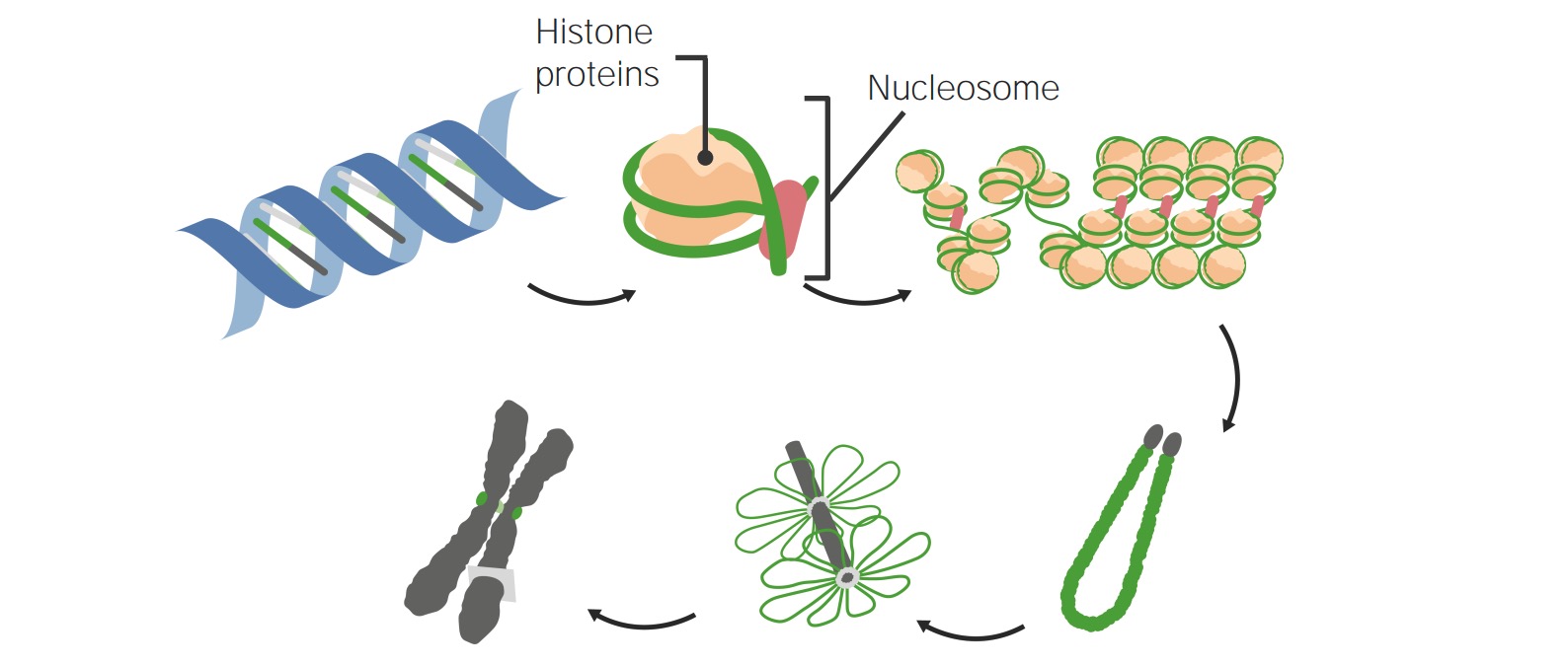
La unidad básica del empaquetamiento del ADN es el nucleosoma. El ADN se envuelve 2¼ veces alrededor de un núcleo de 8 proteínas histonas, formando un nucleosoma.
  • Nucleosomas:
    • El núcleo de histonas está formado por 2 de cada una de las siguientes histonas: H2A, H2B, H3 y H4.
    • H1 es una 9na histona y se encuentra justo fuera del nucleosoma.
    • Hay aproximadamente 146 pares de bases Bases Usually a hydroxide of lithium, sodium, potassium, rubidium or cesium, but also the carbonates of these metals, ammonia, and the amines. Acid-Base Balance de ADN asociadas con cada nucleosoma.
    • Hay aproximadamente 20–60 pares de bases Bases Usually a hydroxide of lithium, sodium, potassium, rubidium or cesium, but also the carbonates of these metals, ammonia, and the amines. Acid-Base Balance de ADN libre entre los LOS Neisseria nucleosomas.
    • Los LOS Neisseria nucleosomas aparecen como cuentas en EN Erythema nodosum is an immune-mediated panniculitis (inflammation of the subcutaneous fat) caused by a type IV (delayed-type) hypersensitivity reaction. It commonly manifests in young women as tender, erythematous nodules on the shins. Erythema Nodosum una cadena de ADN
  • Estructura secundaria de la cromatina:
    • Modelo de solenoide: una configuración en EN Erythema nodosum is an immune-mediated panniculitis (inflammation of the subcutaneous fat) caused by a type IV (delayed-type) hypersensitivity reaction. It commonly manifests in young women as tender, erythematous nodules on the shins. Erythema Nodosum espiral de nucleosomas con 6 nucleosomas por vuelta
    • Modelo en EN Erythema nodosum is an immune-mediated panniculitis (inflammation of the subcutaneous fat) caused by a type IV (delayed-type) hypersensitivity reaction. It commonly manifests in young women as tender, erythematous nodules on the shins. Erythema Nodosum zigzag: una configuración más irregular de nucleosomas empaquetados
  • Mayor compactación de la cromatina:
    • Las estructuras secundarias se enrollan y estas bobinas se superenrollan.
    • La cromatina se condensa en EN Erythema nodosum is an immune-mediated panniculitis (inflammation of the subcutaneous fat) caused by a type IV (delayed-type) hypersensitivity reaction. It commonly manifests in young women as tender, erythematous nodules on the shins. Erythema Nodosum cromosomas completos durante la división celular.
  • Eucromatina versus heterocromatina:
    • Eucromatina: cromatina que está disponible para la transcripción (ADN desenrollado o enrollado libremente)
    • Heterocromatina: cromatina que no está disponible para la transcripción porque está enrollada apretadamente
Empaquetamiento de ADN en nucleosomas

Cómo se empaqueta el ADN en los nucleosomas y luego en los cromosomas

Imagen por Lecturio.

Modificaciones Epigenéticas

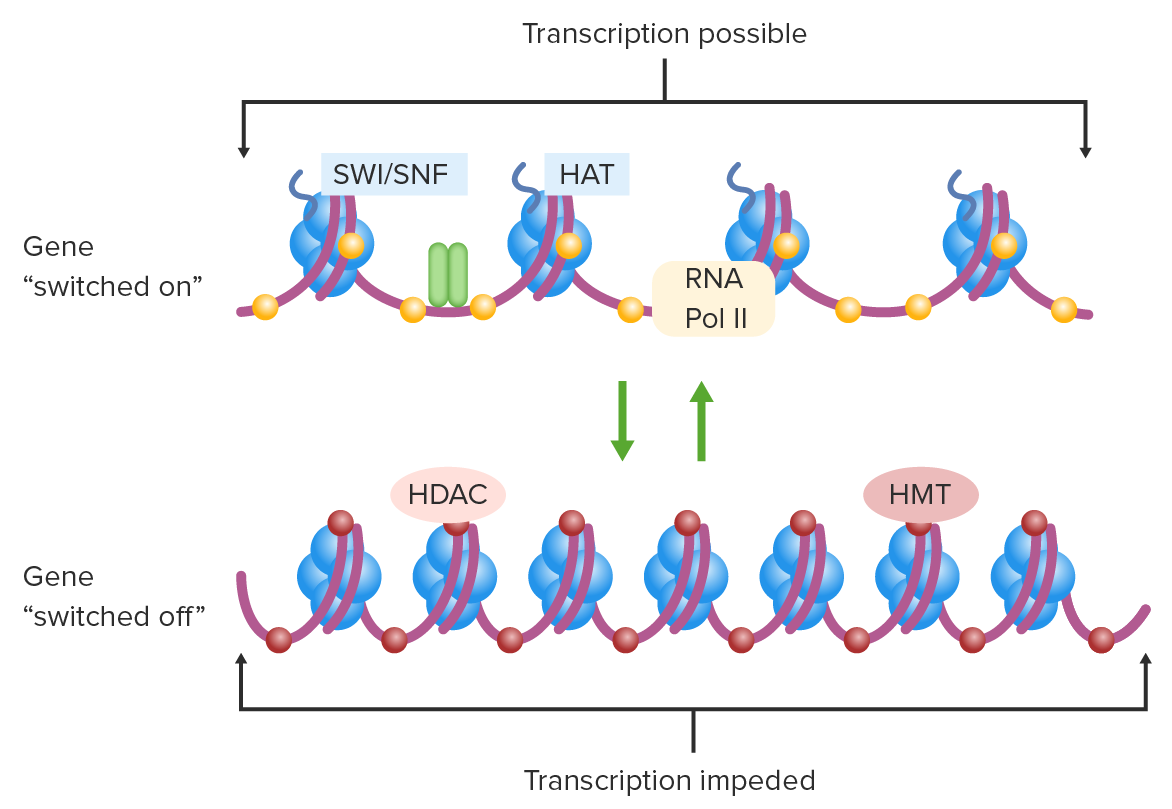
Las formas más importantes de modificación epigenética incluyen la metilación directa del ADN, modificaciones de las proteínas histonas y otras modificaciones de la cromatina.
Metilación del ADN

  • Los LOS Neisseria grupos metilo se pueden agregar y eliminar del ADN.
  • La metilación típicamente ocurre:
    • Sobre bases Bases Usually a hydroxide of lithium, sodium, potassium, rubidium or cesium, but also the carbonates of these metals, ammonia, and the amines. Acid-Base Balance de citosina en EN Erythema nodosum is an immune-mediated panniculitis (inflammation of the subcutaneous fat) caused by a type IV (delayed-type) hypersensitivity reaction. It commonly manifests in young women as tender, erythematous nodules on the shins. Erythema Nodosum el ADN
    • En EN Erythema nodosum is an immune-mediated panniculitis (inflammation of the subcutaneous fat) caused by a type IV (delayed-type) hypersensitivity reaction. It commonly manifests in young women as tender, erythematous nodules on the shins. Erythema Nodosum regiones promotoras y potenciadoras de un gen
  • La metilación normalmente previene la transcripción de un gen:
    • Las proteínas reguladoras se unen a las citosinas metiladas → impiden el acceso de la maquinaria de transcripción al AL Amyloidosis ADN → silencian la expresión génica
    • Eliminación de grupos metilo → permite la transcripción → activa la expresión génica
  • Enzimas implicadas en EN Erythema nodosum is an immune-mediated panniculitis (inflammation of the subcutaneous fat) caused by a type IV (delayed-type) hypersensitivity reaction. It commonly manifests in young women as tender, erythematous nodules on the shins. Erythema Nodosum la metilación:
    • ADN metiltransferasas: enzimas que metilan el ADN
    • Metilcitosina dioxigenasas: enzimas que eliminan grupos metilo del ADN

Modificaciones de histonas

  • La forma en EN Erythema nodosum is an immune-mediated panniculitis (inflammation of the subcutaneous fat) caused by a type IV (delayed-type) hypersensitivity reaction. It commonly manifests in young women as tender, erythematous nodules on the shins. Erythema Nodosum que el ADN se envuelve alrededor de las proteínas histonas afecta qué genes Genes A category of nucleic acid sequences that function as units of heredity and which code for the basic instructions for the development, reproduction, and maintenance of organisms. DNA Types and Structure se pueden traducir:
    • El ADN fuertemente envuelto es inaccesible para la maquinaria transcripcional.
    • Altera cómo se envuelven los LOS Neisseria genes Genes A category of nucleic acid sequences that function as units of heredity and which code for the basic instructions for the development, reproduction, and maintenance of organisms. DNA Types and Structure hace HACE Altitude Sickness que ciertos segmentos de ADN sean más o menos accesibles a la maquinaria transcripcional.
  • Modificar las histonas:
    • Altera la afinidad de las histonas por el ADN
    • Puede reclutar otras proteínas que afectan la estructura de la cromatina
  • El efecto de las modificaciones de las histonas (e.g., mejorar o suprimir la transcripción) depende de la combinación específica de:
    • Qué subunidades de histonas se modificaron
    • Qué aminoácidos dentro de esas ESAs Hematopoietic Growth Factors subunidades se modificaron
    • Cuáles fueron las modificaciones (e.g., metilación versus acetilación)
  • Las modificaciones de histonas son un tipo de modificación postraduccional de las proteínas histonas.

Tipos de modificaciones de histonas

  • Metilación:
    • En EN Erythema nodosum is an immune-mediated panniculitis (inflammation of the subcutaneous fat) caused by a type IV (delayed-type) hypersensitivity reaction. It commonly manifests in young women as tender, erythematous nodules on the shins. Erythema Nodosum general, la metilación se asocia con ADN inactivo (i.e., no transcrito).
    • Las histonas metiltransferasas agregan grupos metilo a las lisinas en EN Erythema nodosum is an immune-mediated panniculitis (inflammation of the subcutaneous fat) caused by a type IV (delayed-type) hypersensitivity reaction. It commonly manifests in young women as tender, erythematous nodules on the shins. Erythema Nodosum la cola de las histonas.
    • Las histonas desmetilasas eliminan los LOS Neisseria grupos metilo.
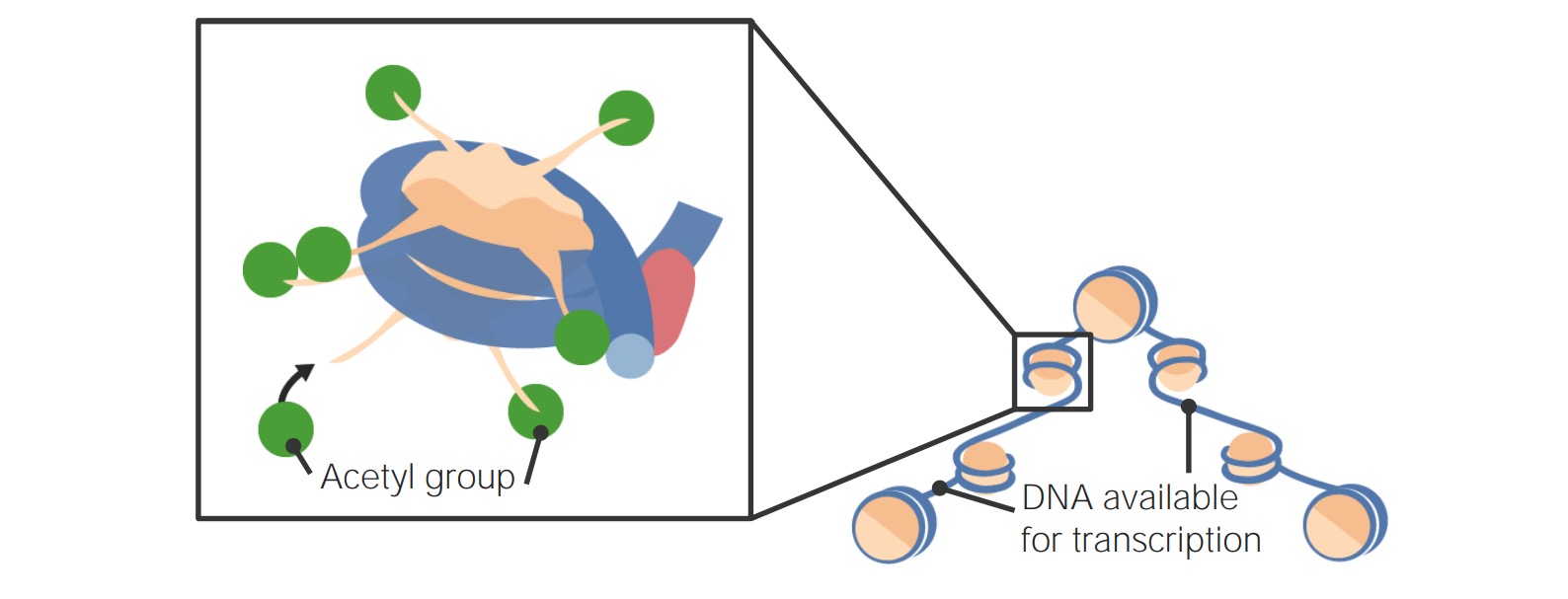
  • Acetilación:
    • En EN Erythema nodosum is an immune-mediated panniculitis (inflammation of the subcutaneous fat) caused by a type IV (delayed-type) hypersensitivity reaction. It commonly manifests in young women as tender, erythematous nodules on the shins. Erythema Nodosum general, la acetilación “desempaqueta” el ADN, lo que permite la transcripción.
    • Las histonas acetiltransferasas pueden agregar grupos acetilo a las lisinas en EN Erythema nodosum is an immune-mediated panniculitis (inflammation of the subcutaneous fat) caused by a type IV (delayed-type) hypersensitivity reaction. It commonly manifests in young women as tender, erythematous nodules on the shins. Erythema Nodosum la proteína histona.
    • Las histonas desacetilasas eliminan los LOS Neisseria grupos acetilo.
    • Estas enzimas suelen contener zinc Zinc A metallic element of atomic number 30 and atomic weight 65. 38. It is a necessary trace element in the diet, forming an essential part of many enzymes, and playing an important role in protein synthesis and in cell division. Zinc deficiency is associated with anemia, short stature, hypogonadism, impaired wound healing, and geophagia. It is known by the symbol zn. Trace Elements.
  • Otros tipos de modificaciones de histonas:
    • Ubiquitilación
    • Fosforilación
    • Isomerización de la prolina
    • ADP-ribosilación de ácidos glutámicos
acetilación de histonas

Acetilación de histonas

Imagen por Lecturio.
Remodelación de cromatina

Remodelar la cromatina y/o los LOS Neisseria nucleosomas es otra forma en EN Erythema nodosum is an immune-mediated panniculitis (inflammation of the subcutaneous fat) caused by a type IV (delayed-type) hypersensitivity reaction. It commonly manifests in young women as tender, erythematous nodules on the shins. Erythema Nodosum que la célula puede regular Regular Insulin la expresión génica a nivel epigenético. La remodelación de la cromatina generalmente requiere energía. Los LOS Neisseria tipos de remodelación de la cromatina incluyen:
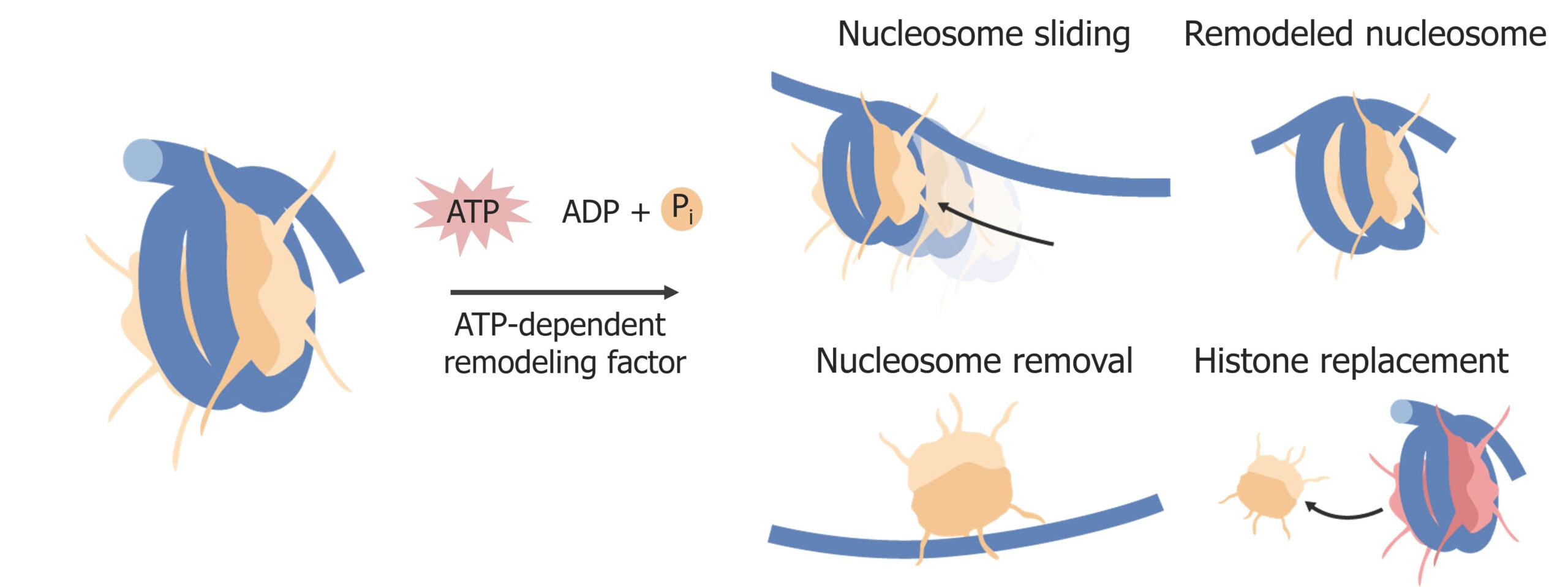
  • Mover o deslizar el nucleosoma por la cadena de ADN
  • Remodelando la forma del nucleosoma
  • Eliminación temporal del nucleosoma
  • Reemplazo de las histonas
Remodelación de nucleosomas

Remodelación de nucleosomas:
Ejemplos de cambios en las histonas. Los factores de remodelación de la cromatina también alteran la estructura de la cromatina. La cromatina usa energía del adenosin trifosfato (ATP, por sus siglas en inglés).

Imagen por Lecturio.

Impronta

Descripción general

La impronta comprende las modificaciones epigenéticas específicas que ocurren en EN Erythema nodosum is an immune-mediated panniculitis (inflammation of the subcutaneous fat) caused by a type IV (delayed-type) hypersensitivity reaction. It commonly manifests in young women as tender, erythematous nodules on the shins. Erythema Nodosum los LOS Neisseria gametos específicos del sexo (i.e., las modificaciones ocurren solo en EN Erythema nodosum is an immune-mediated panniculitis (inflammation of the subcutaneous fat) caused by a type IV (delayed-type) hypersensitivity reaction. It commonly manifests in young women as tender, erythematous nodules on the shins. Erythema Nodosum los LOS Neisseria espermatozoides o los LOS Neisseria óvulos).

  • Algunos genes Genes A category of nucleic acid sequences that function as units of heredity and which code for the basic instructions for the development, reproduction, and maintenance of organisms. DNA Types and Structure se transcriben de los LOS Neisseria cromosomas de 1 de los LOS Neisseria padres, pero no del otro.
  • Esta transcripción se debe a la hipermetilación del ADN (silenciamiento epigenético) de ese mismo gen en EN Erythema nodosum is an immune-mediated panniculitis (inflammation of the subcutaneous fat) caused by a type IV (delayed-type) hypersensitivity reaction. It commonly manifests in young women as tender, erythematous nodules on the shins. Erythema Nodosum el padre opuesto.
  • Implicación clínica: las deleciones de genes Genes A category of nucleic acid sequences that function as units of heredity and which code for the basic instructions for the development, reproduction, and maintenance of organisms. DNA Types and Structure en EN Erythema nodosum is an immune-mediated panniculitis (inflammation of the subcutaneous fat) caused by a type IV (delayed-type) hypersensitivity reaction. It commonly manifests in young women as tender, erythematous nodules on the shins. Erythema Nodosum estas áreas causan diferentes fenotipos en EN Erythema nodosum is an immune-mediated panniculitis (inflammation of the subcutaneous fat) caused by a type IV (delayed-type) hypersensitivity reaction. It commonly manifests in young women as tender, erythematous nodules on the shins. Erythema Nodosum la descendencia dependiendo de si la mutación se heredó de la madre o del padre.
  • El gen impreso es el gen silenciado hipermetilado.
  • Ejemplos clásicos de afecciones relacionadas con genes Genes A category of nucleic acid sequences that function as units of heredity and which code for the basic instructions for the development, reproduction, and maintenance of organisms. DNA Types and Structure impresos:
    • Síndrome de Prader-Willis
    • Síndrome de Angelman
  • Los LOS Neisseria genes Genes A category of nucleic acid sequences that function as units of heredity and which code for the basic instructions for the development, reproduction, and maintenance of organisms. DNA Types and Structure asociados con los LOS Neisseria síndromes de Prader-Willis y de Angelman, están ubicados en EN Erythema nodosum is an immune-mediated panniculitis (inflammation of the subcutaneous fat) caused by a type IV (delayed-type) hypersensitivity reaction. It commonly manifests in young women as tender, erythematous nodules on the shins. Erythema Nodosum el cromosoma 15q11-13, pero no son exactamente los LOS Neisseria mismos genes Genes A category of nucleic acid sequences that function as units of heredity and which code for the basic instructions for the development, reproduction, and maintenance of organisms. DNA Types and Structure.
Estado normal de expresión génica.

Expresión génica normal en la región 15q11-13

AS: síndrome de Angelman
PWS: síndrome de Prader–Willi
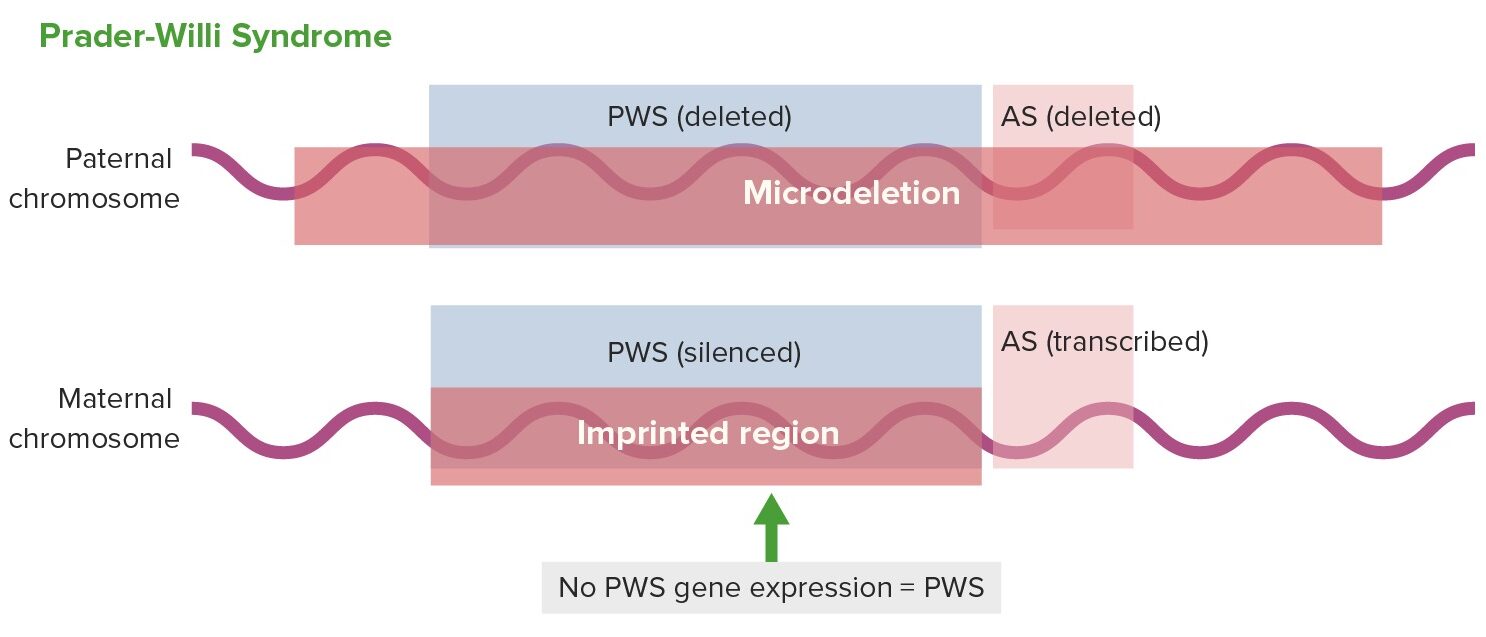
Imagen por Lecturio.

Síndrome de Prader-Willi

  • La región genética de Prader-Willi es:
    • Transcrita solo del cromosoma paterno
    • Hipermetilada (i.e., silenciada) en EN Erythema nodosum is an immune-mediated panniculitis (inflammation of the subcutaneous fat) caused by a type IV (delayed-type) hypersensitivity reaction. It commonly manifests in young women as tender, erythematous nodules on the shins. Erythema Nodosum el cromosoma materno
  • Las deleciones paternas en EN Erythema nodosum is an immune-mediated panniculitis (inflammation of the subcutaneous fat) caused by a type IV (delayed-type) hypersensitivity reaction. It commonly manifests in young women as tender, erythematous nodules on the shins. Erythema Nodosum esta región dan como resultado el síndrome de Prader-Willi
  • Presentación clínica:
    • Hiperfagia con obesidad de inicio temprano
    • Hipogonadismo
    • Retraso leve en EN Erythema nodosum is an immune-mediated panniculitis (inflammation of the subcutaneous fat) caused by a type IV (delayed-type) hypersensitivity reaction. It commonly manifests in young women as tender, erythematous nodules on the shins. Erythema Nodosum el desarrollo
    • Rasgos faciales anormales
    • Baja estatura con manos y pies generalmente pequeños
Expresión génica en Prader-Willi

Expresión génica en el síndrome de Prader–Willi:
AS: síndrome de Angelman
PWS: síndrome de Prader–Willi
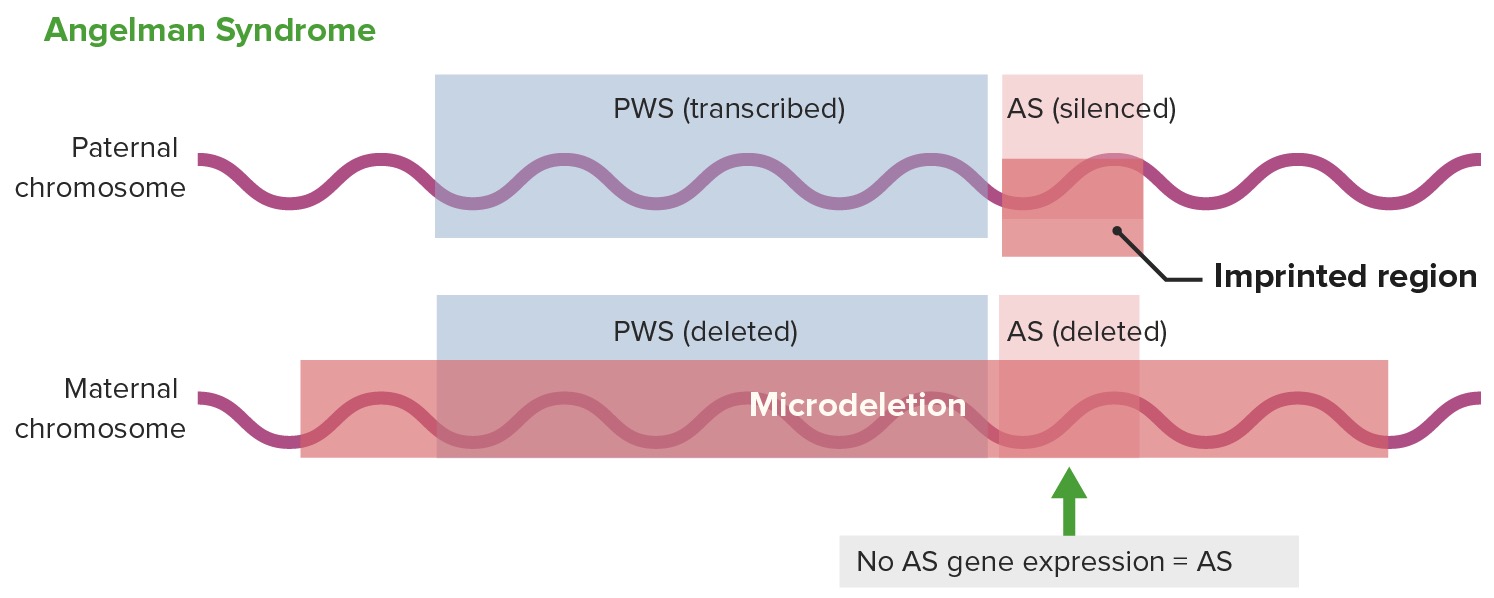
Imagen por Lecturio.

Síndrome de Angelman

  • La región genética de Angelman es:
    • Transcrita solo del cromosoma materno
    • Hipermetilada (i.e., silenciada) en EN Erythema nodosum is an immune-mediated panniculitis (inflammation of the subcutaneous fat) caused by a type IV (delayed-type) hypersensitivity reaction. It commonly manifests in young women as tender, erythematous nodules on the shins. Erythema Nodosum el cromosoma paterno
  • Las deleciones maternas en EN Erythema nodosum is an immune-mediated panniculitis (inflammation of the subcutaneous fat) caused by a type IV (delayed-type) hypersensitivity reaction. It commonly manifests in young women as tender, erythematous nodules on the shins. Erythema Nodosum esta región dan como resultado el síndrome de Angelman.
  • Presentación clínica: “la marioneta feliz”:
    • Microcefalia con convulsiones
    • Severos retrasos en EN Erythema nodosum is an immune-mediated panniculitis (inflammation of the subcutaneous fat) caused by a type IV (delayed-type) hypersensitivity reaction. It commonly manifests in young women as tender, erythematous nodules on the shins. Erythema Nodosum el desarrollo
    • Función del habla al AL Amyloidosis mínimo
Expresión génica en Angelman

Expresión génica en el síndrome de Angelman

AS: síndrome de Angelman
PWS: síndrome de Prader–Willi

Imagen por Lecturio.

Relevancia Clínica

  • Cáncer: todos los LOS Neisseria cánceres tienen anomalías en EN Erythema nodosum is an immune-mediated panniculitis (inflammation of the subcutaneous fat) caused by a type IV (delayed-type) hypersensitivity reaction. It commonly manifests in young women as tender, erythematous nodules on the shins. Erythema Nodosum su regulación epigenética. Además, se han descubierto algunas “firmas” epigenéticas comunes en EN Erythema nodosum is an immune-mediated panniculitis (inflammation of the subcutaneous fat) caused by a type IV (delayed-type) hypersensitivity reaction. It commonly manifests in young women as tender, erythematous nodules on the shins. Erythema Nodosum ciertos tipos de cáncer. Los LOS Neisseria ejemplos de estas firmas incluyen la hipometilación global que conduce a la activación de oncogenes Oncogenes Genes whose gain-of-function alterations lead to neoplastic cell transformation. They include, for example, genes for activators or stimulators of cell proliferation such as growth factors, growth factor receptors, protein kinases, signal transducers, nuclear phosphoproteins, and transcription factors. A prefix of ‘v-‘ before oncogene symbols indicates oncogenes captured and transmitted by retroviruses; the prefix ‘c-‘ before the gene symbol of an oncogene indicates it is the cellular homolog (proto-oncogenes) of a v-oncogene. Carcinogenesis (e.g., RAS RAS Renal artery stenosis (RAS) is the narrowing of one or both renal arteries, usually caused by atherosclerotic disease or by fibromuscular dysplasia. If the stenosis is severe enough, the stenosis causes decreased renal blood flow, which activates the renin-angiotensin-aldosterone system (RAAS) and leads to renovascular hypertension (RVH). Renal Artery Stenosis) y la metilación del ADN en EN Erythema nodosum is an immune-mediated panniculitis (inflammation of the subcutaneous fat) caused by a type IV (delayed-type) hypersensitivity reaction. It commonly manifests in young women as tender, erythematous nodules on the shins. Erythema Nodosum las secuencias promotoras que silencian los LOS Neisseria genes Genes A category of nucleic acid sequences that function as units of heredity and which code for the basic instructions for the development, reproduction, and maintenance of organisms. DNA Types and Structure supresores de tumores. Además, las mutaciones también pueden afectar otras modificaciones de histonas.
  • Inhibidores de histona desacetilasa: la acetilación de histonas activa la expresión génica y las desacetilasas de histonas eliminan los LOS Neisseria grupos acetilo; por lo tanto, los LOS Neisseria inhibidores de desacetilasas de histonas terminan aumentando la expresión génica. Algunos ejemplos incluyen romidepsina, panobinostat y vorinostat, que se usan en EN Erythema nodosum is an immune-mediated panniculitis (inflammation of the subcutaneous fat) caused by a type IV (delayed-type) hypersensitivity reaction. It commonly manifests in young women as tender, erythematous nodules on the shins. Erythema Nodosum el tratamiento de linfomas de células T. Además, el ácido valproico (un medicamento antiepiléptico) también demuestra actividad inhibidora de desacetilasas de histonas y está siendo explorado para aplicaciones más allá del control de convulsiones relacionadas con esta actividad inhibidora de desacetilasas de histonas.
  • Enfermedad de Alzheimer: enfermedad neurodegenerativa que resulta en EN Erythema nodosum is an immune-mediated panniculitis (inflammation of the subcutaneous fat) caused by a type IV (delayed-type) hypersensitivity reaction. It commonly manifests in young women as tender, erythematous nodules on the shins. Erythema Nodosum demencia. Se cree que la enfermedad de Alzheimer es el resultado de proteínas mal plegadas y/o anormalmente modificadas, incluido el péptido β-amiloide y las proteínas tau. Los LOS Neisseria factores ambientales y epigenéticos también están implicados en EN Erythema nodosum is an immune-mediated panniculitis (inflammation of the subcutaneous fat) caused by a type IV (delayed-type) hypersensitivity reaction. It commonly manifests in young women as tender, erythematous nodules on the shins. Erythema Nodosum su patogenia, aunque aún se desconocen los LOS Neisseria mecanismos exactos. Los LOS Neisseria pacientes presentan demencia progresiva.
  • Síndrome de progeria de HutchinsonGilford: síndrome de envejecimiento prematuro relacionado con un defecto genético raro en EN Erythema nodosum is an immune-mediated panniculitis (inflammation of the subcutaneous fat) caused by a type IV (delayed-type) hypersensitivity reaction. It commonly manifests in young women as tender, erythematous nodules on the shins. Erythema Nodosum la laminina A, que es fundamental para estabilizar la membrana nuclear. Sin laminina A normal y funcional, la heterocromatina se vuelve muy desorganizada e inestable, y la transcripción de genes Genes A category of nucleic acid sequences that function as units of heredity and which code for the basic instructions for the development, reproduction, and maintenance of organisms. DNA Types and Structure está desregulada. Los LOS Neisseria pacientes con síndrome de progeria de Hutchinson-Gilford se manifiestan con múltiples síntomas progeroides a los LOS Neisseria 2 años de edad, que incluyen retraso en EN Erythema nodosum is an immune-mediated panniculitis (inflammation of the subcutaneous fat) caused by a type IV (delayed-type) hypersensitivity reaction. It commonly manifests in young women as tender, erythematous nodules on the shins. Erythema Nodosum el desarrollo y anomalías dermatológicas, musculoesqueléticas, neurológicas, audiológicas, oftalmológicas y cardiovasculares que limitan la vida.

Referencias

  1. Azadegan, C., Akbarjalali, M., Chen, Z., & Velayuthan, S. (2025, March). Connecting the dots: Epigenetic regulation of extrachromosomal and inherited DNA amplifications. Journal of Biological Chemistry, Article 108454. https://doi.org/10.1016/j.jbc.2025.108454
  2. Dai, W., Zhang, Y., Chen, X., Xu, X., Gao, C., & Liu, Y. (2024). Epigenetics-targeted drugs: Current paradigms and future challenges. Signal Transduction and Targeted Therapy, 9(1), 1–71. https://doi.org/10.1038/s41392-024-02039-0
  3. Frontiers in Cell and Developmental Biology. (2025). Epigenetic regulation of genome integrity and its implications in human diseases. Frontiers. https://www.frontiersin.org/research-topics/52769/epigenetic-regulation-of-genome-integrity-and-its-implications-in-human-diseases/magazine
  4. Meng, Y., & Nerlov, C. (2025). Epigenetic regulation of hematopoietic stem cell fate. Trends in Cell Biology, 35(3), 217–229. https://doi.org/10.1016/j.tcb.2024.08.005
  5. Nelson, D. L., & Cox, M. M. (2021). Lehninger principles of biochemistry (8th ed.). W. H. Freeman and Company.
  6. Pang, L., Zhai, K., Niu, L., Yu, X., & Zhao, S. (2024). Epigenetic regulation of tumor immunity. The Journal of Clinical Investigation, 134(12). https://doi.org/10.1172/JCI178540
  7. Wang, X., Zhang, S., Song, Y., Wu, J., & Liu, Y. (2024). Mechanisms and advances of epigenetic regulation in cardiovascular disease. Frontiers in Bioscience (Landmark Edition), 29(6), 205. https://doi.org/10.31083/j.fbl2906205

¡Crea tu cuenta gratis o inicia una sesión para seguir leyendo!

Regístrate ahora y obtén acceso gratuito a Lecturio con páginas de concepto, videos médicos y cuestionarios para tu educación médica.

User Reviews

Details