
Domina Conceptos Médicos

Estudia para la escuela de medicina y tus examenes con Lecturio.

Trastornos Barométricos

Los LOS Neisseria trastornos barométricos son un espectro de síntomas causados por cambios fisiológicos en EN Erythema nodosum is an immune-mediated panniculitis (inflammation of the subcutaneous fat) caused by a type IV (delayed-type) hypersensitivity reaction. It commonly manifests in young women as tender, erythematous nodules on the shins. Erythema Nodosum el cuerpo humano a altitudes superiores a los LOS Neisseria 2 500 m. Los LOS Neisseria trastornos barométricos incluyen el mal agudo de montaña, el edema Edema Edema is a condition in which excess serous fluid accumulates in the body cavity or interstitial space of connective tissues. Edema is a symptom observed in several medical conditions. It can be categorized into 2 types, namely, peripheral (in the extremities) and internal (in an organ or body cavity). Edema cerebral de altura y el edema Edema Edema is a condition in which excess serous fluid accumulates in the body cavity or interstitial space of connective tissues. Edema is a symptom observed in several medical conditions. It can be categorized into 2 types, namely, peripheral (in the extremities) and internal (in an organ or body cavity). Edema pulmonar de altura. La hipoxia hipobárica es un desencadenante fisiopatológico común. El mal agudo de montaña y el edema Edema Edema is a condition in which excess serous fluid accumulates in the body cavity or interstitial space of connective tissues. Edema is a symptom observed in several medical conditions. It can be categorized into 2 types, namely, peripheral (in the extremities) and internal (in an organ or body cavity). Edema cerebral de altura representan 2 extremos de un trastorno neurológico, desde el benigno hasta el que pone en EN Erythema nodosum is an immune-mediated panniculitis (inflammation of the subcutaneous fat) caused by a type IV (delayed-type) hypersensitivity reaction. It commonly manifests in young women as tender, erythematous nodules on the shins. Erythema Nodosum peligro la vida. El edema Edema Edema is a condition in which excess serous fluid accumulates in the body cavity or interstitial space of connective tissues. Edema is a symptom observed in several medical conditions. It can be categorized into 2 types, namely, peripheral (in the extremities) and internal (in an organ or body cavity). Edema pulmonar de altura es principalmente un problema pulmonar, no necesariamente precedido del mal agudo de montaña o de edema Edema Edema is a condition in which excess serous fluid accumulates in the body cavity or interstitial space of connective tissues. Edema is a symptom observed in several medical conditions. It can be categorized into 2 types, namely, peripheral (in the extremities) and internal (in an organ or body cavity). Edema cerebral de altura El riesgo de trastornos barométricos puede reducirse mediante el ascenso gradual y otras medidas de precaución, incluyendo el uso de medicamentos. Los LOS Neisseria síntomas del trastorno barométrico pueden reducirse con la oxigenoterapia hiperbárica.

Last updated: Dec 15, 2025

Editorial responsibility: Stanley Oiseth, Lindsay Jones, Evelin Maza

Mal Agudo de Montaña y Edema Cerebral de Altura

Definiciones

  • Mal agudo de montaña: síndrome neurológico sin hallazgos físicos que se produce > 6 horas después de ascender a altitudes > 2 500 m (raramente, 1 500 m)
  • Edema Edema Edema is a condition in which excess serous fluid accumulates in the body cavity or interstitial space of connective tissues. Edema is a symptom observed in several medical conditions. It can be categorized into 2 types, namely, peripheral (in the extremities) and internal (in an organ or body cavity). Edema cerebral de altura: encefalopatía difusa sin déficits neurológicos focales, siempre precedida de mal agudo de montaña

Epidemiología

  • Dado que el mal agudo de montaña se convierte en EN Erythema nodosum is an immune-mediated panniculitis (inflammation of the subcutaneous fat) caused by a type IV (delayed-type) hypersensitivity reaction. It commonly manifests in young women as tender, erythematous nodules on the shins. Erythema Nodosum edema Edema Edema is a condition in which excess serous fluid accumulates in the body cavity or interstitial space of connective tissues. Edema is a symptom observed in several medical conditions. It can be categorized into 2 types, namely, peripheral (in the extremities) and internal (in an organ or body cavity). Edema cerebral de altura, los LOS Neisseria factores epidemiológicos son los LOS Neisseria mismos.
  • Prevalencia: 40%–90% según la altitud
  • Factores de riesgo:
    • Antecedentes de trastornos barométricos
    • Velocidad de ascenso
    • Esfuerzo (la falta de aptitud física no es un factor de riesgo)
    • Radiación del cuello o cirugía con daño a los LOS Neisseria cuerpos carotídeos
    • Edad > 50 años reduce el riesgo.

Etiología

Toda la sintomatología del mal agudo de montaña y el edema Edema Edema is a condition in which excess serous fluid accumulates in the body cavity or interstitial space of connective tissues. Edema is a symptom observed in several medical conditions. It can be categorized into 2 types, namely, peripheral (in the extremities) and internal (in an organ or body cavity). Edema cerebral de altura está relacionada con la hipoxia. El sistema nervioso central (SNC) es el órgano más sensible a la hipoxia.
Presentación clínica

  • Mal agudo de montaña:
    • Síntomas:
      • Cefalea (el más común)
      • Náuseas
      • Fatiga
      • Mareo
      • Insomnio
    • Generalmente, no hay alteraciones en EN Erythema nodosum is an immune-mediated panniculitis (inflammation of the subcutaneous fat) caused by a type IV (delayed-type) hypersensitivity reaction. It commonly manifests in young women as tender, erythematous nodules on the shins. Erythema Nodosum el examen físico.
  • Edema Edema Edema is a condition in which excess serous fluid accumulates in the body cavity or interstitial space of connective tissues. Edema is a symptom observed in several medical conditions. It can be categorized into 2 types, namely, peripheral (in the extremities) and internal (in an organ or body cavity). Edema cerebral de altura:
    • Síntomas y signos:
      • Ataxia Ataxia Impairment of the ability to perform smoothly coordinated voluntary movements. This condition may affect the limbs, trunk, eyes, pharynx, larynx, and other structures. Ataxia may result from impaired sensory or motor function. Sensory ataxia may result from posterior column injury or peripheral nerve diseases. Motor ataxia may be associated with cerebellar diseases; cerebral cortex diseases; thalamic diseases; basal ganglia diseases; injury to the red nucleus; and other conditions. Ataxia-telangiectasia
      • Alteración del nivel de conciencia
    • Hallazgos del examen físico:
      • Papiledema
      • ± Hemorragia retiniana
      • No hay hallazgos neurológicos focales

Fisiopatología

  • El mecanismo exacto no se conoce bien.
  • Mal agudo de montaña:
    • Grandes alturas → disminución de la presión parcial de oxígeno en EN Erythema nodosum is an immune-mediated panniculitis (inflammation of the subcutaneous fat) caused by a type IV (delayed-type) hypersensitivity reaction. It commonly manifests in young women as tender, erythematous nodules on the shins. Erythema Nodosum el gas inspirado (hipoxia hipobárica)
    • Hipoxia hipobárica → baja saturación arterial de oxígeno (SaO2 es < 90%).
    • Baja SaO2 → aumento del flujo sanguíneo cerebral:
      • Aumento de la presión intracraneal
      • Aumento de la actividad simpática
      • Hipoventilación
      • Retención de líquidos
      • Deterioro adicional del intercambio gaseoso
  • Edema Edema Edema is a condition in which excess serous fluid accumulates in the body cavity or interstitial space of connective tissues. Edema is a symptom observed in several medical conditions. It can be categorized into 2 types, namely, peripheral (in the extremities) and internal (in an organ or body cavity). Edema cerebral de altura:
    • Como en EN Erythema nodosum is an immune-mediated panniculitis (inflammation of the subcutaneous fat) caused by a type IV (delayed-type) hypersensitivity reaction. It commonly manifests in young women as tender, erythematous nodules on the shins. Erythema Nodosum el caso anterior, pero la inflamación progresa, dando lugar a un edema Edema Edema is a condition in which excess serous fluid accumulates in the body cavity or interstitial space of connective tissues. Edema is a symptom observed in several medical conditions. It can be categorized into 2 types, namely, peripheral (in the extremities) and internal (in an organ or body cavity). Edema cerebral vasogénico
    • El edema Edema Edema is a condition in which excess serous fluid accumulates in the body cavity or interstitial space of connective tissues. Edema is a symptom observed in several medical conditions. It can be categorized into 2 types, namely, peripheral (in the extremities) and internal (in an organ or body cavity). Edema ejerce presión sobre el cerebro, lo que provoca:
      • Papiledema
      • Síntomas neurológicos difusos
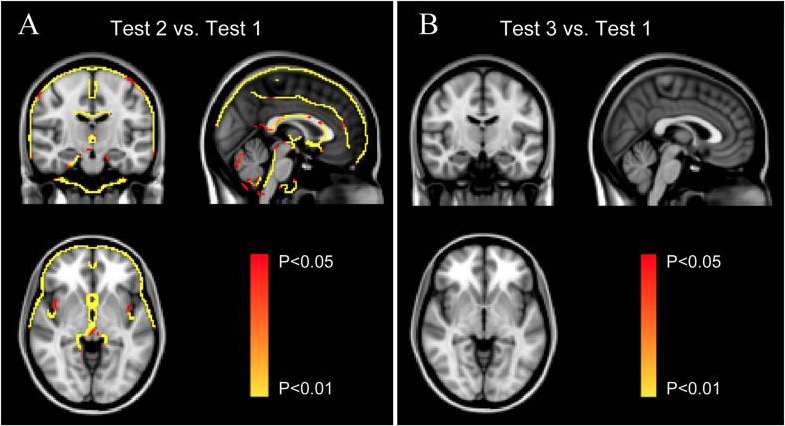
Anomalías cerebrales reversibles en personas sin signos de mal de montaña durante la exposición a gran altitud

Flujo morfométrico significativo que indica un aumento del volumen cerebral durante la exposición a grandes alturas (prueba 2A) y 2 meses después de volver al nivel del mar (prueba 3B) en comparación con la línea basal antes del ascenso a grandes alturas (prueba 1)

Imagen: “Reversible Brain Abnormalities in People Without Signs of Mountain Sickness During High-Altitude Exposure” por Cunxiu Fan et al. Licencia: CC BY 4.0

Diagnóstico

Tanto el mal agudo de montaña como el edema Edema Edema is a condition in which excess serous fluid accumulates in the body cavity or interstitial space of connective tissues. Edema is a symptom observed in several medical conditions. It can be categorized into 2 types, namely, peripheral (in the extremities) and internal (in an organ or body cavity). Edema cerebral de altura se diagnostican clínicamente observando los LOS Neisseria síntomas característicos en EN Erythema nodosum is an immune-mediated panniculitis (inflammation of the subcutaneous fat) caused by a type IV (delayed-type) hypersensitivity reaction. It commonly manifests in young women as tender, erythematous nodules on the shins. Erythema Nodosum un paciente que asciende a gran altura.

  • La oximetría de pulso, los LOS Neisseria signos vitales y los LOS Neisseria exámenes de laboratorio no son marcadores útiles, ya que suelen ser normales.
  • Los LOS Neisseria ensayos clínicos suelen utilizar la escala 2018 Lake Louise AMS AMS Neurologic syndrome with no physical findings occurring > 6 hours after ascent to altitudes > 2,500 m (rarely, 1,500 m) Altitude Sickness para el mal agudo de montaña en EN Erythema nodosum is an immune-mediated panniculitis (inflammation of the subcutaneous fat) caused by a type IV (delayed-type) hypersensitivity reaction. It commonly manifests in young women as tender, erythematous nodules on the shins. Erythema Nodosum el diagnóstico:
    • Una puntuación de ≥ 3, incluyendo la cefalea, se considera diagnóstica de mal agudo de montaña.
    • No se utiliza de forma rutinaria para el diagnóstico ambulatorio, pero las escalas como la Lake Louise AMS AMS Neurologic syndrome with no physical findings occurring > 6 hours after ascent to altitudes > 2,500 m (rarely, 1,500 m) Altitude Sickness pueden ser útiles para el tamizaje
Tabla: Autocuestionario 2018 Lake Louise
Cefalea
  • No hay cefalea: 0
  • Cefalea leve: 1
  • Cefalea moderada: 2
  • Cefalea intensa, incapacitante: 3
Síntomas gastrointestinales
  • No hay síntomas: 0
  • Falta de apetito o náuseas: 1
  • Náuseas o vómitos moderados: 2
  • Náuseas y vómitos severos, incapacitantes: 3
Fatiga/debilidad
  • No está cansado ni débil en EN Erythema nodosum is an immune-mediated panniculitis (inflammation of the subcutaneous fat) caused by a type IV (delayed-type) hypersensitivity reaction. It commonly manifests in young women as tender, erythematous nodules on the shins. Erythema Nodosum absoluto: 0
  • Fatiga o debilidad leve: 1
  • Fatiga o debilidad moderada: 2
  • Fatiga o debilidad severa, incapacitante: 3
Mareo/aturdimiento
  • No hay mareo/aturdimiento: 0
  • Mareo/aturdimiento leve: 1
  • Mareo/aturdimiento moderado: 2
  • Mareo/aturdimiento severo, incapacitante: 3
Puntuación funcional clínica del mal agudo de montaña: en EN Erythema nodosum is an immune-mediated panniculitis (inflammation of the subcutaneous fat) caused by a type IV (delayed-type) hypersensitivity reaction. It commonly manifests in young women as tender, erythematous nodules on the shins. Erythema Nodosum general, si tuvo síntomas de mal agudo de montaña, ¿cómo afectaron a sus actividades?
  • En EN Erythema nodosum is an immune-mediated panniculitis (inflammation of the subcutaneous fat) caused by a type IV (delayed-type) hypersensitivity reaction. It commonly manifests in young women as tender, erythematous nodules on the shins. Erythema Nodosum absoluto: 0
  • Los LOS Neisseria síntomas están presentes, pero no motivaron un cambio de actividad o de itinerario: 1
  • Mis síntomas me obligaron a detener el ascenso o a bajar por mis propios medios: 2
  • Tuve que ser evacuado a una altitud inferior: 3
Una puntuación de 3 o más es sugestiva de mal agudo de montaña. Esta puntuación se utiliza más para la investigación clínica que para el diagnóstico por los médicos.

Prevención

  • Lo mejor es el ascenso gradual.
  • Pasar 1 noche en EN Erythema nodosum is an immune-mediated panniculitis (inflammation of the subcutaneous fat) caused by a type IV (delayed-type) hypersensitivity reaction. It commonly manifests in young women as tender, erythematous nodules on the shins. Erythema Nodosum una altitud intermedia antes de ascender a las más altas
  • Hidratación adecuada, pero no excesiva
  • Acetazolamida para pacientes con antecedentes de mal agudo de montaña o cuando sea necesario un descenso rápido (e.g., misiones de rescate)

Tratamiento

  • Mal agudo de montaña:
    • Leve:
      • Interrumpir el ascenso.
      • Descanso.
      • Inhibidores de la anhidrasa carbónica (acetazolamida)
      • El tratamiento final es el descenso.
    • Moderado:
      • Descenso inmediato
      • Oxígeno suplementario
      • Acetazolamida y/o dexametasona
      • Terapia hiperbárica
  • Edema Edema Edema is a condition in which excess serous fluid accumulates in the body cavity or interstitial space of connective tissues. Edema is a symptom observed in several medical conditions. It can be categorized into 2 types, namely, peripheral (in the extremities) and internal (in an organ or body cavity). Edema cerebral de altura:
    • Descenso inmediato
    • Cámara hiperbárica portátil (cuando no es posible el descenso)
    • Oxígeno suplementario
    • Dexametasona

Edema Pulmonar de Altura

Definición

El edema Edema Edema is a condition in which excess serous fluid accumulates in the body cavity or interstitial space of connective tissues. Edema is a symptom observed in several medical conditions. It can be categorized into 2 types, namely, peripheral (in the extremities) and internal (in an organ or body cavity). Edema pulmonar de altura es un edema Edema Edema is a condition in which excess serous fluid accumulates in the body cavity or interstitial space of connective tissues. Edema is a symptom observed in several medical conditions. It can be categorized into 2 types, namely, peripheral (in the extremities) and internal (in an organ or body cavity). Edema pulmonar no cardiogénico (presión de enclavamiento capilar normal) que se produce entre 2–4 días después de la llegada a grandes alturas.
Epidemiología

  • La incidencia oscila entre el 0,01%–15,5% en EN Erythema nodosum is an immune-mediated panniculitis (inflammation of the subcutaneous fat) caused by a type IV (delayed-type) hypersensitivity reaction. It commonly manifests in young women as tender, erythematous nodules on the shins. Erythema Nodosum función de la altitud.
  • Factores de riesgo:
    • Antecedentes de edema Edema Edema is a condition in which excess serous fluid accumulates in the body cavity or interstitial space of connective tissues. Edema is a symptom observed in several medical conditions. It can be categorized into 2 types, namely, peripheral (in the extremities) and internal (in an organ or body cavity). Edema pulmonar de altura
    • Ascenso rápido
    • Infección de las vías respiratorias
    • Temperaturas frías
    • Ejercicio
    • Anomalías cardiopulmonares preexistentes que provocan hipertensión pulmonar

Fisiopatología

  • Hipoxia hipobárica de grandes alturas → disminución del óxido nítrico y aumento de la endotelina 1 en EN Erythema nodosum is an immune-mediated panniculitis (inflammation of the subcutaneous fat) caused by a type IV (delayed-type) hypersensitivity reaction. It commonly manifests in young women as tender, erythematous nodules on the shins. Erythema Nodosum la vasculatura pulmonar causando vasoconstricción
  • Vasoconstricción pulmonar parcheada → sobreperfusión y aumento de la presión capilar
  • Aumento de la presión capilar pulmonar → fuga de líquido intersticial → edema Edema Edema is a condition in which excess serous fluid accumulates in the body cavity or interstitial space of connective tissues. Edema is a symptom observed in several medical conditions. It can be categorized into 2 types, namely, peripheral (in the extremities) and internal (in an organ or body cavity). Edema pulmonar de altura

Presentación clínica

  • Síntomas:
    • Tos TOS Thoracic outlet syndrome (TOS) is a broad term used for a spectrum of syndromes related to the general region of the thoracic outlet, which involves the compression or irritation of elements of the brachial plexus, subclavian artery, or subclavian vein. Thoracic Outlet Syndrome (la más común, pero inespecífica)
    • Hemoptisis
    • Fatiga
    • Disnea en EN Erythema nodosum is an immune-mediated panniculitis (inflammation of the subcutaneous fat) caused by a type IV (delayed-type) hypersensitivity reaction. It commonly manifests in young women as tender, erythematous nodules on the shins. Erythema Nodosum reposo
  • Signos:
    • Taquipnea y taquicardia, especialmente en EN Erythema nodosum is an immune-mediated panniculitis (inflammation of the subcutaneous fat) caused by a type IV (delayed-type) hypersensitivity reaction. It commonly manifests in young women as tender, erythematous nodules on the shins. Erythema Nodosum reposo (marcadores importantes)
    • Crepitantes en EN Erythema nodosum is an immune-mediated panniculitis (inflammation of the subcutaneous fat) caused by a type IV (delayed-type) hypersensitivity reaction. It commonly manifests in young women as tender, erythematous nodules on the shins. Erythema Nodosum la auscultación pulmonar
    • Signos de edema Edema Edema is a condition in which excess serous fluid accumulates in the body cavity or interstitial space of connective tissues. Edema is a symptom observed in several medical conditions. It can be categorized into 2 types, namely, peripheral (in the extremities) and internal (in an organ or body cavity). Edema cerebral de altura

Diagnóstico

  • El diagnóstico es principalmente clínico; requiere:
    • 2 o más de los LOS Neisseria siguientes síntomas:
      • Opresión o dolor Dolor Inflammation torácico
      • Tos TOS Thoracic outlet syndrome (TOS) is a broad term used for a spectrum of syndromes related to the general region of the thoracic outlet, which involves the compression or irritation of elements of the brachial plexus, subclavian artery, or subclavian vein. Thoracic Outlet Syndrome
      • Disnea en EN Erythema nodosum is an immune-mediated panniculitis (inflammation of the subcutaneous fat) caused by a type IV (delayed-type) hypersensitivity reaction. It commonly manifests in young women as tender, erythematous nodules on the shins. Erythema Nodosum reposo
      • Disminución de la tolerancia al AL Amyloidosis ejercicio
    • 2 o más de los LOS Neisseria siguientes hallazgos al AL Amyloidosis examen físico:
      • Cianosis central
      • Crepitantes/sibilancias
      • Taquicardia
      • Taquipnea
  • La imagenología y los LOS Neisseria análisis de laboratorio apoyan el diagnóstico:
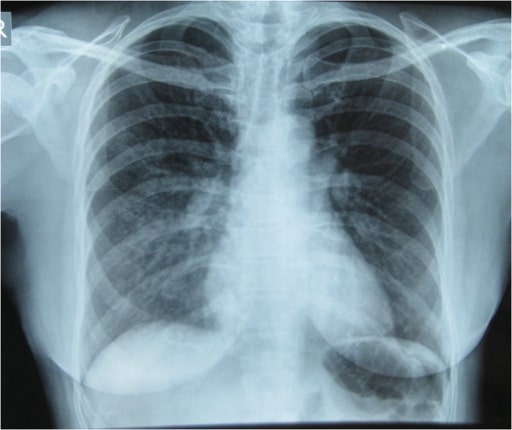
    • Radiografía de tórax: opacidades parcheadas/localizadas y/o edema Edema Edema is a condition in which excess serous fluid accumulates in the body cavity or interstitial space of connective tissues. Edema is a symptom observed in several medical conditions. It can be categorized into 2 types, namely, peripheral (in the extremities) and internal (in an organ or body cavity). Edema intersticial veteado
    • Electrocardiograma ( ECG ECG An electrocardiogram (ECG) is a graphic representation of the electrical activity of the heart plotted against time. Adhesive electrodes are affixed to the skin surface allowing measurement of cardiac impulses from many angles. The ECG provides 3-dimensional information about the conduction system of the heart, the myocardium, and other cardiac structures. Electrocardiogram (ECG)): sobrecarga del ventrículo derecho y /o hipertrofia
    • Pruebas de laboratorio: hipoxia, alcalosis respiratoria (a menos que se haya administrado acetazolamida)
    • Ultrasonido: hallazgos consistentes con edema Edema Edema is a condition in which excess serous fluid accumulates in the body cavity or interstitial space of connective tissues. Edema is a symptom observed in several medical conditions. It can be categorized into 2 types, namely, peripheral (in the extremities) and internal (in an organ or body cavity). Edema pulmonar
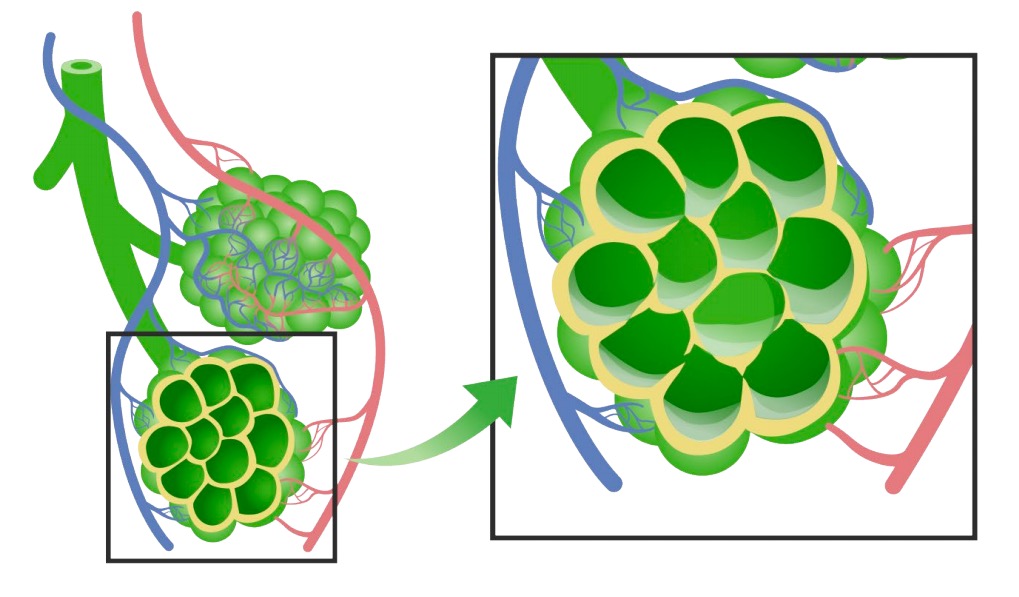
Diagrama del edema pulmonar

Diagrama del edema pulmonar: en el edema pulmonar de altura, los alvéolos se llenan de líquido, interrumpiendo el intercambio gaseoso adecuado.

Imagen por Lecturio.
Prevención

  • Lo mejor es el ascenso gradual.
  • Pacientes con antecedentes de edema Edema Edema is a condition in which excess serous fluid accumulates in the body cavity or interstitial space of connective tissues. Edema is a symptom observed in several medical conditions. It can be categorized into 2 types, namely, peripheral (in the extremities) and internal (in an organ or body cavity). Edema pulmonar de altura o cuando sea necesario un descenso rápido (e.g., misiones de rescate):
    • Nifedipino de liberación prolongada
    • Salmeterol Salmeterol Asthma Drugs
    • Tadalafil Tadalafil A carboline derivative and phosphodiesterase 5 inhibitor that is used primarily to treat erectile dysfunction; benign prostatic hyperplasia and primary pulmonary hypertension. Phosphodiesterase Inhibitors
    • Dexametasona

Tratamiento

  • Descenso inmediato
  • Cámara hiperbárica portátil (cuando no es posible el descenso)
  • Descanso y temperaturas cálidas
  • Terapia con oxígeno para alcanzar > 90% de saturación
  • Nifedipino de liberación prolongada

Referencias

  1. Centers for Disease Control and Prevention. (2024). High elevation travel and altitude illness. In CDC Yellow Book 2024: Health Information for International Travel. Oxford University Press. Retrieved from https://wwwnc.cdc.gov/travel/yellowbook/2024/environmental-hazards-risks/high-elevation-travel-and-altitude-illness
  2. Hackett, P. H., & Davis, C. B. (2016). High-altitude disorders. In J. E. Tintinalli, J. S. Stapczynski, O. J. Ma, D. M. Yealy, G. D. Meckler, & D. M. Cline (Eds.), Tintinalli’s emergency medicine: A comprehensive study guide, (8e). New York, NY: McGraw-Hill Education. accessmedicine.mhmedical.com/content.aspx?aid=1121514038
  3. Roach, R. C. et al. (2018). The 2018 Lake Louise acute mountain sickness score. High Altitude Medicine & Biology, 19(1), 4–6. https://doi.org/10.1089/ham.2017.0164
  4. Luks, A. M., Swenson, E. R., & Bärtsch, P. (2017). Acute high-altitude sickness. European Respiratory Review, 26(143). https://doi.org/10.1183/16000617.0096-2016

¡Crea tu cuenta gratis o inicia una sesión para seguir leyendo!

Regístrate ahora y obtén acceso gratuito a Lecturio con páginas de concepto, videos médicos y cuestionarios para tu educación médica.

User Reviews

Que tengas una sesión de estudio alegre y navideña 🎁 Ahorra 50% en todos los planes >>

Details