Domina Conceptos Médicos

Estudia para la escuela de medicina y tus examenes con Lecturio.

Hernias Diafragmáticas Congénitas

Las hernias diafragmáticas congénitas son defectos embrionarios del diafragma a través de los LOS Neisseria cuales las estructuras abdominales pueden pasar a la cavidad torácica. La presencia de intestinos y órganos intraabdominales en EN Erythema nodosum is an immune-mediated panniculitis (inflammation of the subcutaneous fat) caused by a type IV (delayed-type) hypersensitivity reaction. It commonly manifests in young women as tender, erythematous nodules on the shins. Erythema Nodosum el tórax interfiere en EN Erythema nodosum is an immune-mediated panniculitis (inflammation of the subcutaneous fat) caused by a type IV (delayed-type) hypersensitivity reaction. It commonly manifests in young women as tender, erythematous nodules on the shins. Erythema Nodosum el desarrollo embrionario de los LOS Neisseria pulmones, que es la principal causa de patología postnatal. El diagnóstico prenatal suele realizarse mediante un ultrasonido durante el embarazo, seguido de una confirmación con radiografía de tórax después del nacimiento. Se requiere una reanimación respiratoria inmediata al AL Amyloidosis nacer con intubación endotraqueal y ventilación mecánica. La reparación quirúrgica es la única opción curativa. El pronóstico varía, pero los LOS Neisseria niños con hernias diafragmáticas generalmente sufren complicaciones pulmonares de por vida.

Last updated: Dec 15, 2025

Editorial responsibility: Stanley Oiseth, Lindsay Jones, Evelin Maza

Descripción General

Definición

  • Comunicación anormal entre las cavidades abdominal y torácica a través de un defecto diafragmático
  • Surge debido a que los LOS Neisseria pliegues pleuroperitoneales no se fusionan durante el desarrollo embrionario

Epidemiología

  • Incidencia: 1 de cada 3 300 nacidos vivos
  • No hay asociación con el género o la etnicidad
  • Más comúnmente esporádica, con rara incidencia familiar
  • Las anomalías asociadas se producen en EN Erythema nodosum is an immune-mediated panniculitis (inflammation of the subcutaneous fat) caused by a type IV (delayed-type) hypersensitivity reaction. It commonly manifests in young women as tender, erythematous nodules on the shins. Erythema Nodosum aproximadamente el 30% de los LOS Neisseria casos de hernia Hernia Protrusion of tissue, structure, or part of an organ through the bone, muscular tissue, or the membrane by which it is normally contained. Hernia may involve tissues such as the abdominal wall or the respiratory diaphragm. Hernias may be internal, external, congenital, or acquired. Abdominal Hernias diafragmática congénita e incluyen:
  • Los LOS Neisseria síndromes cromosómicos asociados incluyen:
    • Trisomías 13, 18 y 21
    • Síndrome de Turner
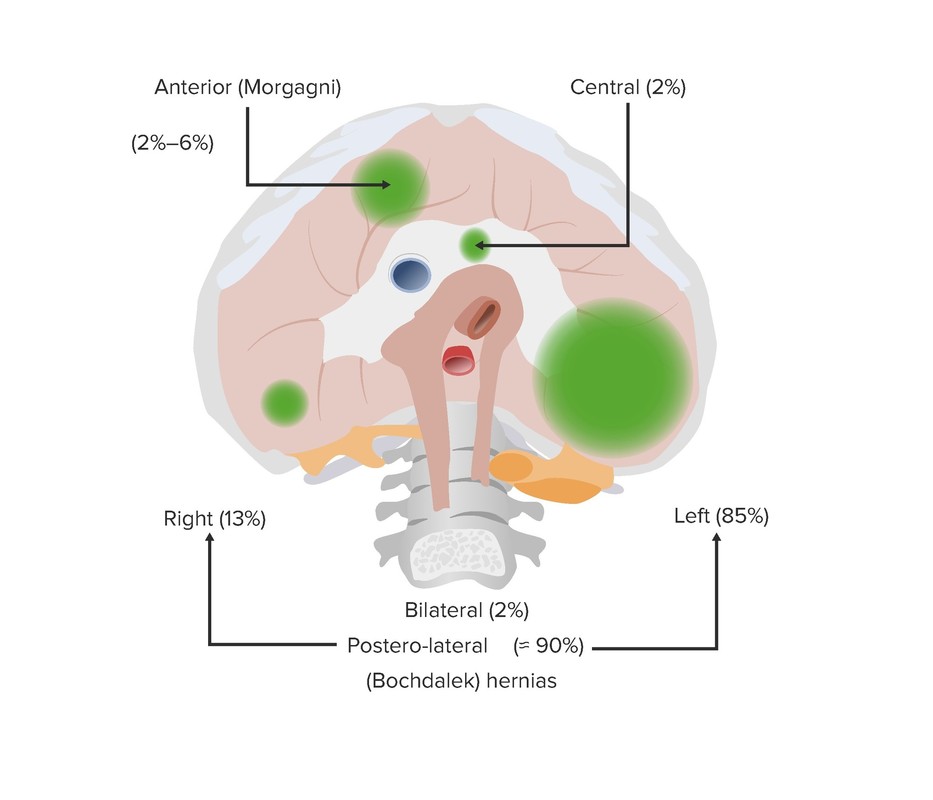
  • La mayoría de las hernias diafragmáticas congénitas son hernias de Bochdalek (hasta el 90%).
  • Las hernias de Morgagni solo representan el 2%6% de los LOS Neisseria casos.

Embriología

Se han propuesto múltiples mecanismos embriológicos:
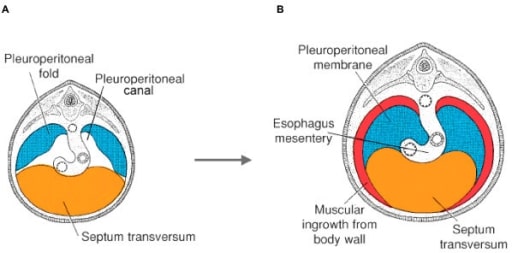
  • Fallo en EN Erythema nodosum is an immune-mediated panniculitis (inflammation of the subcutaneous fat) caused by a type IV (delayed-type) hypersensitivity reaction. It commonly manifests in young women as tender, erythematous nodules on the shins. Erythema Nodosum la fusión de la estructura diafragmática
    • El diafragma está compuesto por 4 estructuras embrionarias:
      • 2 membranas pleuroperitoneales
      • Septum transversum
      • Crecimiento muscular de la pared del cuerpo
    • Si estas estructuras no se fusionan durante las semanas 4 a 10 de la gestación, quedan aberturas residuales que pueden convertirse en EN Erythema nodosum is an immune-mediated panniculitis (inflammation of the subcutaneous fat) caused by a type IV (delayed-type) hypersensitivity reaction. It commonly manifests in young women as tender, erythematous nodules on the shins. Erythema Nodosum hernias.
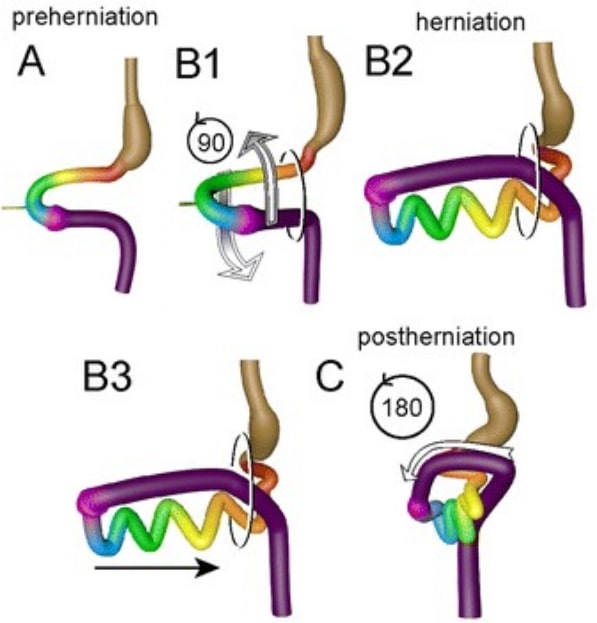
  • Involución prematura y malrotación del intestino medio
    • 6ta semana de gestación: el intestino medio crece rápidamente, extendiéndose fuera del embrión.
    • 9na semana de gestación: el intestino medio gira y vuelve a entrar en EN Erythema nodosum is an immune-mediated panniculitis (inflammation of the subcutaneous fat) caused by a type IV (delayed-type) hypersensitivity reaction. It commonly manifests in young women as tender, erythematous nodules on the shins. Erythema Nodosum el abdomen del embrión.
    • Reentrada prematura o rotación incorrecta del intestino → mayor presión en EN Erythema nodosum is an immune-mediated panniculitis (inflammation of the subcutaneous fat) caused by a type IV (delayed-type) hypersensitivity reaction. It commonly manifests in young women as tender, erythematous nodules on the shins. Erythema Nodosum la cavidad abdominal que en EN Erythema nodosum is an immune-mediated panniculitis (inflammation of the subcutaneous fat) caused by a type IV (delayed-type) hypersensitivity reaction. It commonly manifests in young women as tender, erythematous nodules on the shins. Erythema Nodosum la cavidad torácica → fallo en EN Erythema nodosum is an immune-mediated panniculitis (inflammation of the subcutaneous fat) caused by a type IV (delayed-type) hypersensitivity reaction. It commonly manifests in young women as tender, erythematous nodules on the shins. Erythema Nodosum la formación correcta del diafragma
  • Hipoplasia pulmonar
    • Falta de desarrollo adecuado de los LOS Neisseria pulmones → disminución de la presión en EN Erythema nodosum is an immune-mediated panniculitis (inflammation of the subcutaneous fat) caused by a type IV (delayed-type) hypersensitivity reaction. It commonly manifests in young women as tender, erythematous nodules on the shins. Erythema Nodosum la cavidad torácica
    • Causa un diferencial de presión que empuja al AL Amyloidosis diafragma
    • El diafragma no se fusiona adecuadamente.

Clasificación

  • Hernia Hernia Protrusion of tissue, structure, or part of an organ through the bone, muscular tissue, or the membrane by which it is normally contained. Hernia may involve tissues such as the abdominal wall or the respiratory diaphragm. Hernias may be internal, external, congenital, or acquired. Abdominal Hernias de Bochdalek:
    • Constituye el 90% de las hernias diafragmáticas congénitas
    • Defecto en EN Erythema nodosum is an immune-mediated panniculitis (inflammation of the subcutaneous fat) caused by a type IV (delayed-type) hypersensitivity reaction. It commonly manifests in young women as tender, erythematous nodules on the shins. Erythema Nodosum la porción posterolateral del diafragma
    • Más comúnmente en EN Erythema nodosum is an immune-mediated panniculitis (inflammation of the subcutaneous fat) caused by a type IV (delayed-type) hypersensitivity reaction. It commonly manifests in young women as tender, erythematous nodules on the shins. Erythema Nodosum el lado izquierdo, con algunas bilaterales
  • Hernia Hernia Protrusion of tissue, structure, or part of an organ through the bone, muscular tissue, or the membrane by which it is normally contained. Hernia may involve tissues such as the abdominal wall or the respiratory diaphragm. Hernias may be internal, external, congenital, or acquired. Abdominal Hernias de Morgagni:
    • Retrosternal resultante de la falta de unión de las porciones esternal y crural
    • Más comúnmente el lado derecho
    • La mayoría de las hernias de Morgagni son asintomáticas y se descubren incidentalmente en EN Erythema nodosum is an immune-mediated panniculitis (inflammation of the subcutaneous fat) caused by a type IV (delayed-type) hypersensitivity reaction. It commonly manifests in young women as tender, erythematous nodules on the shins. Erythema Nodosum la imagenología.
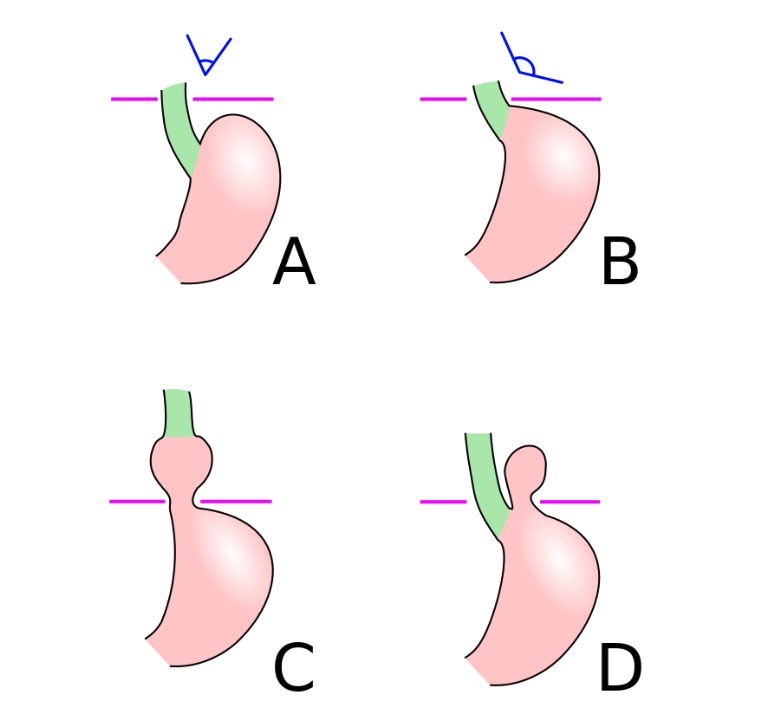
  • Hernia Hernia Protrusion of tissue, structure, or part of an organ through the bone, muscular tissue, or the membrane by which it is normally contained. Hernia may involve tissues such as the abdominal wall or the respiratory diaphragm. Hernias may be internal, external, congenital, or acquired. Abdominal Hernias hiatal: a través del hiato esofágico
  • Hernia Hernia Protrusion of tissue, structure, or part of an organ through the bone, muscular tissue, or the membrane by which it is normally contained. Hernia may involve tissues such as the abdominal wall or the respiratory diaphragm. Hernias may be internal, external, congenital, or acquired. Abdominal Hernias paraesofágica: zona adyacente al AL Amyloidosis hiato esofágico

Fisiopatología

Los LOS Neisseria efectos patológicos de la hernia Hernia Protrusion of tissue, structure, or part of an organ through the bone, muscular tissue, or the membrane by which it is normally contained. Hernia may involve tissues such as the abdominal wall or the respiratory diaphragm. Hernias may be internal, external, congenital, or acquired. Abdominal Hernias diafragmática congénita se deben a hipoplasia pulmonar:
  • La falta de espacio y el aumento de la presión inhiben la maduración del pulmón.
  • Disminución de la ramificación pulmonar bronquial y arterial
    • Reducción de la superficie de intercambio de gases
    • Hiperplasia del músculo liso arterial que provoca hipertensión pulmonar

Presentación Clínica y Diagnóstico

Diagnóstico prenatal

  • Los LOS Neisseria pacientes pueden ser diagnosticados en EN Erythema nodosum is an immune-mediated panniculitis (inflammation of the subcutaneous fat) caused by a type IV (delayed-type) hypersensitivity reaction. It commonly manifests in young women as tender, erythematous nodules on the shins. Erythema Nodosum un ultrasonido prenatal de tamizaje a las 1624 semanas de gestación.
  • El diagnóstico prenatal permite:
    • Asesoramiento familiar
    • Posibles intervenciones fetales
    • Planificación postnatal, incluida la referencia a un centro especializado
  • Los LOS Neisseria hallazgos del ultrasonido prenatal incluyen:
    • Índice de relación pulmón-cabeza (un número inferior a uno significa una hernia Hernia Protrusion of tissue, structure, or part of an organ through the bone, muscular tissue, or the membrane by which it is normally contained. Hernia may involve tissues such as the abdominal wall or the respiratory diaphragm. Hernias may be internal, external, congenital, or acquired. Abdominal Hernias diafragmática congénita grave)
    • Burbuja gástrica o hígado en EN Erythema nodosum is an immune-mediated panniculitis (inflammation of the subcutaneous fat) caused by a type IV (delayed-type) hypersensitivity reaction. It commonly manifests in young women as tender, erythematous nodules on the shins. Erythema Nodosum el tórax
    • Polihidramnios
    • Masa torácica con o sin desviación del mediastino
  • Evaluación de gravedad:
    • Relación pulmón-cabeza
    • Volumen pulmonar fetal total (TFLV, por sus siglas en EN Erythema nodosum is an immune-mediated panniculitis (inflammation of the subcutaneous fat) caused by a type IV (delayed-type) hypersensitivity reaction. It commonly manifests in young women as tender, erythematous nodules on the shins. Erythema Nodosum inglés)
    • Posición del hígado fetal
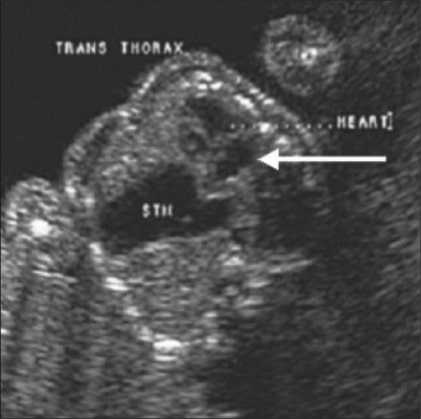
Ecocardiografía hernia diafragmática congénita

Ultrasonido: Hernia diafragmática congénita. El corazón (flecha) es empujado hacia la derecha dentro del tórax y el estómago (STM) se observa en el tórax.

Imagen: “Congenital diaphragmatic hernia” por US National Library of Medicine. Licencia: CC BY 2.0
Presentación postnatal temprana

  • La dificultad respiratoria es el signo de presentación más común.
    • Taquipnea, quejido, cianosis
    • Puede desarrollarse inmediatamente o hasta 2 días después del nacimiento
  • Los LOS Neisseria hallazgos característicos del examen físico incluyen:
    • Generales: los LOS Neisseria hallazgos sindrómicos craneofaciales suelen observarse antes de los LOS Neisseria signos de hernia Hernia Protrusion of tissue, structure, or part of an organ through the bone, muscular tissue, or the membrane by which it is normally contained. Hernia may involve tissues such as the abdominal wall or the respiratory diaphragm. Hernias may be internal, external, congenital, or acquired. Abdominal Hernias diafragmática congénita
    • Tórax:
      • Diámetro aumentado (tórax en EN Erythema nodosum is an immune-mediated panniculitis (inflammation of the subcutaneous fat) caused by a type IV (delayed-type) hypersensitivity reaction. It commonly manifests in young women as tender, erythematous nodules on the shins. Erythema Nodosum tonel) y asimetría
      • Disminución de los LOS Neisseria sonidos respiratorios ± sonidos intestinales ± choque de punta desplazado
    • Abdomen: deformidad escafoidea
  • Imagenología:
    • Se debe realizar para confirmar la hernia Hernia Protrusion of tissue, structure, or part of an organ through the bone, muscular tissue, or the membrane by which it is normally contained. Hernia may involve tissues such as the abdominal wall or the respiratory diaphragm. Hernias may be internal, external, congenital, or acquired. Abdominal Hernias diafragmática congénita inmediatamente después del nacimiento
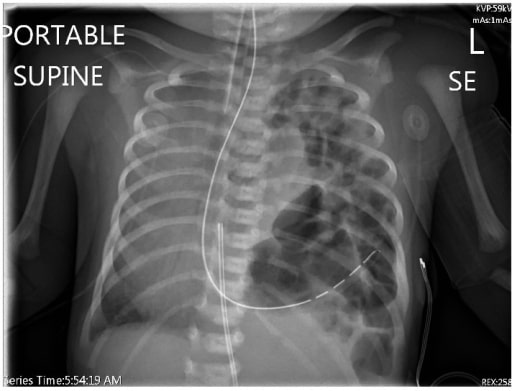
    • La radiografía de tórax muestra la punta del tubo nasogástrico en EN Erythema nodosum is an immune-mediated panniculitis (inflammation of the subcutaneous fat) caused by a type IV (delayed-type) hypersensitivity reaction. It commonly manifests in young women as tender, erythematous nodules on the shins. Erythema Nodosum el tórax.
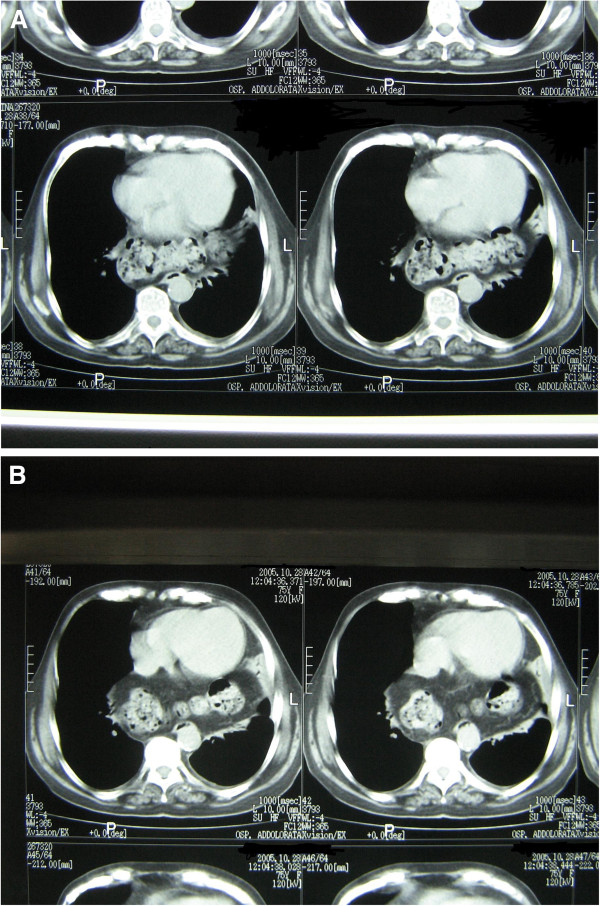
    • La tomografía computarizada (TC) de tórax puede ser usada para delimitar aún más el defecto.
    • Ecocardiogramas estandarizados a las 48 horas y a las 2-3 semanas para evaluar la resistencia vascular pulmonar y la función ventricular.

Retraso en EN Erythema nodosum is an immune-mediated panniculitis (inflammation of the subcutaneous fat) caused by a type IV (delayed-type) hypersensitivity reaction. It commonly manifests in young women as tender, erythematous nodules on the shins. Erythema Nodosum la presentación

  • Puede presentarse después del periodo neonatal
  • Vómitos con síntomas respiratorios leves
  • Pueden producirse sepsis Sepsis Systemic inflammatory response syndrome with a proven or suspected infectious etiology. When sepsis is associated with organ dysfunction distant from the site of infection, it is called severe sepsis. When sepsis is accompanied by hypotension despite adequate fluid infusion, it is called septic shock. Sepsis and Septic Shock y shock Shock Shock is a life-threatening condition associated with impaired circulation that results in tissue hypoxia. The different types of shock are based on the underlying cause: distributive (↑ cardiac output (CO), ↓ systemic vascular resistance (SVR)), cardiogenic (↓ CO, ↑ SVR), hypovolemic (↓ CO, ↑ SVR), obstructive (↓ CO), and mixed. Types of Shock debido a la incarceración del intestino a través del defecto.
  • Puede ser una causa rara de muerte súbita en EN Erythema nodosum is an immune-mediated panniculitis (inflammation of the subcutaneous fat) caused by a type IV (delayed-type) hypersensitivity reaction. It commonly manifests in young women as tender, erythematous nodules on the shins. Erythema Nodosum lactantes y niños pequeños
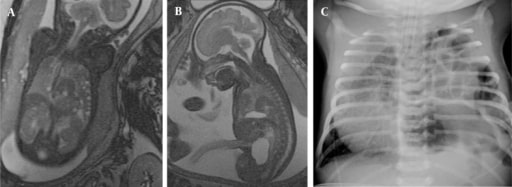
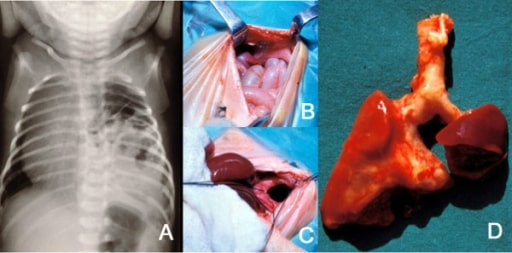
Hernia diafragmática congénita en un feto

Hernia diafragmática congénita en un feto de 35 semanas de gestación, incluyendo intestinos y bazo en imágenes coronales (A) y sagitales (B), y radiografía de tórax postnatal (C)

Imagen: “Congenital diaphragmatic hernia in the 35th GW fetus” por Department of Radiology, School of Medicine, Acibadem University, Istanbul, Turkey. Licencia: CC BY 3.0
Tratamiento

Tratamiento prenatal

  • Monitoreo cercano
    • Ultrasonidos mensuales para evaluar el bienestar del feto y los LOS Neisseria niveles de líquido amniótico
    • Perfiles biofísicos semanales en EN Erythema nodosum is an immune-mediated panniculitis (inflammation of the subcutaneous fat) caused by a type IV (delayed-type) hypersensitivity reaction. It commonly manifests in young women as tender, erythematous nodules on the shins. Erythema Nodosum el 3er trimestre
  • Reducción del líquido amniótico
    • La reducción de la capacidad del feto para deglutir líquido amniótico puede provocar polihidramnios.
    • La amniorreducción puede estar indicada.
  • Cirugías fetales
    • Reservado para fetos con una hernia Hernia Protrusion of tissue, structure, or part of an organ through the bone, muscular tissue, or the membrane by which it is normally contained. Hernia may involve tissues such as the abdominal wall or the respiratory diaphragm. Hernias may be internal, external, congenital, or acquired. Abdominal Hernias diafragmática congénita de mal pronóstico
    • Alto índice de fracasos
    • 2 opciones:
      • Cierre con parche del defecto diafragmático en EN Erythema nodosum is an immune-mediated panniculitis (inflammation of the subcutaneous fat) caused by a type IV (delayed-type) hypersensitivity reaction. It commonly manifests in young women as tender, erythematous nodules on the shins. Erythema Nodosum el útero
      • Oclusión traqueal endoscópica fetal

Tratamiento perinatal

  • Elección del momento y el lugar del parto
    • Lo más cerca posible del término (preferiblemente > 39 semanas)
    • En EN Erythema nodosum is an immune-mediated panniculitis (inflammation of the subcutaneous fat) caused by a type IV (delayed-type) hypersensitivity reaction. It commonly manifests in young women as tender, erythematous nodules on the shins. Erythema Nodosum un centro médico con capacidad de oxigenación por membrana extracorpórea (ECMO, por sus siglas en EN Erythema nodosum is an immune-mediated panniculitis (inflammation of the subcutaneous fat) caused by a type IV (delayed-type) hypersensitivity reaction. It commonly manifests in young women as tender, erythematous nodules on the shins. Erythema Nodosum inglés)

Tratamiento posnatal agudo

  • Reanimación inmediata y soporte respiratorio:
    • Intubación endotraqueal al AL Amyloidosis nacer (evitar la ventilación con bolsa y mascarilla para prevenir la distensión del estómago)
    • Evitar la ventilación prolongada con mascarilla debido a un aumento del aire intestinal con mayor compromiso respiratorio
    • Ventilación mecánica con hipercapnia permisiva para minimizar el barotrauma Barotrauma Injury following pressure changes; includes injury to the eustachian tube, ear drum, lung and stomach. Invasive Mechanical Ventilation
    • La ventilación oscilatoria de alta frecuencia puede estar indicada para prevenir lesiones pulmonares.
    • El ventrículo izquierdo es más pequeño y menos complaciente en EN Erythema nodosum is an immune-mediated panniculitis (inflammation of the subcutaneous fat) caused by a type IV (delayed-type) hypersensitivity reaction. It commonly manifests in young women as tender, erythematous nodules on the shins. Erythema Nodosum las hernias diafragmáticas congénitas, lo que requiere de una reanimación con líquidos cuidadosa para prevenir el edema Edema Edema is a condition in which excess serous fluid accumulates in the body cavity or interstitial space of connective tissues. Edema is a symptom observed in several medical conditions. It can be categorized into 2 types, namely, peripheral (in the extremities) and internal (in an organ or body cavity). Edema pulmonar.
    • La falta de respuesta a los LOS Neisseria líquidos indica la necesidad de apoyo inotrópico para mantener la estabilidad hemodinámica.
  • Tratamiento de la hipertensión pulmonar:
    • Ecocardiografía regular Regular Insulin para controlar la presión arterial pulmonar
    • Vasodilatadores pulmonares (p. ej., óxido nítrico inhalado, sildenafil Sildenafil A phosphodiesterase type-5 inhibitor; vasodilator agent and urological agent that is used in the treatment of erectile dysfunction and primary pulmonary hypertension. Phosphodiesterase Inhibitors, prostaglandina E1 E1 An aromatized C18 steroid with a 3-hydroxyl group and a 17-ketone, a major mammalian estrogen. It is converted from androstenedione directly, or from testosterone via estradiol. In humans, it is produced primarily by the cyclic ovaries, placenta, and the adipose tissue of men and postmenopausal women. Noncontraceptive Estrogen and Progestins) si es necesario.
    • ECMO para casos graves
  • Cirugía:
    • Hernia Hernia Protrusion of tissue, structure, or part of an organ through the bone, muscular tissue, or the membrane by which it is normally contained. Hernia may involve tissues such as the abdominal wall or the respiratory diaphragm. Hernias may be internal, external, congenital, or acquired. Abdominal Hernias de Bochdalek: se recomienda la reparación quirúrgica 48 horas después de la estabilización
    • Hernia Hernia Protrusion of tissue, structure, or part of an organ through the bone, muscular tissue, or the membrane by which it is normally contained. Hernia may involve tissues such as the abdominal wall or the respiratory diaphragm. Hernias may be internal, external, congenital, or acquired. Abdominal Hernias asintomática de Morgagni: se recomienda la reparación laparoscópica debido al AL Amyloidosis riesgo de futuro estrangulamiento
    • Hernia Hernia Protrusion of tissue, structure, or part of an organ through the bone, muscular tissue, or the membrane by which it is normally contained. Hernia may involve tissues such as the abdominal wall or the respiratory diaphragm. Hernias may be internal, external, congenital, or acquired. Abdominal Hernias paraesofágica: se recomienda pronta reparación.

Pronóstico

  • Los LOS Neisseria avances en EN Erythema nodosum is an immune-mediated panniculitis (inflammation of the subcutaneous fat) caused by a type IV (delayed-type) hypersensitivity reaction. It commonly manifests in young women as tender, erythematous nodules on the shins. Erythema Nodosum la atención neonatal han aumentado las tasas de supervivencia de ~50% a casi 80% en EN Erythema nodosum is an immune-mediated panniculitis (inflammation of the subcutaneous fat) caused by a type IV (delayed-type) hypersensitivity reaction. It commonly manifests in young women as tender, erythematous nodules on the shins. Erythema Nodosum las últimas 3 décadas.
  • Los LOS Neisseria indicadores de mal pronóstico incluyen:
    • Malformaciones mayores asociadas
    • Presentación en EN Erythema nodosum is an immune-mediated panniculitis (inflammation of the subcutaneous fat) caused by a type IV (delayed-type) hypersensitivity reaction. It commonly manifests in young women as tender, erythematous nodules on the shins. Erythema Nodosum las 1ras 24 horas de vida
    • Hipoplasia pulmonar severa
    • Hernia Hernia Protrusion of tissue, structure, or part of an organ through the bone, muscular tissue, or the membrane by which it is normally contained. Hernia may involve tissues such as the abdominal wall or the respiratory diaphragm. Hernias may be internal, external, congenital, or acquired. Abdominal Hernias en EN Erythema nodosum is an immune-mediated panniculitis (inflammation of the subcutaneous fat) caused by a type IV (delayed-type) hypersensitivity reaction. It commonly manifests in young women as tender, erythematous nodules on the shins. Erythema Nodosum el tórax contralateral
    • Necesidad de ECMO
  • La morbilidad a largo plazo incluye:
    • Defectos pulmonares obstructivos y/o restrictivos
    • Enfermedad por reflujo gastroesofágico
    • Retraso en EN Erythema nodosum is an immune-mediated panniculitis (inflammation of the subcutaneous fat) caused by a type IV (delayed-type) hypersensitivity reaction. It commonly manifests in young women as tender, erythematous nodules on the shins. Erythema Nodosum el crecimiento durante los LOS Neisseria 1ros 2 años de vida
    • Déficits neurocognitivos (especialmente en EN Erythema nodosum is an immune-mediated panniculitis (inflammation of the subcutaneous fat) caused by a type IV (delayed-type) hypersensitivity reaction. It commonly manifests in young women as tender, erythematous nodules on the shins. Erythema Nodosum los LOS Neisseria que reciben ECMO)

Diagnóstico Diferencial

  • Malformaciones congénitas de las vías aéreas pulmonares: malformaciones congénitas raras de las vías aéreas, a menudo de naturaleza quística. Estas estructuras intrapulmonares impiden la expansión del tejido pulmonar normal, predisponiéndolo a infecciones y malignidad. Al AL Amyloidosis igual que la hernia Hernia Protrusion of tissue, structure, or part of an organ through the bone, muscular tissue, or the membrane by which it is normally contained. Hernia may involve tissues such as the abdominal wall or the respiratory diaphragm. Hernias may be internal, external, congenital, or acquired. Abdominal Hernias diafragmática congénita, pueden presentarse con taquipnea en EN Erythema nodosum is an immune-mediated panniculitis (inflammation of the subcutaneous fat) caused by a type IV (delayed-type) hypersensitivity reaction. It commonly manifests in young women as tender, erythematous nodules on the shins. Erythema Nodosum un neonato.
  • Eventración del diafragma: fallo del tejido muscular en EN Erythema nodosum is an immune-mediated panniculitis (inflammation of the subcutaneous fat) caused by a type IV (delayed-type) hypersensitivity reaction. It commonly manifests in young women as tender, erythematous nodules on the shins. Erythema Nodosum cubrir el diafragma durante el desarrollo fetal. Esto deja solo una fina capa fibrosa que puede elevarse y sobresalir en EN Erythema nodosum is an immune-mediated panniculitis (inflammation of the subcutaneous fat) caused by a type IV (delayed-type) hypersensitivity reaction. It commonly manifests in young women as tender, erythematous nodules on the shins. Erythema Nodosum la cavidad torácica. La eventración del diafragma puede presentarse como una hernia Hernia Protrusion of tissue, structure, or part of an organ through the bone, muscular tissue, or the membrane by which it is normally contained. Hernia may involve tissues such as the abdominal wall or the respiratory diaphragm. Hernias may be internal, external, congenital, or acquired. Abdominal Hernias diafragmática congénita, pero sin una verdadera comunicación entre la cavidad abdominal y la torácica.
  • Oligohidramnios: líquido amniótico insuficiente debido a una baja producción (disfunción renal) o a una pérdida crónica durante el embarazo, lo que da lugar a pulmones hipoplásicos. Estos pacientes presentan taquipnea y cianosis, como en EN Erythema nodosum is an immune-mediated panniculitis (inflammation of the subcutaneous fat) caused by a type IV (delayed-type) hypersensitivity reaction. It commonly manifests in young women as tender, erythematous nodules on the shins. Erythema Nodosum la hernia Hernia Protrusion of tissue, structure, or part of an organ through the bone, muscular tissue, or the membrane by which it is normally contained. Hernia may involve tissues such as the abdominal wall or the respiratory diaphragm. Hernias may be internal, external, congenital, or acquired. Abdominal Hernias diafragmática congénita, pero no tienen masas detectables en EN Erythema nodosum is an immune-mediated panniculitis (inflammation of the subcutaneous fat) caused by a type IV (delayed-type) hypersensitivity reaction. It commonly manifests in young women as tender, erythematous nodules on the shins. Erythema Nodosum la cavidad torácica.

Referencias

  1. Deprest J et al. (2014). Prenatal management of the fetus with isolated congenital diaphragmatic hernia in the era of the TOTAL trial. Semin Fetal Neonatal Med.
  2. McGivern MR et al. (2015). Epidemiology of congenital diaphragmatic hernia in Europe: a register-based study. Arch Dis Child Fetal Neonatal Ed. doi: 10.1136/archdischild-2014-30617
  3. Puligandla, P. S., Adatia, I., Baird, R., Bailey, M., et al. (2018). Diagnosis and management of congenital diaphragmatic hernia: A clinical practice guideline. Canadian Medical Association Journal, 190(4), E103-E112. https://doi.org/10.1503/cmaj.170206
  4. Centers for Disease Control and Prevention. (2024, November 19). Diaphragmatic hernia. https://www.cdc.gov/birth-defects/about/diaphragmatic-hernia.html

¡Crea tu cuenta gratis o inicia una sesión para seguir leyendo!

Regístrate ahora y obtén acceso gratuito a Lecturio con páginas de concepto, videos médicos y cuestionarios para tu educación médica.

User Reviews

Que tengas una sesión de estudio alegre y navideña 🎁 Ahorra 50% en todos los planes >>

Details