Domina Conceptos Médicos

Estudia para la escuela de medicina y tus examenes con Lecturio.

Gametogénesis

La gametogénesis es el desarrollo de gametos a partir de células germinales primordiales. Este proceso difiere entre los LOS Neisseria sexos. En EN Erythema nodosum is an immune-mediated panniculitis (inflammation of the subcutaneous fat) caused by a type IV (delayed-type) hypersensitivity reaction. It commonly manifests in young women as tender, erythematous nodules on the shins. Erythema Nodosum los LOS Neisseria hombres, la espermatogénesis produce espermatozoides. En EN Erythema nodosum is an immune-mediated panniculitis (inflammation of the subcutaneous fat) caused by a type IV (delayed-type) hypersensitivity reaction. It commonly manifests in young women as tender, erythematous nodules on the shins. Erythema Nodosum las mujeres, la ovogénesis da como resultado un óvulo. El proceso comienza con la migración de las células germinales primordiales desde el saco vitelino hasta la cresta gonadal. La ovogénesis comienza durante los LOS Neisseria períodos embrionario y fetal, mientras que la espermatogénesis comienza en EN Erythema nodosum is an immune-mediated panniculitis (inflammation of the subcutaneous fat) caused by a type IV (delayed-type) hypersensitivity reaction. It commonly manifests in young women as tender, erythematous nodules on the shins. Erythema Nodosum la pubertad. Sin embargo, las fases de la gametogénesis son similares, y las células germinales progresan a través de la mitosis Mitosis A type of cell nucleus division by means of which the two daughter nuclei normally receive identical complements of the number of chromosomes of the somatic cells of the species. Cell Cycle, meiosis I Meiosis I Following DNA replication, meiosis I creates 2 daughter cells containing half the genetic information of the mother cell (1n) but the same number of chromosomes (2c) by segregating sister chromatids into the same daughter cell Meiosis, meiosis II Meiosis II Meiosis II is a cellular division event wherein the number of chromosomes in the daughter cells is halved from that of the mother cell. Meiosis II: similar to meiosis I but not preceded by interphase (DNA replication) Meiosis y maduración. Este proceso da como resultado gametos que son haploides, con 23 cromosomas.

Last updated: Mar 25, 2022
Editorial responsibility: Stanley Oiseth, Lindsay Jones, Evelin Maza

Descripción General

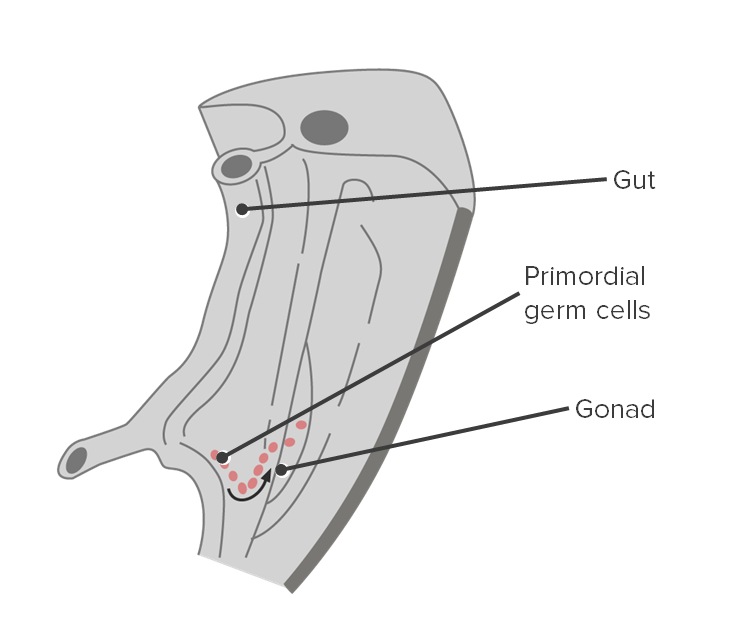
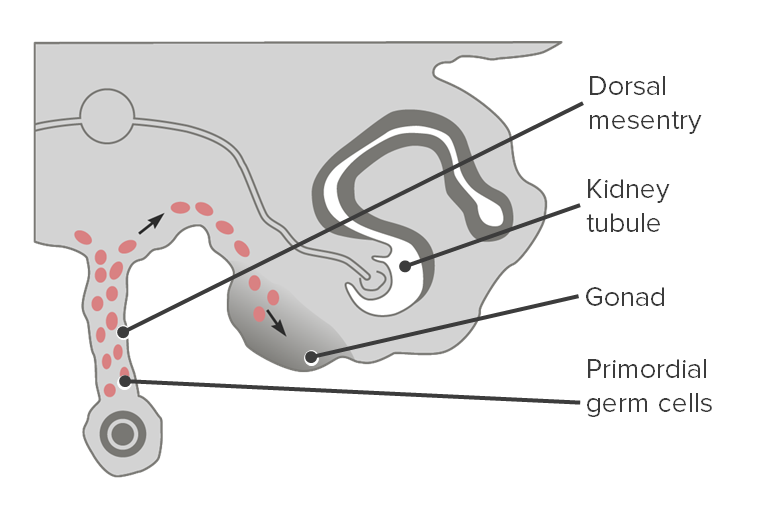
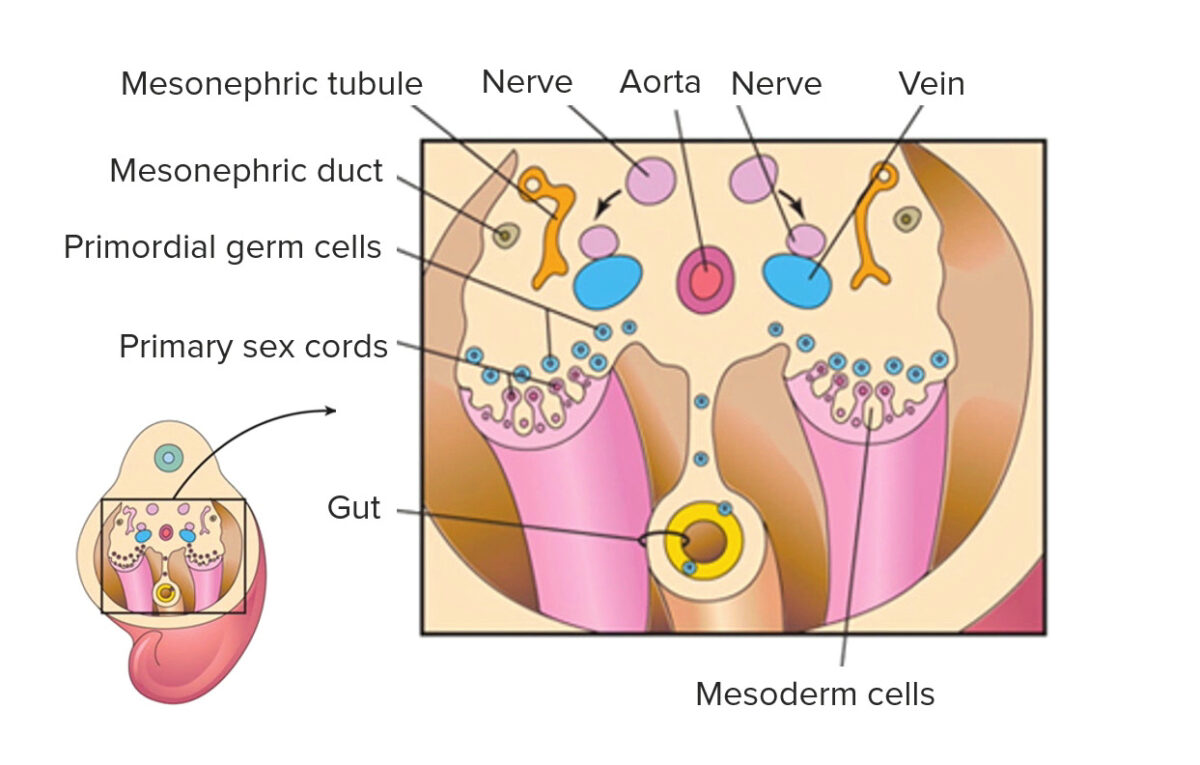
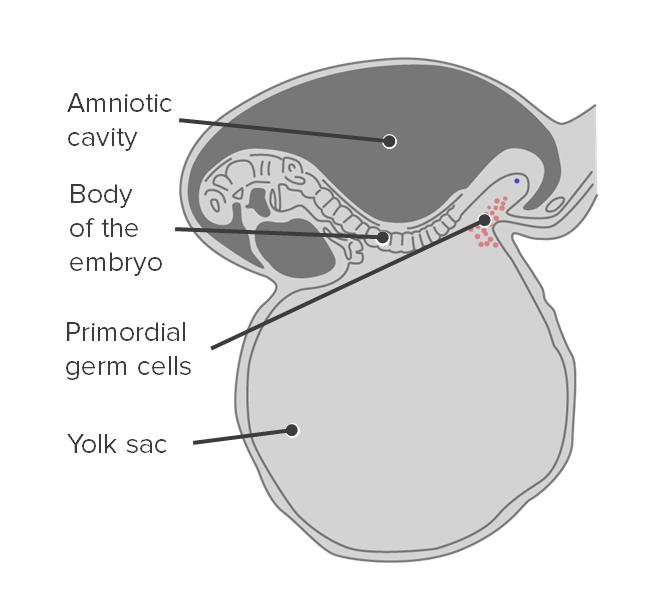
Emigración de células germinales

  • Las células germinales primordiales se originan en EN Erythema nodosum is an immune-mediated panniculitis (inflammation of the subcutaneous fat) caused by a type IV (delayed-type) hypersensitivity reaction. It commonly manifests in young women as tender, erythematous nodules on the shins. Erythema Nodosum el endodermo del saco vitelino.
  • Viajan a lo largo del intestino posterior → llegan a la cresta gonadal → células ahora son llamadas gametogonias
  • Se asocian con los LOS Neisseria cordones sexuales primordiales

Gametogénesis

  • La gametogonia Gametogonia Gametogenesis y la gametogénesis difieren entre sexos:
    • Mujeres: oogonia → ovogénesis
    • Hombres: espermatogonia → espermatogénesis
  • Las células generalmente siguen las mismas fases:
    • Mitosis Mitosis A type of cell nucleus division by means of which the two daughter nuclei normally receive identical complements of the number of chromosomes of the somatic cells of the species. Cell Cycle
    • Meiosis I Meiosis I Following DNA replication, meiosis I creates 2 daughter cells containing half the genetic information of the mother cell (1n) but the same number of chromosomes (2c) by segregating sister chromatids into the same daughter cell Meiosis
    • Meiosis II Meiosis II Meiosis II is a cellular division event wherein the number of chromosomes in the daughter cells is halved from that of the mother cell. Meiosis II: similar to meiosis I but not preceded by interphase (DNA replication) Meiosis
    • Maduración/diferenciación
  • Estas fases conducen a las células a través del siguiente desarrollo:
    • Gametogonia Gametogonia Gametogenesis (diploide, 46 cromosomas)
    • Gametocito primario (diploide, 46 cromosomas)
    • Gametocito secundario (haploide, 23 cromosomas)
    • Gamétide (haploide, 23 cromosomas)
    • Gameto (haploide, 23 cromosomas)
Gametogénesis en hombres y mujeres

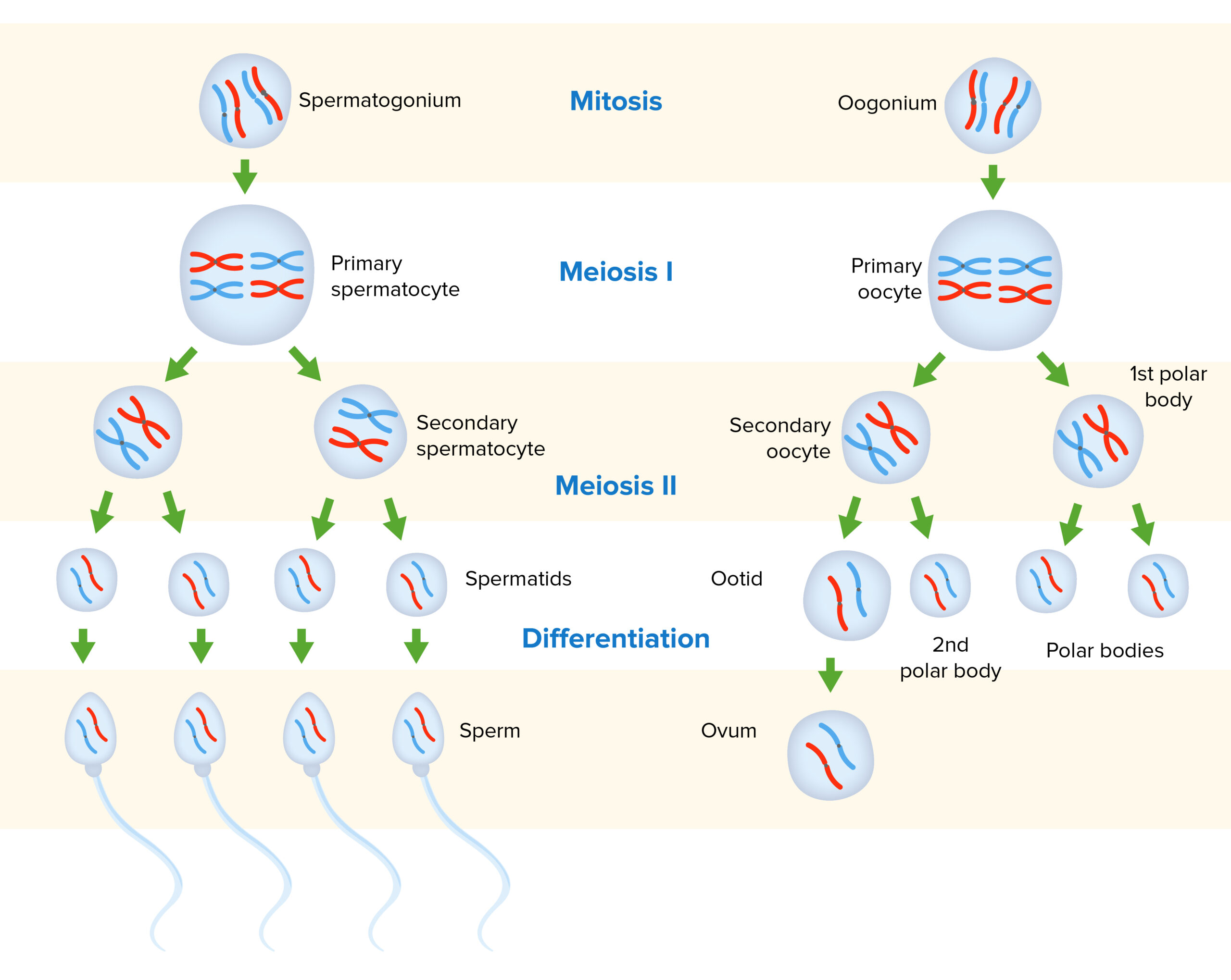
Gametogénesis en hombres y mujeres:
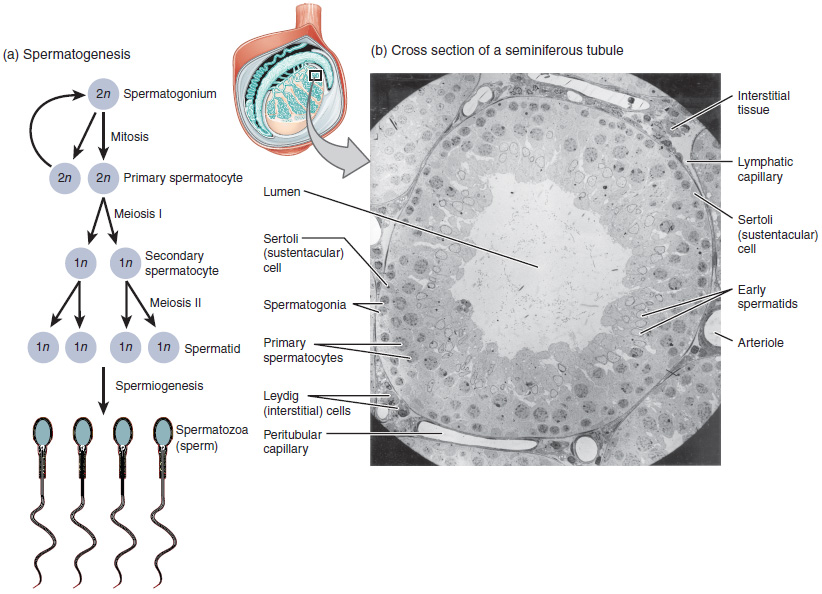
Las gametogonias diploides sufren mitosis. Algunas células hijas permanecerán como gametogonias, mientras que otras se diferenciarán en gametocitos primarios. A partir de ahí, ocurre la meiosis I, lo que resulta en gametocitos secundarios que son haploides. La meiosis II conduce a gamétides, con 1 hebra representativa de ácido desoxirribonucleico (ADN) de cada cromosoma. Las gamétides se someten a un proceso separado de diferenciación/maduración para producir gametos maduros.

Imagen por Lecturio.

Ovogénesis

La ovogénesis es el proceso de producción de óvulos a partir de células germinales primordiales.

Formación del óvulo

  • Fases de la ovogénesis:
    • Mitosis Mitosis A type of cell nucleus division by means of which the two daughter nuclei normally receive identical complements of the number of chromosomes of the somatic cells of the species. Cell Cycle:
      • Oogonia → ovocito primario
      • Ploidía: diploide
      • 46 cromosomas
    • Meiosis I Meiosis I Following DNA replication, meiosis I creates 2 daughter cells containing half the genetic information of the mother cell (1n) but the same number of chromosomes (2c) by segregating sister chromatids into the same daughter cell Meiosis:
      • Ovocito primario → ovocito secundario y 1er cuerpo polar
      • Ploidía: diploide → haploide
      • 46 → 23 cromosomas
    • Meiosis II Meiosis II Meiosis II is a cellular division event wherein the number of chromosomes in the daughter cells is halved from that of the mother cell. Meiosis II: similar to meiosis I but not preceded by interphase (DNA replication) Meiosis:
      • Ovocito secundario → ootide y 2do cuerpo polar
      • Ploidía: haploide
      • 23 cromosomas
    • Maduración: ootide → óvulo
  • Nota: a diferencia de la espermatogénesis, la división celular es desigual en EN Erythema nodosum is an immune-mediated panniculitis (inflammation of the subcutaneous fat) caused by a type IV (delayed-type) hypersensitivity reaction. It commonly manifests in young women as tender, erythematous nodules on the shins. Erythema Nodosum la ovogénesis, lo que da como resultado un único óvulo y cuerpos polares.
  • Cronología:
    • Iniciada en EN Erythema nodosum is an immune-mediated panniculitis (inflammation of the subcutaneous fat) caused by a type IV (delayed-type) hypersensitivity reaction. It commonly manifests in young women as tender, erythematous nodules on the shins. Erythema Nodosum los LOS Neisseria períodos embrionario y fetal.
    • Se detiene en EN Erythema nodosum is an immune-mediated panniculitis (inflammation of the subcutaneous fat) caused by a type IV (delayed-type) hypersensitivity reaction. It commonly manifests in young women as tender, erythematous nodules on the shins. Erythema Nodosum la profase de la meiosis I Meiosis I Following DNA replication, meiosis I creates 2 daughter cells containing half the genetic information of the mother cell (1n) but the same number of chromosomes (2c) by segregating sister chromatids into the same daughter cell Meiosis
    • Se reanuda durante la pubertad
    • Se produce una 2da parada en EN Erythema nodosum is an immune-mediated panniculitis (inflammation of the subcutaneous fat) caused by a type IV (delayed-type) hypersensitivity reaction. It commonly manifests in young women as tender, erythematous nodules on the shins. Erythema Nodosum la metafase de la meiosis II Meiosis II Meiosis II is a cellular division event wherein the number of chromosomes in the daughter cells is halved from that of the mother cell. Meiosis II: similar to meiosis I but not preceded by interphase (DNA replication) Meiosis.
    • Se reanuda de nuevo después de la fecundación
    • El proceso continúa mensualmente hasta la menopausia.

Desarrollo folicular

La foliculogénesis es un proceso complejo en EN Erythema nodosum is an immune-mediated panniculitis (inflammation of the subcutaneous fat) caused by a type IV (delayed-type) hypersensitivity reaction. It commonly manifests in young women as tender, erythematous nodules on the shins. Erythema Nodosum el que un folículo ovárico, que contiene un ovocito, madura a través de varias etapas.
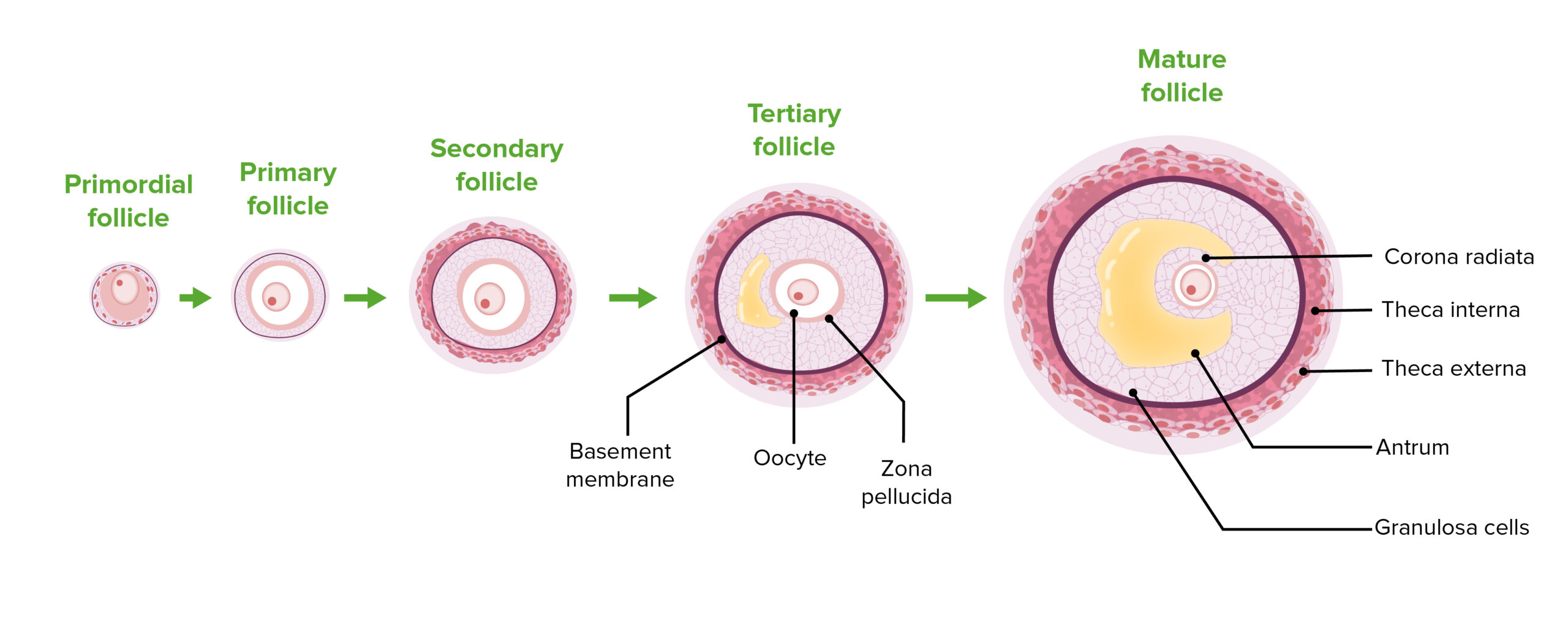
  • Folículo primordial:
    • Se desarrolla en EN Erythema nodosum is an immune-mediated panniculitis (inflammation of the subcutaneous fat) caused by a type IV (delayed-type) hypersensitivity reaction. It commonly manifests in young women as tender, erythematous nodules on the shins. Erythema Nodosum los LOS Neisseria ovarios durante el período fetal
    • Las oogonias quedan rodeadas por células epiteliales somáticas de la cresta genital.
  • Folículo primario:
    • Contiene un ovocito primario
    • Se crea una capa de glicoproteína (zona pelúcida).
    • Las células foliculares proliferan para convertirse en EN Erythema nodosum is an immune-mediated panniculitis (inflammation of the subcutaneous fat) caused by a type IV (delayed-type) hypersensitivity reaction. It commonly manifests in young women as tender, erythematous nodules on the shins. Erythema Nodosum la capa de células de la granulosa.
  • Folículo secundario:
    • Esta etapa responde a las gonadotropinas.
    • Crece la capa de células de la granulosa.
    • Reclutamiento de células de la teca → membrana basal circundante
  • Folículo terciario:
    • Las células de la granulosa producen:
      • Secreciones → crean un antro
      • Estrógeno
    • Las células de la granulosa alrededor del ovocito se convierten en EN Erythema nodosum is an immune-mediated panniculitis (inflammation of the subcutaneous fat) caused by a type IV (delayed-type) hypersensitivity reaction. It commonly manifests in young women as tender, erythematous nodules on the shins. Erythema Nodosum el cúmulo oóforo.
    • Las células de la teca se diferencian en EN Erythema nodosum is an immune-mediated panniculitis (inflammation of the subcutaneous fat) caused by a type IV (delayed-type) hypersensitivity reaction. It commonly manifests in young women as tender, erythematous nodules on the shins. Erythema Nodosum:
      • Teca interna: contiene pequeños vasos y células glandulares; produce testosterona → convertida en EN Erythema nodosum is an immune-mediated panniculitis (inflammation of the subcutaneous fat) caused by a type IV (delayed-type) hypersensitivity reaction. It commonly manifests in young women as tender, erythematous nodules on the shins. Erythema Nodosum estrógeno por las células de la granulosa
      • Teca externa: estabiliza los LOS Neisseria folículos; derivada del tejido conectivo
  • Folículo maduro (de Graaf):
    • Solo 1 folículo llegará a esta etapa en EN Erythema nodosum is an immune-mediated panniculitis (inflammation of the subcutaneous fat) caused by a type IV (delayed-type) hypersensitivity reaction. It commonly manifests in young women as tender, erythematous nodules on the shins. Erythema Nodosum cada ciclo.
    • Ovocito primario → ovocito secundario justo antes de la ovulación
    • El antro se agranda (constituye la mayor parte del folículo)
    • Capa más interna del cúmulo oóforo → corona radiada
  • Cuerpo lúteo:
    • Formado después de la liberación del ovocito
    • El centro contiene un coágulo de sangre formado después de la ovulación.
    • Las células de la granulosa y la teca producen progesterona.
    • Se atrofia si no se produce el embarazo.
Las etapas de la foliculogénesis.

Las etapas de la foliculogénesis:
Obsérvese la progresión de la proliferación de células foliculares, la diferenciación de las células de la teca y el agrandamiento del antro.
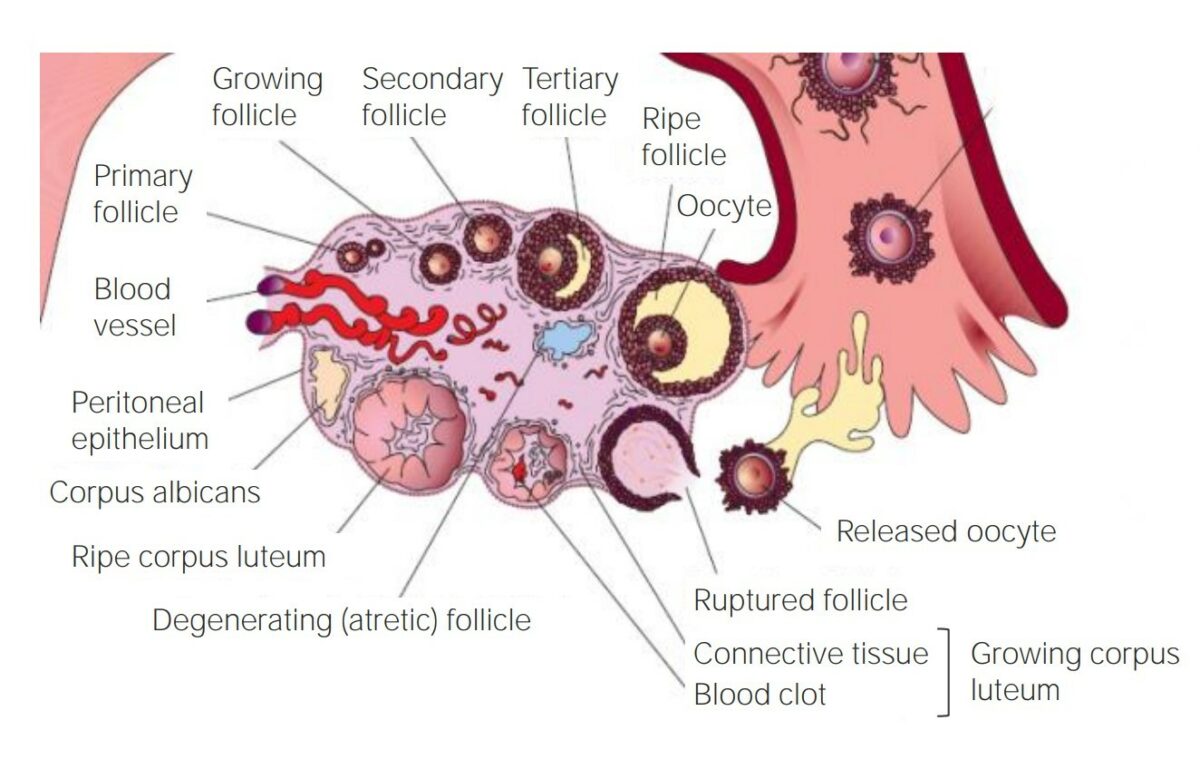
Imagen por Lecturio.

Ovulación

  • Ocurre cuando los LOS Neisseria niveles de hormona luteinizante ( LH LH A major gonadotropin secreted by the adenohypophysis. Luteinizing hormone regulates steroid production by the interstitial cells of the testis and the ovary. The preovulatory luteinizing hormone surge in females induces ovulation, and subsequent luteinization of the follicle. Luteinizing hormone consists of two noncovalently linked subunits, alpha and beta. Within a species, the alpha subunit is common in the three pituitary glycoprotein hormones (TSH, LH, and FSH), but the beta subunit is unique and confers its biological specificity. Menstrual Cycle, por sus siglas en EN Erythema nodosum is an immune-mediated panniculitis (inflammation of the subcutaneous fat) caused by a type IV (delayed-type) hypersensitivity reaction. It commonly manifests in young women as tender, erythematous nodules on the shins. Erythema Nodosum inglés) y hormona folículoestimulante ( FSH FSH A major gonadotropin secreted by the adenohypophysis. Follicle-stimulating hormone stimulates gametogenesis and the supporting cells such as the ovarian granulosa cells, the testicular sertoli cells, and leydig cells. Fsh consists of two noncovalently linked subunits, alpha and beta. Within a species, the alpha subunit is common in the three pituitary glycoprotein hormones (TSH, LH, and FSH), but the beta subunit is unique and confers its biological specificity. Menstrual Cycle, por sus siglas en EN Erythema nodosum is an immune-mediated panniculitis (inflammation of the subcutaneous fat) caused by a type IV (delayed-type) hypersensitivity reaction. It commonly manifests in young women as tender, erythematous nodules on the shins. Erythema Nodosum inglés) alcanzan su punto máximo
  • Las células del cúmulo oóforo se aflojan → permiten que el ovocito y la corona radiada se desprendan del folículo
  • Las enzimas proteolíticas debilitan la pared del folículo.
  • Rotura de la pared folicular → liberación del ovocito

Related videos

Espermatogénesis

La espermatogénesis es el proceso de producción de espermatozoides a partir de células germinales primordiales.

Localización

Descripción general:

  • La espermatogénesis tiene lugar en EN Erythema nodosum is an immune-mediated panniculitis (inflammation of the subcutaneous fat) caused by a type IV (delayed-type) hypersensitivity reaction. It commonly manifests in young women as tender, erythematous nodules on the shins. Erythema Nodosum los LOS Neisseria túbulos seminíferos de los LOS Neisseria testículos.
  • Los LOS Neisseria túbulos seminíferos prepuberales consisten en EN Erythema nodosum is an immune-mediated panniculitis (inflammation of the subcutaneous fat) caused by a type IV (delayed-type) hypersensitivity reaction. It commonly manifests in young women as tender, erythematous nodules on the shins. Erythema Nodosum:
    • Células de Sertoli
    • Células germinales primordiales (espermatogonias)

Células de Sertoli:

  • Controlan el medio ambiente dentro de los LOS Neisseria túbulos seminíferos
  • Ayudan a regular Regular Insulin la espermatogénesis
  • Contienen receptores de FSH FSH A major gonadotropin secreted by the adenohypophysis. Follicle-stimulating hormone stimulates gametogenesis and the supporting cells such as the ovarian granulosa cells, the testicular sertoli cells, and leydig cells. Fsh consists of two noncovalently linked subunits, alpha and beta. Within a species, the alpha subunit is common in the three pituitary glycoprotein hormones (TSH, LH, and FSH), but the beta subunit is unique and confers its biological specificity. Menstrual Cycle y andrógenos → necesarios para estimular la espermatogénesis
  • Secretan:
    • Hormona antimülleriana → regresión de los LOS Neisseria conductos de Müller durante el desarrollo embrionario
    • Inhibina B → inhibe la secreción de FSH FSH A major gonadotropin secreted by the adenohypophysis. Follicle-stimulating hormone stimulates gametogenesis and the supporting cells such as the ovarian granulosa cells, the testicular sertoli cells, and leydig cells. Fsh consists of two noncovalently linked subunits, alpha and beta. Within a species, the alpha subunit is common in the three pituitary glycoprotein hormones (TSH, LH, and FSH), but the beta subunit is unique and confers its biological specificity. Menstrual Cycle → ayuda a regular Regular Insulin los LOS Neisseria niveles hormonales
  • Forman la barrera hemato–testicular → protege el desarrollo de los LOS Neisseria espermatozoides de:
    • Sistema inmune
    • Otras sustancias en EN Erythema nodosum is an immune-mediated panniculitis (inflammation of the subcutaneous fat) caused by a type IV (delayed-type) hypersensitivity reaction. It commonly manifests in young women as tender, erythematous nodules on the shins. Erythema Nodosum la sangre (e.g., toxinas, hormonas)

Formación de espermatozoides

  • Inicio: pubertad
  • Inducida por FSH FSH A major gonadotropin secreted by the adenohypophysis. Follicle-stimulating hormone stimulates gametogenesis and the supporting cells such as the ovarian granulosa cells, the testicular sertoli cells, and leydig cells. Fsh consists of two noncovalently linked subunits, alpha and beta. Within a species, the alpha subunit is common in the three pituitary glycoprotein hormones (TSH, LH, and FSH), but the beta subunit is unique and confers its biological specificity. Menstrual Cycle y testosterona (producida por células de Leydig en EN Erythema nodosum is an immune-mediated panniculitis (inflammation of the subcutaneous fat) caused by a type IV (delayed-type) hypersensitivity reaction. It commonly manifests in young women as tender, erythematous nodules on the shins. Erythema Nodosum respuesta a LH LH A major gonadotropin secreted by the adenohypophysis. Luteinizing hormone regulates steroid production by the interstitial cells of the testis and the ovary. The preovulatory luteinizing hormone surge in females induces ovulation, and subsequent luteinization of the follicle. Luteinizing hormone consists of two noncovalently linked subunits, alpha and beta. Within a species, the alpha subunit is common in the three pituitary glycoprotein hormones (TSH, LH, and FSH), but the beta subunit is unique and confers its biological specificity. Menstrual Cycle)
  • Ocurre en EN Erythema nodosum is an immune-mediated panniculitis (inflammation of the subcutaneous fat) caused by a type IV (delayed-type) hypersensitivity reaction. It commonly manifests in young women as tender, erythematous nodules on the shins. Erythema Nodosum fases:
    • Mitosis Mitosis A type of cell nucleus division by means of which the two daughter nuclei normally receive identical complements of the number of chromosomes of the somatic cells of the species. Cell Cycle:
      • Espermatogonias → espermatocito primario
      • Ploidía: diploide
      • 46 cromosomas
    • Meiosis I Meiosis I Following DNA replication, meiosis I creates 2 daughter cells containing half the genetic information of the mother cell (1n) but the same number of chromosomes (2c) by segregating sister chromatids into the same daughter cell Meiosis:
      • Espermatocito primario → espermatocito secundario
      • Ploidía: diploide → haploide
      • 46 → 23 cromosomas
    • Meiosis II Meiosis II Meiosis II is a cellular division event wherein the number of chromosomes in the daughter cells is halved from that of the mother cell. Meiosis II: similar to meiosis I but not preceded by interphase (DNA replication) Meiosis:
      • Espermatocito secundario → espermátide
      • Ploidía: haploide
      • 23 cromosomas
    • Espermiogénesis (maduración): espermátides → espermatozoides
  • Los LOS Neisseria espermatozoides maduros se liberan en EN Erythema nodosum is an immune-mediated panniculitis (inflammation of the subcutaneous fat) caused by a type IV (delayed-type) hypersensitivity reaction. It commonly manifests in young women as tender, erythematous nodules on the shins. Erythema Nodosum la luz de los LOS Neisseria túbulos seminíferos → almacenados en EN Erythema nodosum is an immune-mediated panniculitis (inflammation of the subcutaneous fat) caused by a type IV (delayed-type) hypersensitivity reaction. It commonly manifests in young women as tender, erythematous nodules on the shins. Erythema Nodosum el epidídimo
  • Todo el proceso tarda aproximadamente 2 meses
El proceso de la espermatogénesis.

El proceso de la espermatogénesis a medida que las células progresan desde los espermatocitos primarios hasta los espermatozoides, pasando por los espermatocitos secundarios y las espermátides.

Imagen: “Illustration from Anatomy & Physiology, Connexions” por OpenStax College. Licencia: CC BY 4.0

Estructura de los LOS Neisseria espermatozoides

La espermatogénesis produce cambios morfológicos característicos asociados con los LOS Neisseria espermatozoides.
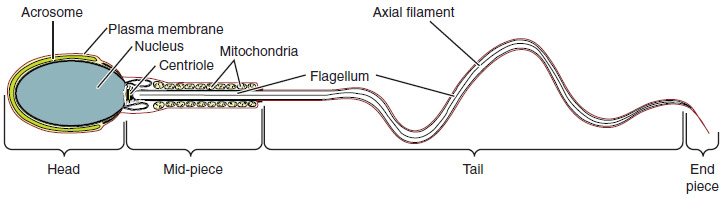
  • Cabeza:
    • Núcleo:
      • Contiene cromosomas
      • Condensado
    • Acrosoma:
      • Estructura en EN Erythema nodosum is an immune-mediated panniculitis (inflammation of the subcutaneous fat) caused by a type IV (delayed-type) hypersensitivity reaction. It commonly manifests in young women as tender, erythematous nodules on the shins. Erythema Nodosum forma de gorro que cubre la región anterior de la cabeza
      • Producido por transformación del aparato de Golgi
      • Contiene las enzimas necesarias para la fecundación
  • Cuerpo (pieza intermedia):
    • Contiene mitocondrias
    • Proporciona adenosin trifosfato (ATP, por sus siglas en EN Erythema nodosum is an immune-mediated panniculitis (inflammation of the subcutaneous fat) caused by a type IV (delayed-type) hypersensitivity reaction. It commonly manifests in young women as tender, erythematous nodules on the shins. Erythema Nodosum inglés) para el movimiento del flagelo
  • Cola (flagelo):
    • Aporta motilidad
    • Compuesto por microtúbulos
Estructura del espermatozoide

Estructura del espermatozoide

Imagen: “Structure of Sperm: Sperm cells are divided into a head, containing DNA; a mid-piece, containing mitochondria; and a tail, providing motility. The acrosome is oval and somewhat flattened.” por OpenStax College. Licencia: CC BY 4.0

Capacitación

  • Los LOS Neisseria espermatozoides son funcionalmente inmaduros después de la espermatogénesis.
  • Se requiere un proceso de maduración final para:
    • Convertirse en EN Erythema nodosum is an immune-mediated panniculitis (inflammation of the subcutaneous fat) caused by a type IV (delayed-type) hypersensitivity reaction. It commonly manifests in young women as tender, erythematous nodules on the shins. Erythema Nodosum metabólicamente activo
    • Fecundar un óvulo
  • Proceso:
    • Comienza en EN Erythema nodosum is an immune-mediated panniculitis (inflammation of the subcutaneous fat) caused by a type IV (delayed-type) hypersensitivity reaction. It commonly manifests in young women as tender, erythematous nodules on the shins. Erythema Nodosum el epidídimo
    • Termina en EN Erythema nodosum is an immune-mediated panniculitis (inflammation of the subcutaneous fat) caused by a type IV (delayed-type) hypersensitivity reaction. It commonly manifests in young women as tender, erythematous nodules on the shins. Erythema Nodosum el tracto reproductivo femenino
  • Los LOS Neisseria cambios incluyen:
    • Motilidad
    • Contenido enzimático del acrosoma
    • Proteínas de la superficie celular

Relevancia Clínica

  • Trisomía 21 (síndrome de Down): trastorno cromosómico que puede resultar de un error Error Refers to any act of commission (doing something wrong) or omission (failing to do something right) that exposes patients to potentially hazardous situations. Disclosure of Information en EN Erythema nodosum is an immune-mediated panniculitis (inflammation of the subcutaneous fat) caused by a type IV (delayed-type) hypersensitivity reaction. It commonly manifests in young women as tender, erythematous nodules on the shins. Erythema Nodosum la meiosis Meiosis The creation of eukaryotic gametes involves a DNA replication phase followed by 2 cellular division stages: meiosis I and meiosis II. Meiosis I separates homologous chromosomes into separate cells (1n, 2c), while meiosis II separates sister chromatids into gametes (1n, 1c). Meiosis durante la gametogénesis. Los LOS Neisseria individuos afectados tienen rasgos craneofaciales y musculoesqueléticos característicos, así como múltiples anomalías médicas que involucran los LOS Neisseria sistemas cardíaco, gastrointestinal, ocular y auditivo. En EN Erythema nodosum is an immune-mediated panniculitis (inflammation of the subcutaneous fat) caused by a type IV (delayed-type) hypersensitivity reaction. It commonly manifests in young women as tender, erythematous nodules on the shins. Erythema Nodosum última instancia, el cariotipo confirma el diagnóstico en EN Erythema nodosum is an immune-mediated panniculitis (inflammation of the subcutaneous fat) caused by a type IV (delayed-type) hypersensitivity reaction. It commonly manifests in young women as tender, erythematous nodules on the shins. Erythema Nodosum el período prenatal o postnatal. No existe cura para el síndrome de Down. El tratamiento se basa en EN Erythema nodosum is an immune-mediated panniculitis (inflammation of the subcutaneous fat) caused by a type IV (delayed-type) hypersensitivity reaction. It commonly manifests in young women as tender, erythematous nodules on the shins. Erythema Nodosum las manifestaciones clínicas presentes.
  • Trisomía 18 (síndrome de Edwards): trastorno cromosómico que puede resultar de un error Error Refers to any act of commission (doing something wrong) or omission (failing to do something right) that exposes patients to potentially hazardous situations. Disclosure of Information en EN Erythema nodosum is an immune-mediated panniculitis (inflammation of the subcutaneous fat) caused by a type IV (delayed-type) hypersensitivity reaction. It commonly manifests in young women as tender, erythematous nodules on the shins. Erythema Nodosum la meiosis Meiosis The creation of eukaryotic gametes involves a DNA replication phase followed by 2 cellular division stages: meiosis I and meiosis II. Meiosis I separates homologous chromosomes into separate cells (1n, 2c), while meiosis II separates sister chromatids into gametes (1n, 1c). Meiosis durante la gametogénesis. La trisomía 18 es la 2da trisomía más común, con predominio en EN Erythema nodosum is an immune-mediated panniculitis (inflammation of the subcutaneous fat) caused by a type IV (delayed-type) hypersensitivity reaction. It commonly manifests in young women as tender, erythematous nodules on the shins. Erythema Nodosum niñas. Los LOS Neisseria rasgos característicos incluyen restricción del crecimiento intrauterino, defectos cardíacos, puños cerrados con dedos superpuestos y pies en EN Erythema nodosum is an immune-mediated panniculitis (inflammation of the subcutaneous fat) caused by a type IV (delayed-type) hypersensitivity reaction. It commonly manifests in young women as tender, erythematous nodules on the shins. Erythema Nodosum mecedora. El diagnóstico se realiza mediante análisis de cariotipo. No hay tratamiento disponible y la mayoría de las personas afectadas no sobreviven más allá de 1 año de vida.
  • Trisomía 13 (síndrome de Patau): trastorno cromosómico que puede resultar de un error Error Refers to any act of commission (doing something wrong) or omission (failing to do something right) that exposes patients to potentially hazardous situations. Disclosure of Information en EN Erythema nodosum is an immune-mediated panniculitis (inflammation of the subcutaneous fat) caused by a type IV (delayed-type) hypersensitivity reaction. It commonly manifests in young women as tender, erythematous nodules on the shins. Erythema Nodosum la meiosis Meiosis The creation of eukaryotic gametes involves a DNA replication phase followed by 2 cellular division stages: meiosis I and meiosis II. Meiosis I separates homologous chromosomes into separate cells (1n, 2c), while meiosis II separates sister chromatids into gametes (1n, 1c). Meiosis durante la gametogénesis. La trisomía 13 es la 3ra trisomía más común. Las características clínicas incluyen malformaciones del cerebro y la médula espinal, defectos cardíacos, defectos oculares, labio leporino/paladar hendido e hipotonía. El diagnóstico se realiza mediante análisis de cariotipo. No hay tratamiento disponible y la mayoría de las personas afectadas no sobreviven más allá de 1 año de vida.

Referencias

  1. Gilbert, S.F. Spermatogenesis (2000). In Developmental Biology, 6th ed. Sunderland (MA): Sinauer Associates. https://www.ncbi.nlm.nih.gov/books/NBK10095/
  2. Matsumoto, A.M., Anawalt, B.D. (2020). Male reproductive physiology. UpToDate. Retrieved September 5, 2021, from https://www.uptodate.com/contents/male-reproductive-physiology
  3. Suede, S.H., Malik, A., Sapra, A. (2021). Histology, spermatogenesis. StatPearls. Retrieved September 5, 2021, from https://www.ncbi.nlm.nih.gov/books/NBK553142/
  4. Waters, M., Tadi, P. (2020). Genetics, female gametogenesis. StatPearls. Retrieved September 9, 2021, from https://www.ncbi.nlm.nih.gov/books/NBK555917/
  5. Holesh, J.E., Bass, A.N., Lord, M. (2021). Physiology, ovulation. StatPearls. Retrieved September 9, 2021, from https://www.ncbi.nlm.nih.gov/books/NBK441996/
  6. Desai, N., Ludgin, J., Sharma, R., Anirudh, R. K., & Aga, A. (2013). Female and male gametogenesis. In T. Falcone & W. W. Hurd (Eds.), Clinical reproductive medicine and surgery: A practical guide (pp. 43–65). Springer Science+Business Media. https://doi.org/10.1007/978-1-4614-6837-0_3
  7. Swerdloff, R.S., Wang, C. (2020). The testis and male hypogonadism, infertility, and sexual dysfunction. In: Goldman, L., Schafer, A. I. (Eds.), Goldman-Cecil Medicine, 26th ed., pp. 1537–1547. Elsevier.

¡Crea tu cuenta gratis o inicia una sesión para seguir leyendo!

Regístrate ahora y obtén acceso gratuito a Lecturio con páginas de concepto, videos médicos y cuestionarios para tu educación médica.

User Reviews

Que tengas una sesión de estudio alegre y navideña 🎁 Ahorra 50% en todos los planes >>

Details