Domina Conceptos Médicos

Estudia para la escuela de medicina y tus examenes con Lecturio.

Etapas y Regulación de la Traducción

La traducción es el proceso de síntesis de una proteína a partir de un transcrito de ácido ribonucleico (ARN) mensajero (ARNm). Este proceso se divide en EN Erythema nodosum is an immune-mediated panniculitis (inflammation of the subcutaneous fat) caused by a type IV (delayed-type) hypersensitivity reaction. It commonly manifests in young women as tender, erythematous nodules on the shins. Erythema Nodosum tres etapas principales: iniciación, elongación y terminación. La traducción es catalizada por estructuras conocidas como ribosomas, que son grandes complejos de proteínas y ARN ribosómico (ARNr). El ribosoma “lee” el ARNm y aporta los LOS Neisseria ARN de transferencia (ARNt), cada uno de ellos unido a un aminoácido específico, en EN Erythema nodosum is an immune-mediated panniculitis (inflammation of the subcutaneous fat) caused by a type IV (delayed-type) hypersensitivity reaction. It commonly manifests in young women as tender, erythematous nodules on the shins. Erythema Nodosum el orden correcto. A continuación, estos aminoácidos se unen entre sí mediante un componente enzimático del ribosoma conocido como peptidil transferasa. La traducción puede ser regulada en EN Erythema nodosum is an immune-mediated panniculitis (inflammation of the subcutaneous fat) caused by a type IV (delayed-type) hypersensitivity reaction. It commonly manifests in young women as tender, erythematous nodules on the shins. Erythema Nodosum múltiples pasos, incluso a través de un proceso conocido como interferencia de ARN. En EN Erythema nodosum is an immune-mediated panniculitis (inflammation of the subcutaneous fat) caused by a type IV (delayed-type) hypersensitivity reaction. It commonly manifests in young women as tender, erythematous nodules on the shins. Erythema Nodosum este proceso intervienen pequeños segmentos de ARN de doble cadena que son capaces de inhibir la traducción de los LOS Neisseria ARNm.

Last updated: Dec 15, 2025
Editorial responsibility: Stanley Oiseth, Lindsay Jones, Evelin Maza

Dogma Central y Código Genético

Definición

  • El dogma central de la expresión génica: para expresar un gen, el ácido desoxirribonucleico (ADN) se transcribe en EN Erythema nodosum is an immune-mediated panniculitis (inflammation of the subcutaneous fat) caused by a type IV (delayed-type) hypersensitivity reaction. It commonly manifests in young women as tender, erythematous nodules on the shins. Erythema Nodosum ARN, que luego se traduce en EN Erythema nodosum is an immune-mediated panniculitis (inflammation of the subcutaneous fat) caused by a type IV (delayed-type) hypersensitivity reaction. It commonly manifests in young women as tender, erythematous nodules on the shins. Erythema Nodosum un polipéptido.
  • La traducción es el proceso por el que el ARNm se utiliza como molde para fabricar polipéptidos.

ADN

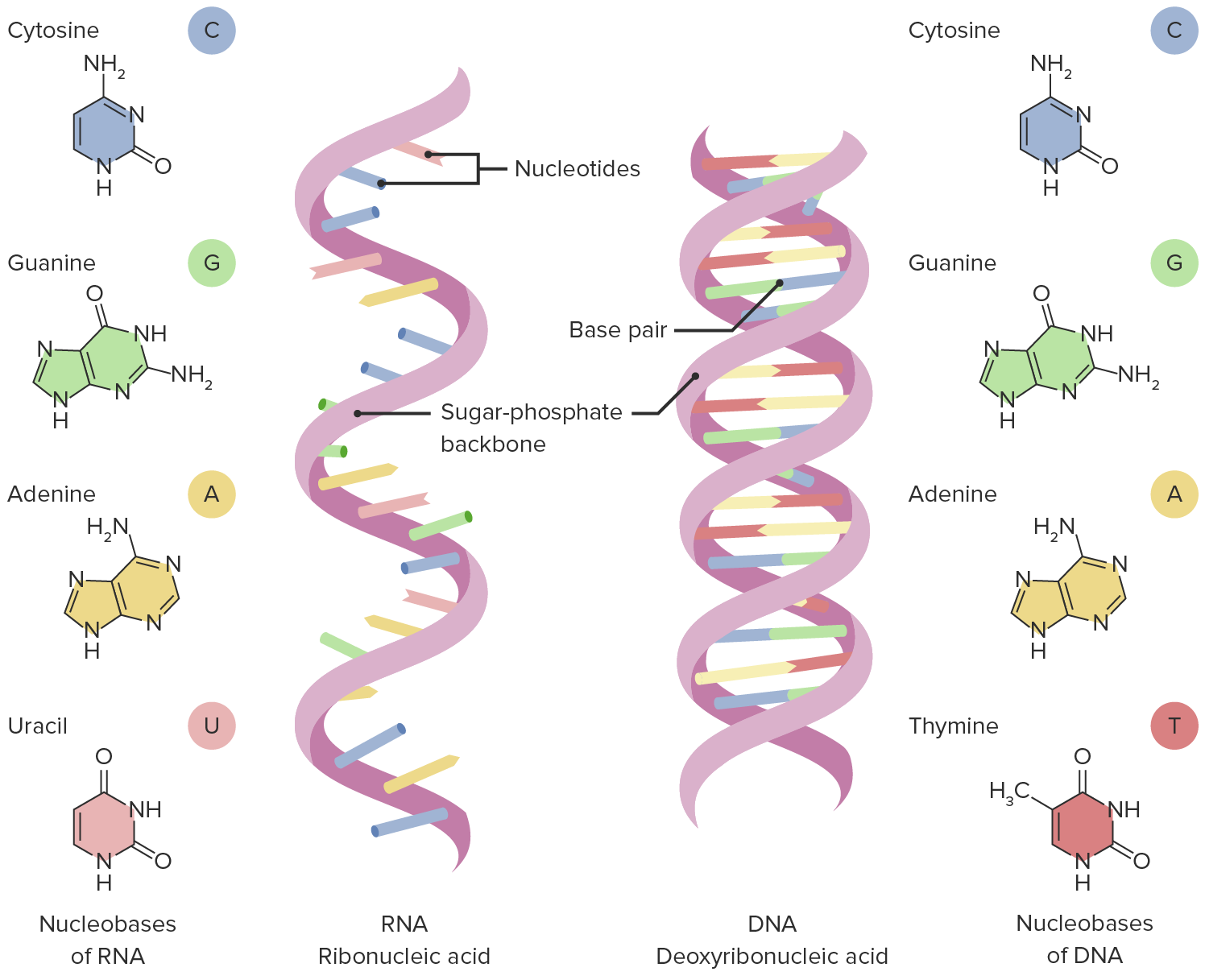
  • Una molécula de doble hélice formada por 2 hebras antiparalelas, con una estructura similar a una escalera retorcida:
    • Los LOS Neisseria “lados” de cada escalera están formados por moléculas alternas de desoxirribosa (un azúcar de 5 carbonos) y de fosfato.
    • Los LOS Neisseria “peldaños” de la escalera están formados por moléculas que contienen nitrógeno emparejadas, llamadas nucleótidos, y que suelen denominarse “ bases Bases Usually a hydroxide of lithium, sodium, potassium, rubidium or cesium, but also the carbonates of these metals, ammonia, and the amines. Acid-Base Balance”.
  • Pares de bases Bases Usually a hydroxide of lithium, sodium, potassium, rubidium or cesium, but also the carbonates of these metals, ammonia, and the amines. Acid-Base Balance de ADN:
    • Guanina (G), citosina (C), adenina (A) y timina (T)
    • G se empareja con C (y viceversa) a través de 3 enlaces de hidrógeno.
    • A se empareja con T (y viceversa) a través de 2 enlaces de hidrógeno.
    • Estos pares de bases Bases Usually a hydroxide of lithium, sodium, potassium, rubidium or cesium, but also the carbonates of these metals, ammonia, and the amines. Acid-Base Balance pueden “leerse” como una cadena de letras; e.g., GTATCGA.
    • Esta cadena de letras es el “código”, o manual de instrucciones, que se utiliza en EN Erythema nodosum is an immune-mediated panniculitis (inflammation of the subcutaneous fat) caused by a type IV (delayed-type) hypersensitivity reaction. It commonly manifests in young women as tender, erythematous nodules on the shins. Erythema Nodosum última instancia para crear proteínas.

ARN

  • Una molécula monocatenaria formada por moléculas alternas de ribosa (un azúcar de 5 carbonos) y fosfato
  • Cada ribosa está unida a un nucleótido de ARN:
    • Guanina (G), citosina (C), adenina (A) y uracilo (U)
    • Observe que, en EN Erythema nodosum is an immune-mediated panniculitis (inflammation of the subcutaneous fat) caused by a type IV (delayed-type) hypersensitivity reaction. It commonly manifests in young women as tender, erythematous nodules on the shins. Erythema Nodosum lugar de la timina, la adenina se une al AL Amyloidosis uracilo (y viceversa) mediante 2 enlaces de hidrógeno.
  • Codón: serie de 3 nucleótidos seguidos que codifican un aminoácido concreto
  • Tipos de ARN:
    • ARNm: cadenas molde que son traducidas en EN Erythema nodosum is an immune-mediated panniculitis (inflammation of the subcutaneous fat) caused by a type IV (delayed-type) hypersensitivity reaction. It commonly manifests in young women as tender, erythematous nodules on the shins. Erythema Nodosum polipéptidos por los LOS Neisseria complejos ribosomales
    • ARNr: componente del complejo ribosómico que ayuda a la síntesis de proteínas.
    • ARNt: moléculas que llevan los LOS Neisseria aminoácidos al AL Amyloidosis ribosoma, donde se unen al AL Amyloidosis ARNm
Transcripción Ácidos nucleicos

Estructuras de ARN y ADN

Imagen por Lecturio.

El código genético

El código genético es la forma en EN Erythema nodosum is an immune-mediated panniculitis (inflammation of the subcutaneous fat) caused by a type IV (delayed-type) hypersensitivity reaction. It commonly manifests in young women as tender, erythematous nodules on the shins. Erythema Nodosum que los LOS Neisseria organismos traducen una secuencia de bases Bases Usually a hydroxide of lithium, sodium, potassium, rubidium or cesium, but also the carbonates of these metals, ammonia, and the amines. Acid-Base Balance en EN Erythema nodosum is an immune-mediated panniculitis (inflammation of the subcutaneous fat) caused by a type IV (delayed-type) hypersensitivity reaction. It commonly manifests in young women as tender, erythematous nodules on the shins. Erythema Nodosum una proteína real.
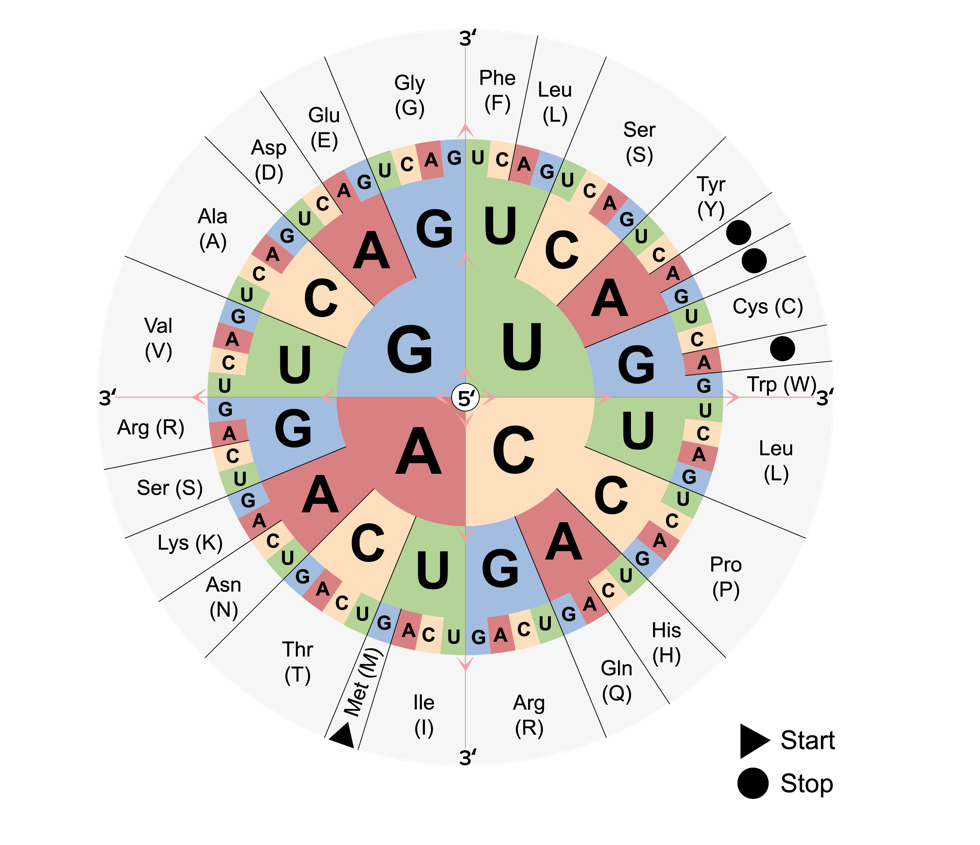
  • La información del ARNm está contenida en EN Erythema nodosum is an immune-mediated panniculitis (inflammation of the subcutaneous fat) caused by a type IV (delayed-type) hypersensitivity reaction. It commonly manifests in young women as tender, erythematous nodules on the shins. Erythema Nodosum secuencias de 3 bases Bases Usually a hydroxide of lithium, sodium, potassium, rubidium or cesium, but also the carbonates of these metals, ammonia, and the amines. Acid-Base Balance llamadas codones.
  • El código es específico: cada codón codifica solo un aminoácido.
  • El código es redundante:
    • Con 4 bases Bases Usually a hydroxide of lithium, sodium, potassium, rubidium or cesium, but also the carbonates of these metals, ammonia, and the amines. Acid-Base Balance, hay 64 posibles codones de 3 bases Bases Usually a hydroxide of lithium, sodium, potassium, rubidium or cesium, but also the carbonates of these metals, ammonia, and the amines. Acid-Base Balance, pero solo 20 aminoácidos.
    • Algunos aminoácidos pueden estar codificados por varios codones diferentes:
      • Normalmente, es la 3ra base la que difiere (conocida como base oscilante).
      • Las mutaciones en EN Erythema nodosum is an immune-mediated panniculitis (inflammation of the subcutaneous fat) caused by a type IV (delayed-type) hypersensitivity reaction. It commonly manifests in young women as tender, erythematous nodules on the shins. Erythema Nodosum la base oscilante, suelen ser mutaciones silenciosas que no afectan a la secuencia de aminoácidos.
      • Por ejemplo, GGG, GGA, GGC y GGU codifican todos para la glicina, por lo que, aunque GGG mute a GGA, la proteína final será la misma.
  • El código contiene “puntuación”:
    • Codón de inicio (inicia la traducción): AUG → codifica la metionina
    • Codones de parada (terminan la traducción): UAA, UAG, UGA
  • El código es universal:
    • El código es el mismo en EN Erythema nodosum is an immune-mediated panniculitis (inflammation of the subcutaneous fat) caused by a type IV (delayed-type) hypersensitivity reaction. It commonly manifests in young women as tender, erythematous nodules on the shins. Erythema Nodosum todas las especies, incluidas las procariotas y las eucariotas.
    • Excepción: varios codones son ligeramente diferentes en EN Erythema nodosum is an immune-mediated panniculitis (inflammation of the subcutaneous fat) caused by a type IV (delayed-type) hypersensitivity reaction. It commonly manifests in young women as tender, erythematous nodules on the shins. Erythema Nodosum las mitocondrias.
  • El código es leído por los LOS Neisseria ARNt dentro de los LOS Neisseria ribosomas.
Código genético

El código genético: empieza en el centro y se lee hacia afuera para determinar qué aminoácidos codifica cada uno de los 64 codones. Se observan los codones de inicio y parada.

Imagen por Lecturio.

Componentes de la Traducción

Los LOS Neisseria ARNm son traducidos a proteínas por los LOS Neisseria ribosomas y los LOS Neisseria ARN de transferencia.

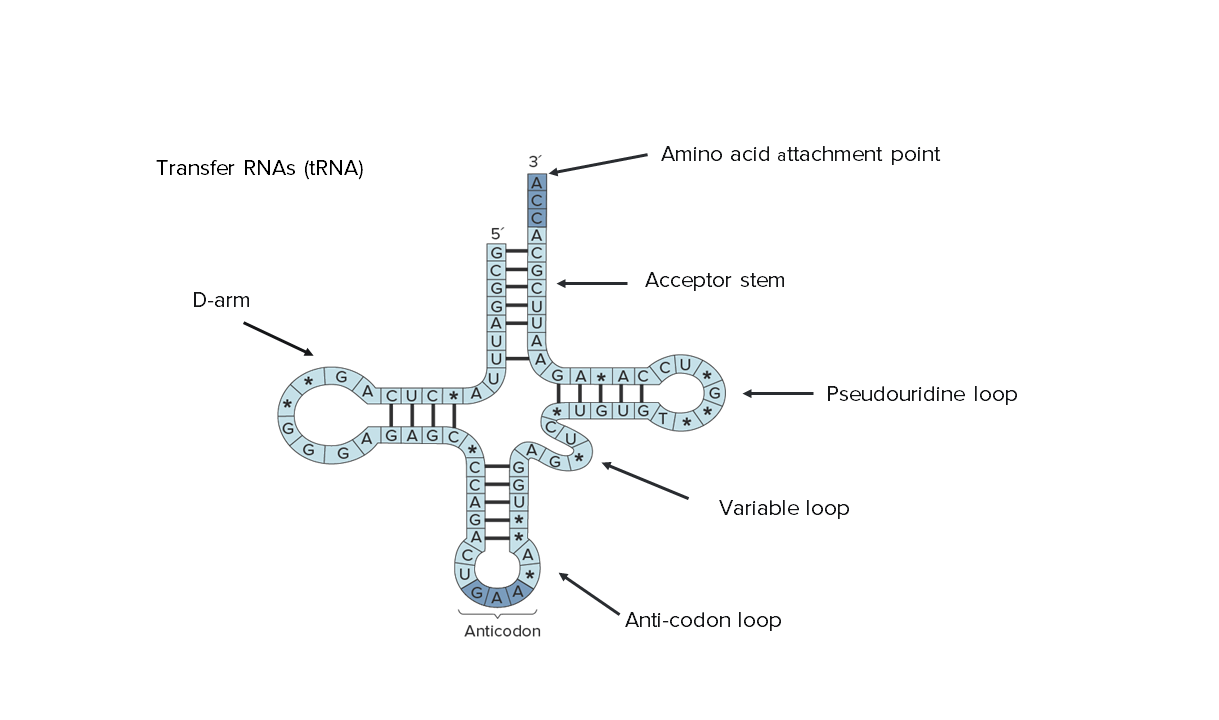
ARN de transferencia (ARNt)

Los LOS Neisseria ARNt transportan los LOS Neisseria aminoácidos a los LOS Neisseria ribosomas, donde se unen al AL Amyloidosis ARNm, alineando los LOS Neisseria aminoácidos que se unirán para formar el polipéptido en EN Erythema nodosum is an immune-mediated panniculitis (inflammation of the subcutaneous fat) caused by a type IV (delayed-type) hypersensitivity reaction. It commonly manifests in young women as tender, erythematous nodules on the shins. Erythema Nodosum crecimiento.
  • Sintetizado por:
    • ARN polimerasa en EN Erythema nodosum is an immune-mediated panniculitis (inflammation of the subcutaneous fat) caused by a type IV (delayed-type) hypersensitivity reaction. It commonly manifests in young women as tender, erythematous nodules on the shins. Erythema Nodosum procariotas
    • ARN polimerasa III en EN Erythema nodosum is an immune-mediated panniculitis (inflammation of the subcutaneous fat) caused by a type IV (delayed-type) hypersensitivity reaction. It commonly manifests in young women as tender, erythematous nodules on the shins. Erythema Nodosum eucariotas
    • Hay un ARNt único para cada aminoácido.
  • Estructura:
    • Una molécula de ARN monocatenario tiene una longitud de 70–85 nucleótidos.
    • Forma enlaces de hidrógeno/pares de bases Bases Usually a hydroxide of lithium, sodium, potassium, rubidium or cesium, but also the carbonates of these metals, ammonia, and the amines. Acid-Base Balance consigo mismo para crear una estructura de trébol (secundaria)
    • El extremo 3′ ( en EN Erythema nodosum is an immune-mediated panniculitis (inflammation of the subcutaneous fat) caused by a type IV (delayed-type) hypersensitivity reaction. It commonly manifests in young women as tender, erythematous nodules on the shins. Erythema Nodosum el tallo del trébol) es un sitio de unión para un aminoácido.
    • El bucle central del trébol contiene un anticodón:
      • Una secuencia de 3 bases Bases Usually a hydroxide of lithium, sodium, potassium, rubidium or cesium, but also the carbonates of these metals, ammonia, and the amines. Acid-Base Balance que son complementarias a un codón de ARNm.
      • Permite que el ARNt se una a un ARNm donde el codón y el anticodón coincidan
  • Carga de ARNt:
    • El proceso de conexión de un aminoácido con el ARNt
    • Catalizada por la enzima aminoacil-ARNt sintetasa
  • Aminoacil-ARNt sintetasa:
    • Responsable de conectar el aminoácido correcto con el ARNt correcto
    • Existe una aminoacil-ARNt sintetasa diferente para cada aminoácido/ARNt.
    • Contiene 2 sitios de unión primarios:
      • Sitio de unión del ARNt: incluye una estructura similar a un codón que se une al AL Amyloidosis anticodón del ARNt
      • Sitio de unión del aminoácido: se ajusta al AL Amyloidosis aminoácido que coincide con ese anticodón
    • Proceso de carga:
      • Aminoácido cargado en EN Erythema nodosum is an immune-mediated panniculitis (inflammation of the subcutaneous fat) caused by a type IV (delayed-type) hypersensitivity reaction. It commonly manifests in young women as tender, erythematous nodules on the shins. Erythema Nodosum su sitio de unión
      • El adenosin trifosfato (ATP, por sus siglas en EN Erythema nodosum is an immune-mediated panniculitis (inflammation of the subcutaneous fat) caused by a type IV (delayed-type) hypersensitivity reaction. It commonly manifests in young women as tender, erythematous nodules on the shins. Erythema Nodosum inglés) se escinde, creando un adenosin monofosfato (AMP, por sus siglas en EN Erythema nodosum is an immune-mediated panniculitis (inflammation of the subcutaneous fat) caused by a type IV (delayed-type) hypersensitivity reaction. It commonly manifests in young women as tender, erythematous nodules on the shins. Erythema Nodosum inglés) para cargar el aminoácido.
      • El ARNt se carga en EN Erythema nodosum is an immune-mediated panniculitis (inflammation of the subcutaneous fat) caused by a type IV (delayed-type) hypersensitivity reaction. It commonly manifests in young women as tender, erythematous nodules on the shins. Erythema Nodosum su sitio de unión.
      • El aminoácido se empareja con el ARNt, mientras que el AMP se libera.
      • El ARNt cargado se libera de la enzima.
    • El aminoácido unido en EN Erythema nodosum is an immune-mediated panniculitis (inflammation of the subcutaneous fat) caused by a type IV (delayed-type) hypersensitivity reaction. It commonly manifests in young women as tender, erythematous nodules on the shins. Erythema Nodosum el extremo 3′ del ARNt coincidirá con el codón del ARNm al AL Amyloidosis que puede unirse el anticodón del ARNt.
  • ARNt iniciador: los LOS Neisseria ARNt que se emparejan con el codón de inicio
    • En EN Erythema nodosum is an immune-mediated panniculitis (inflammation of the subcutaneous fat) caused by a type IV (delayed-type) hypersensitivity reaction. It commonly manifests in young women as tender, erythematous nodules on the shins. Erythema Nodosum los LOS Neisseria procariotas, el ARNt iniciador es el ARNt N-formilmetionina (fMet)
    • En EN Erythema nodosum is an immune-mediated panniculitis (inflammation of the subcutaneous fat) caused by a type IV (delayed-type) hypersensitivity reaction. It commonly manifests in young women as tender, erythematous nodules on the shins. Erythema Nodosum los LOS Neisseria eucariotas, el ARNt iniciador es la metionina-ARNt (met-ARNti).

Ribosomas

Los LOS Neisseria ribosomas son complejos catalíticos que incluyen componentes proteicos y de ARNr. Dentro del complejo ribosomal, el ARNm es leído por los LOS Neisseria ARNt y se crea un polipéptido.
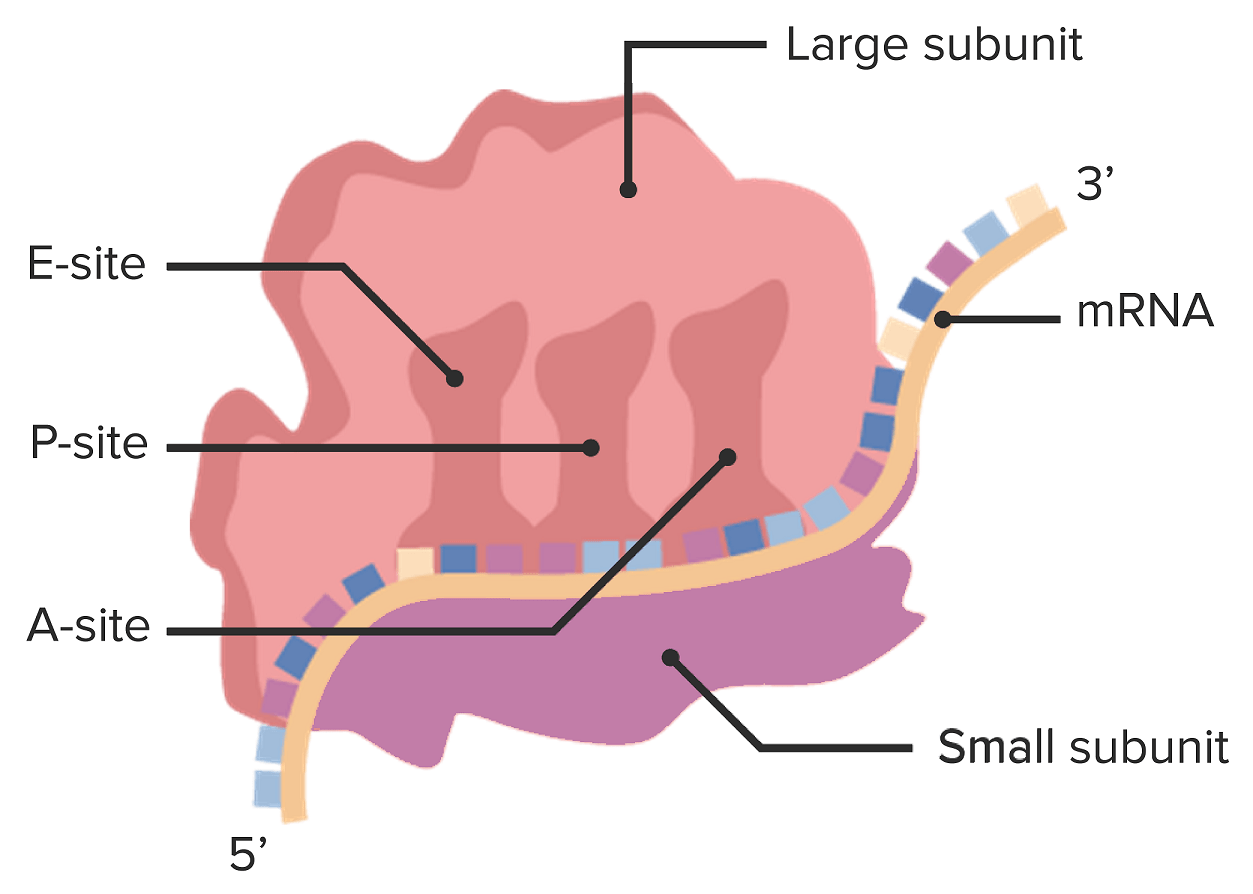
  • Estructura del ribosoma:
    • Formado por 2 subunidades primarias: una subunidad grande y otra más pequeña
    • Contiene múltiples proteínas y ARNr
    • Los LOS Neisseria ARNr forman extensas estructuras secundarias al AL Amyloidosis emparejarse con ellos mismos.
  • Subunidad grande:
    • Contiene peptidil transferasa:
      • Una ribozima (un ARNr que funciona como enzima para catalizar una reacción): el ARNr más grande dentro del ribosoma.
      • Crea los LOS Neisseria enlaces peptídicos entre los LOS Neisseria aminoácidos
    • Contiene 3 sitios de unión para los LOS Neisseria ARNt cargados:
      • Sitio de llegada (A)
      • Sitio del polipéptido (P)
      • Sitio de salida (E)
  • Subunidad pequeña: descodifica el ARNm
  • Los LOS Neisseria ribosomas leen el ARNm de 5′ a 3′
  • Se encuentran flotando libremente en EN Erythema nodosum is an immune-mediated panniculitis (inflammation of the subcutaneous fat) caused by a type IV (delayed-type) hypersensitivity reaction. It commonly manifests in young women as tender, erythematous nodules on the shins. Erythema Nodosum el citosol o pueden unirse al AL Amyloidosis retículo endoplásmico rugoso
Ribosome structure demonstrating the large subunit on top

Estructura del ribosoma que muestra la subunidad grande en la parte superior, con los sitios de unión A, P y E para los ARNt cargados. La subunidad más pequeña está debajo del ARNm.

Imagen por Lecturio.
Tabla: Ribosomas procarióticos frente a eucarióticos
Procariotas Eucariotas
Tamaño de la subunidad pequeña 30 S 40 S
Tamaño de la subunidad grande 50 S 60 S
Número de proteínas 52 88
Número de ARNr 3 4
Tamaño de los LOS Neisseria ARNr homólogos en EN Erythema nodosum is an immune-mediated panniculitis (inflammation of the subcutaneous fat) caused by a type IV (delayed-type) hypersensitivity reaction. It commonly manifests in young women as tender, erythematous nodules on the shins. Erythema Nodosum la subunidad pequeña 16 S 18 S
Tamaños de los LOS Neisseria ARNr homólogos en EN Erythema nodosum is an immune-mediated panniculitis (inflammation of the subcutaneous fat) caused by a type IV (delayed-type) hypersensitivity reaction. It commonly manifests in young women as tender, erythematous nodules on the shins. Erythema Nodosum la subunidad grande
  • 5 S
  • 23 S*
  • 5 S
  • 28 S*
Tamaño del ARNr en EN Erythema nodosum is an immune-mediated panniculitis (inflammation of the subcutaneous fat) caused by a type IV (delayed-type) hypersensitivity reaction. It commonly manifests in young women as tender, erythematous nodules on the shins. Erythema Nodosum la subunidad grande sin un homólogo procariota 5,8 S
* El ARNr conocido como peptidil transferasa cataliza la formación de enlaces peptídicos entre los aminoácidos de la cadena polipeptídica en crecimiento.

Inicio de la Traducción

El inicio de la traducción implica el ensamblaje del ribosoma en EN Erythema nodosum is an immune-mediated panniculitis (inflammation of the subcutaneous fat) caused by a type IV (delayed-type) hypersensitivity reaction. It commonly manifests in young women as tender, erythematous nodules on the shins. Erythema Nodosum el ARNm en EN Erythema nodosum is an immune-mediated panniculitis (inflammation of the subcutaneous fat) caused by a type IV (delayed-type) hypersensitivity reaction. It commonly manifests in young women as tender, erythematous nodules on the shins. Erythema Nodosum la dirección adecuada y la búsqueda del codón de inicio.

Ensamblaje del ribosoma

  • Las subunidades ribosomales se desmontan en EN Erythema nodosum is an immune-mediated panniculitis (inflammation of the subcutaneous fat) caused by a type IV (delayed-type) hypersensitivity reaction. It commonly manifests in young women as tender, erythematous nodules on the shins. Erythema Nodosum el citosol cuando no se utilizan.
  • La subunidad pequeña del ribosoma se une al AL Amyloidosis extremo 5′ del ARNm.
  • La subunidad grande no se une hasta después de que el ARNt iniciador se una al AL Amyloidosis codón de inicio.
  • En EN Erythema nodosum is an immune-mediated panniculitis (inflammation of the subcutaneous fat) caused by a type IV (delayed-type) hypersensitivity reaction. It commonly manifests in young women as tender, erythematous nodules on the shins. Erythema Nodosum procariotas:
    • El ribosoma se ensambla en EN Erythema nodosum is an immune-mediated panniculitis (inflammation of the subcutaneous fat) caused by a type IV (delayed-type) hypersensitivity reaction. It commonly manifests in young women as tender, erythematous nodules on the shins. Erythema Nodosum el ARNm mientras se transcribe del ADN.
    • No existe ni se requiere un tapón para determinar la direccionalidad.
  • En EN Erythema nodosum is an immune-mediated panniculitis (inflammation of the subcutaneous fat) caused by a type IV (delayed-type) hypersensitivity reaction. It commonly manifests in young women as tender, erythematous nodules on the shins. Erythema Nodosum eucariotas:
    • El ARNm debe ser transportado desde el núcleo, donde fue transcrito, hasta el citosol para su traducción.
    • Los LOS Neisseria ARNm tienen un tapón 5′ que:
      • Indica la direccionalidad del ARNm
      • Es un sitio de unión para los LOS Neisseria factores de iniciación eucarióticos
    • Se requieren múltiples factores de iniciación eucarióticos para ayudar a la subunidad pequeña y al AL Amyloidosis ARNt iniciador a unirse al AL Amyloidosis ARNm.
  • La unión de los LOS Neisseria factores de iniciación eucarióticos y las subunidades ribosomales requiere energía.

Búsqueda del lugar de inicio

Una vez que la subunidad pequeña se ha HA Hemolytic anemia (HA) is the term given to a large group of anemias that are caused by the premature destruction/hemolysis of circulating red blood cells (RBCs). Hemolysis can occur within (intravascular hemolysis) or outside the blood vessels (extravascular hemolysis). Hemolytic Anemia unido al AL Amyloidosis extremo 5′ del ARNm, la subunidad pequeña comienza a buscar el sitio de inicio.
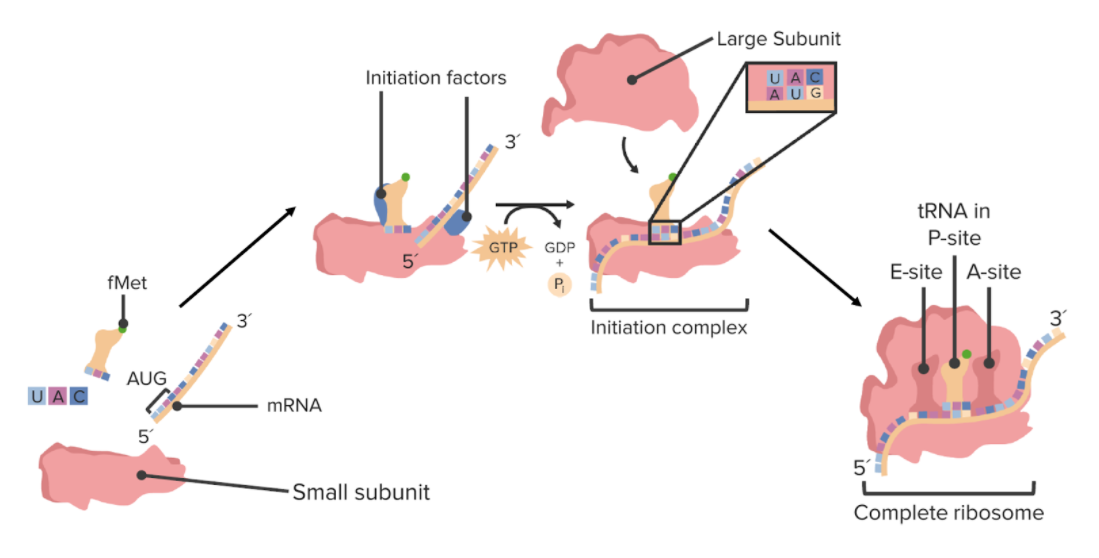
  • El sitio de inicio: AUG (el codón de la metionina)
    • Procariotas: utilizan una secuencia específica rica en EN Erythema nodosum is an immune-mediated panniculitis (inflammation of the subcutaneous fat) caused by a type IV (delayed-type) hypersensitivity reaction. It commonly manifests in young women as tender, erythematous nodules on the shins. Erythema Nodosum purinas en EN Erythema nodosum is an immune-mediated panniculitis (inflammation of the subcutaneous fat) caused by a type IV (delayed-type) hypersensitivity reaction. It commonly manifests in young women as tender, erythematous nodules on the shins. Erythema Nodosum el extremo 5′ para distinguir el AUG de inicio de otros AUG (internos)
    • Eucariotas: utilizan el primer AUG encontrado más cercano al AL Amyloidosis extremo 5′
  • El complejo ribosómico escanea el ARNm para el codón de inicio (AUG) moviéndose paso a paso en EN Erythema nodosum is an immune-mediated panniculitis (inflammation of the subcutaneous fat) caused by a type IV (delayed-type) hypersensitivity reaction. It commonly manifests in young women as tender, erythematous nodules on the shins. Erythema Nodosum la dirección 5′ a 3′ a lo largo del ARNm. Este proceso requiere la hidrólisis de ATP para que la energía se mueva.
  • Cuando la subunidad pequeña alcanza el codón de inicio (AUG) en EN Erythema nodosum is an immune-mediated panniculitis (inflammation of the subcutaneous fat) caused by a type IV (delayed-type) hypersensitivity reaction. It commonly manifests in young women as tender, erythematous nodules on the shins. Erythema Nodosum el ARNm, este se une a un ARNt iniciador.
  • Una vez que el ARNt iniciador se une al AL Amyloidosis ARNm, la subunidad grande entra y se orienta para que el ARNt iniciador se sitúe en EN Erythema nodosum is an immune-mediated panniculitis (inflammation of the subcutaneous fat) caused by a type IV (delayed-type) hypersensitivity reaction. It commonly manifests in young women as tender, erythematous nodules on the shins. Erythema Nodosum el sitio P del complejo.
  • En EN Erythema nodosum is an immune-mediated panniculitis (inflammation of the subcutaneous fat) caused by a type IV (delayed-type) hypersensitivity reaction. It commonly manifests in young women as tender, erythematous nodules on the shins. Erythema Nodosum los LOS Neisseria eucariotas se necesitan factores de iniciación eucarióticos y energía adicional para ensamblar completamente el ribosoma.
Montaje de un ribosoma

Ensamblado de un ribosoma
fMet: formilmetionina
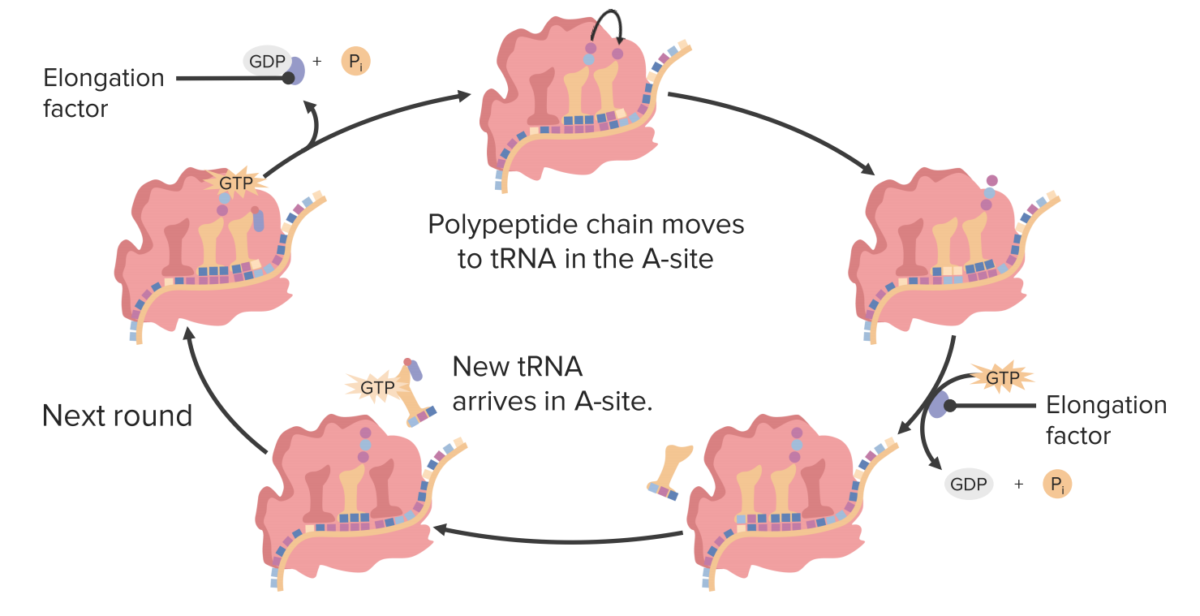
Imagen por Lecturio.

Elongación y Terminación de la Traducción

Proceso de elongación

  • Un ARNt cargado de aminoácidos se une al AL Amyloidosis sitio A dentro del ribosoma:
    • El anticodón del ARNt debe complementar el codón del ARNm para que se produzca la unión en EN Erythema nodosum is an immune-mediated panniculitis (inflammation of the subcutaneous fat) caused by a type IV (delayed-type) hypersensitivity reaction. It commonly manifests in young women as tender, erythematous nodules on the shins. Erythema Nodosum el sitio A.
    • Requiere energía de un factor de elongación que hidroliza un guanosín trifosfato (GTP, por sus siglas en EN Erythema nodosum is an immune-mediated panniculitis (inflammation of the subcutaneous fat) caused by a type IV (delayed-type) hypersensitivity reaction. It commonly manifests in young women as tender, erythematous nodules on the shins. Erythema Nodosum inglés)
    • Los LOS Neisseria factores de elongación específicos son:
      • eEF-1α en EN Erythema nodosum is an immune-mediated panniculitis (inflammation of the subcutaneous fat) caused by a type IV (delayed-type) hypersensitivity reaction. It commonly manifests in young women as tender, erythematous nodules on the shins. Erythema Nodosum eucariotas
      • EF-Tu en EN Erythema nodosum is an immune-mediated panniculitis (inflammation of the subcutaneous fat) caused by a type IV (delayed-type) hypersensitivity reaction. It commonly manifests in young women as tender, erythematous nodules on the shins. Erythema Nodosum procariotas
  • La peptidil transferasa conecta el nuevo aminoácido a la cadena polipeptídica en EN Erythema nodosum is an immune-mediated panniculitis (inflammation of the subcutaneous fat) caused by a type IV (delayed-type) hypersensitivity reaction. It commonly manifests in young women as tender, erythematous nodules on the shins. Erythema Nodosum crecimiento:
    • Transfiriendo la cadena polipeptídica desde el ARNt en EN Erythema nodosum is an immune-mediated panniculitis (inflammation of the subcutaneous fat) caused by a type IV (delayed-type) hypersensitivity reaction. It commonly manifests in young women as tender, erythematous nodules on the shins. Erythema Nodosum el sitio P al AL Amyloidosis extremo amino (“superior”) del aminoácido conectado al AL Amyloidosis ARNt en EN Erythema nodosum is an immune-mediated panniculitis (inflammation of the subcutaneous fat) caused by a type IV (delayed-type) hypersensitivity reaction. It commonly manifests in young women as tender, erythematous nodules on the shins. Erythema Nodosum el sitio A
    • Catalizando la formación de un enlace peptídico entre los LOS Neisseria 2 aminoácidos
  • El ribosoma transloca 1 codón más en EN Erythema nodosum is an immune-mediated panniculitis (inflammation of the subcutaneous fat) caused by a type IV (delayed-type) hypersensitivity reaction. It commonly manifests in young women as tender, erythematous nodules on the shins. Erythema Nodosum la dirección 3′:
    • La translocación requiere la energía de otro factor de elongación que hidroliza un GTP:
      • EF-G en EN Erythema nodosum is an immune-mediated panniculitis (inflammation of the subcutaneous fat) caused by a type IV (delayed-type) hypersensitivity reaction. It commonly manifests in young women as tender, erythematous nodules on the shins. Erythema Nodosum procariotas
      • eEF-2 en EN Erythema nodosum is an immune-mediated panniculitis (inflammation of the subcutaneous fat) caused by a type IV (delayed-type) hypersensitivity reaction. It commonly manifests in young women as tender, erythematous nodules on the shins. Erythema Nodosum eucariotas
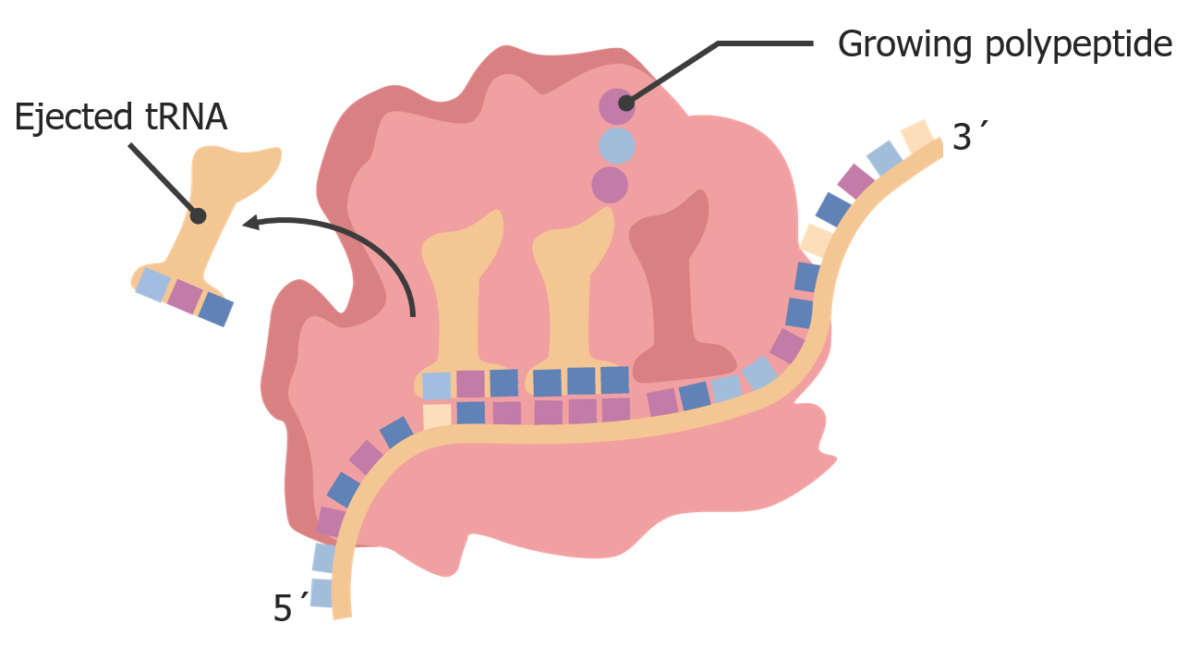
    • Esta translocación desplaza los LOS Neisseria ARNt:
      • El ARNt en EN Erythema nodosum is an immune-mediated panniculitis (inflammation of the subcutaneous fat) caused by a type IV (delayed-type) hypersensitivity reaction. It commonly manifests in young women as tender, erythematous nodules on the shins. Erythema Nodosum la posición A con la cadena polipeptídica en EN Erythema nodosum is an immune-mediated panniculitis (inflammation of the subcutaneous fat) caused by a type IV (delayed-type) hypersensitivity reaction. It commonly manifests in young women as tender, erythematous nodules on the shins. Erythema Nodosum crecimiento se mueve a la posición P.
      • El ARNt en EN Erythema nodosum is an immune-mediated panniculitis (inflammation of the subcutaneous fat) caused by a type IV (delayed-type) hypersensitivity reaction. It commonly manifests in young women as tender, erythematous nodules on the shins. Erythema Nodosum la posición P se desplaza al AL Amyloidosis sitio E y es expulsado del ribosoma.
      • El sitio A está ahora abierto para que entre el siguiente ARNt cargado.
  • Este ciclo se repite hasta que se encuentra un codón de parada.

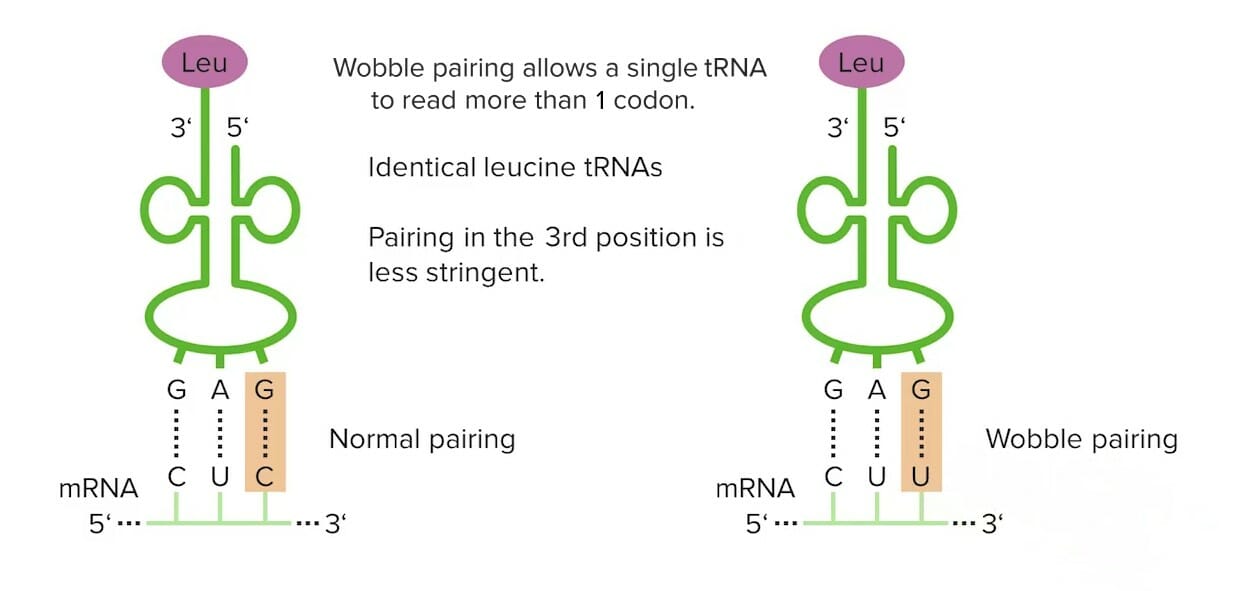
Emparejamiento de wobble

  • Las normas de emparejamiento de bases Bases Usually a hydroxide of lithium, sodium, potassium, rubidium or cesium, but also the carbonates of these metals, ammonia, and the amines. Acid-Base Balance no son tan estrictas para la 3ra posición.
  • Emparejamiento de wobble: cuando la base en EN Erythema nodosum is an immune-mediated panniculitis (inflammation of the subcutaneous fat) caused by a type IV (delayed-type) hypersensitivity reaction. It commonly manifests in young women as tender, erythematous nodules on the shins. Erythema Nodosum la 3ra posición del codón no coincide con la base en EN Erythema nodosum is an immune-mediated panniculitis (inflammation of the subcutaneous fat) caused by a type IV (delayed-type) hypersensitivity reaction. It commonly manifests in young women as tender, erythematous nodules on the shins. Erythema Nodosum la 3ra posición del anticodón
  • Muchos aminoácidos tienen múltiples terceras bases Bases Usually a hydroxide of lithium, sodium, potassium, rubidium or cesium, but also the carbonates of these metals, ammonia, and the amines. Acid-Base Balance posibles, en EN Erythema nodosum is an immune-mediated panniculitis (inflammation of the subcutaneous fat) caused by a type IV (delayed-type) hypersensitivity reaction. It commonly manifests in young women as tender, erythematous nodules on the shins. Erythema Nodosum las que el emparejamiento de wobble no alteraría la estructura final de la proteína.
  • Si el emparejamiento de wobble permite la inserción de un aminoácido diferente, puede resultar una proteína mutante.
Wobble pairing

Emparejamiento de wobble

Imagen por Lecturio.
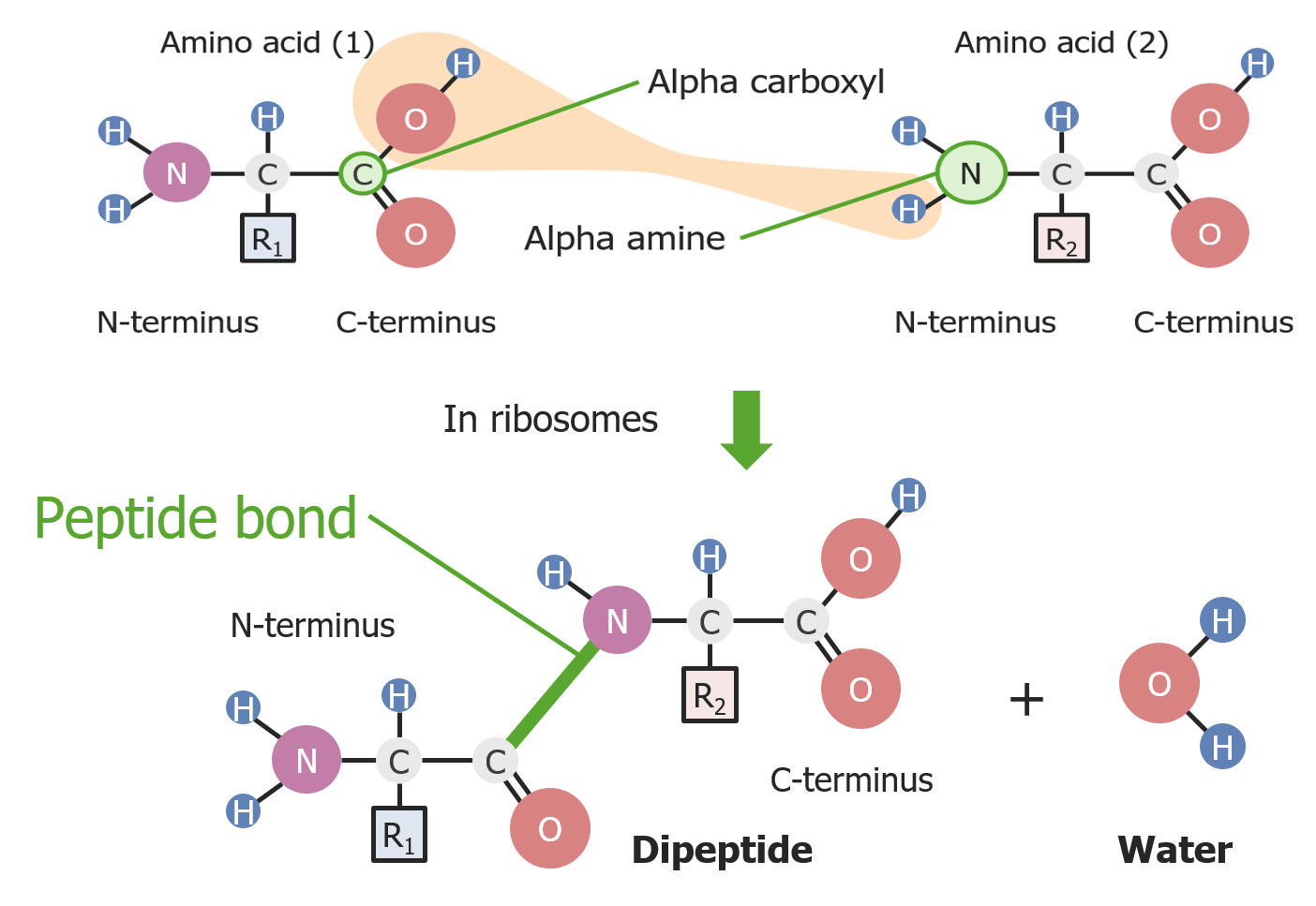
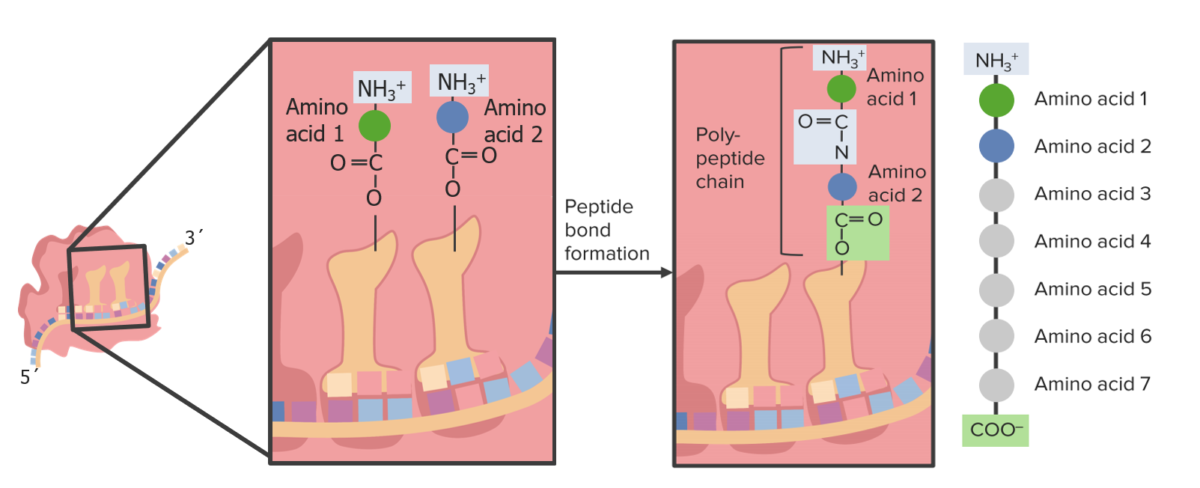
Formación de enlaces peptídicos

  • Catalizados por la peptidil transferasa (un ARNr enzimático dentro de un ribosoma)
  • Une el carbono α-carboxilo con el nitrógeno α-amina
  • Libera H2O en EN Erythema nodosum is an immune-mediated panniculitis (inflammation of the subcutaneous fat) caused by a type IV (delayed-type) hypersensitivity reaction. It commonly manifests in young women as tender, erythematous nodules on the shins. Erythema Nodosum el proceso
Formación de un enlace peptídico entre 2 aminoácidos

Formación de un enlace peptídico entre 2 aminoácidos

Imagen por Lecturio.

Finalización de la traducción

La terminación se produce cuando el ribosoma alcanza un codón de parada.
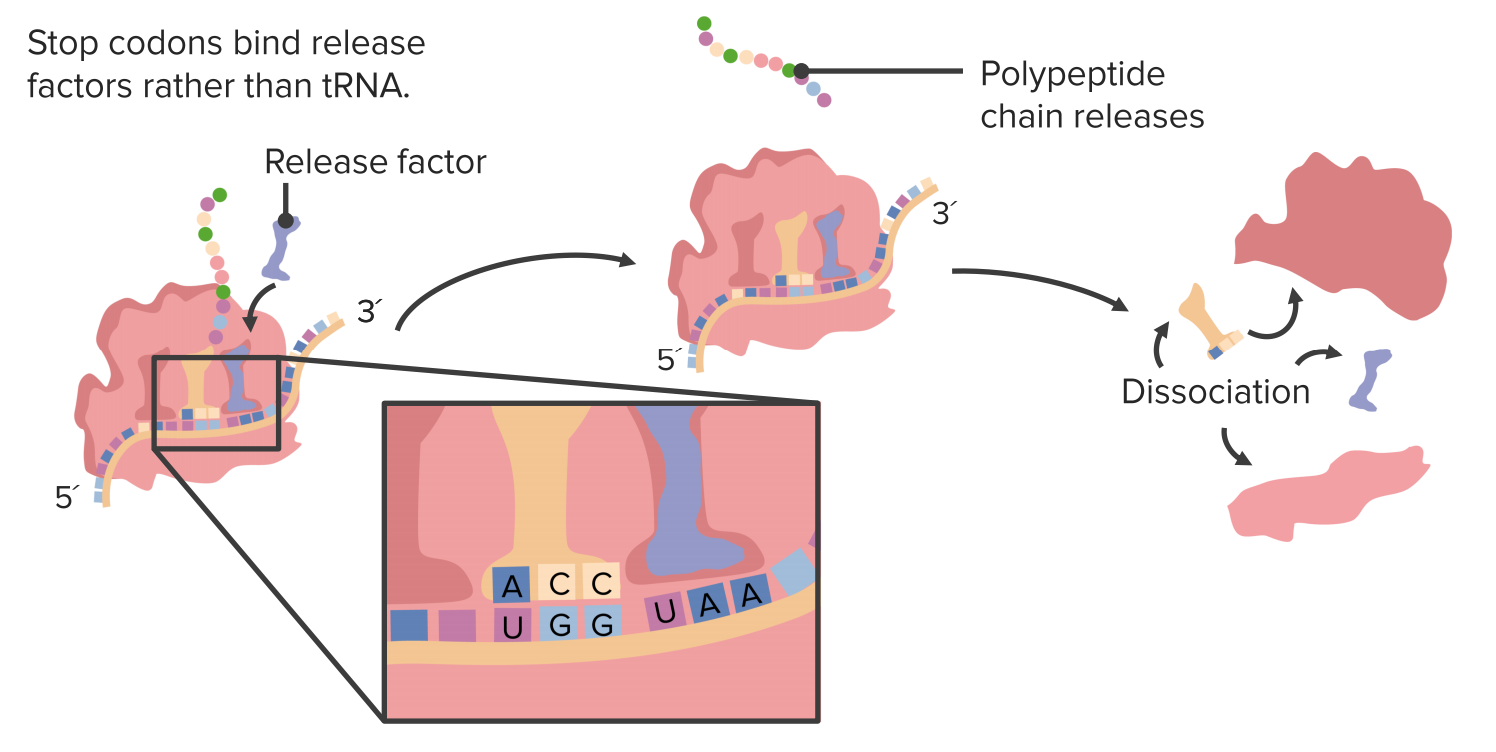
  • Los LOS Neisseria codones de parada codifican un factor de liberación en EN Erythema nodosum is an immune-mediated panniculitis (inflammation of the subcutaneous fat) caused by a type IV (delayed-type) hypersensitivity reaction. It commonly manifests in young women as tender, erythematous nodules on the shins. Erythema Nodosum lugar de aminoácidos.
  • Los LOS Neisseria factores de liberación entran en EN Erythema nodosum is an immune-mediated panniculitis (inflammation of the subcutaneous fat) caused by a type IV (delayed-type) hypersensitivity reaction. It commonly manifests in young women as tender, erythematous nodules on the shins. Erythema Nodosum el sitio A y provocan:
    • El ribosoma se desensambla
    • Liberación de la cadena polipeptídica
Finalización de la traducción

Finalización de la traducción

Imagen por Lecturio.

Regulación de la Traducción

La traducción puede regularse en EN Erythema nodosum is an immune-mediated panniculitis (inflammation of the subcutaneous fat) caused by a type IV (delayed-type) hypersensitivity reaction. It commonly manifests in young women as tender, erythematous nodules on the shins. Erythema Nodosum la iniciación, elongación o terminación; principalmente a través de la regulación hacia arriba o hacia abajo de los LOS Neisseria factores de iniciación, elongación y terminación. La traducción se regula además mediante la interferencia del ARN, el empalme alternativo y la edición del ARN.

ARN de interferencia

El ARN de interferencia ( ARNi ARNi Renin-Angiotensin-Aldosterone System Inhibitors) es una interferencia en EN Erythema nodosum is an immune-mediated panniculitis (inflammation of the subcutaneous fat) caused by a type IV (delayed-type) hypersensitivity reaction. It commonly manifests in young women as tender, erythematous nodules on the shins. Erythema Nodosum la traducción por parte de pequeñas moléculas de ARN de doble cadena que acaba inhibiendo la traducción de ARNm específicos.
  • Implica a los LOS Neisseria ARN de doble cadena y a un complejo de proteínas:
    • MicroARNs (miARNs): se originan dentro de la célula
    • ARN silenciador (o pequeño interferente) (ARNsi): se origina fuera de la célula
      • Puede tener su origen en EN Erythema nodosum is an immune-mediated panniculitis (inflammation of the subcutaneous fat) caused by a type IV (delayed-type) hypersensitivity reaction. It commonly manifests in young women as tender, erythematous nodules on the shins. Erythema Nodosum un virus Virus Viruses are infectious, obligate intracellular parasites composed of a nucleic acid core surrounded by a protein capsid. Viruses can be either naked (non-enveloped) or enveloped. The classification of viruses is complex and based on many factors, including type and structure of the nucleoid and capsid, the presence of an envelope, the replication cycle, and the host range. Virology
      • De uso común en EN Erythema nodosum is an immune-mediated panniculitis (inflammation of the subcutaneous fat) caused by a type IV (delayed-type) hypersensitivity reaction. It commonly manifests in young women as tender, erythematous nodules on the shins. Erythema Nodosum biotecnología
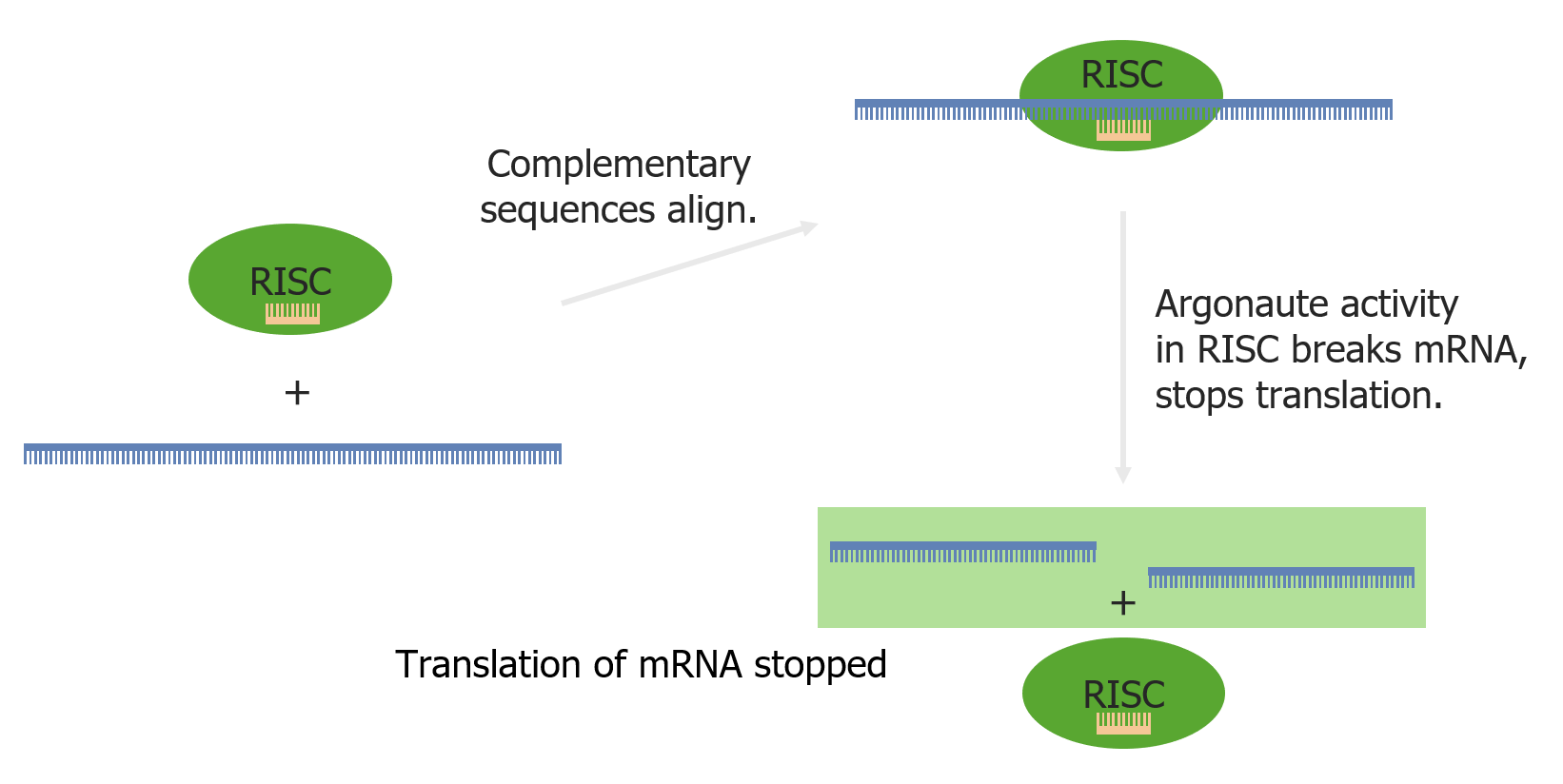
    • Complejo de silenciamiento inducido por ARN: complejo de proteínas que incorpora un miARN o un ARNsi y puede inhibir la traducción
  • Los LOS Neisseria ARNsi y miARNs están implicados en EN Erythema nodosum is an immune-mediated panniculitis (inflammation of the subcutaneous fat) caused by a type IV (delayed-type) hypersensitivity reaction. It commonly manifests in young women as tender, erythematous nodules on the shins. Erythema Nodosum:
    • Degradación selectiva del ARNm
    • Inhibición de la traducción
    • Alteración de la estructura de la cromatina (mecanismos epigenéticos)
  • Cómo funciona el ARNi ARNi Renin-Angiotensin-Aldosterone System Inhibitors:
    • Una enzima llamada dicer escinde el ARN de doble cadena (ARNds) en EN Erythema nodosum is an immune-mediated panniculitis (inflammation of the subcutaneous fat) caused by a type IV (delayed-type) hypersensitivity reaction. It commonly manifests in young women as tender, erythematous nodules on the shins. Erythema Nodosum segmentos de aproximadamente 20 pares de bases Bases Usually a hydroxide of lithium, sodium, potassium, rubidium or cesium, but also the carbonates of these metals, ammonia, and the amines. Acid-Base Balance (miARNs o ARNsi)
    • Una vez cortado, el ARNds se separa en EN Erythema nodosum is an immune-mediated panniculitis (inflammation of the subcutaneous fat) caused by a type IV (delayed-type) hypersensitivity reaction. It commonly manifests in young women as tender, erythematous nodules on the shins. Erythema Nodosum hebras simples.
    • Cuando estos segmentos de miARNs/ARNsi de cadena simple se unen al AL Amyloidosis complejo de silenciamiento inducido por ARN, estas ayudan al AL Amyloidosis miARNs/ARNsi a unirse a una cadena de ARNm complementaria e inhibirla.
    • Una vez unido a un ARNm, el complejo de silenciamiento inducido por ARN inhibe la traducción:
      • Escindiendo segmentos de ARNm con la enzima argonauta (parte del complejo de silenciamiento inducido por ARN).
      • Permaneciendo unido al AL Amyloidosis ARNm y bloqueando el ribosoma para que no complete la traducción.
  • Propósitos del ARNi ARNi Renin-Angiotensin-Aldosterone System Inhibitors:
    • Protección contra determinados virus Virus Viruses are infectious, obligate intracellular parasites composed of a nucleic acid core surrounded by a protein capsid. Viruses can be either naked (non-enveloped) or enveloped. The classification of viruses is complex and based on many factors, including type and structure of the nucleoid and capsid, the presence of an envelope, the replication cycle, and the host range. Virology
    • Regulación de la expresión génica
    • En EN Erythema nodosum is an immune-mediated panniculitis (inflammation of the subcutaneous fat) caused by a type IV (delayed-type) hypersensitivity reaction. It commonly manifests in young women as tender, erythematous nodules on the shins. Erythema Nodosum biotecnología: permite a los LOS Neisseria biólogos moleculares silenciar genes Genes A category of nucleic acid sequences that function as units of heredity and which code for the basic instructions for the development, reproduction, and maintenance of organisms. DNA Types and Structure específicos
Interferencia de ARN a través del complejo de silenciamiento inducido por ARN y un miARN

Interferencia de ARN a través del complejo de silenciamiento inducido por ARN y un miARN

Imagen por Lecturio.
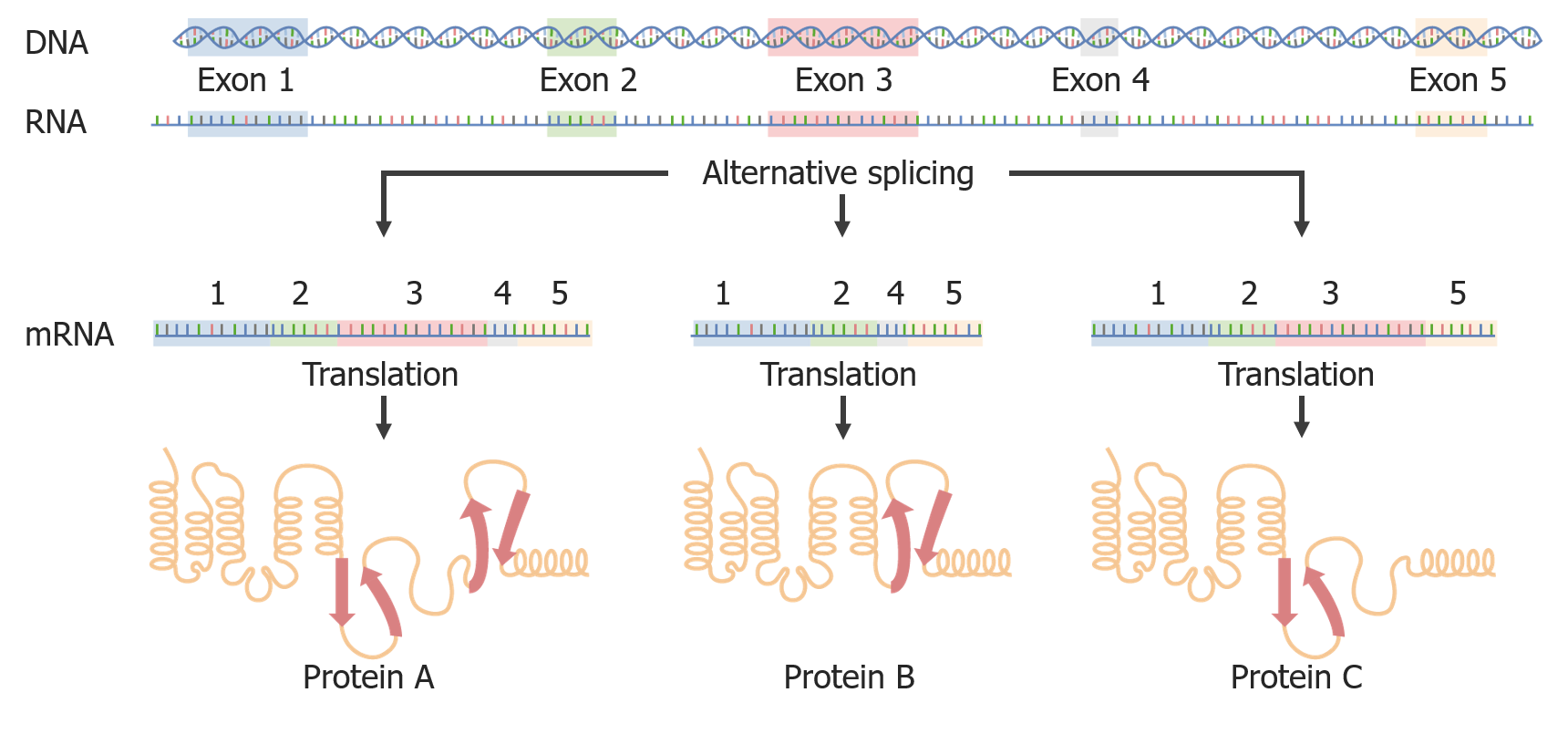
Empalme alternativo

  • Los LOS Neisseria intrones no codificantes son empalmados por los LOS Neisseria espliceosomas (complejos enzimáticos de ribonucleoproteínas).
  • A partir de un solo gen se pueden producir múltiples proteínas con el empalme diferencial del ARNm.
Empalme alternativo

Empalme alternativo:
Al empalmar de diferentes maneras, se pueden crear diferentes proteínas a partir del mismo ARNm.

Imagen por Lecturio.

Edición de ARN

  • Las enzimas pueden editar los LOS Neisseria transcritos de ARNm después de que se hayan creado.
  • Ejemplos de proteínas cuyos ARNm se someten a la edición del ARN:
    • Apolipoproteína B
    • Receptores de serotonina

Relevancia Clínica

  • Macrólidos y cetólidos: un grupo de antibióticos comúnmente utilizados en EN Erythema nodosum is an immune-mediated panniculitis (inflammation of the subcutaneous fat) caused by a type IV (delayed-type) hypersensitivity reaction. It commonly manifests in young women as tender, erythematous nodules on the shins. Erythema Nodosum las infecciones respiratorias que actúan inhibiendo la subunidad 50S del ribosoma, bloqueando la síntesis de proteínas en EN Erythema nodosum is an immune-mediated panniculitis (inflammation of the subcutaneous fat) caused by a type IV (delayed-type) hypersensitivity reaction. It commonly manifests in young women as tender, erythematous nodules on the shins. Erythema Nodosum la bacteria Bacteria Bacteria are prokaryotic single-celled microorganisms that are metabolically active and divide by binary fission. Some of these organisms play a significant role in the pathogenesis of diseases. Bacteriology. Los LOS Neisseria macrólidos más comunes son la eritromicina, claritromicina y azitromicina.
  • Tetraciclinas: grupo de antibióticos bacteriostáticos de amplio espectro que actúan inhibiendo la subunidad 30S del ribosoma, bloqueando la síntesis de proteínas en EN Erythema nodosum is an immune-mediated panniculitis (inflammation of the subcutaneous fat) caused by a type IV (delayed-type) hypersensitivity reaction. It commonly manifests in young women as tender, erythematous nodules on the shins. Erythema Nodosum la bacteria Bacteria Bacteria are prokaryotic single-celled microorganisms that are metabolically active and divide by binary fission. Some of these organisms play a significant role in the pathogenesis of diseases. Bacteriology. Un ejemplo común es la doxiciclina.
  • Toxina diftérica: la toxina diftérica ribosila el eEF-2, inhibiendo así la elongación y, por tanto, la síntesis de proteínas, lo que conduce a la muerte celular. Los LOS Neisseria hallazgos característicos de la difteria incluyen seudomembranas faríngeas (exudados amigdalinos grisáceos), faringitis severa y una linfadenopatía en EN Erythema nodosum is an immune-mediated panniculitis (inflammation of the subcutaneous fat) caused by a type IV (delayed-type) hypersensitivity reaction. It commonly manifests in young women as tender, erythematous nodules on the shins. Erythema Nodosum forma de “cuello de toro”. El tratamiento consiste principalmente en EN Erythema nodosum is an immune-mediated panniculitis (inflammation of the subcutaneous fat) caused by a type IV (delayed-type) hypersensitivity reaction. It commonly manifests in young women as tender, erythematous nodules on the shins. Erythema Nodosum la inmunización pasiva con antitoxina y antibióticos. La prevención es a través de la vacuna del toxoide diftérico.
  • Cáncer: los LOS Neisseria miARNs pueden actuar como supresores de tumores o como oncogenes Oncogenes Genes whose gain-of-function alterations lead to neoplastic cell transformation. They include, for example, genes for activators or stimulators of cell proliferation such as growth factors, growth factor receptors, protein kinases, signal transducers, nuclear phosphoproteins, and transcription factors. A prefix of ‘v-‘ before oncogene symbols indicates oncogenes captured and transmitted by retroviruses; the prefix ‘c-‘ before the gene symbol of an oncogene indicates it is the cellular homolog (proto-oncogenes) of a v-oncogene. Carcinogenesis al AL Amyloidosis desregular la expresión de los LOS Neisseria genes Genes A category of nucleic acid sequences that function as units of heredity and which code for the basic instructions for the development, reproduction, and maintenance of organisms. DNA Types and Structure.

Referencias

  1. Alberts, B., Heald, R., Johnson, A., Morgan, D., Raff, M., Roberts, K., Walter, P., & Wilson, J. (2022). Molecular biology of the cell (7th ed.). W.W. Norton & Company.
  2. Blanchet, S., & Ranjan, N. (2022). Translation phases in eukaryotes. In K.-D. Entian (Ed.), Ribosome biogenesis: Methods and protocols (pp. 217–228). Springer US. https://doi.org/10.1007/978-1-0716-2501-9_13
  3. Famà, V., Rossi, M. A., De Gregorio, L., & Biffo, S. (2025). Coupling mechanisms coordinating mRNA translation with stages of the mRNA lifecycle. RNA Biology, 22(1), 1–12. https://doi.org/10.1080/15476286.2025.2483001
  4. Laham-Karam, N., Pinto, G. P., Poso, A., & Bartos, P. (2020). Transcription and translation inhibitors in cancer treatment. Frontiers in Chemistry, 8, Article 276. https://doi.org/10.3389/fchem.2020.00276
  5. Uversky, V. N. (2023). Translational regulation – an overview. In J. R. Idle & K. M. Gibson (Eds.), Essentials of medical biochemistry (3rd ed.). Elsevier. https://www.sciencedirect.com/topics/biochemistry-genetics-and-molecular-biology/translational-regulation

¡Crea tu cuenta gratis o inicia una sesión para seguir leyendo!

Regístrate ahora y obtén acceso gratuito a Lecturio con páginas de concepto, videos médicos y cuestionarios para tu educación médica.

User Reviews

Que tengas una sesión de estudio alegre y navideña 🎁 Ahorra 50% en todos los planes >>

Details