Domina Conceptos Médicos

Estudia para la escuela de medicina y tus examenes con Lecturio.

Encefalopatías Espongiformes Transmisibles

Las encefalopatías espongiformes transmisibles son enfermedades causadas por priones. Los LOS Neisseria priones se diferencian de los LOS Neisseria virus Virus Viruses are infectious, obligate intracellular parasites composed of a nucleic acid core surrounded by a protein capsid. Viruses can be either naked (non-enveloped) or enveloped. The classification of viruses is complex and based on many factors, including type and structure of the nucleoid and capsid, the presence of an envelope, the replication cycle, and the host range. Virology en EN Erythema nodosum is an immune-mediated panniculitis (inflammation of the subcutaneous fat) caused by a type IV (delayed-type) hypersensitivity reaction. It commonly manifests in young women as tender, erythematous nodules on the shins. Erythema Nodosum que son pequeños patógenos infecciosos que no contienen ácido nucleico. Las encefalopatías espongiformes reconocidas incluyen la enfermedad de Creutzfeldt-Jakob, la variante de la enfermedad de Creutzfeldt-Jakob, Kuru Kuru A prion disease found exclusively among the fore linguistic group natives of the highlands of new guinea. The illness is primarily restricted to adult females and children of both sexes. It is marked by the subacute onset of tremor and ataxia followed by motor weakness and incontinence. Death occurs within 3-6 months of disease onset. The condition is associated with ritual cannibalism, and has become rare since this practice has been discontinued. Pathologic features include a noninflammatory loss of neurons that is most prominent in the cerebellum, glial proliferation, and amyloid plaques. Transmissible Spongiform Encephalopathies, el insomnio familiar fatal y el síndrome de Gerstmann-Straussler. Las características comunes de estas enfermedades incluyen demencia, ataxia Ataxia Impairment of the ability to perform smoothly coordinated voluntary movements. This condition may affect the limbs, trunk, eyes, pharynx, larynx, and other structures. Ataxia may result from impaired sensory or motor function. Sensory ataxia may result from posterior column injury or peripheral nerve diseases. Motor ataxia may be associated with cerebellar diseases; cerebral cortex diseases; thalamic diseases; basal ganglia diseases; injury to the red nucleus; and other conditions. Ataxia-telangiectasia y mioclonías. Desafortunadamente, estas enfermedades están asociadas con largos períodos de incubación (más de 20 años) y una vez que se presentan los LOS Neisseria síntomas, progresan rápidamente hasta la muerte.

Last updated: Dec 15, 2025

Editorial responsibility: Stanley Oiseth, Lindsay Jones, Evelin Maza

Epidemiología y Etiología

Epidemiología

Las encefalopatías espongiformes son extremadamente raras.

Enfermedades humanas conocidas:

  • Enfermedad de Creutzfeldt-Jakob
  • Kuru Kuru A prion disease found exclusively among the fore linguistic group natives of the highlands of new guinea. The illness is primarily restricted to adult females and children of both sexes. It is marked by the subacute onset of tremor and ataxia followed by motor weakness and incontinence. Death occurs within 3-6 months of disease onset. The condition is associated with ritual cannibalism, and has become rare since this practice has been discontinued. Pathologic features include a noninflammatory loss of neurons that is most prominent in the cerebellum, glial proliferation, and amyloid plaques. Transmissible Spongiform Encephalopathies
  • Insomnio familiar fatal
  • Síndrome de Gerstmann-Straussler (incidencia: 1 por 100 millones de casos nuevos por año)

La encefalopatía espongiforme más común es la enfermedad de Creutzfeldt-Jakob. Las variaciones son:

  1. Enfermedad de Creutzfeldt-Jakob esporádica:
    • Incidencia: 1 por 1 000 000 casos por año (90% de los LOS Neisseria casos)
    • La edad promedio de inicio es 62 años
  2. Variante de la enfermedad de Creutzfeldt-Jakob y enfermedad de Creutzfeldt-Jakob iatrogénica: edad de inicio más temprana (no claramente definida)
  3. Enfermedad de Creutzfeldt-Jakob genética: existen grupos en EN Erythema nodosum is an immune-mediated panniculitis (inflammation of the subcutaneous fat) caused by a type IV (delayed-type) hypersensitivity reaction. It commonly manifests in young women as tender, erythematous nodules on the shins. Erythema Nodosum el norte de África, Israel e Italia

Etiología

Los LOS Neisseria factores de alto riesgo son:

  • Canibalismo ( Kuru Kuru A prion disease found exclusively among the fore linguistic group natives of the highlands of new guinea. The illness is primarily restricted to adult females and children of both sexes. It is marked by the subacute onset of tremor and ataxia followed by motor weakness and incontinence. Death occurs within 3-6 months of disease onset. The condition is associated with ritual cannibalism, and has become rare since this practice has been discontinued. Pathologic features include a noninflammatory loss of neurons that is most prominent in the cerebellum, glial proliferation, and amyloid plaques. Transmissible Spongiform Encephalopathies)
  • Antecedentes familiares de enfermedad de Creutzfeldt-Jakob genética, síndrome de Gerstmann-Straussler, o insomnio familiar fatal

Fisiopatología

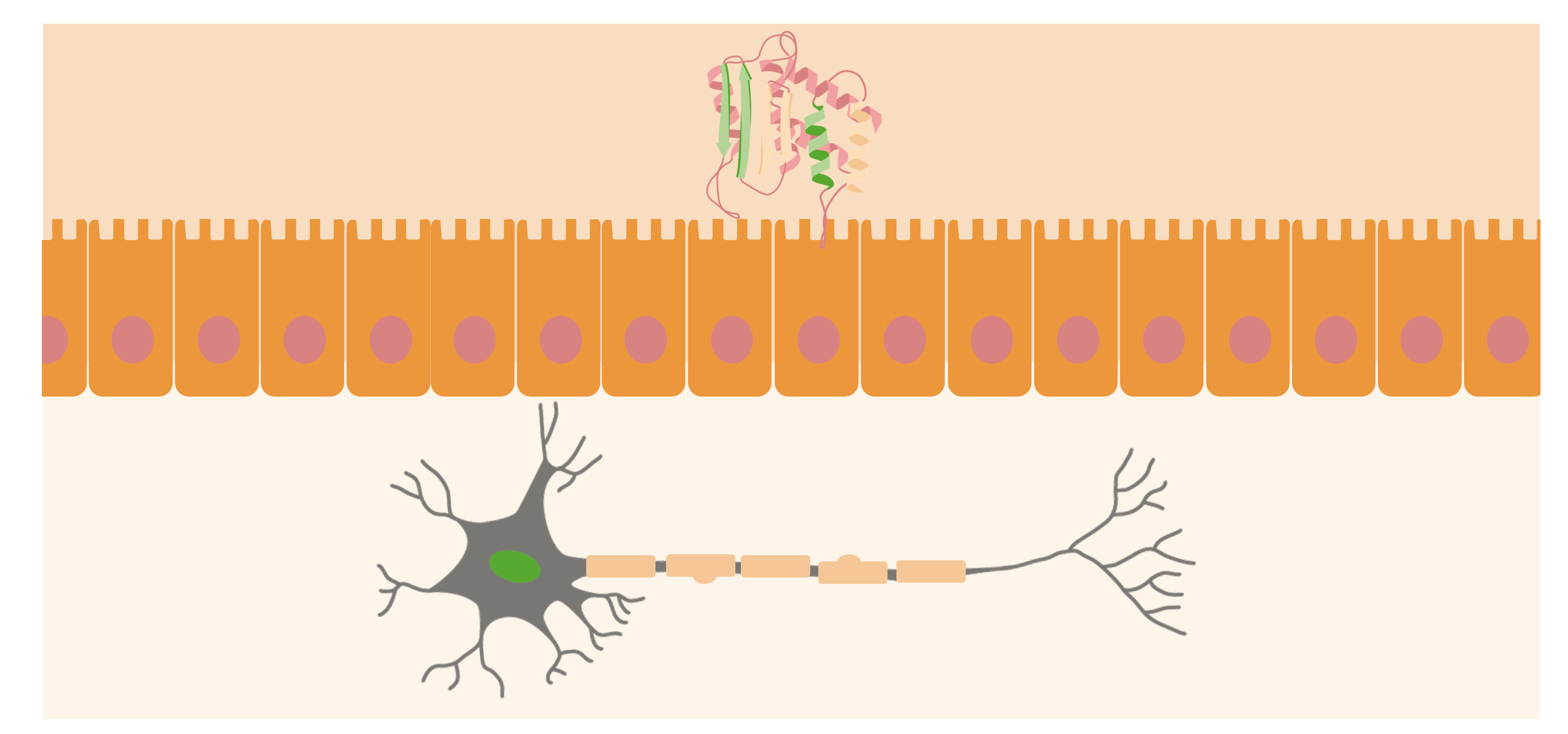
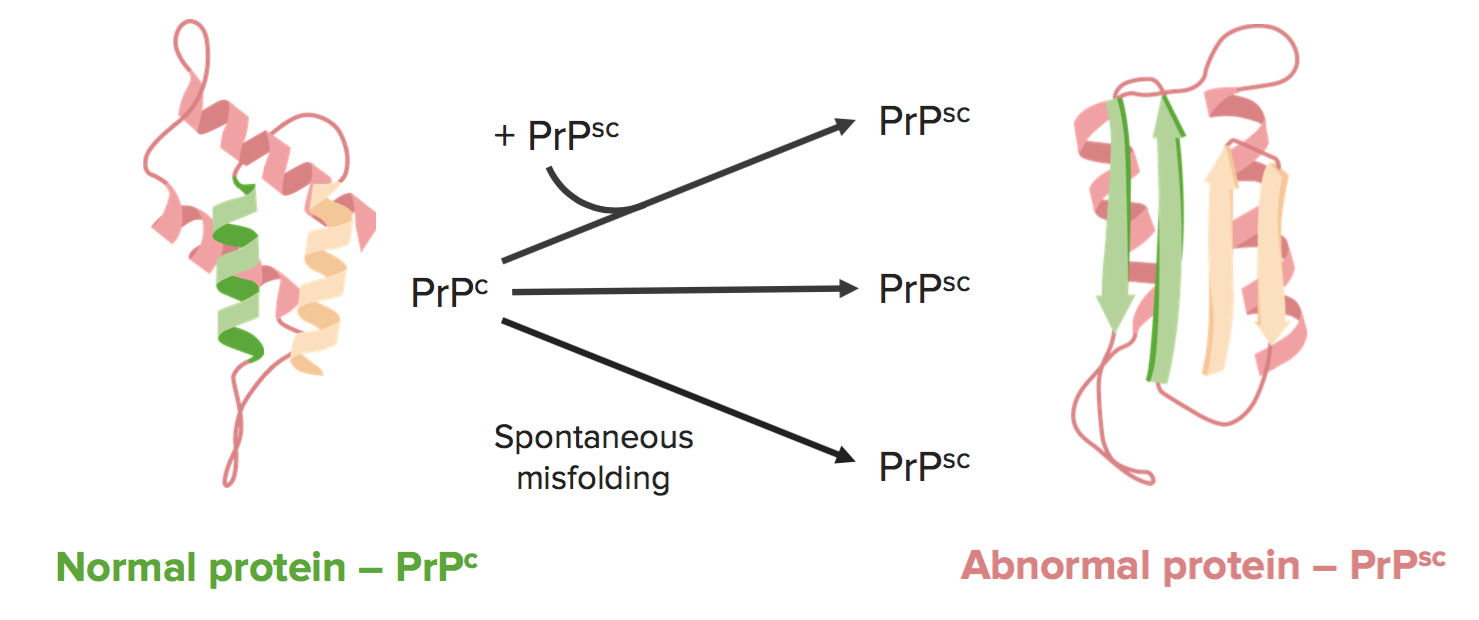
Las enfermedades por priones ocurren cuando una proteína ⍺-helicoidal normal conocida como PrPc PrPc Normal cellular isoform of prion proteins encoded by a chromosomal gene and found in normal and scrapie-infected brain tissue, and other normal tissue. PRPC are protease-sensitive proteins whose function is unknown. Posttranslational modification of PRPC into PRPSC leads to infectivity. Transmissible Spongiform Encephalopathies se convierte en EN Erythema nodosum is an immune-mediated panniculitis (inflammation of the subcutaneous fat) caused by a type IV (delayed-type) hypersensitivity reaction. It commonly manifests in young women as tender, erythematous nodules on the shins. Erythema Nodosum una proteína plegada β anormal conocida como PrPsc PrPsc Abnormal isoform of prion proteins resulting from a posttranslational modification of the cellular prion protein (PRPC proteins). Prpsc are disease-specific proteins seen in certain human and animal neurodegenerative diseases (prion diseases). Transmissible Spongiform Encephalopathies

  • Se puede considerar como una enfermedad de “mal plegamiento de proteínas”.
  • La PrP PRP Raynaud Phenomenonsc anormal es resistente a la degradación de proteasas, lo que facilita la conversión de PrP PRP Raynaud Phenomenonc a una PrP PRP Raynaud Phenomenonsc anormal. Esta conversión constante reemplaza lentamente a las proteínas normales.
  • PrP PRP Raynaud Phenomenonsc se acumula en EN Erythema nodosum is an immune-mediated panniculitis (inflammation of the subcutaneous fat) caused by a type IV (delayed-type) hypersensitivity reaction. It commonly manifests in young women as tender, erythematous nodules on the shins. Erythema Nodosum los LOS Neisseria órganos secretores y linforreticulares
    • Se disemina al AL Amyloidosis sistema nervioso central (SNC) → astrocitosis → pérdida de neuronas → vacuolización del cerebro 
    • Este proceso causa los LOS Neisseria síntomas clásicos de la encefalopatía espongiforme:
      • Ataxia Ataxia Impairment of the ability to perform smoothly coordinated voluntary movements. This condition may affect the limbs, trunk, eyes, pharynx, larynx, and other structures. Ataxia may result from impaired sensory or motor function. Sensory ataxia may result from posterior column injury or peripheral nerve diseases. Motor ataxia may be associated with cerebellar diseases; cerebral cortex diseases; thalamic diseases; basal ganglia diseases; injury to the red nucleus; and other conditions. Ataxia-telangiectasia cerebelosa
      • Demencia
      • Muerte

Transmisión

Hay 3 formas principales de desarrollar encefalopatías espongiformes:
  1. Adquirida o infecciosa: 
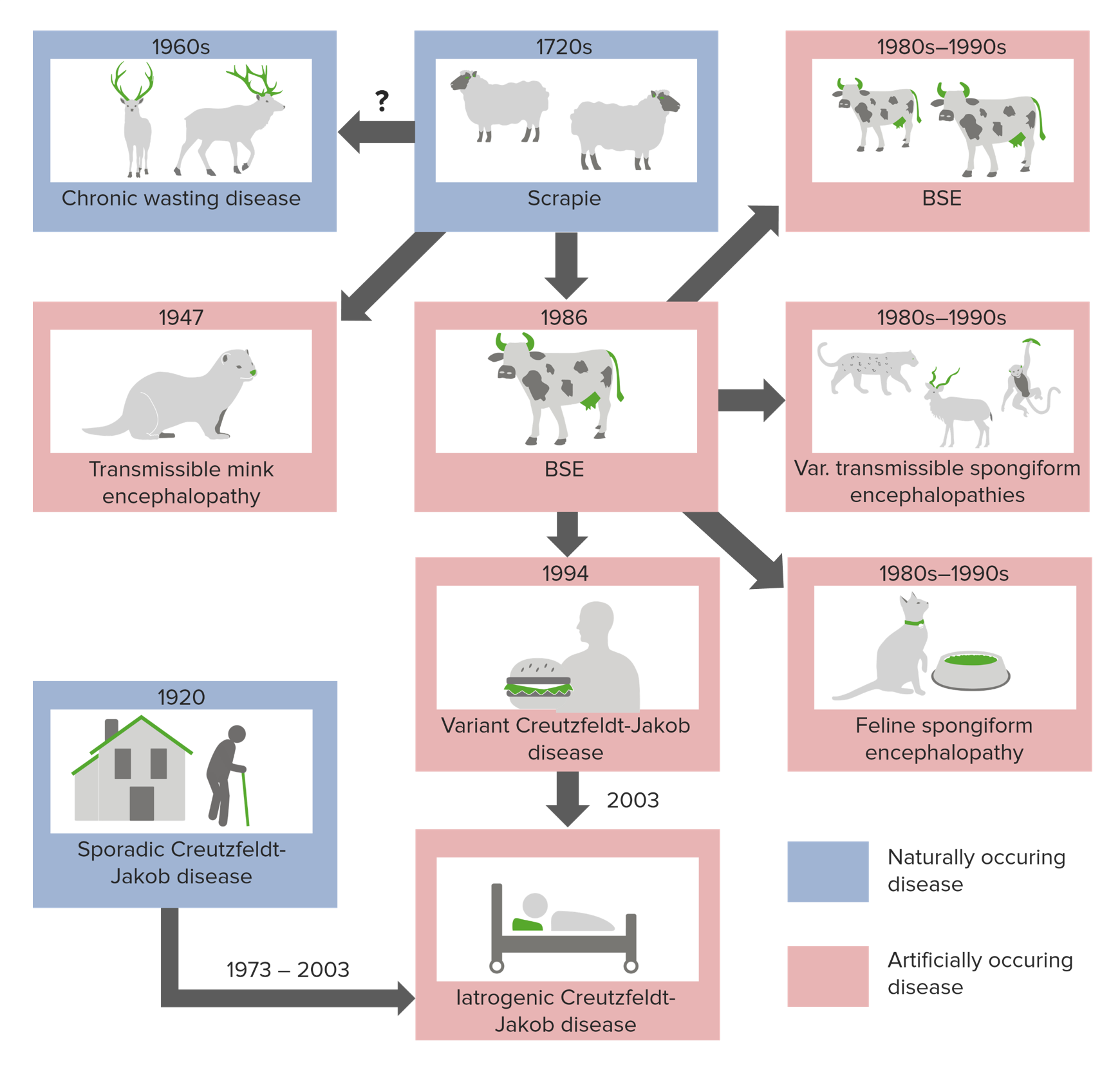
    • Exposición directa a tejidos infectados del SNC, como en EN Erythema nodosum is an immune-mediated panniculitis (inflammation of the subcutaneous fat) caused by a type IV (delayed-type) hypersensitivity reaction. It commonly manifests in young women as tender, erythematous nodules on the shins. Erythema Nodosum un trasplante de córnea (enfermedad de Creutzfeldt-Jakob iatrógena)
    • Administración de hormonas pituitarias humanas cadavéricas (enfermedad de Creutzfeldt-Jakob iatrógena)
    • Ingestión de alimentos contaminados por encefalopatía espongiforme bovina- productos animales infectados con (“vacas locas”) (variante de la enfermedad de Creutzfeldt-Jakob)
    • Canibalismo de tejidos infectados con el SNC ( Kuru Kuru A prion disease found exclusively among the fore linguistic group natives of the highlands of new guinea. The illness is primarily restricted to adult females and children of both sexes. It is marked by the subacute onset of tremor and ataxia followed by motor weakness and incontinence. Death occurs within 3-6 months of disease onset. The condition is associated with ritual cannibalism, and has become rare since this practice has been discontinued. Pathologic features include a noninflammatory loss of neurons that is most prominent in the cerebellum, glial proliferation, and amyloid plaques. Transmissible Spongiform Encephalopathies)
  2. Genética:
    • Mutación de la PrP PRP Raynaud Phenomenonc parental en EN Erythema nodosum is an immune-mediated panniculitis (inflammation of the subcutaneous fat) caused by a type IV (delayed-type) hypersensitivity reaction. It commonly manifests in young women as tender, erythematous nodules on the shins. Erythema Nodosum PrP PRP Raynaud Phenomenonsc (enfermedad de Creutzfeldt-Jakob genética, insomnio familiar fatal, síndrome de Gerstmann-Straussler)
  3. Espontáneo: 
    • Mal plegamiento repentino de la PrP PRP Raynaud Phenomenonc en EN Erythema nodosum is an immune-mediated panniculitis (inflammation of the subcutaneous fat) caused by a type IV (delayed-type) hypersensitivity reaction. It commonly manifests in young women as tender, erythematous nodules on the shins. Erythema Nodosum PrP PRP Raynaud Phenomenonsc anormal (enfermedad de Creutzfeldt-Jakob esporádica)
Mad cow disease transmission

Orígenes de las enfermedades por priones

Imagen por Lecturio.

Presentación Clínica y Diagnóstico

Las encefalopatías espongiformes transmisibles se asocian con tiempos de incubación extremadamente largos (20–50 años) y una vez que aparecen los LOS Neisseria síntomas, la enfermedad progresa rápidamente hasta la muerte.

No existen medidas curativas y las enfermedades son universalmente fatales.

Presentación clínica y diagnóstico de las encefalopatías espongiformes transmisibles
Síntomas Diagnóstico
Enfermedad de Creutzfeldt-Jakob
  • Demencia rápidamente progresiva (durante semanas o meses)
  • Mioclonías
  • Ataxia Ataxia Impairment of the ability to perform smoothly coordinated voluntary movements. This condition may affect the limbs, trunk, eyes, pharynx, larynx, and other structures. Ataxia may result from impaired sensory or motor function. Sensory ataxia may result from posterior column injury or peripheral nerve diseases. Motor ataxia may be associated with cerebellar diseases; cerebral cortex diseases; thalamic diseases; basal ganglia diseases; injury to the red nucleus; and other conditions. Ataxia-telangiectasia
  • Muerte en EN Erythema nodosum is an immune-mediated panniculitis (inflammation of the subcutaneous fat) caused by a type IV (delayed-type) hypersensitivity reaction. It commonly manifests in young women as tender, erythematous nodules on the shins. Erythema Nodosum el plazo de 1 año desde el inicio de los LOS Neisseria síntomas
  • TC/RM de la cabeza: apariencia normal
  • Líquido cefalorraquídeo (LCR): ↑ en EN Erythema nodosum is an immune-mediated panniculitis (inflammation of the subcutaneous fat) caused by a type IV (delayed-type) hypersensitivity reaction. It commonly manifests in young women as tender, erythematous nodules on the shins. Erythema Nodosum la proteína 14-3-3
  • Electroencefalograma ( EEG EEG Seizures): complejos periódicos de ondas agudas
  • Biopsia cerebral post-mortem:
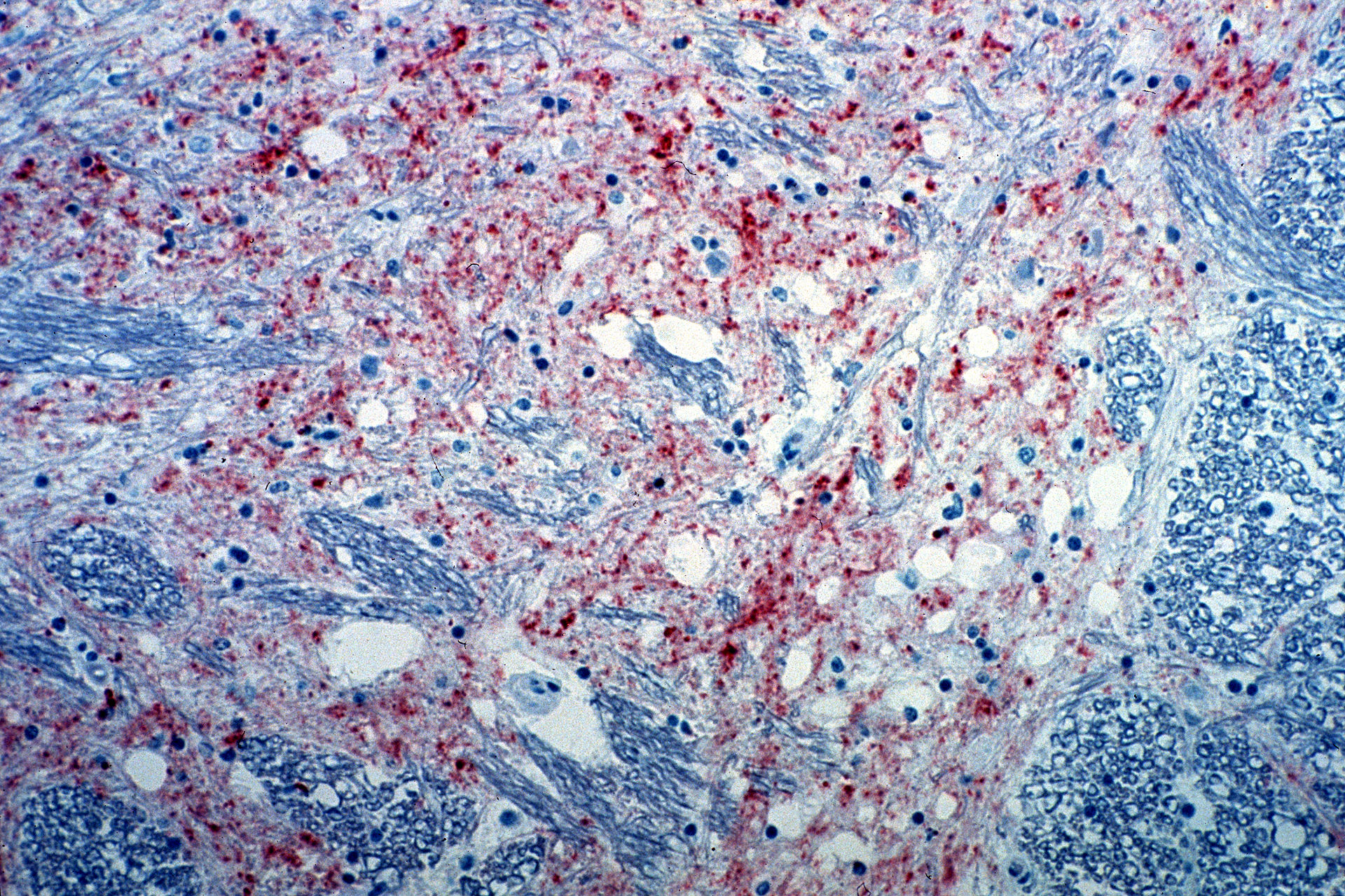
    • Vacuolas intracitoplasmáticas en EN Erythema nodosum is an immune-mediated panniculitis (inflammation of the subcutaneous fat) caused by a type IV (delayed-type) hypersensitivity reaction. It commonly manifests in young women as tender, erythematous nodules on the shins. Erythema Nodosum la corteza espongiforme
    • Acumulación de PrPsc PrPsc Abnormal isoform of prion proteins resulting from a posttranslational modification of the cellular prion protein (PRPC proteins). Prpsc are disease-specific proteins seen in certain human and animal neurodegenerative diseases (prion diseases). Transmissible Spongiform Encephalopathies en EN Erythema nodosum is an immune-mediated panniculitis (inflammation of the subcutaneous fat) caused by a type IV (delayed-type) hypersensitivity reaction. It commonly manifests in young women as tender, erythematous nodules on the shins. Erythema Nodosum histopatología
    • Pérdida neuronal
Kuru Kuru A prion disease found exclusively among the fore linguistic group natives of the highlands of new guinea. The illness is primarily restricted to adult females and children of both sexes. It is marked by the subacute onset of tremor and ataxia followed by motor weakness and incontinence. Death occurs within 3-6 months of disease onset. The condition is associated with ritual cannibalism, and has become rare since this practice has been discontinued. Pathologic features include a noninflammatory loss of neurons that is most prominent in the cerebellum, glial proliferation, and amyloid plaques. Transmissible Spongiform Encephalopathies
  • Primera etapa: temblores, ataxia Ataxia Impairment of the ability to perform smoothly coordinated voluntary movements. This condition may affect the limbs, trunk, eyes, pharynx, larynx, and other structures. Ataxia may result from impaired sensory or motor function. Sensory ataxia may result from posterior column injury or peripheral nerve diseases. Motor ataxia may be associated with cerebellar diseases; cerebral cortex diseases; thalamic diseases; basal ganglia diseases; injury to the red nucleus; and other conditions. Ataxia-telangiectasia, inestabilidad postural
  • Segunda etapa: pérdida de la deambulación, mioclono
  • Etapa tardía: demencia
  • Muerte dentro de 1 año del inicio de los LOS Neisseria síntomas
Desconocido; se han realizado pocos estudios debido a casos limitados (principalmente aislados en EN Erythema nodosum is an immune-mediated panniculitis (inflammation of the subcutaneous fat) caused by a type IV (delayed-type) hypersensitivity reaction. It commonly manifests in young women as tender, erythematous nodules on the shins. Erythema Nodosum Papúa Nueva Guinea en EN Erythema nodosum is an immune-mediated panniculitis (inflammation of the subcutaneous fat) caused by a type IV (delayed-type) hypersensitivity reaction. It commonly manifests in young women as tender, erythematous nodules on the shins. Erythema Nodosum la década de 1950)
Insomnio familiar fatal En EN Erythema nodosum is an immune-mediated panniculitis (inflammation of the subcutaneous fat) caused by a type IV (delayed-type) hypersensitivity reaction. It commonly manifests in young women as tender, erythematous nodules on the shins. Erythema Nodosum pacientes de 23–73 años:
  • Insomnio progresivo
  • Pérdida del patrón de actividad del sueño circadiano normal
  • Mioclonías
  • Ataxia Ataxia Impairment of the ability to perform smoothly coordinated voluntary movements. This condition may affect the limbs, trunk, eyes, pharynx, larynx, and other structures. Ataxia may result from impaired sensory or motor function. Sensory ataxia may result from posterior column injury or peripheral nerve diseases. Motor ataxia may be associated with cerebellar diseases; cerebral cortex diseases; thalamic diseases; basal ganglia diseases; injury to the red nucleus; and other conditions. Ataxia-telangiectasia
  • Disautonomía
  • Muerte dentro del primer año del inicio de los LOS Neisseria síntomas
Poco claro; biopsia cerebral post-mortem
Síndrome de Gerstmann-Straussler-Scheinker En EN Erythema nodosum is an immune-mediated panniculitis (inflammation of the subcutaneous fat) caused by a type IV (delayed-type) hypersensitivity reaction. It commonly manifests in young women as tender, erythematous nodules on the shins. Erythema Nodosum pacientes de mediados a finales de los LOS Neisseria 40:
  • Degeneración cerebelosa progresiva (torpeza, falta de coordinación, ataxia Ataxia Impairment of the ability to perform smoothly coordinated voluntary movements. This condition may affect the limbs, trunk, eyes, pharynx, larynx, and other structures. Ataxia may result from impaired sensory or motor function. Sensory ataxia may result from posterior column injury or peripheral nerve diseases. Motor ataxia may be associated with cerebellar diseases; cerebral cortex diseases; thalamic diseases; basal ganglia diseases; injury to the red nucleus; and other conditions. Ataxia-telangiectasia)
  • Demencia
  • Muerte dentro de los LOS Neisseria 5 años del inicio de los LOS Neisseria síntomas
Biopsia cerebral post-mortem

Diagnóstico Diferencial

Diagnóstico diferencial incluye enfermedades que están asociadas con la demencia de progresión rápida, incluidas las siguientes:

  • Demencia con cuerpos de Lewy:
    • Puede progresar rápidamente
    • Asociada con demencia, alucinaciones visuales y síncope
    • Hallazgos histológicos: cuerpos de Lewy intracelulares (⍺-sinucleína)
  • Demencia frontotemporal (enfermedad de Pick):
    • Asociada con cambios tempranos en EN Erythema nodosum is an immune-mediated panniculitis (inflammation of the subcutaneous fat) caused by a type IV (delayed-type) hypersensitivity reaction. It commonly manifests in young women as tender, erythematous nodules on the shins. Erythema Nodosum la personalidad y el comportamiento que progresan a un movimiento similar al AL Amyloidosis parkinsonismo
    • RM: degeneración del lóbulo frontotemporal
  • Demencia vascular:
    • Generalmente disminución escalonada de la función neurológica con deterioro de la memoria de aparición tardía
    • RM: infartos corticales múltiples
  • Enfermedad de Alzheimer:
    • Causa más común de demencia en EN Erythema nodosum is an immune-mediated panniculitis (inflammation of the subcutaneous fat) caused by a type IV (delayed-type) hypersensitivity reaction. It commonly manifests in young women as tender, erythematous nodules on the shins. Erythema Nodosum los LOS Neisseria ancianos
    • Los LOS Neisseria síntomas a menudo se desarrollan gradualmente
    • RM: atrofia cortical e hipocampal

Referencias

  1. Baiardi, S., Capellari, S., Bartoletti-Stella, A., & Parchi, P. (2023). Human Prion Disease: Molecular Pathogenesis, and Possible Therapeutic Targets and Strategies. Expert Opinion on Therapeutic Targets, 27(12), 1271–1284. https://doi.org/10.1080/14728222.2023.2199923
  2. Geschwind M. D. (2015). Prion Diseases. Continuum (Minneapolis, Minn.)21(6 Neuroinfectious Disease), 1612–1638. https://doi.org/10.1212/CON.0000000000000251
  3. Ironside, J. W., Ritchie, D. L., & Head, M. W. (2017). Prion diseases. Handbook of clinical neurology145, 393–403. https://doi.org/10.1016/B978-0-12-802395-2.00028-6
  4. Liu, F., Lü, W., & Liu, L. (2024). New implications for prion diseases therapy and prophylaxis. Frontiers in molecular neuroscience17, 1324702. https://doi.org/10.3389/fnmol.2024.1324702
  5. Prusiner S. B. (2013). Biology and genetics of prions causing neurodegeneration. Annual review of genetics47, 601–623. https://doi.org/10.1146/annurev-genet-110711-155524
  6. Appleby, B. S., & Cohen, M. L. (2024). Creutzfeldt-Jakob disease. UpToDate, Inc. Retrieved January 19, 2025, from https://www.uptodate.com/contents/creutzfeldt-jakob-disease
  7. National Institute of Neurological Disorders and Stroke. (n.d.). Kuru. U.S. Department of Health and Human Services. Retrieved January 19, 2025, from https://www.ninds.nih.gov/health-information/disorders/kuru
  8. World Health Organization. (2003). WHO guidelines on transmissible spongiform encephalopathies in relation to biological and pharmaceutical products. World Health Organization. Retrieved January 19, 2025, from https://www.who.int/publications/m/item/who-guidelines-on-transmissible-spongiform-encephalopathies 

¡Crea tu cuenta gratis o inicia una sesión para seguir leyendo!

Regístrate ahora y obtén acceso gratuito a Lecturio con páginas de concepto, videos médicos y cuestionarios para tu educación médica.

User Reviews

Que tengas una sesión de estudio alegre y navideña 🎁 Ahorra 50% en todos los planes >>

Details