
Bordetella Bordetella Bordetella is a genus of obligate aerobic, Gram-negative coccobacilli. They are highly fastidious and difficult to isolate. The most important pathologic species is Bordetella pertussis (B. pertussis), which is commonly isolated on Bordet-Gengou agar. Bordetella es un género de cocobacilos Gram-negativos aerobios obligados. Son muy exigentes y difíciles de aislar. La especie patológica más importante es Bordetella pertussis Bordetella pertussis A species of gram-negative, aerobic bacteria that is the causative agent of whooping cough. Its cells are minute coccobacilli that are surrounded by a slime sheath. Bordetella ( B. pertussis B. pertussis A species of gram-negative, aerobic bacteria that is the causative agent of whooping cough. Its cells are minute coccobacilli that are surrounded by a slime sheath. Bordetella), que suele aislarse en EN Erythema nodosum is an immune-mediated panniculitis (inflammation of the subcutaneous fat) caused by a type IV (delayed-type) hypersensitivity reaction. It commonly manifests in young women as tender, erythematous nodules on the shins. Erythema Nodosum agar Bordet-Gengou. Bordetella pertussis Bordetella pertussis A species of gram-negative, aerobic bacteria that is the causative agent of whooping cough. Its cells are minute coccobacilli that are surrounded by a slime sheath. Bordetella es altamente infecciosa a través de gotitas respiratorias y solo se sabe que infecta a humanos, causando el síndrome clínico de la tos TOS Thoracic outlet syndrome (TOS) is a broad term used for a spectrum of syndromes related to the general region of the thoracic outlet, which involves the compression or irritation of elements of the brachial plexus, subclavian artery, or subclavian vein. Thoracic Outlet Syndrome ferina. La tos TOS Thoracic outlet syndrome (TOS) is a broad term used for a spectrum of syndromes related to the general region of the thoracic outlet, which involves the compression or irritation of elements of the brachial plexus, subclavian artery, or subclavian vein. Thoracic Outlet Syndrome ferina se caracteriza por 3 fases distintas: catarral, paroxística y convaleciente. La tos TOS Thoracic outlet syndrome (TOS) is a broad term used for a spectrum of syndromes related to the general region of the thoracic outlet, which involves the compression or irritation of elements of the brachial plexus, subclavian artery, or subclavian vein. Thoracic Outlet Syndrome ferina es rara en EN Erythema nodosum is an immune-mediated panniculitis (inflammation of the subcutaneous fat) caused by a type IV (delayed-type) hypersensitivity reaction. It commonly manifests in young women as tender, erythematous nodules on the shins. Erythema Nodosum los LOS Neisseria países desarrollados debido al AL Amyloidosis uso generalizado de la vacuna combinada contra difteria, tétanos y tos TOS Thoracic outlet syndrome (TOS) is a broad term used for a spectrum of syndromes related to the general region of the thoracic outlet, which involves the compression or irritation of elements of the brachial plexus, subclavian artery, or subclavian vein. Thoracic Outlet Syndrome ferina acelular ( DTaP DTaP Combined vaccines consisting of diphtheria toxoid; tetanus toxoid; and an acellular form of pertussis vaccine. At least five different purified antigens of b. Pertussis have been used in various combinations in these vaccines. Bordetella).
Last updated: Dec 15, 2025
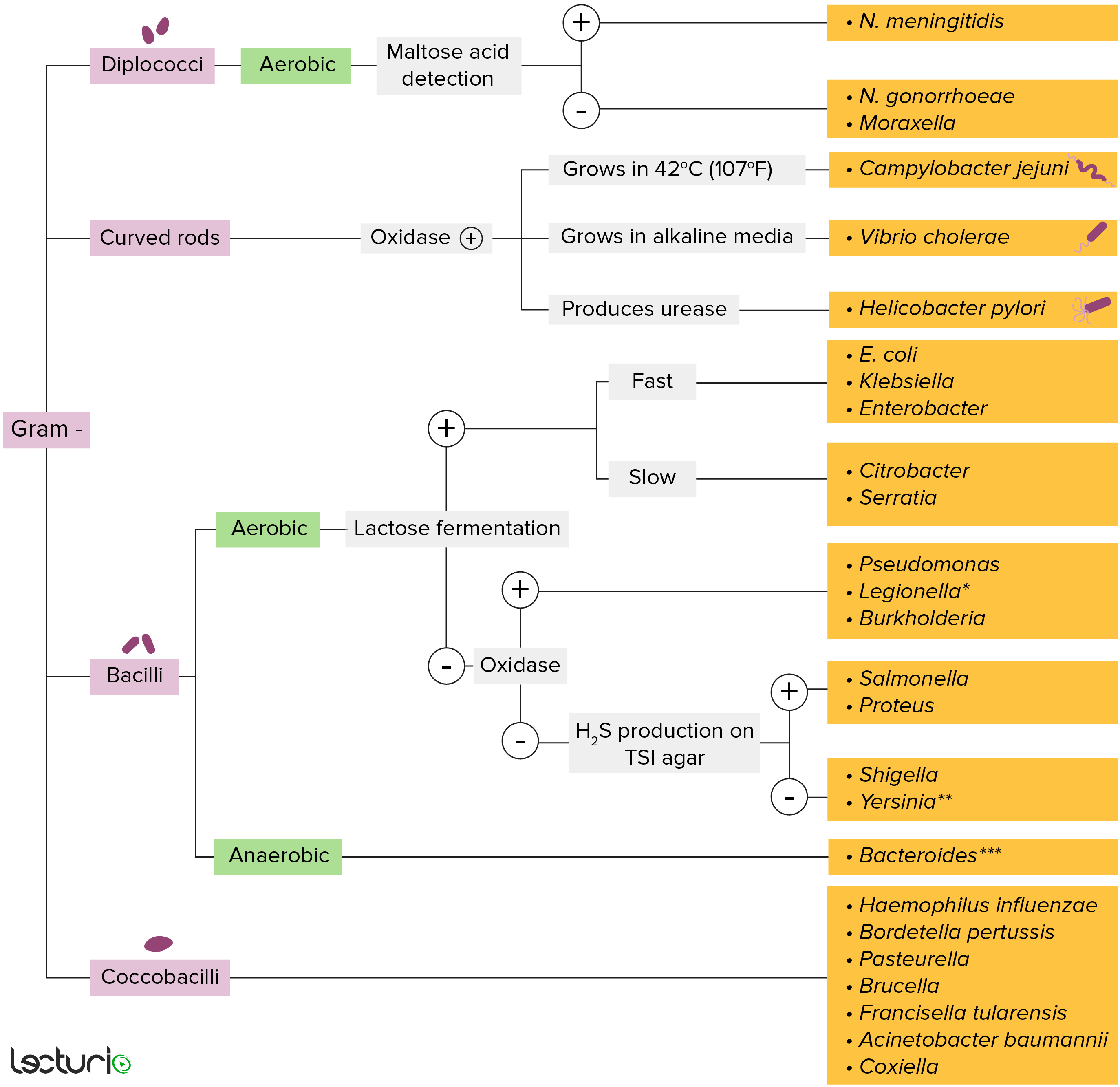
Bacterias Gram-negativas:
La mayoría de las bacterias se pueden clasificar de acuerdo con un procedimiento de laboratorio llamado tinción de Gram.
Las bacterias con paredes celulares que tienen una capa delgada de peptidoglicano no retienen la tinción de cristal violeta utilizada en la tinción de Gram. Sin embargo, estas bacterias retienen la contratinción de safranina y, por lo tanto, se tiñen de color rojo rosado, lo que las convierte en gram negativas. Estas bacterias pueden clasificarse además según su morfología (diplococos, bastoncillos curvos, bacilos y cocobacilos) y su capacidad para crecer en presencia de oxígeno (aeróbicos frente a anaeróbicos). Las bacterias se pueden identificar de manera más estrecha cultivándolas en medios específicos (agar triple azúcar hierro (TSI, por sus siglas en inglés)) donde se pueden identificar sus enzimas (ureasa, oxidasa) y se puede probar su capacidad para fermentar lactosa.
* Se tiñe mal en la tinción de Gram
** Bastoncillo pleomórfico/cocobacilo
*** Requiere medios de transporte especiales
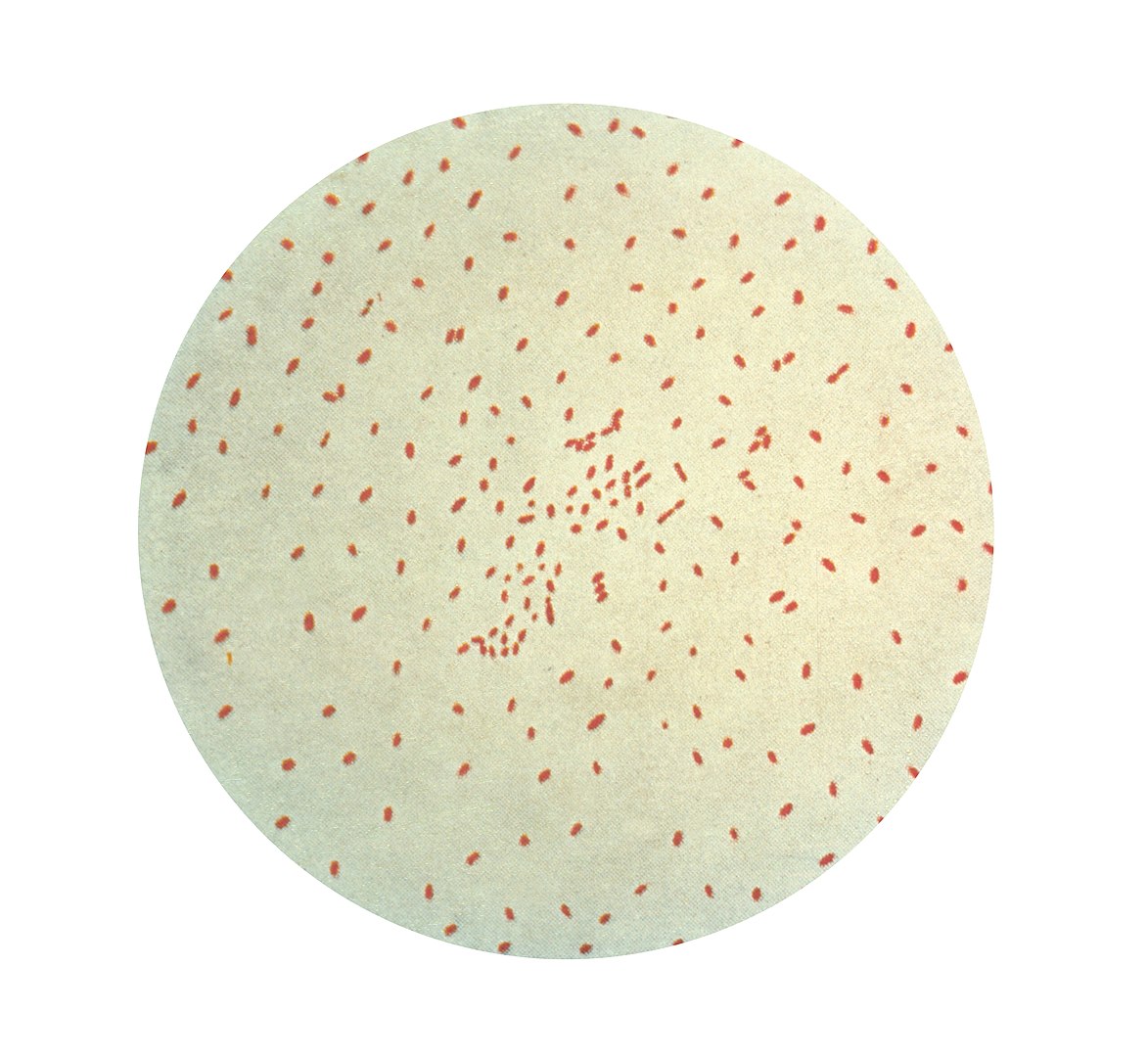
Tinción de Gram de B. pertussis
Imagen: “Gram stain of Bordetella pertussis” por CDC Public Health Image Library. Licencia: Dominio Público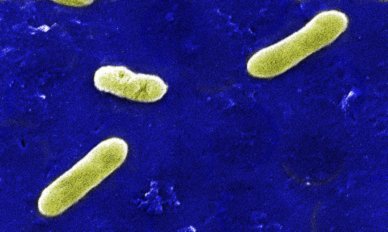
Micrografía electrónica de barrido de Bordetella bronchiseptica
Imagen: “File: Bordetella bronchiseptica” por CDC/ Janice Carr. Licencia: Dominio PúblicoPatogénesis:
Factores virulentos:
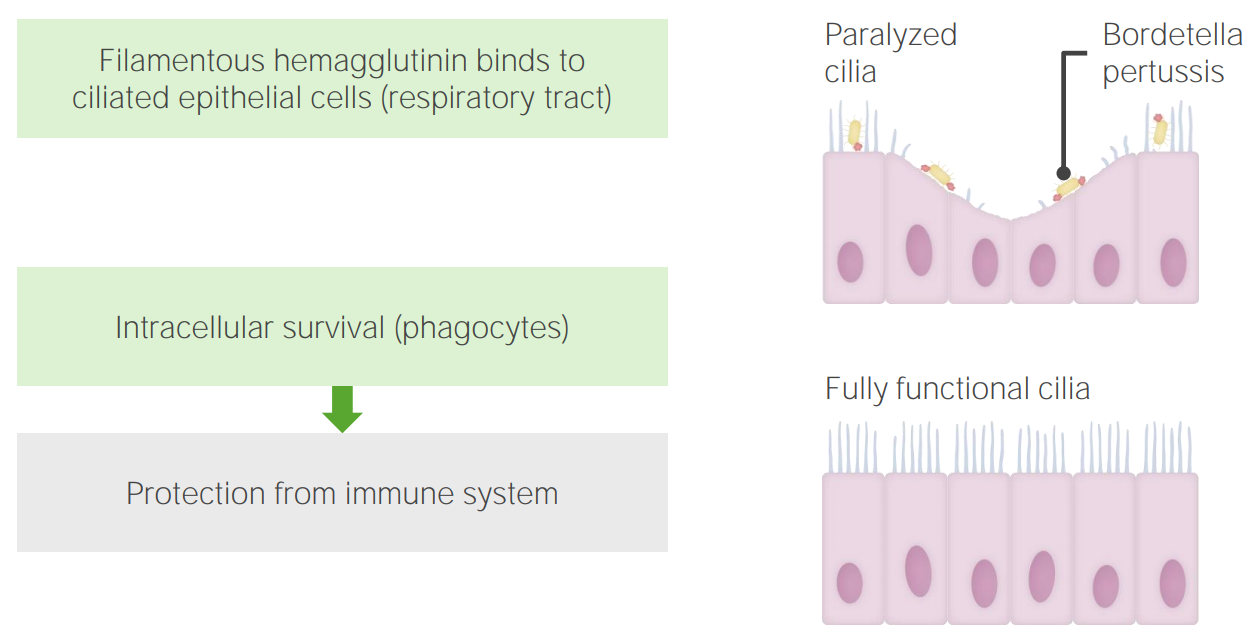
Patogenia de Bordetella pertussis : La hemaglutinina filamentosa se une a las células epiteliales ciliadas, infectando las células, inhibiendo la elevación mucociliar. Otro mecanismo es la prevención de la digestión intracelular por fagocitosis, evadiendo así el sistema inmunológico.
Imagen por Lecturio.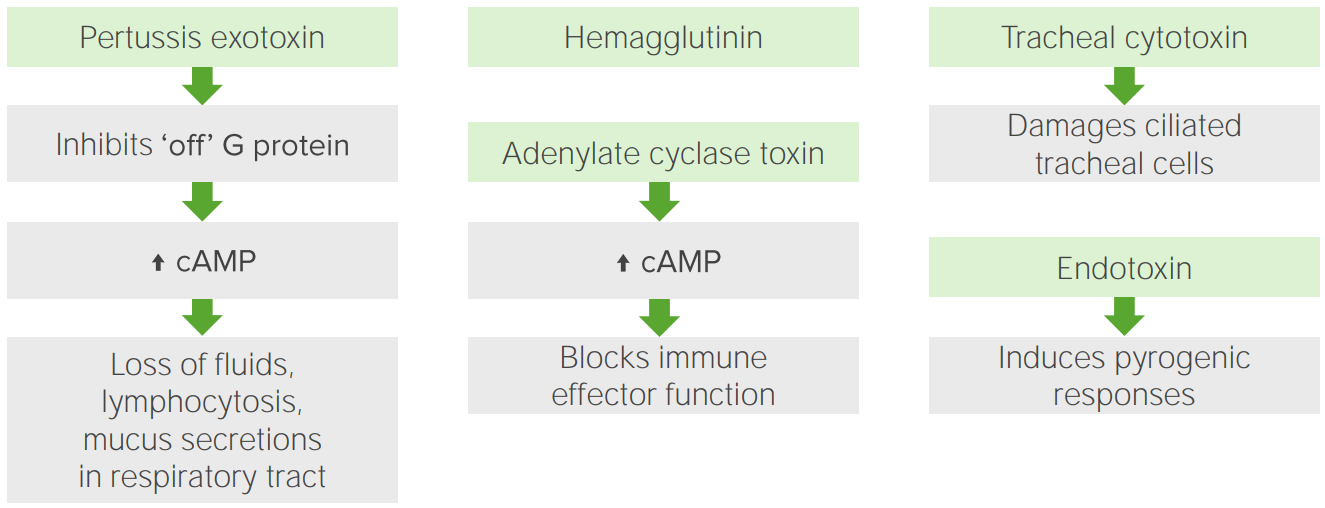
Mecanismos fisiopatológicos subyacentes a la virulencia y factores patogénicos.
Imagen por Lecturio.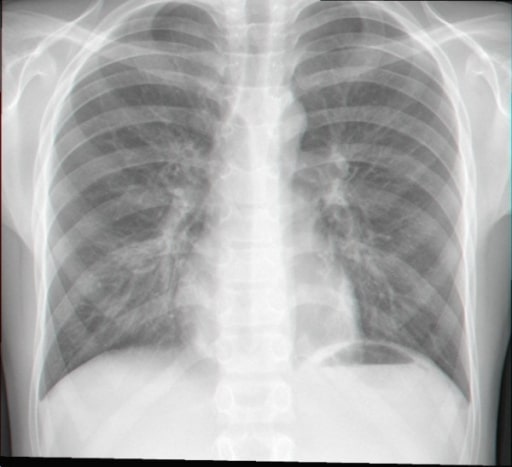
Radiografía de tórax de un paciente de 11 años con infección por Bordetella pertussis con refuerzo del retículo broncovascular perihiliar e infiltrados heterogéneos en el tercio inferior de ambos campos pulmonares.
Imagen: “Bordetella pertussis an agent not to forget: a case report.” por Melo N, Dias AC, Isidoro L, Duarte R. Licencia: CC BY 2.0Recolección de especímenes:
Estudios: