Os neutrófilos são um componente importante do sistema imunitário e desempenham um papel significativo na erradicação das infeções. Um baixo número de neutrófilos circulantes, referido como neutropeniaNeutropeniaNeutrophils are an important component of the immune system and play a significant role in the eradication of infections. Low numbers of circulating neutrophils, referred to as neutropenia, predispose the body to recurrent infections or sepsis, though patients can also be asymptomatic. Neutropenia, predispõe o corpo a infeções recorrentes ou sépsis, embora os pacientes também possam ser assintomáticos. A maioria das causas de neutropénia são adquiridas, incluindo a neutropeniaNeutropeniaNeutrophils are an important component of the immune system and play a significant role in the eradication of infections. Low numbers of circulating neutrophils, referred to as neutropenia, predispose the body to recurrent infections or sepsis, though patients can also be asymptomatic. Neutropenia secundária a infeções, distúrbios da medula óssea e/ou efeitos adversos de muitos medicamentos. O diagnóstico é feito usando hemograma completo e esfregaços de sangue periféricos. A abordagem visa a prevenção e o tratamento de infeções.
A neutropeniaNeutropeniaNeutrophils are an important component of the immune system and play a significant role in the eradication of infections. Low numbers of circulating neutrophils, referred to as neutropenia, predispose the body to recurrent infections or sepsis, though patients can also be asymptomatic. Neutropenia é uma diminuição do número de neutrófilos circulantes no sangue, que é tipicamente definida como uma contagem absoluta de neutrófilos (CAN) de:
< 5000 células/µL em adultos e crianças > 1 ano de idade:
NeutropeniaNeutropeniaNeutrophils are an important component of the immune system and play a significant role in the eradication of infections. Low numbers of circulating neutrophils, referred to as neutropenia, predispose the body to recurrent infections or sepsis, though patients can also be asymptomatic. Neutropenia ligeira: 1000-1500 células/µL
NeutropeniaNeutropeniaNeutrophils are an important component of the immune system and play a significant role in the eradication of infections. Low numbers of circulating neutrophils, referred to as neutropenia, predispose the body to recurrent infections or sepsis, though patients can also be asymptomatic. Neutropenia moderada: 500-1000 células/µL
NeutropeniaNeutropeniaNeutrophils are an important component of the immune system and play a significant role in the eradication of infections. Low numbers of circulating neutrophils, referred to as neutropenia, predispose the body to recurrent infections or sepsis, though patients can also be asymptomatic. Neutropenia grave: < 500 células/µL
Agranulocitose: < 100-200 células/µL
< 1000 células/µL em crianças de 2 semanas a 1 ano de idade
< 5000 células/µL em bebés durante os seus primeiros dias de vida
Neutrófilos
Os neutrófilos são os maisMAISAndrogen Insensitivity Syndrome comuns de todos os leucócitos. Os leucócitos são glóbulos brancos e são um componente importante do sistema imunológico.
Os neutrófilos respondem rapidamente no local da infeção.
Os neutrófilos são leucócitos granulocíticos:
Contêm enzimas, oxidantes e proteínas, dentro de 4 tipos de grânulos, todos formados durante a diferenciação dos neutrófilos:
Grânulos azurofílicos (primários): contêm proteínas antibacterianas como a mieloperoxidase e o CAP37; funcionam principalmente dentro dos fagolisossomas
Grânulos específicos: contêm proteínas antibacterianas, tais como lactoferrina, gelatina neutrofílica associada à lipocalina, catelicidina e lisozima e proteasesProteasesProteins and Peptides, tais como colagenase.
Grânulos de gelatinase: contêm proteína antibacteriana, lisozima e as proteasesProteasesProteins and Peptides gelatinase (matriz metaloproteinase 9) e leucolisina
Grânulos secretores: contêm receptores transmembrana (por exemplo, receptores de fator de necrose tumoral e receptores interferon-α) que se integram na membrana plasmática dos neutrófilos à medida que ocorre a exocitose.
Pode produzir armadilhas extracelulares de neutrófilos (neutrophil extracellular traps (NETs)):
Compostas por redes de microfibras extracelulares, compostas na sua maioria por ADN de neutrófilos disrompidos.
As redes ligam e degradam bactérias e outros agentes patogénicos.
Outros termos:
Frequentemente referidos como PMNs (polimorfonucleares)
Neutrófilos mais jovens e imaturos conhecidos como “bandas” ou “stab cells”
Tipicamente reportado num hemograma completo como uma percentagem da contagem de leucócitos
Contagem absoluta de neutrófilos (CAN):
O número de neutrófilos (em oposição à percentagem de leucócitos) que circulam por µL de sangue
CAN = glóbulos brancos/µL × percentagem (neutrófilos segmentados + bandas)
Níveis normais de CAN (contagem absoluta de neutrófilos): variam de acordo com a idade
Tabela: Níveis normais de CAN por idade
Faixa etária
Intervalo de referência (células/µL)
Percentagem de leucócitos que são neutrófilos
Com 1 dia de vida
5000–21,000
Aproximadamente 60%
Com 1 mês de vida
1000–9000
Aproximadamente 35%.
≥ 1 ano de idade
1500‒8500
Aproximadamente 31%
≥ 10 anos de idade
1500–8000
Aproximadamente%–70%
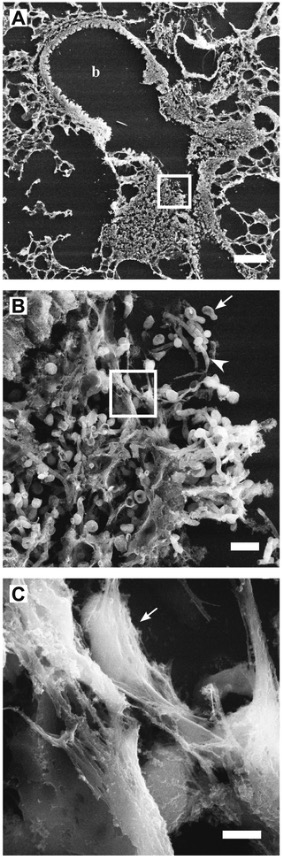
Imagens de microscópio eletrónico de varredura em diferentes ampliações para demonstrar armadilhas extracelulares de neutrófilos (NETs): As seções são dos pulmões dos ratos albicanos infectados com Candida24 horas após o desafio intranasal. A: Um bronquíolo (b) colonizado com C. albicans e infiltrado pelas células imunitárias do hospedeiro B: Imagem de alta resolução da área de caixa do painel A mostra epitélio respiratório do bronquíolo colonizado com formas de levedura C. albicans (seta) e hifas (ponta de seta). C: Imagem de alta resolução da área da caixa a partir do painel B mostra as redes que cobrem as superfícies fúngicas (seta).
Barra de escala em A = 100 µm, em B = 10 µm e em C = 2 µm
Imagem: “A scanning electron microscope” por Urban CF et al. Licença: CC BY 2.5
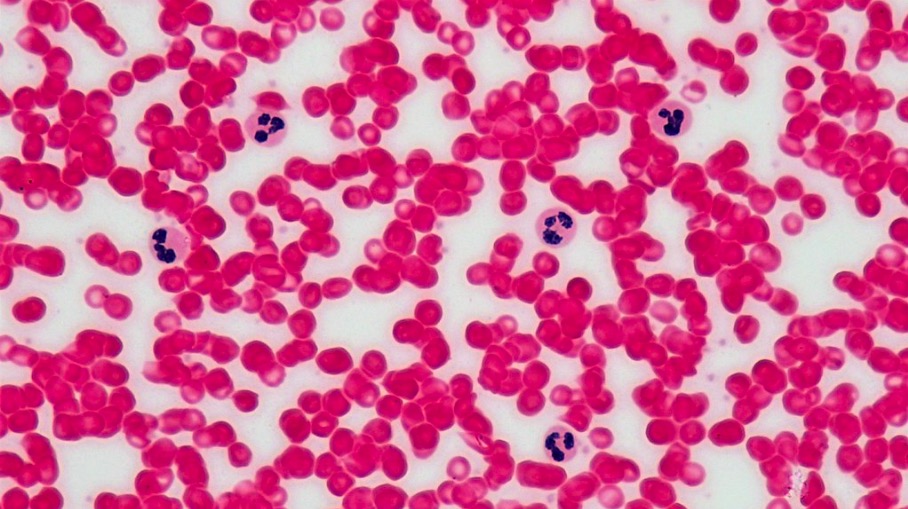
Coloração de Wright de um esfregaço de sangue periférico mostrando 5 neutrófilos normais e maduros (polimorfonucleares): Note que cada neutrófilo tem um núcleo denso disposto em 2-5 lóbulos e citoplasma rosa azul-pálido. A fina granularidade do citoplasma só pode ser apreciada com maior ampliação. A esperança de vida dos neutrófilos no sangue é de 6 a 10 horas.
Imagem: “hematoxylin eosin stain” por Berkshire Community College Bioscience Image Library. Licença: Public Domain
Significado clínico da neutropeniaNeutropeniaNeutrophils are an important component of the immune system and play a significant role in the eradication of infections. Low numbers of circulating neutrophils, referred to as neutropenia, predispose the body to recurrent infections or sepsis, though patients can also be asymptomatic. Neutropenia
A correlação entre a CAN e o risco infeccioso aplica-se apenas às condições em que a reserva de neutrófilos da medula óssea está diminuída, como a toxicidade hematológica da quimioterapia.
Com neutropeniaNeutropeniaNeutrophils are an important component of the immune system and play a significant role in the eradication of infections. Low numbers of circulating neutrophils, referred to as neutropenia, predispose the body to recurrent infections or sepsis, though patients can also be asymptomatic. Neutropenia ligeira não relacionada com a terapia (CAN, 1000-1500 células/µL), não há um risco significativamente aumentado de infeção.
Com neutropeniaNeutropeniaNeutrophils are an important component of the immune system and play a significant role in the eradication of infections. Low numbers of circulating neutrophils, referred to as neutropenia, predispose the body to recurrent infections or sepsis, though patients can also be asymptomatic. Neutropenia grave (CAN, < 500/µL), há um risco significativo de infeção; a febre deve ser tratada em regime de internamento com antibióticos parenterais, mesmo com poucos sinais clínicos de infeção.
Epidemiologia
Prevalência:
1%–10% em indivíduos saudáveis e assintomáticos
Maior naqueles com determinadas condições médicas:
A neutropeniaNeutropeniaNeutrophils are an important component of the immune system and play a significant role in the eradication of infections. Low numbers of circulating neutrophils, referred to as neutropenia, predispose the body to recurrent infections or sepsis, though patients can also be asymptomatic. Neutropenia pode ocorrer como uma característica isolada ou em associação com outras anomalias hematológicas e/ou defeitos da medula óssea (por exemplo, anemiaAnemiaAnemia is a condition in which individuals have low Hb levels, which can arise from various causes. Anemia is accompanied by a reduced number of RBCs and may manifest with fatigue, shortness of breath, pallor, and weakness. Subtypes are classified by the size of RBCs, chronicity, and etiology. Anemia: Overview and Types megaloblástica ou leucemia).
Fisiopatologia
Revisão da fisiologia normal
Os neutrófilos maduros são produzidos por precursores na medula óssea. Os neutrófilos podem ser encontrados em três compartimentos:
Medula óssea; aqui os neutrófilos podem ser classificados como:
Proliferativos: em desenvolvimento
Armazenados: neutrófilos maduros
Sangue: aqui os neutrófilos podem ser classificados como:
Circulantes
Marginados: aderentes ao endotélio vascular ou localizados dentro do baço
Tecidos: Os neutrófilos deixam o sangue ao acaso após cerca de 6-10 horas para entrar nos tecidos, onde atuam para destruir patogénios ou sofrer apoptose.
Mecanismos que levam à neutropeniaNeutropeniaNeutrophils are an important component of the immune system and play a significant role in the eradication of infections. Low numbers of circulating neutrophils, referred to as neutropenia, predispose the body to recurrent infections or sepsis, though patients can also be asymptomatic. Neutropenia
Diminuição da produção/diferenciação na medula óssea:
Precursores hematopoiéticos danificados (por exemplo, quimioterapia, radiação, infeção)
Granulopoiese ineficaz (por exemplo, anemiaAnemiaAnemia is a condition in which individuals have low Hb levels, which can arise from various causes. Anemia is accompanied by a reduced number of RBCs and may manifest with fatigue, shortness of breath, pallor, and weakness. Subtypes are classified by the size of RBCs, chronicity, and etiology. Anemia: Overview and Types megaloblástica)
Infiltração da medula óssea (por exemplo, leucemia)
Marginação:
Mudança dos PMNs circulantes para o endotélio vascular ou baço
Exemplo: endotoxina pode causar marginação → ↓ neutrófilos circulantes (às vezes chamados de pseudoneutropenia)
A neutropenia é mais comumente adquirida, frequentemente após infeções ou como um efeito colateral de uma série de diferentes medicamentos. Raramente, a neutropenia pode ser “primária” ou congénita como parte de uma síndrome menos comum.
NeutropeniaNeutropeniaNeutrophils are an important component of the immune system and play a significant role in the eradication of infections. Low numbers of circulating neutrophils, referred to as neutropenia, predispose the body to recurrent infections or sepsis, though patients can also be asymptomatic. Neutropenia adquirida: não-induzida por drogas
Infeções (forma maisMAISAndrogen Insensitivity Syndrome comum de neutropeniaNeutropeniaNeutrophils are an important component of the immune system and play a significant role in the eradication of infections. Low numbers of circulating neutrophils, referred to as neutropenia, predispose the body to recurrent infections or sepsis, though patients can also be asymptomatic. Neutropenia adquirida):
Virais, incluindo:
CMV
Vírus Epstein-Barr
InfluenzaInfluenzaInfluenza viruses are members of the Orthomyxoviridae family and the causative organisms of influenza, a highly contagious febrile respiratory disease. There are 3 primary influenza viruses (A, B, and C) and various subtypes, which are classified based on their virulent surface antigens, hemagglutinin (HA) and neuraminidase (NA). Influenza typically presents with a fever, myalgia, headache, and symptoms of an upper respiratory infection. Influenza Viruses/Influenza
Hepatite vírica
VIH
Bactérias, incluindo:
Sépsis bacteriana
Tuberculose
Rickettsioses
Parasitárias:
Toxoplasmose
Malária
Doenças malignas hematológicas (tipicamente presentes com pancitopenias):
Leucemias
Outras doenças linfoproliferativas
Síndrome mielodisplásica
Mielofibrose
Supressão da medula óssea:
AnemiaAnemiaAnemia is a condition in which individuals have low Hb levels, which can arise from various causes. Anemia is accompanied by a reduced number of RBCs and may manifest with fatigue, shortness of breath, pallor, and weakness. Subtypes are classified by the size of RBCs, chronicity, and etiology. Anemia: Overview and Types aplástica
Radiação ionizante
Infiltração maligna
Medicamentos (ver abaixo)
Hiperesplenismo
Causas nutricionais:
Défice de vitamina B12 ou folato (anemiaAnemiaAnemia is a condition in which individuals have low Hb levels, which can arise from various causes. Anemia is accompanied by a reduced number of RBCs and may manifest with fatigue, shortness of breath, pallor, and weakness. Subtypes are classified by the size of RBCs, chronicity, and etiology. Anemia: Overview and Types megaloblástica; pode ser vista no alcoolismo)
Défice de cobre
Processo auto-imune e/ou associado a distúrbios reumatológicos:
Lupús eritematoso sistémico (LES)
Artrite reumatóide
Síndrome de Sjögren
Doença de Crohn
Granulomatose com poliangiite
Reações transfusionais
Ativação do complemento:
Hemodiálise usando membranas não-biocompatíveis
Síndrome de dificuldade respiratória aguda
NeutropeniaNeutropeniaNeutrophils are an important component of the immune system and play a significant role in the eradication of infections. Low numbers of circulating neutrophils, referred to as neutropenia, predispose the body to recurrent infections or sepsis, though patients can also be asymptomatic. Neutropenia idiopática crónica
NeutropeniaNeutropeniaNeutrophils are an important component of the immune system and play a significant role in the eradication of infections. Low numbers of circulating neutrophils, referred to as neutropenia, predispose the body to recurrent infections or sepsis, though patients can also be asymptomatic. Neutropenia adquirida: induzida por fármacos
Alguns medicamentos, incluindo muitos agentes de quimioterapia, produzem previsivelmente mielossupressão dose-dependente. Muitos outros medicamentos estão associados a neutropeniaNeutropeniaNeutrophils are an important component of the immune system and play a significant role in the eradication of infections. Low numbers of circulating neutrophils, referred to as neutropenia, predispose the body to recurrent infections or sepsis, though patients can also be asymptomatic. Neutropenia grave isolada (conhecida como reações medicamentosas idiossincráticas), ocorrendo tipicamente dentro de 3 meses após o início da medicação.
Medicamentos associados à mielossupressão (lista parcial, inclui muitos agentes quimioterápicos e imunossupressores):
Metotrexato
Ciclofosfamida
Cisplatina, carboplatina
EtoposideEtoposideA semisynthetic derivative of podophyllotoxin that exhibits antitumor activity. Etoposide inhibits DNA synthesis by forming a complex with topoisomerase II and DNA. This complex induces breaks in double stranded DNA and prevents repair by topoisomerase II binding. Accumulated breaks in DNA prevent entry into the mitotic phase of cell division, and lead to cell death. Etoposide acts primarily in the g2 and s phases of the cell cycle.Microtubule and Topoisomerase Inhibitors
Doxorrubicina
Colchicina
Azatioprina
GanciclovirGanciclovirAn acyclovir analog that is a potent inhibitor of the herpesvirus family including cytomegalovirus. Ganciclovir is used to treat complications from aids-associated cytomegalovirus infections.Antivirals for Herpes Virus
Medicamentos associados à neutropeniaNeutropeniaNeutrophils are an important component of the immune system and play a significant role in the eradication of infections. Low numbers of circulating neutrophils, referred to as neutropenia, predispose the body to recurrent infections or sepsis, though patients can also be asymptomatic. Neutropenia associada a reações medicamentosas idiossincráticas (lista parcial, os maisMAISAndrogen Insensitivity Syndrome comuns estão em negrito):
Antivíricos: aciclovir, oseltamivirOseltamivirAn acetamido cyclohexene that is a structural homolog of sialic acid and inhibits neuraminidase.Antivirals for Influenza, ganciclovirGanciclovirAn acyclovir analog that is a potent inhibitor of the herpesvirus family including cytomegalovirus. Ganciclovir is used to treat complications from aids-associated cytomegalovirus infections.Antivirals for Herpes Virus
Tionamidas (medicamentos para a tiróide): metimazol, propiltiouracil (PTUPTUA thiourea antithyroid agent. Propylthiouracil inhibits the synthesis of thyroxine and inhibits the peripheral conversion of throxine to triiodothyronine. It is used in the treatment of hyperthyroidism.Antithyroid Drugs)
Drogas cardiovasculares: ticlopidina, procainamida, propranololPropranololA widely used non-cardioselective beta-adrenergic antagonist. Propranolol has been used for myocardial infarction; arrhythmia; angina pectoris; hypertension; hyperthyroidism; migraine; pheochromocytoma; and anxiety but adverse effects instigate replacement by newer drugs.Antiadrenergic Drugs, digoxina, inibidores da ECA, hidralazina
Agentes anticancerígenos não mielo-supressores: rituximabRituximabA murine-derived monoclonal antibody and antineoplastic agent that binds specifically to the cd20 antigen and is used in the treatment of leukemia; lymphoma and rheumatoid arthritis.Immunosuppressants, inibidores da tirosina quinase
Neutropenias congénitas ou primárias
A neutropeniaNeutropeniaNeutrophils are an important component of the immune system and play a significant role in the eradication of infections. Low numbers of circulating neutrophils, referred to as neutropenia, predispose the body to recurrent infections or sepsis, though patients can also be asymptomatic. Neutropenia está associada a múltiplas síndromes raras. Exemplos incluem:
NeutropeniaNeutropeniaNeutrophils are an important component of the immune system and play a significant role in the eradication of infections. Low numbers of circulating neutrophils, referred to as neutropenia, predispose the body to recurrent infections or sepsis, though patients can also be asymptomatic. Neutropenia familiar (étnica) benigna
NeutropeniaNeutropeniaNeutrophils are an important component of the immune system and play a significant role in the eradication of infections. Low numbers of circulating neutrophils, referred to as neutropenia, predispose the body to recurrent infections or sepsis, though patients can also be asymptomatic. Neutropenia hereditária (ou congénita)
Síndrome de Kostmann
NeutropeniaNeutropeniaNeutrophils are an important component of the immune system and play a significant role in the eradication of infections. Low numbers of circulating neutrophils, referred to as neutropenia, predispose the body to recurrent infections or sepsis, though patients can also be asymptomatic. Neutropenia cíclica
Os pacientes com neutropeniaNeutropeniaNeutrophils are an important component of the immune system and play a significant role in the eradication of infections. Low numbers of circulating neutrophils, referred to as neutropenia, predispose the body to recurrent infections or sepsis, though patients can also be asymptomatic. Neutropenia ou serão assintomáticos, ou apresentar-se-ão com infeções ou com sintomas associados à causa subjacente da sua neutropeniaNeutropeniaNeutrophils are an important component of the immune system and play a significant role in the eradication of infections. Low numbers of circulating neutrophils, referred to as neutropenia, predispose the body to recurrent infections or sepsis, though patients can also be asymptomatic. Neutropenia.
Infeções
Os sintomas principais relacionados diretamente com a neutropeniaNeutropeniaNeutrophils are an important component of the immune system and play a significant role in the eradication of infections. Low numbers of circulating neutrophils, referred to as neutropenia, predispose the body to recurrent infections or sepsis, though patients can also be asymptomatic. Neutropenia envolvem infeções. As infeções virais podem causar neutropeniaNeutropeniaNeutrophils are an important component of the immune system and play a significant role in the eradication of infections. Low numbers of circulating neutrophils, referred to as neutropenia, predispose the body to recurrent infections or sepsis, though patients can also be asymptomatic. Neutropenia, enquanto os pacientes com neutropeniaNeutropeniaNeutrophils are an important component of the immune system and play a significant role in the eradication of infections. Low numbers of circulating neutrophils, referred to as neutropenia, predispose the body to recurrent infections or sepsis, though patients can also be asymptomatic. Neutropenia moderada a grave são maisMAISAndrogen Insensitivity Syndrome propensos a desenvolver uma infeção bacteriana ou fúngica. Os pacientes com neutropeniaNeutropeniaNeutrophils are an important component of the immune system and play a significant role in the eradication of infections. Low numbers of circulating neutrophils, referred to as neutropenia, predispose the body to recurrent infections or sepsis, though patients can also be asymptomatic. Neutropenia podem apresentar-se com:
Infeções recorrentes (por exemplo, otite média recorrente)
Infeções oportunísticas (por exemplo, candidíase)
Infeções graves com neutropeniaNeutropeniaNeutrophils are an important component of the immune system and play a significant role in the eradication of infections. Low numbers of circulating neutrophils, referred to as neutropenia, predispose the body to recurrent infections or sepsis, though patients can also be asymptomatic. Neutropenia grave (CAN < 200 células/µL):
Sépsis
Infeções gastrointestinais e pulmonares que ameaçam a vida
A maioria dos organismos comuns que causam infeções recorrentes, oportunistas e/ou graves:
Bacilos Gram-negativos:
Escherichia coliEscherichia coliThe gram-negative bacterium Escherichia coli is a key component of the human gut microbiota. Most strains of E. coli are avirulent, but occasionally they escape the GI tract, infecting the urinary tract and other sites. Less common strains of E. coli are able to cause disease within the GI tract, most commonly presenting as abdominal pain and diarrhea. Escherichia coli
KlebsiellaKlebsiellaKlebsiella are encapsulated gram-negative, lactose-fermenting bacilli. They form pink colonies on MacConkey agar due to lactose fermentation. The main virulence factor is a polysaccharide capsule. Klebsiella pneumoniae is the most important pathogenic species.Klebsiella spp.
Pseudomonas aeruginosaPseudomonas aeruginosaA species of gram-negative, aerobic, rod-shaped bacteria commonly isolated from clinical specimens (wound, burn, and urinary tract infections). It is also found widely distributed in soil and water. P. Aeruginosa is a major agent of nosocomial infection.Pseudomonas
Cocos Gram-positivos (especialmente em pacientes com cateteres instalados):
StaphylococcusStaphylococcusStaphylococcus is a medically important genera of Gram-positive, aerobic cocci. These bacteria form clusters resembling grapes on culture plates. Staphylococci are ubiquitous for humans, and many strains compose the normal skin flora.Staphylococcusspp.
Streptococcus viridansStreptococcus viridansA large heterogeneous group of mostly alpha-hemolytic streptococci. They colonize the respiratory tract at birth and generally have a low degree of pathogenicity. This group of species includes Streptococcus mitis; Streptococcus mutans; Streptococcus oralis; Streptococcus sanguis; Streptococcus sobrinus; and the Streptococcus milleri group. The latter are often beta-hemolytic and commonly produce invasive pyogenic infections including brain and abdominal abscesses.Brain Abscess
CandidaCandidaCandida is a genus of dimorphic, opportunistic fungi. Candida albicans is part of the normal human flora and is the most common cause of candidiasis. The clinical presentation varies and can include localized mucocutaneous infections (e.g., oropharyngeal, esophageal, intertriginous, and vulvovaginal candidiasis) and invasive disease (e.g., candidemia, intraabdominal abscess, pericarditis, and meningitis). Candida/Candidiasis spp., especialmente após pacientes neutropénicos receberem tratamento com antibióticos de amplo espectro
Os achados clínicos dependerão da localização da infeção e do organismo causador e frequentemente incluem:
Icterícia (pode sugerir doença hepática secundária à hepatite viral)
Achados do foro otorrinolaringológico:
Úlceras recorrentes na boca
Gengivite
Achados pulmonares (se estiver presente uma pneumoniaPneumoniaPneumonia or pulmonary inflammation is an acute or chronic inflammation of lung tissue. Causes include infection with bacteria, viruses, or fungi. In more rare cases, pneumonia can also be caused through toxic triggers through inhalation of toxic substances, immunological processes, or in the course of radiotherapy.Pneumonia):
Tosse
Dispneia
Macicez à percussão
Achados musculoesqueléticos:
Dor e/ou edemaEdemaEdema is a condition in which excess serous fluid accumulates in the body cavity or interstitial space of connective tissues. Edema is a symptom observed in several medical conditions. It can be categorized into 2 types, namely, peripheral (in the extremities) and internal (in an organ or body cavity). Edema nas articulações
Mialgias
Nota: Os pacientes não correm risco acrescido de infeções virais ou parasitárias, uma vez que estas infeções não são neutralizadas por neutrófilos.
Outras achados de história e exame físico
Pode ser assintomática
Histórico de medicamentos que podem causar neutropeniaNeutropeniaNeutrophils are an important component of the immune system and play a significant role in the eradication of infections. Low numbers of circulating neutrophils, referred to as neutropenia, predispose the body to recurrent infections or sepsis, though patients can also be asymptomatic. Neutropenia
Sintomas relacionados com a causa primária, por exemplo:
Fadiga e dispneia devido a anemiaAnemiaAnemia is a condition in which individuals have low Hb levels, which can arise from various causes. Anemia is accompanied by a reduced number of RBCs and may manifest with fatigue, shortness of breath, pallor, and weakness. Subtypes are classified by the size of RBCs, chronicity, and etiology. Anemia: Overview and Types concomitante
Diagnóstico
Avaliação analítica/laboratorial
Hemograma completo com contagem diferencial:
Determina a severidade da neutropeniaNeutropeniaNeutrophils are an important component of the immune system and play a significant role in the eradication of infections. Low numbers of circulating neutrophils, referred to as neutropenia, predispose the body to recurrent infections or sepsis, though patients can also be asymptomatic. Neutropenia
Determina se a neutropeniaNeutropeniaNeutrophils are an important component of the immune system and play a significant role in the eradication of infections. Low numbers of circulating neutrophils, referred to as neutropenia, predispose the body to recurrent infections or sepsis, though patients can also be asymptomatic. Neutropenia é isolada ou associada a outras anomalias hematológicas (ajuda a estreitar o diagnóstico diferencial); por exemplo:
Eosinofilia → reações a medicamentos/alergias ou infeções parasitárias
Linfocitose → leucemias, linfomas
Linfopénia → imunodeficiência
AnemiaAnemiaAnemia is a condition in which individuals have low Hb levels, which can arise from various causes. Anemia is accompanied by a reduced number of RBCs and may manifest with fatigue, shortness of breath, pallor, and weakness. Subtypes are classified by the size of RBCs, chronicity, and etiology. Anemia: Overview and Types megaloblástica → défice de folato ou vitamina B12
Esfregaço de sangue:
Confirmar o número reduzido de neutrófilos
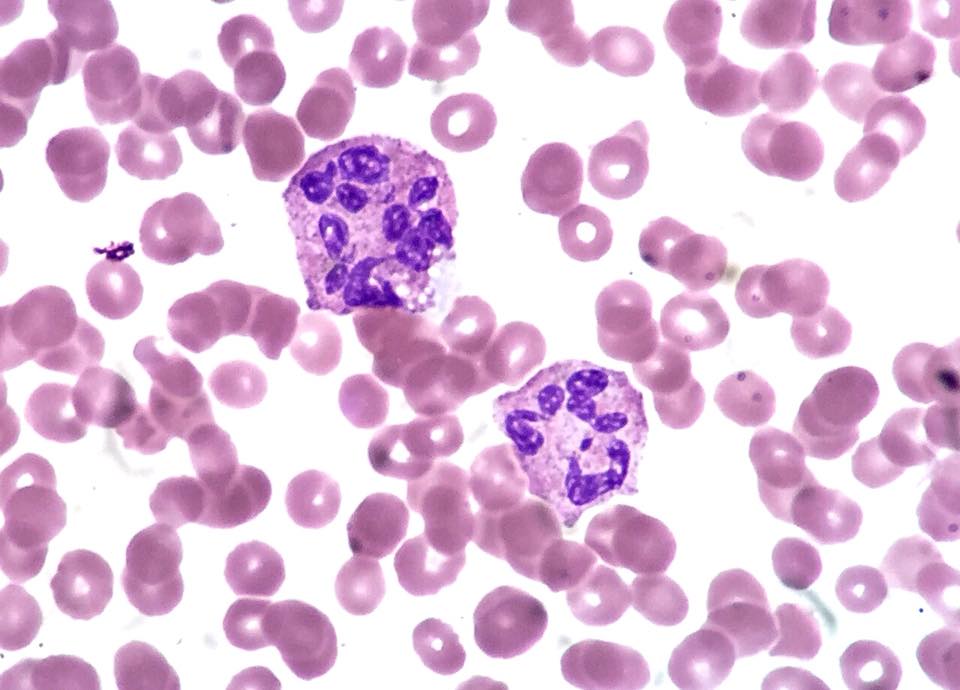
Neutrófilos hiper-segmentados → défice de folato ou vitamina B12
Linfócitos atípicos → causa viral
Alterações consistentes com leucemias (por exemplo, linfócitos “smudge”, projeções capilares (hair-like), ou grânulos azurofílicos)
Velocidade de sedimentação de eritrócitos (VS) e PCRPCRPolymerase chain reaction (PCR) is a technique that amplifies DNA fragments exponentially for analysis. The process is highly specific, allowing for the targeting of specific genomic sequences, even with minuscule sample amounts. The PCR cycles multiple times through 3 phases: denaturation of the template DNA, annealing of a specific primer to the individual DNA strands, and synthesis/elongation of new DNA molecules.Polymerase Chain Reaction (PCR): visto que os achados clássicos de infeção ou inflamação podem ser inaparentes
Outros testesTestesGonadal Hormones laboratoriais a considerar com base na história e nos achados:
Culturas de sangue e urina se febril
Teste de fezes se o paciente tiver diarreia infecciosa
Outros testesTestesGonadal Hormones a considerar com base na apresentação clínica incluem:
Radiografia do tórax para avaliação de infeção ou doença maligna
Ultrassonografia ou TC de abdómen para imagens de fígado e baço
Aspiração e biópsia da medula óssea em caso de suspeita de doença maligna
Tratamento
Abordagem geral
O tratamento depende da causa e do grau da neutropeniaNeutropeniaNeutrophils are an important component of the immune system and play a significant role in the eradication of infections. Low numbers of circulating neutrophils, referred to as neutropenia, predispose the body to recurrent infections or sepsis, though patients can also be asymptomatic. Neutropenia .
Descontinuar agentes farmacológicos causadores
Repleção de défices vitamínicos causadores (vitamina B12, folato e/ou cobre).
Monitore a CAN em hemogramas seriados:
Para a maioria dos pacientes, a neutropeniaNeutropeniaNeutrophils are an important component of the immune system and play a significant role in the eradication of infections. Low numbers of circulating neutrophils, referred to as neutropenia, predispose the body to recurrent infections or sepsis, though patients can also be asymptomatic. Neutropenia será devida a uma infeção ou medicação.
Repetir o hemograma completo para assegurar a resolução da neutropeniaNeutropeniaNeutrophils are an important component of the immune system and play a significant role in the eradication of infections. Low numbers of circulating neutrophils, referred to as neutropenia, predispose the body to recurrent infections or sepsis, though patients can also be asymptomatic. Neutropenia após a melhoria da infeção/descontinuação dos agentes causadores.
Se a neutropeniaNeutropeniaNeutrophils are an important component of the immune system and play a significant role in the eradication of infections. Low numbers of circulating neutrophils, referred to as neutropenia, predispose the body to recurrent infections or sepsis, though patients can also be asymptomatic. Neutropenia persistir, está indicada investigação adicional.
Infeções:
Tratar as infeções com agentes apropriados.
Profilaxia contra infeção:
Lavagem das mãos para prevenir infeções
Evite a exposição a pessoas doentes.
Cuidados dentários regulares
Nneutropenia associada à autoimunidade: Considere imunoglobulina IV (IVIGIVIGDermatomyositis) e/ou esteroides se a neutropeniaNeutropeniaNeutrophils are an important component of the immune system and play a significant role in the eradication of infections. Low numbers of circulating neutrophils, referred to as neutropenia, predispose the body to recurrent infections or sepsis, though patients can also be asymptomatic. Neutropenia for grave e causada pela condição autoimune.
Fatores estimulantes de colónias granulocíticas (G-CSFs):
Estimula naturalmente a produção de neutrófilos
Exemplos: filgrastimFilgrastimA recombinant granulocyte colony-stimulating factor (G-CSF) that is used in the treatment and prevention of neutropenia, preparation and collection of blood progenitor cells, and for use in peripheral blood stem cell transplantation.Hematopoietic Growth Factors, pegfilgrastimPegfilgrastimHematopoietic Growth Factors
Indicado em:
NeutropeniaNeutropeniaNeutrophils are an important component of the immune system and play a significant role in the eradication of infections. Low numbers of circulating neutrophils, referred to as neutropenia, predispose the body to recurrent infections or sepsis, though patients can also be asymptomatic. Neutropenia febril aguda
Uso profilático em pacientes de quimioterapia em risco de neutropeniaNeutropeniaNeutrophils are an important component of the immune system and play a significant role in the eradication of infections. Low numbers of circulating neutrophils, referred to as neutropenia, predispose the body to recurrent infections or sepsis, though patients can also be asymptomatic. Neutropenia
Crianças com neutropeniaNeutropeniaNeutrophils are an important component of the immune system and play a significant role in the eradication of infections. Low numbers of circulating neutrophils, referred to as neutropenia, predispose the body to recurrent infections or sepsis, though patients can also be asymptomatic. Neutropenia congénita grave e/ou falência da medula óssea
NeutropeniaNeutropeniaNeutrophils are an important component of the immune system and play a significant role in the eradication of infections. Low numbers of circulating neutrophils, referred to as neutropenia, predispose the body to recurrent infections or sepsis, though patients can also be asymptomatic. Neutropenia cíclica se a CAN < 200 e no caso de infeções estarem presentes
Transplante de medula óssea: pode ser curativo para crianças com síndrome de Kostmann
Indicações para referenciação hematológica imediata:
Blastos ou outros achados que sugiram doença maligna hematológica vistos em esfregaço de sangue periférico
CAN < 200
Pancitopenia
Tratamento da neutropeniaNeutropeniaNeutrophils are an important component of the immune system and play a significant role in the eradication of infections. Low numbers of circulating neutrophils, referred to as neutropenia, predispose the body to recurrent infections or sepsis, though patients can also be asymptomatic. Neutropenia febril em pacientes com cancro
A neutropeniaNeutropeniaNeutrophils are an important component of the immune system and play a significant role in the eradication of infections. Low numbers of circulating neutrophils, referred to as neutropenia, predispose the body to recurrent infections or sepsis, though patients can also be asymptomatic. Neutropenia febril é a complicação com risco de vida maisMAISAndrogen Insensitivity Syndrome comum dos tratamentos oncológicos.
A antibioticoterapia empírica na apresentação é imperativa para melhorar os resultados e diminuir a mortalidade.
Um organismo causador é identificado em apenas ⅓ dos casos e, portanto, os antibióticos devem visar o tratamento de um amplo espectro de patogénios esperados.
Os antibióticos profiláticos e o tratamento com fator de crescimento no início da neutropeniaNeutropeniaNeutrophils are an important component of the immune system and play a significant role in the eradication of infections. Low numbers of circulating neutrophils, referred to as neutropenia, predispose the body to recurrent infections or sepsis, though patients can also be asymptomatic. Neutropenia demonstraram beneficiar apenas um pequeno subgrupo de pacientes de alto risco com cancro e a receber quimioterapia.
Diagnóstico Diferencial das Neutropenias Primárias
NeutropeniaNeutropeniaNeutrophils are an important component of the immune system and play a significant role in the eradication of infections. Low numbers of circulating neutrophils, referred to as neutropenia, predispose the body to recurrent infections or sepsis, though patients can also be asymptomatic. Neutropenia familiar (étnica) benigna: causa herdada de neutropeniaNeutropeniaNeutrophils are an important component of the immune system and play a significant role in the eradication of infections. Low numbers of circulating neutrophils, referred to as neutropenia, predispose the body to recurrent infections or sepsis, though patients can also be asymptomatic. Neutropenia ligeira a moderada, maisMAISAndrogen Insensitivity Syndrome frequentemente observada em indivíduos de ascendência africana. Estes pacientes podem não gerar leucocitose durante a infeção, todavia a sua apresentação é normal. Eles geram febre e taquicardia durante a infeção (semelhante aos controlos), não têm uma incidência maior de infeção e não têm um risco aumentado de neutropeniaNeutropeniaNeutrophils are an important component of the immune system and play a significant role in the eradication of infections. Low numbers of circulating neutrophils, referred to as neutropenia, predispose the body to recurrent infections or sepsis, though patients can also be asymptomatic. Neutropenia febril secundária à terapia mielossupressora. As reservas de medula óssea destes pacientes são normais.
NeutropeniaNeutropeniaNeutrophils are an important component of the immune system and play a significant role in the eradication of infections. Low numbers of circulating neutrophils, referred to as neutropenia, predispose the body to recurrent infections or sepsis, though patients can also be asymptomatic. Neutropenia hereditária / neutropeniaNeutropeniaNeutrophils are an important component of the immune system and play a significant role in the eradication of infections. Low numbers of circulating neutrophils, referred to as neutropenia, predispose the body to recurrent infections or sepsis, though patients can also be asymptomatic. Neutropenia congénita: condição resultante de mutações em 1 de vários genesGenesA category of nucleic acid sequences that function as units of heredity and which code for the basic instructions for the development, reproduction, and maintenance of organisms.DNA Types and Structure, tipicamente herdada de forma autossómica dominante e muitas vezes levando a neutropeniaNeutropeniaNeutrophils are an important component of the immune system and play a significant role in the eradication of infections. Low numbers of circulating neutrophils, referred to as neutropenia, predispose the body to recurrent infections or sepsis, though patients can also be asymptomatic. Neutropenia grave. Esta patologia é maisMAISAndrogen Insensitivity Syndrome comum em bebés e crianças pequenas. Os sintomas incluem feridas na boca, febre frequente, pneumoniaPneumoniaPneumonia or pulmonary inflammation is an acute or chronic inflammation of lung tissue. Causes include infection with bacteria, viruses, or fungi. In more rare cases, pneumonia can also be caused through toxic triggers through inhalation of toxic substances, immunological processes, or in the course of radiotherapy.Pneumonia, infeções de ouvido e feridas retais. Se não for tratada imediatamente, uma criança pode começar a perder dentes como resultado de infeções gengivais graves.
Síndrome de Kostmann: causa hereditária de neutropeniaNeutropeniaNeutrophils are an important component of the immune system and play a significant role in the eradication of infections. Low numbers of circulating neutrophils, referred to as neutropenia, predispose the body to recurrent infections or sepsis, though patients can also be asymptomatic. Neutropenia congénita grave (CAN é frequentemente < 200). É herdada num padrão autossómico recessivo, embora os genesGenesA category of nucleic acid sequences that function as units of heredity and which code for the basic instructions for the development, reproduction, and maintenance of organisms.DNA Types and Structure causadores sejam desconhecidos. A síndrome de Kostmann é uma condição agressiva em que os pacientes são incapazes de produzir neutrófilos de forma eficaz. Os pacientes normalmente ficam muito doentes e podem necessitar de transplante de medula óssea, que é curativo.
NeutropeniaNeutropeniaNeutrophils are an important component of the immune system and play a significant role in the eradication of infections. Low numbers of circulating neutrophils, referred to as neutropenia, predispose the body to recurrent infections or sepsis, though patients can also be asymptomatic. Neutropenia cíclica: causa autossómica dominante de neutropeniaNeutropeniaNeutrophils are an important component of the immune system and play a significant role in the eradication of infections. Low numbers of circulating neutrophils, referred to as neutropenia, predispose the body to recurrent infections or sepsis, though patients can also be asymptomatic. Neutropenia episódica, tanto em crianças como em adultos. Os episódios ocorrem aproximadamente a cada 3 semanas (intervalo, 12-35 dias) e continuam durante 3-6 dias num único ciclo. Os sintomas incluem febre, infeções e úlceras. Muitas crianças melhoram depois da puberdade.
Síndrome de Shwachman-Diamond: síndrome muito rara que se apresenta na infância, herdada através dum padrão autossómico recessivo. A síndrome caracteriza-se por insuficiência pancreática, disostose metafisária (flaring nas extremidades dos ossos longos com constrição e esclerose da diáfise), atraso do crescimento e neutropeniaNeutropeniaNeutrophils are an important component of the immune system and play a significant role in the eradication of infections. Low numbers of circulating neutrophils, referred to as neutropenia, predispose the body to recurrent infections or sepsis, though patients can also be asymptomatic. Neutropenia, com ou sem anemiaAnemiaAnemia is a condition in which individuals have low Hb levels, which can arise from various causes. Anemia is accompanied by a reduced number of RBCs and may manifest with fatigue, shortness of breath, pallor, and weakness. Subtypes are classified by the size of RBCs, chronicity, and etiology. Anemia: Overview and Types ou trombocitopenia.
A Lecturio Medical complementa o teu estudo através de métodos de ensino baseados em evidência, vídeos de palestras, perguntas e muito mais – tudo combinado num só lugar e fácil de usar.
User Reviews
One Platform. Everything You Need to Succeed. 📚 Get 30% off all plans and certificates!
Lecturio Premium dá-lhe acesso total a todos os conteúdos e características
Obtenha Premium para ver todos os vídeos
Verifique agora o seu e-mail para obter um teste gratuito.
Crie uma conta gratuita para testar os seus conhecimentos
Lecturio Premium dá-lhe acesso total a todos os conteúdos e características - incluindo o Qbank de Lecturio com perguntas actualizadas ao estilo do board-.