
Las variables representan información sobre algo que puede cambiar. El diseño de las escalas de medida, o de los LOS Neisseria métodos de obtención de la información, determinará los LOS Neisseria datos recogidos y las características de los LOS Neisseria mismos. Como resultado, una variable Variable Variables represent information about something that can change. The design of the measurement scales, or of the methods for obtaining information, will determine the data gathered and the characteristics of that data. As a result, a variable can be qualitative or quantitative, and may be further classified into subgroups. Types of Variables puede ser cualitativa o cuantitativa y puede clasificarse en EN Erythema nodosum is an immune-mediated panniculitis (inflammation of the subcutaneous fat) caused by a type IV (delayed-type) hypersensitivity reaction. It commonly manifests in young women as tender, erythematous nodules on the shins. Erythema Nodosum subgrupos. Cada forma posible de expresar el valor de una variable Variable Variables represent information about something that can change. The design of the measurement scales, or of the methods for obtaining information, will determine the data gathered and the characteristics of that data. As a result, a variable can be qualitative or quantitative, and may be further classified into subgroups. Types of Variables, o el rango de la variable Variable Variables represent information about something that can change. The design of the measurement scales, or of the methods for obtaining information, will determine the data gathered and the characteristics of that data. As a result, a variable can be qualitative or quantitative, and may be further classified into subgroups. Types of Variables, se llama dominio.
Last updated: Jul 20, 2026
Una variable Variable Variables represent information about something that can change. The design of the measurement scales, or of the methods for obtaining information, will determine the data gathered and the characteristics of that data. As a result, a variable can be qualitative or quantitative, and may be further classified into subgroups. Types of Variables es un marcador de posición para un valor que se puede representar de manera cualitativa o cuantitativa. Una función es una relación entre múltiples variables.
2 clases principales de variables:
Dentro de la epidemiología:
En EN Erythema nodosum is an immune-mediated panniculitis (inflammation of the subcutaneous fat) caused by a type IV (delayed-type) hypersensitivity reaction. It commonly manifests in young women as tender, erythematous nodules on the shins. Erythema Nodosum epidemiología, una variable Variable Variables represent information about something that can change. The design of the measurement scales, or of the methods for obtaining information, will determine the data gathered and the characteristics of that data. As a result, a variable can be qualitative or quantitative, and may be further classified into subgroups. Types of Variables se entiende como un conjunto de atributos.
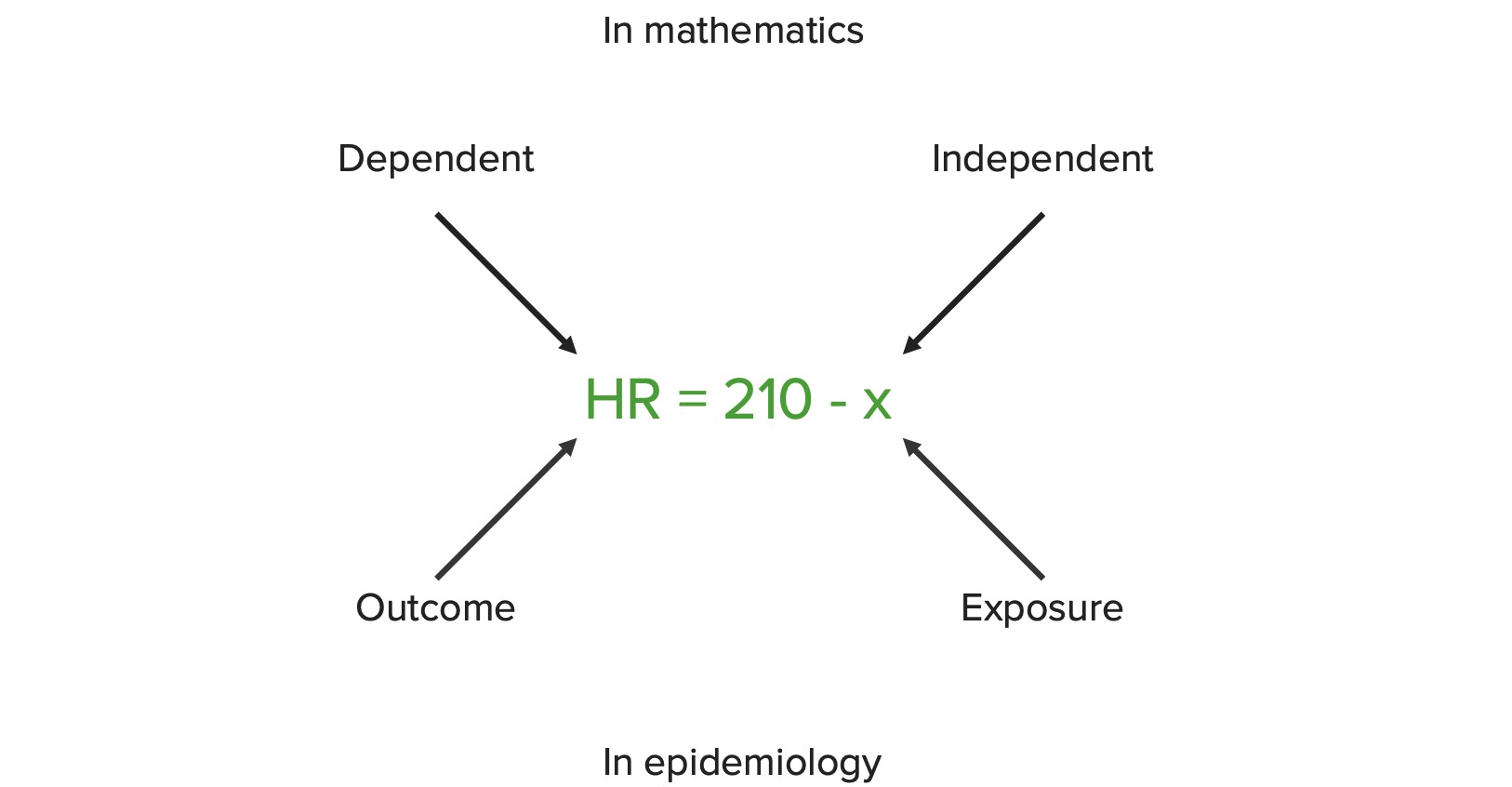
Las distintas interpretaciones de las variables independientes y dependientes en matemáticas y epidemiología:
Este ejemplo ilustra una función comúnmente utilizada para estimar el objetivo de frecuencia cardíaca (HR, por sus siglas en inglés) al ejercitarse de un paciente en función de su edad. La edad del paciente (x) puede modificarse y, por tanto, es la variable independiente (o exposición). La HR representa el objetivo de frecuencia cardíaca al ejercitarse del paciente y se calcula en función de la variable independiente. Por ello, la HR se considera la variable dependiente (o resultado).
Nominal:
Ordinales o jerarquizados:
Continuas:
Discretas:

Ejemplo del proceso de dicotomización:
“dicotomizar” significa convertir
una variable no dicotómica a una dicotómica.