
Domina Conceptos Médicos

Estudia para la escuela de medicina y tus examenes con Lecturio.

Síndrome de Muerte Súbita Infantil

El síndrome de muerte súbita infantil describe la muerte súbita de un lactante por lo demás sano (< 1 año de edad) sin causa identificable. El síndrome de muerte súbita infantil es la principal causa de fallecimiento  en EN Erythema nodosum is an immune-mediated panniculitis (inflammation of the subcutaneous fat) caused by a type IV (delayed-type) hypersensitivity reaction. It commonly manifests in young women as tender, erythematous nodules on the shins. Erythema Nodosum niños entre 1 y 12 meses de edad en EN Erythema nodosum is an immune-mediated panniculitis (inflammation of the subcutaneous fat) caused by a type IV (delayed-type) hypersensitivity reaction. It commonly manifests in young women as tender, erythematous nodules on the shins. Erythema Nodosum Estados Unidos. El síndrome de muerte súbita infantil es un diagnóstico de exclusión y solo puede confirmarse después de que se hayan descartado otras causas de fallecimiento con una toma completa de los LOS Neisseria antecedentes y una autopsia. Brindar a los LOS Neisseria padres educación preventiva es clave para reducir el riesgo de síndrome de muerte súbita infantil. Las medidas preventivas incluyen que los LOS Neisseria lactantes duerman en EN Erythema nodosum is an immune-mediated panniculitis (inflammation of the subcutaneous fat) caused by a type IV (delayed-type) hypersensitivity reaction. It commonly manifests in young women as tender, erythematous nodules on the shins. Erythema Nodosum decúbito supino, sobre superficies firmes, sin desorden en EN Erythema nodosum is an immune-mediated panniculitis (inflammation of the subcutaneous fat) caused by a type IV (delayed-type) hypersensitivity reaction. It commonly manifests in young women as tender, erythematous nodules on the shins. Erythema Nodosum la cuna.

Last updated: Dec 8, 2024

Editorial responsibility: Stanley Oiseth, Lindsay Jones, Evelin Maza

Definición y Epidemiología

Definición

El síndrome de muerte súbita infantil es la muerte súbita e inexplicable de un niño en EN Erythema nodosum is an immune-mediated panniculitis (inflammation of the subcutaneous fat) caused by a type IV (delayed-type) hypersensitivity reaction. It commonly manifests in young women as tender, erythematous nodules on the shins. Erythema Nodosum la infancia (< 1 año de edad) sin una causa identificable después del examen físico, la revisión del caso clínico y la autopsia.
Epidemiología

  • Principal causa de fallecimiento en EN Erythema nodosum is an immune-mediated panniculitis (inflammation of the subcutaneous fat) caused by a type IV (delayed-type) hypersensitivity reaction. It commonly manifests in young women as tender, erythematous nodules on the shins. Erythema Nodosum niños entre 1 y 12 meses de edad en EN Erythema nodosum is an immune-mediated panniculitis (inflammation of the subcutaneous fat) caused by a type IV (delayed-type) hypersensitivity reaction. It commonly manifests in young women as tender, erythematous nodules on the shins. Erythema Nodosum Estados Unidos
    • Incidencia máxima: 2–4 meses
    • > 90% ocurren antes de los LOS Neisseria 6 meses de edad
  • Incidencia: 1 529 muertes atribuidas al AL Amyloidosis síndrome de muerte súbita infantil en EN Erythema nodosum is an immune-mediated panniculitis (inflammation of the subcutaneous fat) caused by a type IV (delayed-type) hypersensitivity reaction. It commonly manifests in young women as tender, erythematous nodules on the shins. Erythema Nodosum Estados Unidos en EN Erythema nodosum is an immune-mediated panniculitis (inflammation of the subcutaneous fat) caused by a type IV (delayed-type) hypersensitivity reaction. It commonly manifests in young women as tender, erythematous nodules on the shins. Erythema Nodosum 2022
  • Casi 3 veces más común en EN Erythema nodosum is an immune-mediated panniculitis (inflammation of the subcutaneous fat) caused by a type IV (delayed-type) hypersensitivity reaction. It commonly manifests in young women as tender, erythematous nodules on the shins. Erythema Nodosum familias negras y nativas americanas/nativas de Alaska
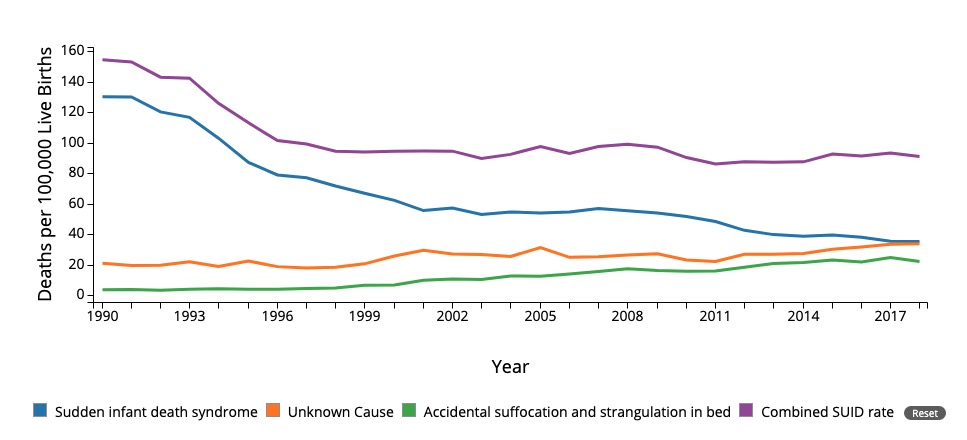
  • La incidencia del síndrome de muerte súbita infantil ha HA Hemolytic anemia (HA) is the term given to a large group of anemias that are caused by the premature destruction/hemolysis of circulating red blood cells (RBCs). Hemolysis can occur within (intravascular hemolysis) or outside the blood vessels (extravascular hemolysis). Hemolytic Anemia disminuido significativamente en EN Erythema nodosum is an immune-mediated panniculitis (inflammation of the subcutaneous fat) caused by a type IV (delayed-type) hypersensitivity reaction. It commonly manifests in young women as tender, erythematous nodules on the shins. Erythema Nodosum los LOS Neisseria países en EN Erythema nodosum is an immune-mediated panniculitis (inflammation of the subcutaneous fat) caused by a type IV (delayed-type) hypersensitivity reaction. It commonly manifests in young women as tender, erythematous nodules on the shins. Erythema Nodosum desarrollo debido a las campañas de salud pública de “dormir boca arriba”.
SUID 1990-2018

Mortalidad por síndrome de muerte súbita infantil y otras causas. Nótese la disminución desde 1994 debido a las intervenciones públicas, incluida la campaña de “dormir boca arriba”.
SUID: muerte súbita e inesperada (en inglés)

Imagen: “Trends in Sudden Unexpected Infant Death by Cause, 1990–2018” por CDC/NCHS, National Vital Statistics System, Compressed Mortality File. Licencia: Dominio Público, editada por Lecturio.

Etiología y Fisiopatología

Etiología

La causa más probable de síndrome de muerte súbita infantil implica una génesis multifactorial en EN Erythema nodosum is an immune-mediated panniculitis (inflammation of the subcutaneous fat) caused by a type IV (delayed-type) hypersensitivity reaction. It commonly manifests in young women as tender, erythematous nodules on the shins. Erythema Nodosum bebés particularmente vulnerables, en EN Erythema nodosum is an immune-mediated panniculitis (inflammation of the subcutaneous fat) caused by a type IV (delayed-type) hypersensitivity reaction. It commonly manifests in young women as tender, erythematous nodules on the shins. Erythema Nodosum la que los LOS Neisseria factores internos y externos trabajan juntos.
  • Lactantes vulnerables: incapaces de detectar o responder a la hipoxia/hipercapnia
    • Lactantes prematuros
    • Lactantes con anomalías del tronco encefálico
    • Lactantes prematuros o de bajo peso al AL Amyloidosis nacer
    • Evento breve, resuelto, inexplicable
  • Factores de riesgo maternos
    • Edad materna menor de 20
    • Atención prenatal tardía
    • Nivel socioeconómico bajo
    • Tabaquismo de los LOS Neisseria padres
  • Factores de riesgo ambiental (muchos de estos son riesgos modificables)
    • Prácticas inseguras para dormir
      • Permitir que el bebé duerma en EN Erythema nodosum is an immune-mediated panniculitis (inflammation of the subcutaneous fat) caused by a type IV (delayed-type) hypersensitivity reaction. It commonly manifests in young women as tender, erythematous nodules on the shins. Erythema Nodosum decúbito prono
      • Compartir la cama (colecho)
      • Cunas abarrotadas (juguetes, almohadas, mantas, etc ETC The electron transport chain (ETC) sends electrons through a series of proteins, which generate an electrochemical proton gradient that produces energy in the form of adenosine triphosphate (ATP). Electron Transport Chain (ETC).)
      • Usar una superficie suave para dormir
      • Cubrir la cabeza del bebé
    • Abuso infantil
    • Antecedente familiar de síndrome de muerte súbita infantil
    • Sobrecalentamiento en EN Erythema nodosum is an immune-mediated panniculitis (inflammation of the subcutaneous fat) caused by a type IV (delayed-type) hypersensitivity reaction. It commonly manifests in young women as tender, erythematous nodules on the shins. Erythema Nodosum un bebé que suda excesivamente

Fisiopatología

  • Se cree que es un proceso secuencial:
    1. Estado inicial de hipoxia
    2. Bradicardia progresiva
    3. Períodos prolongados de apnea y luego asfixia
  • Puede ser interrumpido por estímulos externos que inducen al AL Amyloidosis bebé a respirar
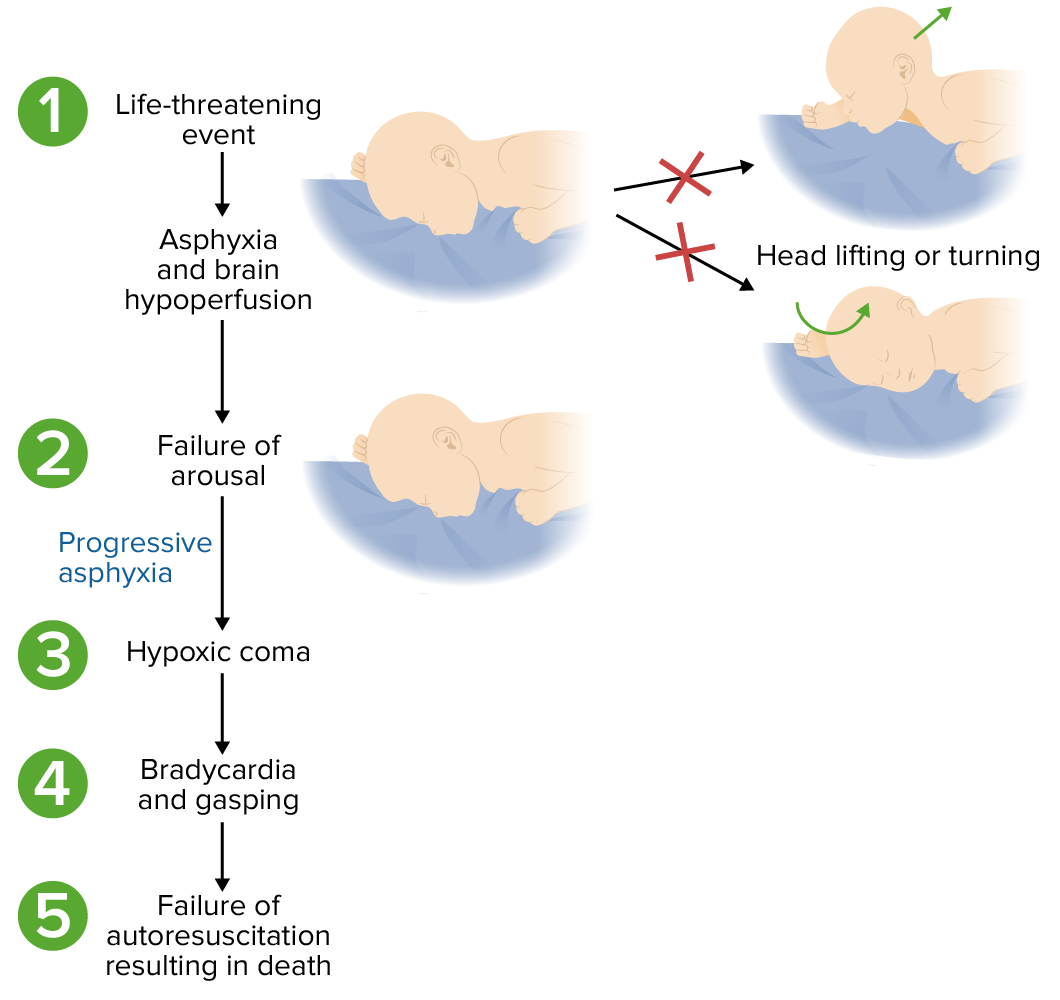
Pathophysiology of Sudden Infant Death Syndrome

Posible fisiopatología del síndrome de muerte súbita del lactante:
En algunos lactantes vulnerables, un evento puede provocar hipoxia y/o hipercapnia. La incapacidad de detectar o responder conduce a consecuencias fisiológicas progresivas y a la muerte.

Imagen por Lecturio.
Table: Factores contribuyentes además de la respuesta deficiente al AL Amyloidosis O2/CO2
Categoría Mecanismos Ejemplos de efectos en EN Erythema nodosum is an immune-mediated panniculitis (inflammation of the subcutaneous fat) caused by a type IV (delayed-type) hypersensitivity reaction. It commonly manifests in young women as tender, erythematous nodules on the shins. Erythema Nodosum el lactante
Sistema nervioso central
  • Cambios en EN Erythema nodosum is an immune-mediated panniculitis (inflammation of the subcutaneous fat) caused by a type IV (delayed-type) hypersensitivity reaction. It commonly manifests in young women as tender, erythematous nodules on the shins. Erythema Nodosum los LOS Neisseria receptores de serotonina ( 5-HT 5-HT A biochemical messenger and regulator, synthesized from the essential amino acid l-tryptophan. In humans it is found primarily in the central nervous system, gastrointestinal tract, and blood platelets. Serotonin mediates several important physiological functions including neurotransmission, gastrointestinal motility, hemostasis, and cardiovascular integrity. Receptors and Neurotransmitters of the CNS) en EN Erythema nodosum is an immune-mediated panniculitis (inflammation of the subcutaneous fat) caused by a type IV (delayed-type) hypersensitivity reaction. It commonly manifests in young women as tender, erythematous nodules on the shins. Erythema Nodosum el tronco encefálico
  • Astrogliosis altera las vías normales de control respiratorio
  • Reducción de la detección y respuesta al AL Amyloidosis aumento de CO2 y la caída de O2, lo que aumenta la vulnerabilidad a la apnea y la hipoxia
    Genética y factores autonómicos
  • Posibles variantes en EN Erythema nodosum is an immune-mediated panniculitis (inflammation of the subcutaneous fat) caused by a type IV (delayed-type) hypersensitivity reaction. It commonly manifests in young women as tender, erythematous nodules on the shins. Erythema Nodosum genes Genes A category of nucleic acid sequences that function as units of heredity and which code for the basic instructions for the development, reproduction, and maintenance of organisms. DNA Types and Structure (p. ej., PHOX2B) que afectan la regulación autonómica
  • Aún no está claro
  • Disminución de la capacidad para iniciar esfuerzos respiratorios protectores o ajustar la frecuencia cardíaca en EN Erythema nodosum is an immune-mediated panniculitis (inflammation of the subcutaneous fat) caused by a type IV (delayed-type) hypersensitivity reaction. It commonly manifests in young women as tender, erythematous nodules on the shins. Erythema Nodosum respuesta a un bajo nivel de oxígeno
    Anomalías cardíacas
  • Mutaciones en EN Erythema nodosum is an immune-mediated panniculitis (inflammation of the subcutaneous fat) caused by a type IV (delayed-type) hypersensitivity reaction. It commonly manifests in young women as tender, erythematous nodules on the shins. Erythema Nodosum genes Genes A category of nucleic acid sequences that function as units of heredity and which code for the basic instructions for the development, reproduction, and maintenance of organisms. DNA Types and Structure de canales iónicos (p. ej., SCN5A, KCNQ1) que provocan arritmias
  • Afecciones como el síndrome de QT largo o la taquicardia ventricular polimórfica catecolaminérgica
  • Predisposición a alteraciones fatales del ritmo cardíaco, especialmente en EN Erythema nodosum is an immune-mediated panniculitis (inflammation of the subcutaneous fat) caused by a type IV (delayed-type) hypersensitivity reaction. It commonly manifests in young women as tender, erythematous nodules on the shins. Erythema Nodosum condiciones de estrés o hipóxicas
    Factores metabólicos
  • Glucogenosis: afecta el almacenamiento y uso de glucógeno, lo que provoca cambios en EN Erythema nodosum is an immune-mediated panniculitis (inflammation of the subcutaneous fat) caused by a type IV (delayed-type) hypersensitivity reaction. It commonly manifests in young women as tender, erythematous nodules on the shins. Erythema Nodosum el hígado y una oxidación deficiente de las grasas
  • Deficiencia de la acil-CoA deshidrogenasa de cadena media (mutación ACADM) que provoca hipoglucemia grave
  • Dificultad para mantener un suministro adecuado de energía, lo que exacerba el impacto del estrés respiratorio o cardíaco
    Infecciones y respuesta inmunitaria
  • Infecciones leves o desequilibrios inmunitarios que amplifican las vulnerabilidades subyacentes
  • Las respuestas inflamatorias anormales perjudican los LOS Neisseria mecanismos de protección normales
  • Mayor riesgo de insuficiencia respiratoria e incapacidad para recuperarse de la hipoxia debido a una inflamación excesiva o desregulada

    Diagnóstico y Tratamiento

    Diagnóstico

    El síndrome de muerte súbita infantil es un diagnóstico de exclusión que se puede asignar solo después de:

    • Un examen minucioso de la escena y las circunstancias que rodearon el fallecimiento
    • Una autopsia que no determina una causa médica de fallecimiento
      • Siempre indicado en EN Erythema nodosum is an immune-mediated panniculitis (inflammation of the subcutaneous fat) caused by a type IV (delayed-type) hypersensitivity reaction. It commonly manifests in young women as tender, erythematous nodules on the shins. Erythema Nodosum casos sin una causa identificable del fallecimiento ( en EN Erythema nodosum is an immune-mediated panniculitis (inflammation of the subcutaneous fat) caused by a type IV (delayed-type) hypersensitivity reaction. It commonly manifests in young women as tender, erythematous nodules on the shins. Erythema Nodosum muchos países y jurisdicciones, esto es legalmente obligatorio)
      • Los LOS Neisseria hallazgos de la autopsia en EN Erythema nodosum is an immune-mediated panniculitis (inflammation of the subcutaneous fat) caused by a type IV (delayed-type) hypersensitivity reaction. It commonly manifests in young women as tender, erythematous nodules on the shins. Erythema Nodosum el síndrome de muerte súbita infantil pueden incluir:
        • Lactante bien alimentado, en EN Erythema nodosum is an immune-mediated panniculitis (inflammation of the subcutaneous fat) caused by a type IV (delayed-type) hypersensitivity reaction. It commonly manifests in young women as tender, erythematous nodules on the shins. Erythema Nodosum buenas condiciones
        • Sin signos evidentes de agitación o traumatismo (lesiones, petequias, equimosis)
        • Livor mortis encontrado en EN Erythema nodosum is an immune-mediated panniculitis (inflammation of the subcutaneous fat) caused by a type IV (delayed-type) hypersensitivity reaction. It commonly manifests in young women as tender, erythematous nodules on the shins. Erythema Nodosum la parte frontal Frontal The bone that forms the frontal aspect of the skull. Its flat part forms the forehead, articulating inferiorly with the nasal bone and the cheek bone on each side of the face. Skull: Anatomy del cuerpo, pero no en EN Erythema nodosum is an immune-mediated panniculitis (inflammation of the subcutaneous fat) caused by a type IV (delayed-type) hypersensitivity reaction. It commonly manifests in young women as tender, erythematous nodules on the shins. Erythema Nodosum la cara (debido a la posición boca abajo en EN Erythema nodosum is an immune-mediated panniculitis (inflammation of the subcutaneous fat) caused by a type IV (delayed-type) hypersensitivity reaction. It commonly manifests in young women as tender, erythematous nodules on the shins. Erythema Nodosum el momento del fallecimiento)
        • Labios y lechos ungueales cianóticos

    Tratamiento

    El enfoque principal del tratamiento es proporcionar un diagnóstico post mortem preciso, así como apoyo emocional y psicológico a los LOS Neisseria padres. Para los LOS Neisseria padres y miembros de la familia también se debe:

    • Permitir pasar tiempo con el lactante fallecido
    • Ofrecer asesoramiento para el duelo y supervisar de cerca para detectar signos de depresión

    Prevención

    La educación de los LOS Neisseria padres es clave para prevenir el síndrome de muerte súbita infantil. Como se señaló anteriormente, muchos de los LOS Neisseria factores de riesgo son modificables y se pueden prevenir. La educación de los LOS Neisseria padres incluye:

    • Fomentar el cuidado prenatal regular Regular Insulin durante el embarazo
    • Fomentar el cese del tabaco y las drogas ilícitas
    • Prácticas seguras para dormir
      • Los LOS Neisseria lactantes deben dormir en EN Erythema nodosum is an immune-mediated panniculitis (inflammation of the subcutaneous fat) caused by a type IV (delayed-type) hypersensitivity reaction. It commonly manifests in young women as tender, erythematous nodules on the shins. Erythema Nodosum decúbito supino (boca arriba) hasta el año de edad.
      • Utilizar un colchón firme.
      • Mantener una cuna ordenada (sin animales de peluche, mantas, almohadas, etc ETC The electron transport chain (ETC) sends electrons through a series of proteins, which generate an electrochemical proton gradient that produces energy in the form of adenosine triphosphate (ATP). Electron Transport Chain (ETC).).
      • Evitar el colecho (considerando que compartir la habitación es aceptable y puede ser un factor de protección).
      • Dejar de envolver al AL Amyloidosis lactante cuando este pueda rodarse.
      • Evitar sobrecalentar al AL Amyloidosis bebé/la habitación.

    Diagnóstico Diferencial

    Las siguientes afecciones son causas naturales de fallecimiento que se distinguen del síndrome de muerte súbita infantil:

    • Infecciones respiratorias en EN Erythema nodosum is an immune-mediated panniculitis (inflammation of the subcutaneous fat) caused by a type IV (delayed-type) hypersensitivity reaction. It commonly manifests in young women as tender, erythematous nodules on the shins. Erythema Nodosum niños (e.g., bronquiolitis, crup): pueden comprometer gravemente el consumo de oxígeno y facilitar un estado de apnea, con fallecimiento posterior si no se interviene.
    • Síndrome de QT largo: un trastorno de la repolarización del miocardio caracterizado por un intervalo QT prolongado en EN Erythema nodosum is an immune-mediated panniculitis (inflammation of the subcutaneous fat) caused by a type IV (delayed-type) hypersensitivity reaction. It commonly manifests in young women as tender, erythematous nodules on the shins. Erythema Nodosum el electrocardiograma; asociado con un mayor riesgo de desarrollar arritmias potencialmente mortales, más notablemente torsades de pointes Torsades de pointes A malignant form of polymorphic ventricular tachycardia that is characterized by heart rate between 200 and 250 beats per minute, and QRS complexes with changing amplitude and twisting of the points. The term also describes the syndrome of tachycardia with prolonged ventricular repolarization, long qt intervals exceeding 500 milliseconds or bradycardia. Torsades de pointes may be self-limited or may progress to ventricular fibrillation. Ventricular Tachycardia. Los LOS Neisseria pacientes pueden estar relativamente asintomáticos en EN Erythema nodosum is an immune-mediated panniculitis (inflammation of the subcutaneous fat) caused by a type IV (delayed-type) hypersensitivity reaction. It commonly manifests in young women as tender, erythematous nodules on the shins. Erythema Nodosum el momento del fallecimiento.
    • Errores innatos de la oxidación de los LOS Neisseria ácidos grasos: los LOS Neisseria ácidos grasos son una fuente de energía importante para el bebé, especialmente el recién nacido, ya que protegen el tejido cerebral cuando los LOS Neisseria niveles de glucosa son bajos. Los LOS Neisseria errores innatos del metabolismo pueden causar un rápido agotamiento de las reservas de energía.
    • Síndrome de Reye: una descompensación hepática aguda que se observa en EN Erythema nodosum is an immune-mediated panniculitis (inflammation of the subcutaneous fat) caused by a type IV (delayed-type) hypersensitivity reaction. It commonly manifests in young women as tender, erythematous nodules on the shins. Erythema Nodosum niños que recibieron aspirina para controlar la temperatura y los LOS Neisseria síntomas durante enfermedades febriles.

    Referencias

    1. Szentpetery, S., Weiner, D. J., & Finder, J. D. (2018). Pulmonary disorders. In B. J. Zitelli MD et al.: Zitelli and Davis’ atlas of pediatric physical diagnosis (pp. 593-615). https://www.clinicalkey.es/#!/content/3-s2.0-B9780323393034000177
    2. Ferri, F. F., M.D. (2020). Shaken baby syndrome. In Ferri, Fred F., M.D., F.A.C.P. (Ed.), Ferri’s clinical advisor 2020 (pp. 1250.e4). https://www.clinicalkey.es/#!/content/3-s2.0-B9780323672542007993
    3. Madan-Khetarpal, S., & Arnold, G. (2018). Genetic disorders and dysmorphic conditions. In B. J. Zitelli MD, S. C. McIntire MD & Nowalk, Andrew J., MD, Ph.D. (Eds.), Zitelli and Davis’ atlas of pediatric physical diagnosis (pp. 1-43). https://www.clinicalkey.es/#!/content/3-s2.0-B9780323393034000013
    4. Centers for Disease Control and Prevention. (2024). Data and statistics on SIDS and SUID. Retrieved December 8, 2024, from https://www.cdc.gov/sudden-infant-death/data-research/data/index.html
    5. Fraile-Martinez, et al. (2024). Sudden Infant Death Syndrome (SIDS): State of the art and future directions. International Journal of Medical Sciences, 21(5), 848–861. https://doi.org/10.7150/ijms.89490

    ¡Crea tu cuenta gratis o inicia una sesión para seguir leyendo!

    Regístrate ahora y obtén acceso gratuito a Lecturio con páginas de concepto, videos médicos y cuestionarios para tu educación médica.

    User Reviews

    Que tengas una sesión de estudio alegre y navideña 🎁 Ahorra 50% en todos los planes >>

    Details