
Domina Conceptos Médicos

Estudia para la escuela de medicina y tus examenes con Lecturio.

Replicación del ADN

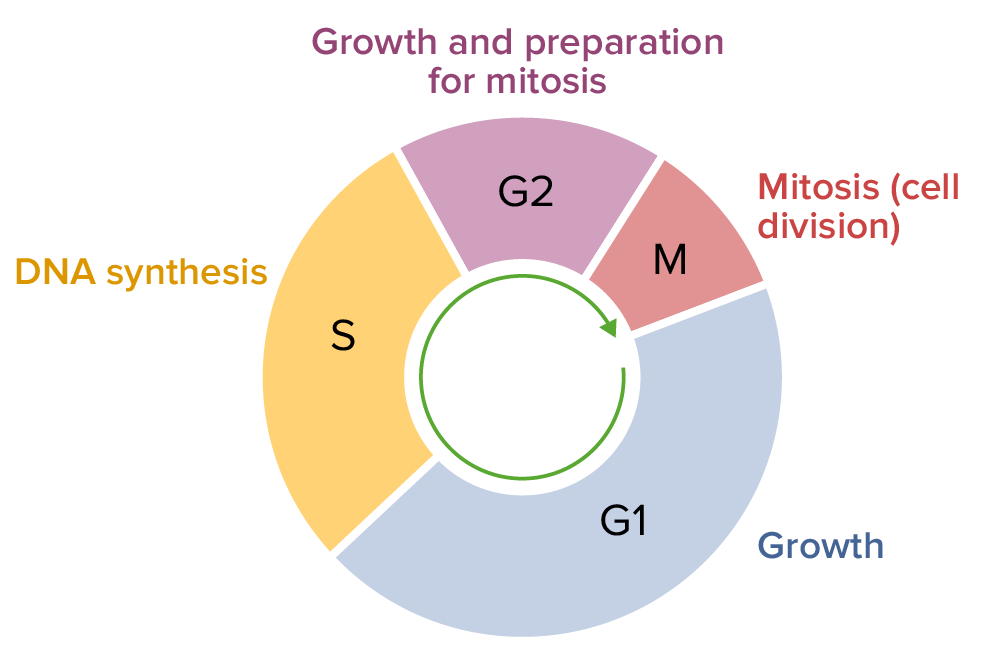
Todo el ADN de una célula se replica durante la fase S (de síntesis) del ciclo celular. El principio de la replicación se basa en el emparejamiento de bases de nucleótidos complementarios: la adenina forma enlaces de hidrógeno con la timina (o uracilo en el ARN) y la guanina forma enlaces de hidrógeno con la citosina. La replicación se produce antes de la división celular en la fase S del ciclo celular para permitir la presencia de 2 conjuntos de cromosomas durante la metafase de la mitosis, tras lo cual se dividen por igual en 2 nuevas células durante la separación (anafase).

Last updated: Apr 23, 2025
Editorial responsibility: Stanley Oiseth, Lindsay Jones, Evelin Maza

Preparación y Requisitos Previos para la Replicación

  • La replicación se produce durante la fase S (de síntesis) del ciclo celular.
  • La duración de estas fases del ciclo celular varía considerablemente en EN Erythema nodosum is an immune-mediated panniculitis (inflammation of the subcutaneous fat) caused by a type IV (delayed-type) hypersensitivity reaction. It commonly manifests in young women as tender, erythematous nodules on the shins. Erythema Nodosum los LOS Neisseria distintos tipos de células. En EN Erythema nodosum is an immune-mediated panniculitis (inflammation of the subcutaneous fat) caused by a type IV (delayed-type) hypersensitivity reaction. It commonly manifests in young women as tender, erythematous nodules on the shins. Erythema Nodosum el caso de una célula humana típica y con rápida proliferación, un ciclo completo tomará 24 horas: la fase G1 (crecimiento) podría durar unas 11 horas, la fase S unas 8 horas, la G2 (crecimiento y preparación para la mitosis Mitosis A type of cell nucleus division by means of which the two daughter nuclei normally receive identical complements of the number of chromosomes of the somatic cells of the species. Cell Cycle) unas 4 horas y la M ( mitosis Mitosis A type of cell nucleus division by means of which the two daughter nuclei normally receive identical complements of the number of chromosomes of the somatic cells of the species. Cell Cycle) una hora.
  • El ADN de una célula humana existe mayoritariamente en EN Erythema nodosum is an immune-mediated panniculitis (inflammation of the subcutaneous fat) caused by a type IV (delayed-type) hypersensitivity reaction. It commonly manifests in young women as tender, erythematous nodules on the shins. Erythema Nodosum forma de 46 cromosomas (23 pares = 2n) dentro del núcleo. Una pequeña fracción del total está presente como ADN mitocondrial, que tiene aproximadamente 16 500 pares de bases Bases Usually a hydroxide of lithium, sodium, potassium, rubidium or cesium, but also the carbonates of these metals, ammonia, and the amines. Acid-Base Balance y contiene 37 genes Genes A category of nucleic acid sequences that function as units of heredity and which code for the basic instructions for the development, reproduction, and maintenance of organisms. DNA Types and Structure, todos ellos esenciales para la función mitocondrial normal.
Cell cycle, consisting of G1, S, G2, and M phases

Ciclo celular, compuesto por las fases G1, S, G2 y M

Imagen pro Lecturio.
Related videos

Iniciación

  • Orígenes de la replicación: ciertas proteínas reconocen secciones de ADN (ricas en EN Erythema nodosum is an immune-mediated panniculitis (inflammation of the subcutaneous fat) caused by a type IV (delayed-type) hypersensitivity reaction. It commonly manifests in young women as tender, erythematous nodules on the shins. Erythema Nodosum AT) a partir de las cuales puede comenzar la replicación.
    • Los LOS Neisseria procariotas poseen un único origen de replicación.
    • Los LOS Neisseria eucariotas tienen múltiples orígenes de replicación. En EN Erythema nodosum is an immune-mediated panniculitis (inflammation of the subcutaneous fat) caused by a type IV (delayed-type) hypersensitivity reaction. It commonly manifests in young women as tender, erythematous nodules on the shins. Erythema Nodosum el ADN humano hay más de 30 000 orígenes de replicación, sin los LOS Neisseria cuales la fase S duraría unas 40 veces más.
  • En EN Erythema nodosum is an immune-mediated panniculitis (inflammation of the subcutaneous fat) caused by a type IV (delayed-type) hypersensitivity reaction. It commonly manifests in young women as tender, erythematous nodules on the shins. Erythema Nodosum los LOS Neisseria procariotas, una proteína llamada DnaA se une a un origen de replicación. En EN Erythema nodosum is an immune-mediated panniculitis (inflammation of the subcutaneous fat) caused by a type IV (delayed-type) hypersensitivity reaction. It commonly manifests in young women as tender, erythematous nodules on the shins. Erythema Nodosum los LOS Neisseria eucariotas, esto lo realiza el complejo de reconocimiento del origen, un complejo de unión al AL Amyloidosis ADN de 6 unidades.
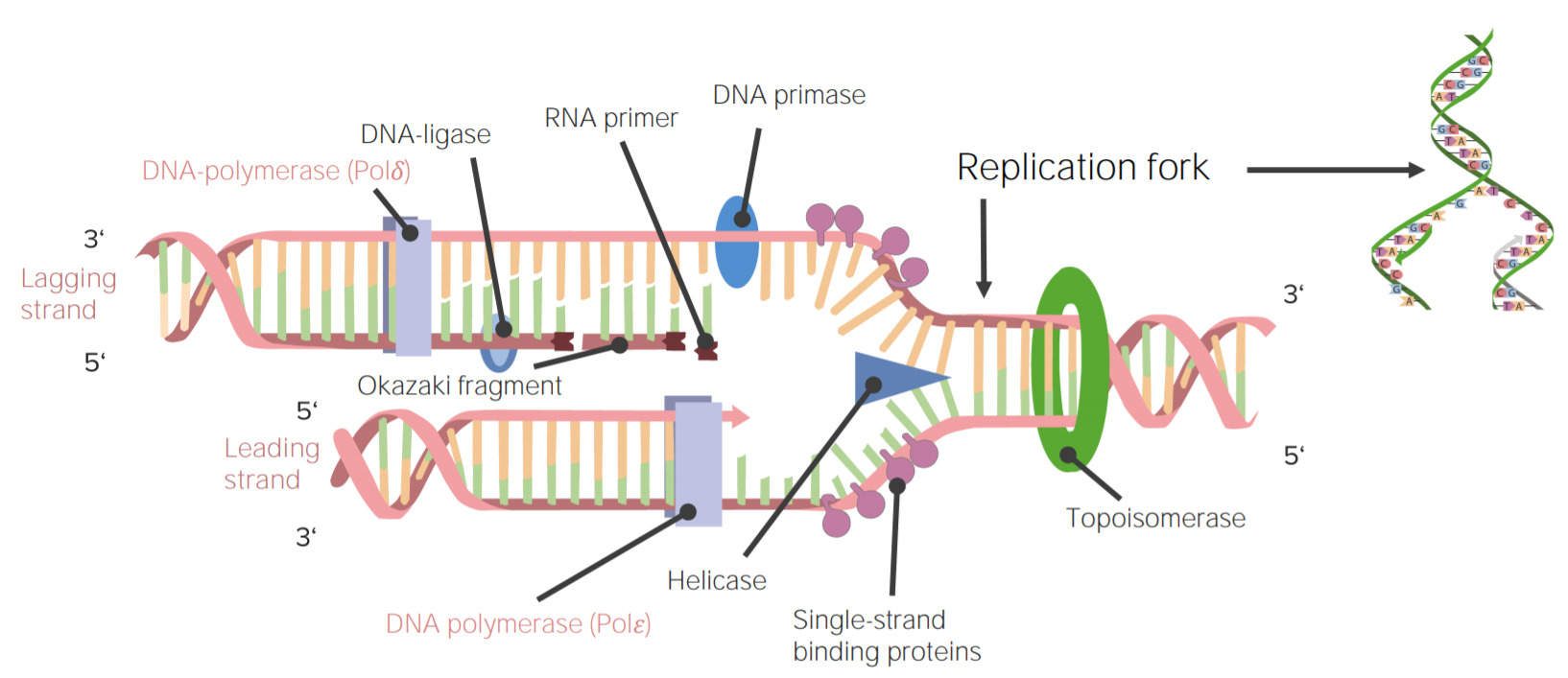
  • La helicasa dependiente de ATP DnaB (procariotas), desenreda la doble hélice del ADN → separa las 2 hebras para exponer 2 hebras simples.
  • Helicasa ( en EN Erythema nodosum is an immune-mediated panniculitis (inflammation of the subcutaneous fat) caused by a type IV (delayed-type) hypersensitivity reaction. It commonly manifests in young women as tender, erythematous nodules on the shins. Erythema Nodosum eucariotas):
    • Se mueve en EN Erythema nodosum is an immune-mediated panniculitis (inflammation of the subcutaneous fat) caused by a type IV (delayed-type) hypersensitivity reaction. It commonly manifests in young women as tender, erythematous nodules on the shins. Erythema Nodosum la dirección 5′ → 3′ a lo largo de la molécula de ADN
    • Forma la horquilla de replicación utilizando la energía de la hidrólisis del ATP para romper los LOS Neisseria enlaces de hidrógeno entre las bases Bases Usually a hydroxide of lithium, sodium, potassium, rubidium or cesium, but also the carbonates of these metals, ammonia, and the amines. Acid-Base Balance nucleotídicas de las cadenas complementarias, separándolas
    • El síndrome de Bloom es un trastorno de predisposición al AL Amyloidosis cáncer causado por mutaciones en EN Erythema nodosum is an immune-mediated panniculitis (inflammation of the subcutaneous fat) caused by a type IV (delayed-type) hypersensitivity reaction. It commonly manifests in young women as tender, erythematous nodules on the shins. Erythema Nodosum el gen de la helicasa BLM, una de las casi 100 helicasas presentes en EN Erythema nodosum is an immune-mediated panniculitis (inflammation of the subcutaneous fat) caused by a type IV (delayed-type) hypersensitivity reaction. It commonly manifests in young women as tender, erythematous nodules on the shins. Erythema Nodosum el ser humano.
  • Proteínas de unión de hebras simples se unen a las hebras simples desenredadas → evitan que se vuelvan a unir entre sí después de haber sido separadas por la helicasa
  • A medida que las 2 hebras del ADN molde se desenvuelven:
    • El ADN que se encuentra por delante de la horquilla de replicación se ve VE Ventilation: Mechanics of Breathing obligado a girar en EN Erythema nodosum is an immune-mediated panniculitis (inflammation of the subcutaneous fat) caused by a type IV (delayed-type) hypersensitivity reaction. It commonly manifests in young women as tender, erythematous nodules on the shins. Erythema Nodosum la dirección opuesta.
    • El ADN se retuerce sobre sí mismo sin la presencia de las topoisomerasas:
      • Catalizan la rotura y la unión reversible de las hebras de ADN.
      • Las roturas transitorias producidas por estas enzimas permiten que las dos hebras de ADN giren libremente, una alrededor de la otra → la replicación puede proceder sin causar una tensión de torsión indebida en EN Erythema nodosum is an immune-mediated panniculitis (inflammation of the subcutaneous fat) caused by a type IV (delayed-type) hypersensitivity reaction. It commonly manifests in young women as tender, erythematous nodules on the shins. Erythema Nodosum la plantilla de ADN, lo que podría provocar la rotura de las hebras de ácido nucleico.
      • En EN Erythema nodosum is an immune-mediated panniculitis (inflammation of the subcutaneous fat) caused by a type IV (delayed-type) hypersensitivity reaction. It commonly manifests in young women as tender, erythematous nodules on the shins. Erythema Nodosum los LOS Neisseria procariotas, los LOS Neisseria antibióticos derivados de fluoroquinolonas inhiben las topoisomerasas II (ADN girasa) y IV.
      • En EN Erythema nodosum is an immune-mediated panniculitis (inflammation of the subcutaneous fat) caused by a type IV (delayed-type) hypersensitivity reaction. It commonly manifests in young women as tender, erythematous nodules on the shins. Erythema Nodosum eucariotas, los LOS Neisseria agentes quimioterapéuticos irinotecán y topotecán inhiben la topoisomerasa I, mientras que el etopósido y el tenipósido inhiben la topoisomerasa II.
Replicación del ADN

La replicación del ADN o síntesis del ADN es el proceso de copia de una molécula de ADN de doble cadena. Este proceso es primordial para toda la vida tal y como la conocemos.

Imagen: “DNA Replication” por Mariana Ruiz. Licencia: Dominio Público
Polimerasa Función Actividad exonucleasa
α Sintetiza el cebador de ARN e inicia la síntesis de ADN a lo largo de la hebra rezagada 3′ → 5′
β Repara el ADN Ninguno
γ Replica el ADN mitocondrial 3′ → 5′
δ Sintetiza la hebra rezagada, rellenando los LOS Neisseria huecos de ADN tras la retirada del cebador 3′ → 5′
ε Sintetiza el hilo conductor 3′ → 5′ y 5′ → 3′

Related videos

Elongación

  • Un cebador es necesario para la síntesis de las hebras hijas del ADN
    • Es un trozo corto de ARN (8–10 pares de bases Bases Usually a hydroxide of lithium, sodium, potassium, rubidium or cesium, but also the carbonates of these metals, ammonia, and the amines. Acid-Base Balance)
    • Complemento de la cadena molde
    • Sintetizada por la primasa (una ARN polimerasa dependiente del ADN)
      • En EN Erythema nodosum is an immune-mediated panniculitis (inflammation of the subcutaneous fat) caused by a type IV (delayed-type) hypersensitivity reaction. It commonly manifests in young women as tender, erythematous nodules on the shins. Erythema Nodosum los LOS Neisseria eucariotas, es una subunidad de la ADN polimerasa alfa
  • Síntesis de ADN
    • La replicación se produce de forma continua en EN Erythema nodosum is an immune-mediated panniculitis (inflammation of the subcutaneous fat) caused by a type IV (delayed-type) hypersensitivity reaction. It commonly manifests in young women as tender, erythematous nodules on the shins. Erythema Nodosum la cadena principal y de forma discontinua en EN Erythema nodosum is an immune-mediated panniculitis (inflammation of the subcutaneous fat) caused by a type IV (delayed-type) hypersensitivity reaction. It commonly manifests in young women as tender, erythematous nodules on the shins. Erythema Nodosum la cadena secundaria
  • Hebra principal
    • Replicación continúa debido al AL Amyloidosis grupo 3′ OH libre
    • Solo requiere 1 inicio (primer)
  • Hebra retardada
    • Replicación discontinua para asegurar siempre un grupo 3′ OH libre para la elongación
    • Forma fragmentos de Okazaki (1 000–2 000 nucleótidos de longitud)
    • Se necesita un cebador para cada segmento de ADN.
  • Proceder en EN Erythema nodosum is an immune-mediated panniculitis (inflammation of the subcutaneous fat) caused by a type IV (delayed-type) hypersensitivity reaction. It commonly manifests in young women as tender, erythematous nodules on the shins. Erythema Nodosum dirección 5′ → 3′
  • Los LOS Neisseria pares de bases Bases Usually a hydroxide of lithium, sodium, potassium, rubidium or cesium, but also the carbonates of these metals, ammonia, and the amines. Acid-Base Balance se añaden al AL Amyloidosis extremo 3′ OH libre de la cadena hija.
  • Catalizada por la ADN polimerasa (polimerasa δ en EN Erythema nodosum is an immune-mediated panniculitis (inflammation of the subcutaneous fat) caused by a type IV (delayed-type) hypersensitivity reaction. It commonly manifests in young women as tender, erythematous nodules on the shins. Erythema Nodosum eucariotas y ADN polimerasa III en EN Erythema nodosum is an immune-mediated panniculitis (inflammation of the subcutaneous fat) caused by a type IV (delayed-type) hypersensitivity reaction. It commonly manifests in young women as tender, erythematous nodules on the shins. Erythema Nodosum procariotas)
    • Forma un enlace éster entre el grupo 3′ OH y el α-fosfato del nucleótido
    • Pirofosfato liberado
  • Corrección de errores
    • Realizado solo por polimerasas con actividad exonucleasa 3′ → 5′
  • Eliminación del cebador (primer)
    • Extirpado en EN Erythema nodosum is an immune-mediated panniculitis (inflammation of the subcutaneous fat) caused by a type IV (delayed-type) hypersensitivity reaction. It commonly manifests in young women as tender, erythematous nodules on the shins. Erythema Nodosum la dirección opuesta de la síntesis (i.e., 5′ → 3′)
    • Procariotas: por la RNasa H y la actividad exonucleasa 5′ → 3′ de la ADN polimerasa I
    • Eucariotas: por la FEN-1 (endonucleasa de aleta-1)
  • Llenar los LOS Neisseria espacios
    • Los LOS Neisseria espacios son rellenados con desoxinucleótidos complementarios
    • Procariotas: la ADN polimerasa I añade los LOS Neisseria desoxinucleótidos de uno en EN Erythema nodosum is an immune-mediated panniculitis (inflammation of the subcutaneous fat) caused by a type IV (delayed-type) hypersensitivity reaction. It commonly manifests in young women as tender, erythematous nodules on the shins. Erythema Nodosum uno y luego los LOS Neisseria corrige
    • Eucariotas: ADN polimerasa δ
  • Unir los LOS Neisseria extremos
    • La ADN ligasa une los LOS Neisseria extremos libres de las hebras hijas.
    • La reacción implica:
      • Transferencia de AMP al AL Amyloidosis extremo de fosfato 5′.
      • El AMP se escinde y el extremo 5′ fosfato se une al AL Amyloidosis extremo 3′ OH del otro fragmento.
  • Después de la duplicación del ADN, hay 46 cromosomas dobles (4n)
    • Tras la anafase, y la citocinesis (de la mitosis Mitosis A type of cell nucleus division by means of which the two daughter nuclei normally receive identical complements of the number of chromosomes of the somatic cells of the species. Cell Cycle) se reduce a 46 cromosomas simples (2n)

Terminación

  • Se inicia por la unión de las proteínas de terminación (proteínas ter) a las secuencias de terminación
  • Terminación diferente en EN Erythema nodosum is an immune-mediated panniculitis (inflammation of the subcutaneous fat) caused by a type IV (delayed-type) hypersensitivity reaction. It commonly manifests in young women as tender, erythematous nodules on the shins. Erythema Nodosum procariotas (ADN circular) y eucariotas (ADN lineal)
  • Cromosomas eucariotas → lineales
    • Habrá una brecha.
  • Si durante la replicación el cebador complementario se encuentra en EN Erythema nodosum is an immune-mediated panniculitis (inflammation of the subcutaneous fat) caused by a type IV (delayed-type) hypersensitivity reaction. It commonly manifests in young women as tender, erythematous nodules on the shins. Erythema Nodosum el extremo 5′-OH de la cadena hija, no hay un extremo 3′-OH libre para la ligadura
  • El hueco que deja el cebador no se puede rellenar; esto significa que después de cada replicación, falta un pequeño trozo al AL Amyloidosis final del ADN
  • De ahí la existencia de una secuencia repetitiva no codificante (GGGTTA) de más de 10 000 pares de bases Bases Usually a hydroxide of lithium, sodium, potassium, rubidium or cesium, but also the carbonates of these metals, ammonia, and the amines. Acid-Base Balance al AL Amyloidosis final del cromosoma eucariota (telómero)
  • Las secuencias codificantes ( genes Genes A category of nucleic acid sequences that function as units of heredity and which code for the basic instructions for the development, reproduction, and maintenance of organisms. DNA Types and Structure) solo dejan de replicarse completamente después de 30–50 ciclos celulares; esto limita la esperanza de vida de la mayoría de las células somáticas.

Telómeros y Relevancia Clínica

  • Telómeros
    • Fragmentos de ADN no codificante en EN Erythema nodosum is an immune-mediated panniculitis (inflammation of the subcutaneous fat) caused by a type IV (delayed-type) hypersensitivity reaction. It commonly manifests in young women as tender, erythematous nodules on the shins. Erythema Nodosum los LOS Neisseria extremos 3′ de los LOS Neisseria cromosomas
    • Cada telómero está formado por varios miles de pares de bases Bases Usually a hydroxide of lithium, sodium, potassium, rubidium or cesium, but also the carbonates of these metals, ammonia, and the amines. Acid-Base Balance (repeticiones en EN Erythema nodosum is an immune-mediated panniculitis (inflammation of the subcutaneous fat) caused by a type IV (delayed-type) hypersensitivity reaction. It commonly manifests in young women as tender, erythematous nodules on the shins. Erythema Nodosum tándem de TTAGGG)
    • Función de un telómero:
      • Previene la pérdida de genes Genes A category of nucleic acid sequences that function as units of heredity and which code for the basic instructions for the development, reproduction, and maintenance of organisms. DNA Types and Structure estructurales
      • La hebra rezagada se acorta después de cada ronda de replicación debido a la eliminación del ARN por lo que el ADN se pierde en EN Erythema nodosum is an immune-mediated panniculitis (inflammation of the subcutaneous fat) caused by a type IV (delayed-type) hypersensitivity reaction. It commonly manifests in young women as tender, erythematous nodules on the shins. Erythema Nodosum el telómero y no en EN Erythema nodosum is an immune-mediated panniculitis (inflammation of the subcutaneous fat) caused by a type IV (delayed-type) hypersensitivity reaction. It commonly manifests in young women as tender, erythematous nodules on the shins. Erythema Nodosum la secuencia codificante.
      • Funciona como un reloj celular ya que la célula experimenta la senescencia replicativa o la muerte celular apoptótica cuando la longitud de los LOS Neisseria telómeros desciende por debajo de un límite crítico. La longitud del ADN determina la duración de la vida de una célula en EN Erythema nodosum is an immune-mediated panniculitis (inflammation of the subcutaneous fat) caused by a type IV (delayed-type) hypersensitivity reaction. It commonly manifests in young women as tender, erythematous nodules on the shins. Erythema Nodosum cultivo.
  • Telomerasa
    • Transcriptasa inversa especial que lleva su propia plantilla de ARN
    • Mantiene los LOS Neisseria telómeros
    • Presente en EN Erythema nodosum is an immune-mediated panniculitis (inflammation of the subcutaneous fat) caused by a type IV (delayed-type) hypersensitivity reaction. It commonly manifests in young women as tender, erythematous nodules on the shins. Erythema Nodosum las células que se dividen rápidamente, en EN Erythema nodosum is an immune-mediated panniculitis (inflammation of the subcutaneous fat) caused by a type IV (delayed-type) hypersensitivity reaction. It commonly manifests in young women as tender, erythematous nodules on the shins. Erythema Nodosum las embrionarias y en EN Erythema nodosum is an immune-mediated panniculitis (inflammation of the subcutaneous fat) caused by a type IV (delayed-type) hypersensitivity reaction. It commonly manifests in young women as tender, erythematous nodules on the shins. Erythema Nodosum las cancerosas
      • La actividad está especialmente potenciada en EN Erythema nodosum is an immune-mediated panniculitis (inflammation of the subcutaneous fat) caused by a type IV (delayed-type) hypersensitivity reaction. It commonly manifests in young women as tender, erythematous nodules on the shins. Erythema Nodosum las células cancerosas, por lo que sus telómeros se mantienen largos y pueden seguir dividiéndose sin tener en EN Erythema nodosum is an immune-mediated panniculitis (inflammation of the subcutaneous fat) caused by a type IV (delayed-type) hypersensitivity reaction. It commonly manifests in young women as tender, erythematous nodules on the shins. Erythema Nodosum cuenta el reloj molecular, incluso si llegan al AL Amyloidosis final de su vida útil normal

Related videos

Referencias

  1. Alberts, B., Johnson, A., Lewis, J., Morgan, D., Raff, M., Roberts, K., & Walter, P. (2022). Molecular biology of the cell (7th ed.). W. W. Norton & Company.
  2. Cooper, G. M. (2019). The cell: A molecular approach (8th ed.). Sinauer Associates.
  3. Gomes, T. M. B., Vincent, A. E., Menger, K. E., Stewart, J. B., & Nicholls, T. J. (2024). Mechanisms and pathologies of human mitochondrial DNA replication and deletion formation. Biochemical Journal, 481(11), 683–715. https://doi.org/10.1042/BCJ20230262
  4. Hyrien, O., et al. (2025). The double life of mammalian DNA replication origins. Genes & Development. https://doi.org/10.1101/gad.352227.124
  5. Liu, Y., Zhangding, Z., Liu, X., & Hu, J. (2025). Chromatin-centric insights into DNA replication. Trends in Genetics, 41(5), 412–424. https://doi.org/10.1016/j.tig.2024.12.003

¡Crea tu cuenta gratis o inicia una sesión para seguir leyendo!

Regístrate ahora y obtén acceso gratuito a Lecturio con páginas de concepto, videos médicos y cuestionarios para tu educación médica.

User Reviews

Que tengas una sesión de estudio alegre y navideña 🎁 Ahorra 50% en todos los planes >>

Details