Domina Conceptos Médicos

Estudia para la escuela de medicina y tus examenes con Lecturio.

Recto y Canal Anal: Anatomía

El recto y el canal anal son las partes más terminales del tracto gastrointestinal inferior/intestino grueso que forman una unidad funcional y controlan la defecación. La incontinencia fecal puede ocurrir si se altera esta función. La continencia fecal se mantiene gracias a varias estructuras anatómicas importantes, incluidos los LOS Neisseria pliegues rectales, válvulas anales, músculo puborrectal en EN Erythema nodosum is an immune-mediated panniculitis (inflammation of the subcutaneous fat) caused by a type IV (delayed-type) hypersensitivity reaction. It commonly manifests in young women as tender, erythematous nodules on the shins. Erythema Nodosum forma de cabestrillo y los LOS Neisseria esfínteres anales internos y externos. Las ondas peristálticas dentro de la capa muscular rectal, la relajación involuntaria del esfínter anal interno (controlado por el sistema nervioso autónomo (SNA)) y la relajación voluntaria del esfínter anal externo (controlado por la corteza cerebral) son esenciales para que ocurra la defecación. El rico plexo de venas que rodean el canal anal puede convertirse en EN Erythema nodosum is an immune-mediated panniculitis (inflammation of the subcutaneous fat) caused by a type IV (delayed-type) hypersensitivity reaction. It commonly manifests in young women as tender, erythematous nodules on the shins. Erythema Nodosum hemorroides si se dilata.

Last updated: Dec 15, 2025
Editorial responsibility: Stanley Oiseth, Lindsay Jones, Evelin Maza

Desarrollo

  • Recto y canal anal superior: derivado del endodermo del intestino posterior del tubo intestinal primitivo
  • Porción inferior del canal anal (incluido el esfínter anal externo): derivado del ectodermo
  • La unión del canal anal superior e inferior resultante de diferentes orígenes embriológicos se denomina línea pectínea (también conocida como línea dentada).

Anatomía Macroscópica

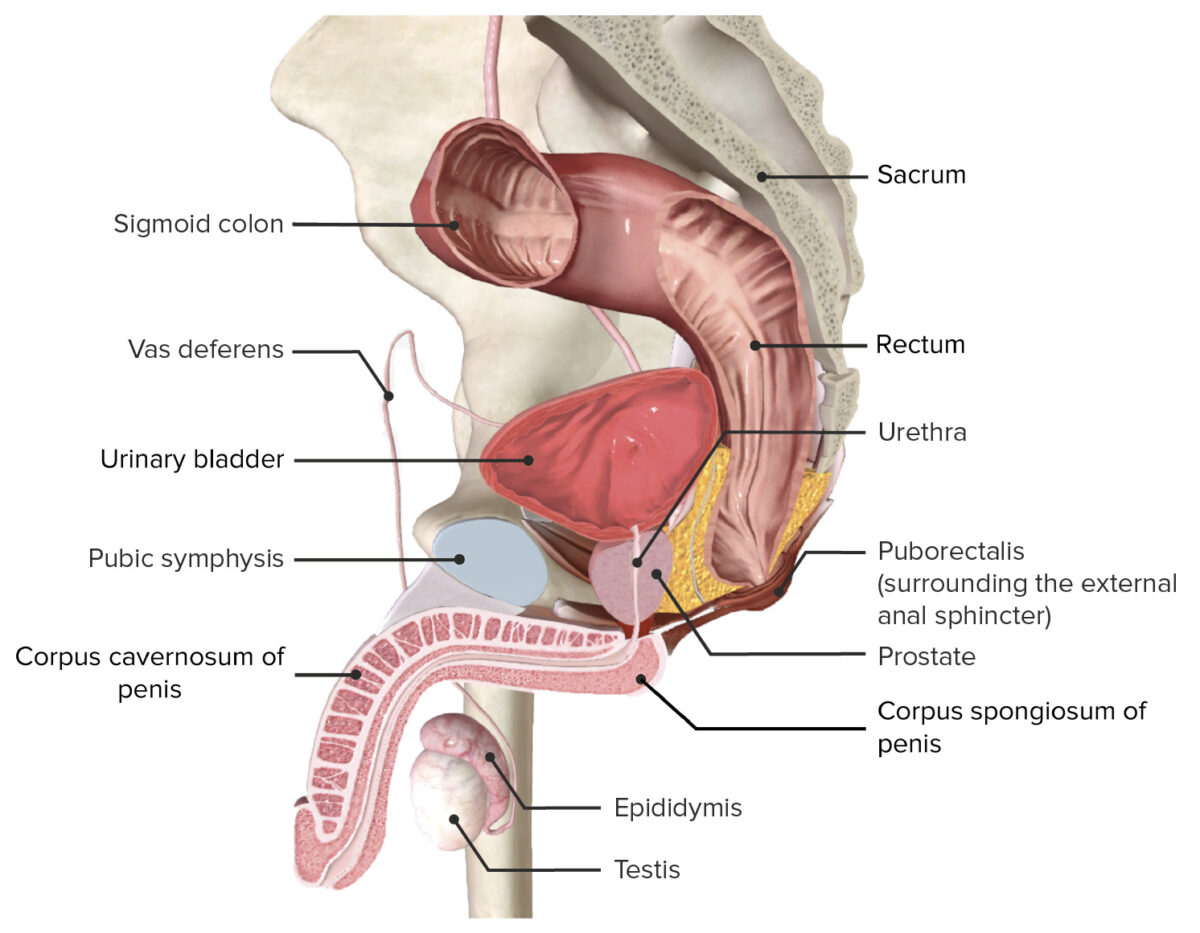
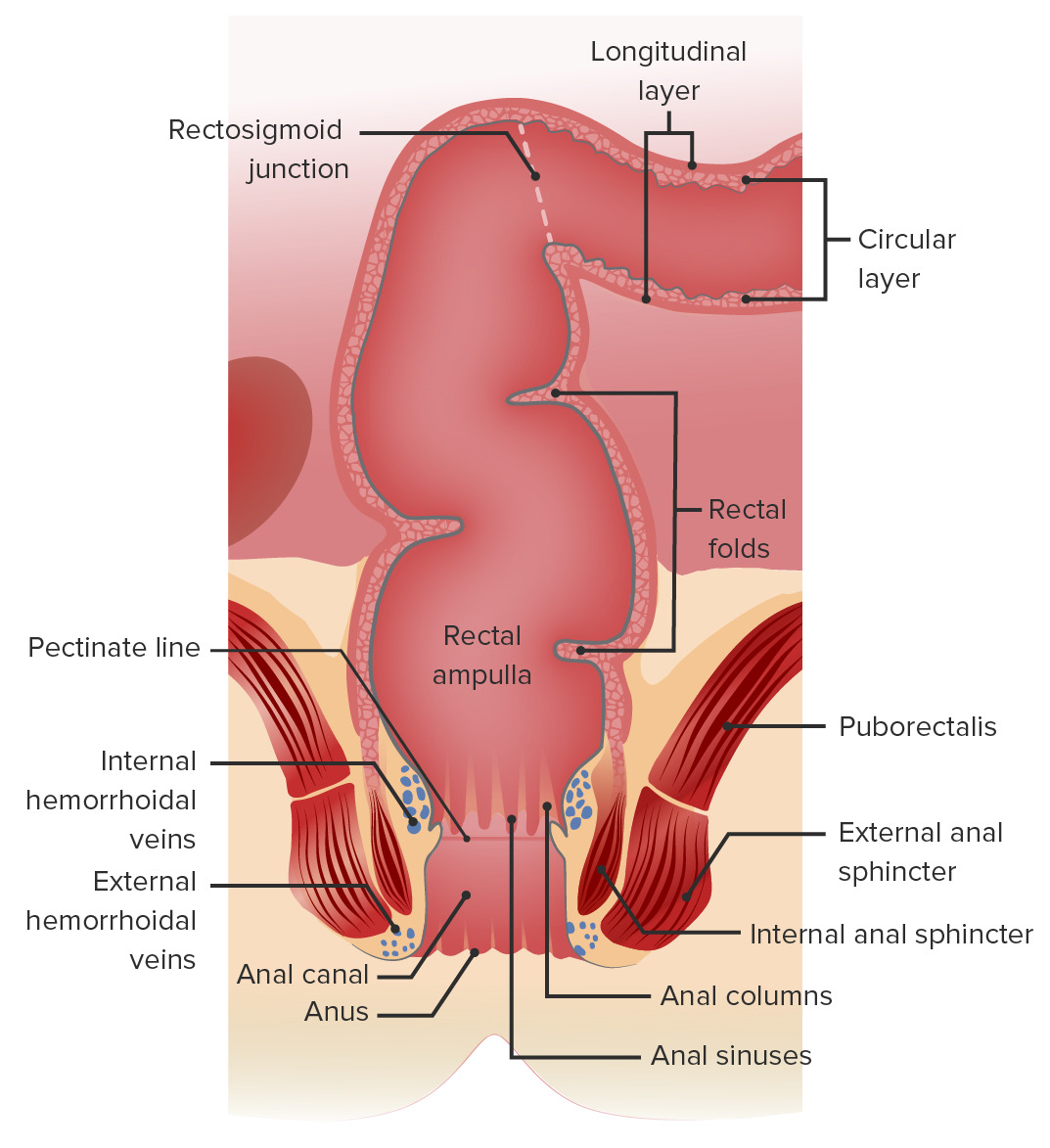
Anatomía macroscópica del recto y el canal anal

Anatomía macroscópica del recto y canal anal

Imagen por Lecturio.

Recto

  • Una estructura tubular recta en EN Erythema nodosum is an immune-mediated panniculitis (inflammation of the subcutaneous fat) caused by a type IV (delayed-type) hypersensitivity reaction. It commonly manifests in young women as tender, erythematous nodules on the shins. Erythema Nodosum la cavidad pélvica
  • Ubicado entre el colon Colon The large intestines constitute the last portion of the digestive system. The large intestine consists of the cecum, appendix, colon (with ascending, transverse, descending, and sigmoid segments), rectum, and anal canal. The primary function of the colon is to remove water and compact the stool prior to expulsion from the body via the rectum and anal canal. Colon, Cecum, and Appendix: Anatomy sigmoide y el canal anal
  • Longitud: aproximadamente 15 cm
  • Relación del recto con el peritoneo:
    • Tercio superior: cubierto anterior y lateralmente por el peritoneo
    • Tercio medio: cubierto anteriormente (solo) por el peritoneo
    • Tercio inferior: no cubierto por el peritoneo (totalmente debajo de la cavidad pélvica)
  • Unión rectosigmoidea:
    • Punto entre el colon Colon The large intestines constitute the last portion of the digestive system. The large intestine consists of the cecum, appendix, colon (with ascending, transverse, descending, and sigmoid segments), rectum, and anal canal. The primary function of the colon is to remove water and compact the stool prior to expulsion from the body via the rectum and anal canal. Colon, Cecum, and Appendix: Anatomy sigmoide y el recto
    • Definido por la pérdida de la tenia coli del colon Colon The large intestines constitute the last portion of the digestive system. The large intestine consists of the cecum, appendix, colon (with ascending, transverse, descending, and sigmoid segments), rectum, and anal canal. The primary function of the colon is to remove water and compact the stool prior to expulsion from the body via the rectum and anal canal. Colon, Cecum, and Appendix: Anatomy
  • El recto tiene 2 flexuras:
    1. Flexura sacra: una curva cóncava dorsal a medida que el recto discurre anterior al AL Amyloidosis sacro
    2. Flexura anorrectal:
      • Una curva convexa ventral que representa la transición entre el recto arriba y el canal anal debajo
      • Formada por el músculo puborrectal (parte del complejo elevador del ano) que se envuelve como un cabestrillo desde los LOS Neisseria huesos púbicos anteriormente alrededor del anorecto posterior
  • Pliegues rectales (válvulas de Houston):
    • 3 pliegues submucosos transversos de tejido que sobresalen en el lumen:
      1. Superior
      2. Intermedia
      3. Inferior
    • Para crear “estantes” que ayuden a contener las heces
    • Ayudan a separar las heces sólidas del gas.
  • Ampolla rectal:
    • Porción terminal del recto
    • Presente en EN Erythema nodosum is an immune-mediated panniculitis (inflammation of the subcutaneous fat) caused by a type IV (delayed-type) hypersensitivity reaction. It commonly manifests in young women as tender, erythematous nodules on the shins. Erythema Nodosum la parte superior del diafragma pélvico
    • Capaz de expandirse para servir como reservorio de heces

Canal anal

  • Una estructura tubular recta al AL Amyloidosis final del tracto gastrointestinal
  • Conecta el recto con el ano (apertura externa)
  • Longitud: aproximadamente 3‒4 cm
  • Completamente extraperitoneal (conocido como “subperitoneal”)
  • Columnas anales (también llamadas columnas de Morgagni):
    • Aproximadamente de 6‒10 pliegues verticales de la mucosa, submucosa y capa muscular circular
    • Se encuentra en EN Erythema nodosum is an immune-mediated panniculitis (inflammation of the subcutaneous fat) caused by a type IV (delayed-type) hypersensitivity reaction. It commonly manifests in young women as tender, erythematous nodules on the shins. Erythema Nodosum la mitad superior de la luz del canal anal
  • Senos anales (senosrectales):
    • Surcos en EN Erythema nodosum is an immune-mediated panniculitis (inflammation of the subcutaneous fat) caused by a type IV (delayed-type) hypersensitivity reaction. It commonly manifests in young women as tender, erythematous nodules on the shins. Erythema Nodosum el canal anal que separan las columnas anales entre sí
    • Terminan en EN Erythema nodosum is an immune-mediated panniculitis (inflammation of the subcutaneous fat) caused by a type IV (delayed-type) hypersensitivity reaction. It commonly manifests in young women as tender, erythematous nodules on the shins. Erythema Nodosum pequeños pliegues en EN Erythema nodosum is an immune-mediated panniculitis (inflammation of the subcutaneous fat) caused by a type IV (delayed-type) hypersensitivity reaction. It commonly manifests in young women as tender, erythematous nodules on the shins. Erythema Nodosum forma de válvula (válvulas anales)
  • Válvulas anales:
    • Pequeños pliegues en EN Erythema nodosum is an immune-mediated panniculitis (inflammation of the subcutaneous fat) caused by a type IV (delayed-type) hypersensitivity reaction. It commonly manifests in young women as tender, erythematous nodules on the shins. Erythema Nodosum forma de válvula en EN Erythema nodosum is an immune-mediated panniculitis (inflammation of the subcutaneous fat) caused by a type IV (delayed-type) hypersensitivity reaction. It commonly manifests in young women as tender, erythematous nodules on the shins. Erythema Nodosum los LOS Neisseria extremos inferiores de los LOS Neisseria senos anales en EN Erythema nodosum is an immune-mediated panniculitis (inflammation of the subcutaneous fat) caused by a type IV (delayed-type) hypersensitivity reaction. It commonly manifests in young women as tender, erythematous nodules on the shins. Erythema Nodosum el canal anal
    • Se unen en EN Erythema nodosum is an immune-mediated panniculitis (inflammation of the subcutaneous fat) caused by a type IV (delayed-type) hypersensitivity reaction. It commonly manifests in young women as tender, erythematous nodules on the shins. Erythema Nodosum los LOS Neisseria extremos inferiores de las columnas anales
    • Las válvulas y los LOS Neisseria senos forman la línea pectínea.
  • Línea pectínea (también conocida como línea dentada):
    • Divide el canal anal en EN Erythema nodosum is an immune-mediated panniculitis (inflammation of the subcutaneous fat) caused by a type IV (delayed-type) hypersensitivity reaction. It commonly manifests in young women as tender, erythematous nodules on the shins. Erythema Nodosum ⅔ superiores y ⅓ inferior
    • Múltiples diferencias neurovasculares e histológicas por encima y por debajo de la línea
  • El canal anal tiene 2 esfínteres anales:
    • Esfínter anal interno:
      • Bajo control involuntario
      • Rodea los LOS Neisseria ⅔ superiores del canal anal (se superpone con el esfínter anal interno)
      • Formado a partir de un engrosamiento del músculo liso circular en EN Erythema nodosum is an immune-mediated panniculitis (inflammation of the subcutaneous fat) caused by a type IV (delayed-type) hypersensitivity reaction. It commonly manifests in young women as tender, erythematous nodules on the shins. Erythema Nodosum la pared intestinal
    • Esfínter anal externo:
      • Bajo control voluntario
      • Rodea los LOS Neisseria ⅔ inferiores del canal anal
      • Consta de varias partes: subcutánea, superficial y profunda

Relaciones anatómicas

El recto es el órgano visceral más posterior de la cavidad pélvica.
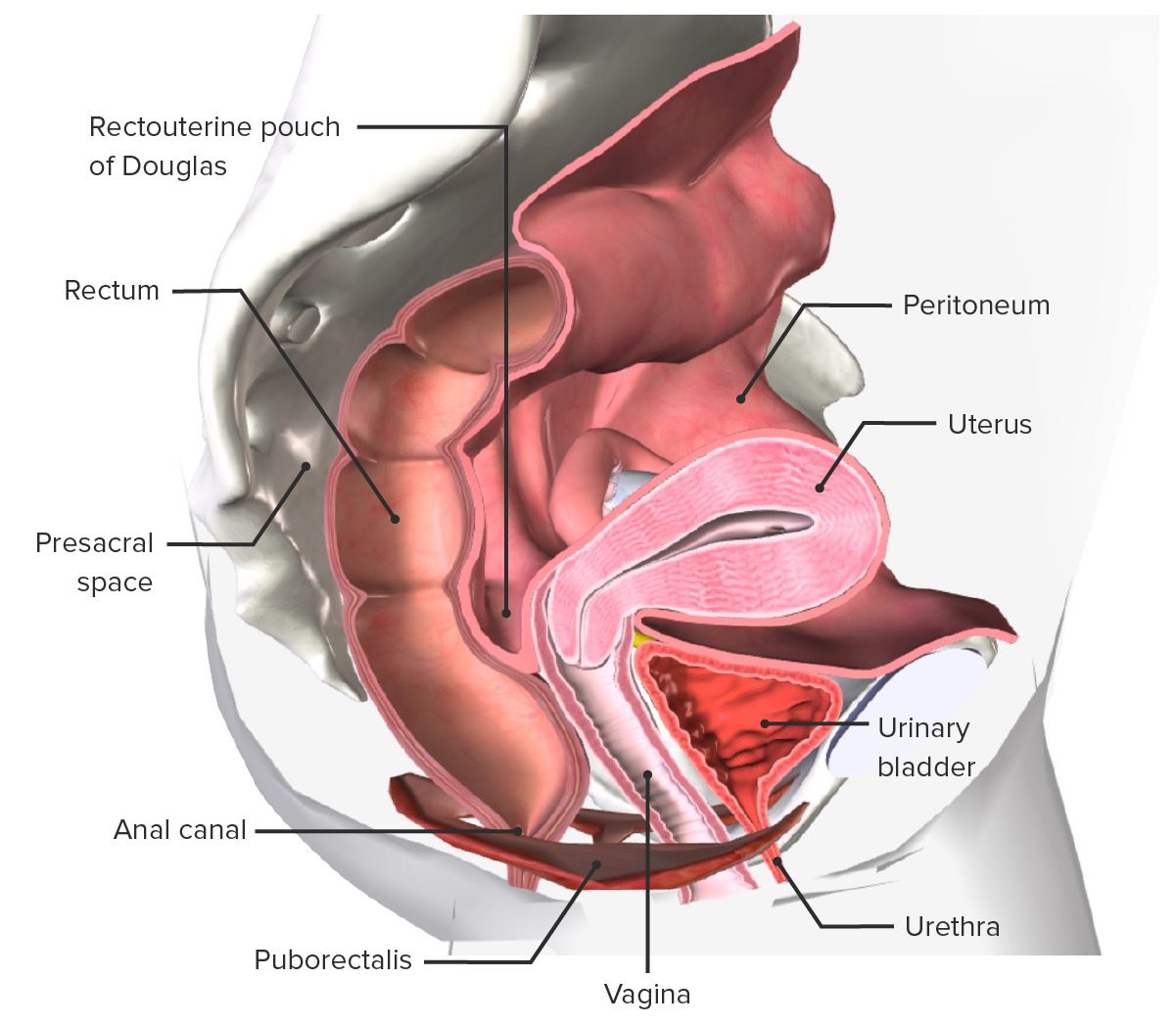
  • Anterior al AL Amyloidosis recto y al AL Amyloidosis canal anal se encuentran:
    • En EN Erythema nodosum is an immune-mediated panniculitis (inflammation of the subcutaneous fat) caused by a type IV (delayed-type) hypersensitivity reaction. It commonly manifests in young women as tender, erythematous nodules on the shins. Erythema Nodosum hombres:
      • Vejiga
      • Vesículas seminales
      • Glándula prostática
    • En EN Erythema nodosum is an immune-mediated panniculitis (inflammation of the subcutaneous fat) caused by a type IV (delayed-type) hypersensitivity reaction. It commonly manifests in young women as tender, erythematous nodules on the shins. Erythema Nodosum mujeres:
      • Útero
      • Cuello uterino
      • Vagina Vagina The vagina is the female genital canal, extending from the vulva externally to the cervix uteri internally. The structures have sexual, reproductive, and urinary functions and a rich blood supply, mainly arising from the internal iliac artery. Vagina, Vulva, and Pelvic Floor: Anatomy
  • Posterior al AL Amyloidosis recto y canal anal:

Anatomía Microscópica

De manera similar a otros segmentos del tracto gastrointestinal, las capas de la pared anorrectal (desde la luz interna hacia afuera) son mucosa → submucosa → capa muscular → serosa. No hay vellosidades o pliegues circulares en EN Erythema nodosum is an immune-mediated panniculitis (inflammation of the subcutaneous fat) caused by a type IV (delayed-type) hypersensitivity reaction. It commonly manifests in young women as tender, erythematous nodules on the shins. Erythema Nodosum la pared anorrectal como los LOS Neisseria del intestino delgado.
Mucosa

  • Consta de 3 subcapas:
    1. Epitelio (revestimiento más interno):
      • Por encima de la línea pectínea: epitelio cilíndrico
      • Debajo de la línea pectínea: epitelio escamoso estratificado no queratinizado
    2. Lámina propia (contiene irrigación pequeña)
    3. Muscular de la mucosa (capa delgada de músculo liso)
  • Criptas intestinales de Liberkühn/glándulas mucosas anales:
    • Poros que se abren en EN Erythema nodosum is an immune-mediated panniculitis (inflammation of the subcutaneous fat) caused by a type IV (delayed-type) hypersensitivity reaction. It commonly manifests in young women as tender, erythematous nodules on the shins. Erythema Nodosum glándulas tubulares
    • Similar a las criptas en EN Erythema nodosum is an immune-mediated panniculitis (inflammation of the subcutaneous fat) caused by a type IV (delayed-type) hypersensitivity reaction. It commonly manifests in young women as tender, erythematous nodules on the shins. Erythema Nodosum el intestino delgado, pero más profundas
    • Contiene varias células caliciformes secretoras de moco que ayudan a lubricar las heces y facilitan el paso de las heces
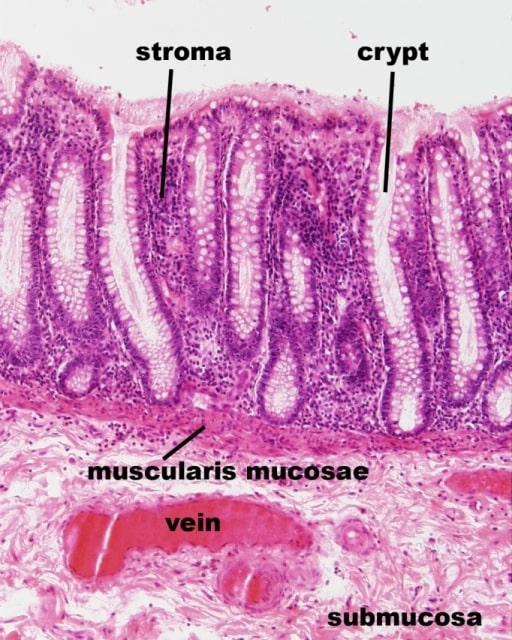
Imagen histológica de la mucosa rectal (corte longitudinal)

Imagen histológica de la mucosa rectal (corte longitudinal):
Las criptas rectales con epitelio cilíndrico simple son visibles y el estroma (lámina propia) se ve envolviendo las criptas.

Imagen: “Histological image of the rectal mucosa (longitudinal section)” por Y. Gao y DF Katz. Licencia: CC BY 4.0

Submucosa

  • Tejido conectivo laxo
  • Contiene vasos más grandes

Capa muscular

Formada por 2 capas de músculo liso:

  • Capa circular (capa interna)
  • Capa longitudinal (capa externa): las tenias coli del colon Colon The large intestines constitute the last portion of the digestive system. The large intestine consists of the cecum, appendix, colon (with ascending, transverse, descending, and sigmoid segments), rectum, and anal canal. The primary function of the colon is to remove water and compact the stool prior to expulsion from the body via the rectum and anal canal. Colon, Cecum, and Appendix: Anatomy se unen para formar una capa externa continua.
  • Plexo mientérico (de Auerbach):
    • Ganglios del SNA que controlan la capa muscular
    • Situado entre las 2 capas de músculo liso

Serosa

  • Formada por tejido conectivo
  • Se une con el peritoneo anteriormente en EN Erythema nodosum is an immune-mediated panniculitis (inflammation of the subcutaneous fat) caused by a type IV (delayed-type) hypersensitivity reaction. It commonly manifests in young women as tender, erythematous nodules on the shins. Erythema Nodosum las regiones superiores del recto
  • Se convierte en EN Erythema nodosum is an immune-mediated panniculitis (inflammation of the subcutaneous fat) caused by a type IV (delayed-type) hypersensitivity reaction. It commonly manifests in young women as tender, erythematous nodules on the shins. Erythema Nodosum una capa fibrosa más gruesa en EN Erythema nodosum is an immune-mediated panniculitis (inflammation of the subcutaneous fat) caused by a type IV (delayed-type) hypersensitivity reaction. It commonly manifests in young women as tender, erythematous nodules on the shins. Erythema Nodosum las regiones subperitoneales

Irrigación e Inervación

Irrigación arterial

  • Por encima de la línea pectínea (incluyendo el recto y el canal anal superior): arteria rectal superior (rama de la arteria mesentérica inferior)
  • Debajo de la línea pectínea:
    • Arteria rectal media (rama de la arteria ilíaca interna)
    • Arteria rectal inferior (rama de la arteria pudenda interna)

Drenaje venoso

  • La anastomosis portosistémica existe alrededor de la línea pectínea.
  • Por encima de la línea pectínea:
    • Drena en EN Erythema nodosum is an immune-mediated panniculitis (inflammation of the subcutaneous fat) caused by a type IV (delayed-type) hypersensitivity reaction. It commonly manifests in young women as tender, erythematous nodules on the shins. Erythema Nodosum el sistema portal
    • Plexo hemorroidal interno → vena rectal superior → vena mesentérica inferior
  • Debajo de la línea pectínea:
    • Drena en EN Erythema nodosum is an immune-mediated panniculitis (inflammation of the subcutaneous fat) caused by a type IV (delayed-type) hypersensitivity reaction. It commonly manifests in young women as tender, erythematous nodules on the shins. Erythema Nodosum las venas sistémicas (vena cava inferior)
    • Plexo hemorroidal externo → venas rectales media e inferior → vena pudenda interna → vena ilíaca interna

Drenaje linfático

  • Por encima de la línea pectínea: ganglios linfáticos ilíacos internos
  • Debajo de la línea pectínea: ganglios linfáticos inguinales superficiales

Inervación

  • Por encima de la línea pectínea:
    • Inervación autonómica/visceral a través del plexo hipogástrico inferior (contiene fibras tanto simpáticas como parasimpáticas)
    • Las fibras parasimpáticas relajan el esfínter anal interno.
    • Las fibras simpáticas mantienen la contracción tónica del esfínter anal interno.
    • Bajo control involuntario
  • Debajo de la línea pectínea: inervación somática
    • Rama rectal inferior del nervio pudendo
    • Bajo control voluntario
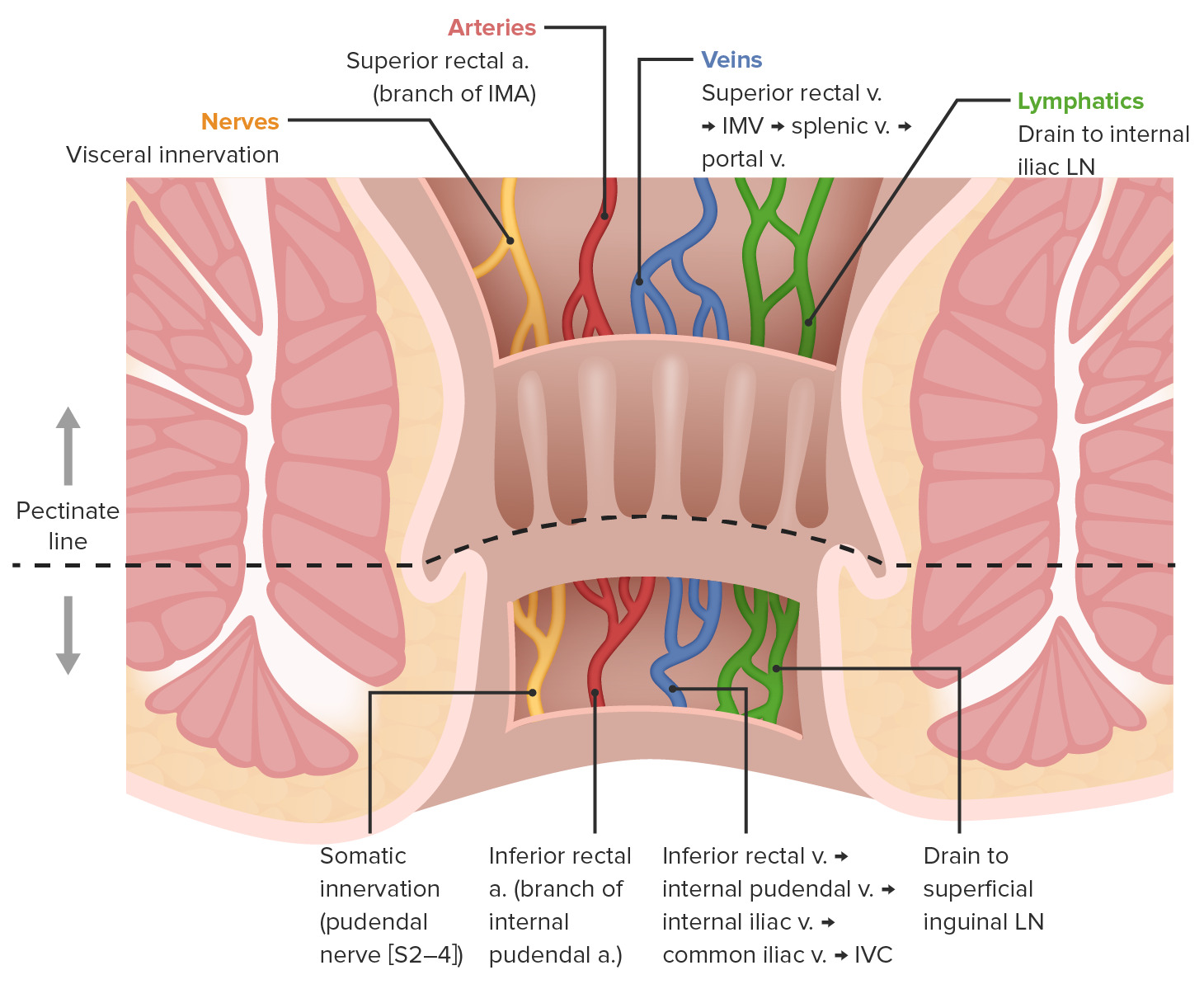
Diferencias en la neurovasculatura anal por encima y por debajo de la línea pectínea

Diferencias en la irrigación e inervación anal por encima y por debajo de la línea pectínea:
IMA: arteria mesentérica inferior
IMV: vena mesentérica inferior
LN: ganglio linfático
IVC: vena cava inferior

Imagen por Lecturio.

Funciones

Funciones generales

Las funciones principales del recto y el canal anal implican la defecación controlada.

  • El recto puede almacenar heces hasta que se desee conscientemente defecar.
  • Los LOS Neisseria esfínteres anales se encuentran en EN Erythema nodosum is an immune-mediated panniculitis (inflammation of the subcutaneous fat) caused by a type IV (delayed-type) hypersensitivity reaction. It commonly manifests in young women as tender, erythematous nodules on the shins. Erythema Nodosum un estado de contracción tónica, impidiendo la expulsión de las heces.
    • Esfínter interno: músculo liso bajo control involuntario
    • Esfínter externo: músculo esquelético bajo control voluntario
  • La defecación requiere:
    • Peristaltismo de los LOS Neisseria músculos rectales
    • Relajación involuntaria del esfínter anal interno
    • Relajación voluntaria del esfínter anal externo

Reflejo de defecación

El recto contiene receptores de estiramiento que estimulan el reflejo de defecación cuando el recto comienza a llenarse de heces.
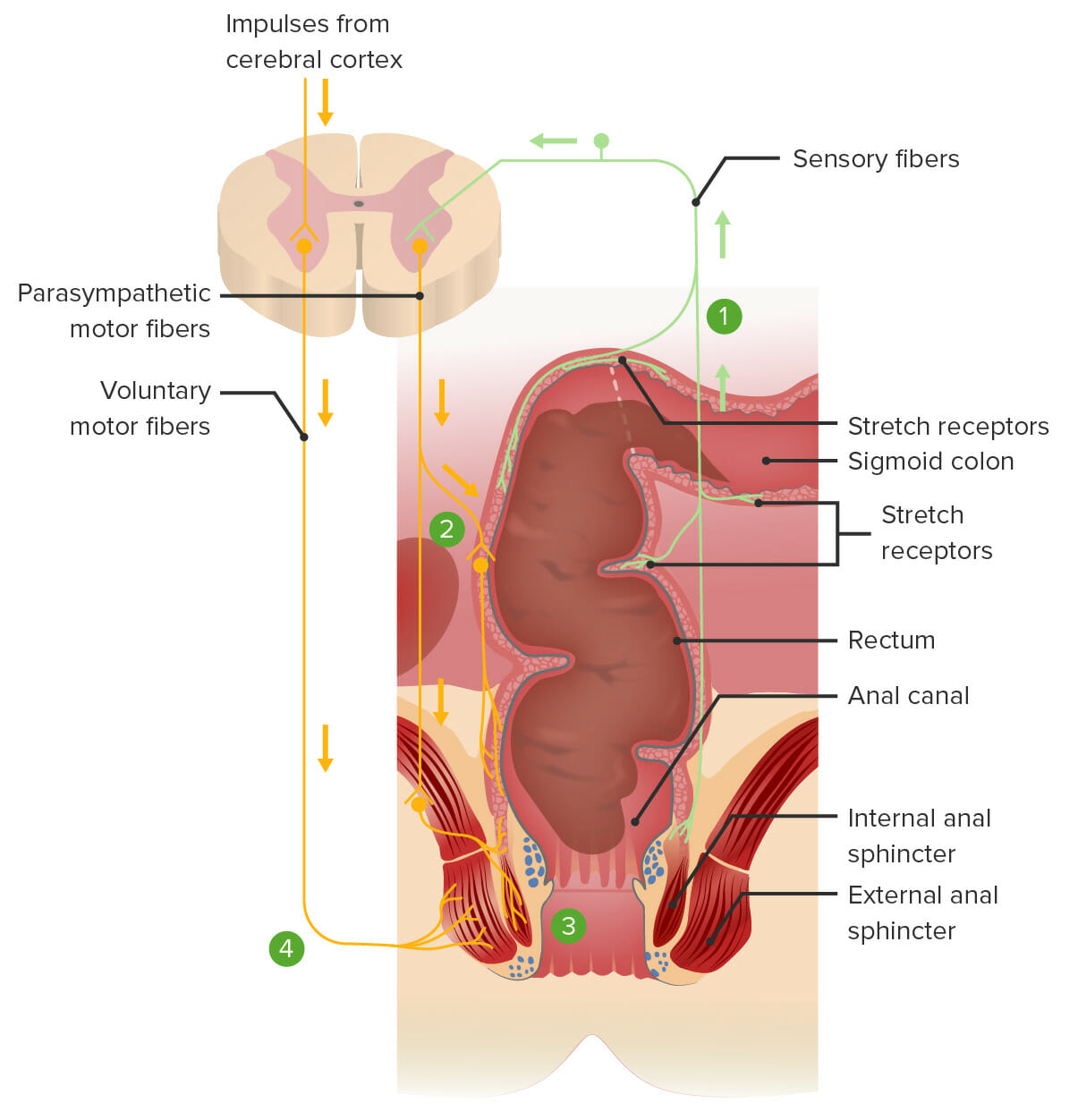
  • Receptores de estiramiento activados en EN Erythema nodosum is an immune-mediated panniculitis (inflammation of the subcutaneous fat) caused by a type IV (delayed-type) hypersensitivity reaction. It commonly manifests in young women as tender, erythematous nodules on the shins. Erythema Nodosum el recto →
  • Las fibras nerviosas sensoriales llevan señales a la médula espinal sacra →
  • Sinapsis con fibras motoras parasimpáticas →
  • Envía señales de ondas peristálticas al AL Amyloidosis plexo nervioso mientérico en EN Erythema nodosum is an immune-mediated panniculitis (inflammation of the subcutaneous fat) caused by a type IV (delayed-type) hypersensitivity reaction. It commonly manifests in young women as tender, erythematous nodules on the shins. Erythema Nodosum las capas musculares de:
    • Colon Colon The large intestines constitute the last portion of the digestive system. The large intestine consists of the cecum, appendix, colon (with ascending, transverse, descending, and sigmoid segments), rectum, and anal canal. The primary function of the colon is to remove water and compact the stool prior to expulsion from the body via the rectum and anal canal. Colon, Cecum, and Appendix: Anatomy descendente
    • Colon Colon The large intestines constitute the last portion of the digestive system. The large intestine consists of the cecum, appendix, colon (with ascending, transverse, descending, and sigmoid segments), rectum, and anal canal. The primary function of the colon is to remove water and compact the stool prior to expulsion from the body via the rectum and anal canal. Colon, Cecum, and Appendix: Anatomy sigmoide
    • Recto
    • Esfínter anal interno
  • Las contracciones peristálticas en EN Erythema nodosum is an immune-mediated panniculitis (inflammation of the subcutaneous fat) caused by a type IV (delayed-type) hypersensitivity reaction. It commonly manifests in young women as tender, erythematous nodules on the shins. Erythema Nodosum el colon Colon The large intestines constitute the last portion of the digestive system. The large intestine consists of the cecum, appendix, colon (with ascending, transverse, descending, and sigmoid segments), rectum, and anal canal. The primary function of the colon is to remove water and compact the stool prior to expulsion from the body via the rectum and anal canal. Colon, Cecum, and Appendix: Anatomy y el recto mueven las heces hacia abajo.
  • El esfínter anal interno se relaja.
  • La defecación ocurre solo si el esfínter anal externo se relaja voluntariamente al AL Amyloidosis mismo tiempo debido a los LOS Neisseria impulsos motores de la corteza cerebral.
  • Si se suprime conscientemente la defecación, las contracciones peristálticas cesan en EN Erythema nodosum is an immune-mediated panniculitis (inflammation of the subcutaneous fat) caused by a type IV (delayed-type) hypersensitivity reaction. It commonly manifests in young women as tender, erythematous nodules on the shins. Erythema Nodosum pocos minutos.
El reflejo de la defecación

Reflejo de defecación:
1. Las heces estiran el recto y estimulan los receptores de estiramiento, transmitiendo la señal a la médula espinal.
2. Un reflejo espinal envía señales motoras parasimpáticas al plexo nervioso mientérico, lo que da como resultado la contracción de los músculos lisos dentro del recto, empujando las heces hacia abajo.
3. El mismo reflejo espinal también envía señales motoras parasimpáticas para relajar el esfínter anal interno.
4. Los impulsos voluntarios del cerebro evitan la defecación al mantener contraído el esfínter anal externo. La defecación ocurrirá si las señales voluntarias permiten que el esfínter anal externo se relaje.

Imagen por Lecturio.

Relevancia Clínica

  • Incontinencia fecal: pérdida involuntaria de heces sólidas o líquidas. Hay 2 tipos principales de incontinencia fecal: incontinencia de urgencia (se siente el deseo de defecar, pero las heces no se pueden retener voluntariamente) e incontinencia pasiva (no hay deseo de defecar antes de que las heces se eliminen involuntariamente). La incontinencia fecal puede resultar de la disfunción de los LOS Neisseria esfínteres anales, distensibilidad rectal anormal, disminución de la sensibilidad rectal, alteración de la consistencia de las heces o, con frecuencia, una combinación de estos factores.
  • Hemorroides: venas inflamadas en EN Erythema nodosum is an immune-mediated panniculitis (inflammation of the subcutaneous fat) caused by a type IV (delayed-type) hypersensitivity reaction. It commonly manifests in young women as tender, erythematous nodules on the shins. Erythema Nodosum los LOS Neisseria plexos hemorroidales que rodean el ano y la parte inferior del recto que son similares a las venas varicosas. Las hemorroides pueden desarrollarse dentro del recto (hemorroides internas) o debajo de la piel alrededor del ano (hemorroides externas). Las manifestaciones clínicas más importantes incluyen hematoquecia, dolor Dolor Inflammation asociado a una hemorroide trombosada y prurito perianal. Los LOS Neisseria factores de riesgo incluyen edad avanzada, diarrea, embarazo, tumores pélvicos, sedestación prolongada, esfuerzo y estreñimiento crónico.
  • Abscesos perianales y perirrectales: acumulación de pus en EN Erythema nodosum is an immune-mediated panniculitis (inflammation of the subcutaneous fat) caused by a type IV (delayed-type) hypersensitivity reaction. It commonly manifests in young women as tender, erythematous nodules on the shins. Erythema Nodosum el espacio cerrado cerca de los LOS Neisseria tejidos perirrectales. Los LOS Neisseria abscesos perianales y perirrectales típicamente se originan debido a la obstrucción de las glándulas de las criptas anales. Los LOS Neisseria individuos afectados presentan dolor Dolor Inflammation intenso en EN Erythema nodosum is an immune-mediated panniculitis (inflammation of the subcutaneous fat) caused by a type IV (delayed-type) hypersensitivity reaction. It commonly manifests in young women as tender, erythematous nodules on the shins. Erythema Nodosum el área anal o rectal y una masa fluctuante en EN Erythema nodosum is an immune-mediated panniculitis (inflammation of the subcutaneous fat) caused by a type IV (delayed-type) hypersensitivity reaction. It commonly manifests in young women as tender, erythematous nodules on the shins. Erythema Nodosum el examen físico. El tratamiento requiere una incisión quirúrgica y drenaje rápidos, que pueden ir seguidos de un ciclo de antibióticos. Si no se tratan, los LOS Neisseria abscesos pueden conducir a la formación de fístulas.
  • Fístula anal: comunicaciones anormales entre la luz anorrectal y la piel u otra estructura del cuerpo. Una fístula anal a menudo se produce debido a la extensión de los LOS Neisseria abscesos anales, pero también se asocia con afecciones específicas como la enfermedad de Crohn. Los LOS Neisseria síntomas incluyen dolor Dolor Inflammation o irritación alrededor del ano; secreción anormal o drenaje purulento; e inflamación, enrojecimiento o fiebre, si hay un absceso presente.
  • Fisuras anales: desgarros superficiales y dolorosos en EN Erythema nodosum is an immune-mediated panniculitis (inflammation of the subcutaneous fat) caused by a type IV (delayed-type) hypersensitivity reaction. It commonly manifests in young women as tender, erythematous nodules on the shins. Erythema Nodosum el revestimiento epitelial (anodermo) del canal anal que causa dolor Dolor Inflammation y sangrado anal. Las fisuras anales son comunes en EN Erythema nodosum is an immune-mediated panniculitis (inflammation of the subcutaneous fat) caused by a type IV (delayed-type) hypersensitivity reaction. It commonly manifests in young women as tender, erythematous nodules on the shins. Erythema Nodosum lactantes y personas de mediana edad y suelen ser secundarias a un traumatismo local o irritación que resulta del estreñimiento, la diarrea o el coito anal. Las manifestaciones clínicas incluyen dolor Dolor Inflammation intenso durante las deposiciones, sangre de color rojo brillante en EN Erythema nodosum is an immune-mediated panniculitis (inflammation of the subcutaneous fat) caused by a type IV (delayed-type) hypersensitivity reaction. It commonly manifests in young women as tender, erythematous nodules on the shins. Erythema Nodosum las heces, presencia de sangre en EN Erythema nodosum is an immune-mediated panniculitis (inflammation of the subcutaneous fat) caused by a type IV (delayed-type) hypersensitivity reaction. It commonly manifests in young women as tender, erythematous nodules on the shins. Erythema Nodosum el papel higiénico, una fisura visible en EN Erythema nodosum is an immune-mediated panniculitis (inflammation of the subcutaneous fat) caused by a type IV (delayed-type) hypersensitivity reaction. It commonly manifests in young women as tender, erythematous nodules on the shins. Erythema Nodosum la piel alrededor del ano y un pequeño bulto o abultamiento en EN Erythema nodosum is an immune-mediated panniculitis (inflammation of the subcutaneous fat) caused by a type IV (delayed-type) hypersensitivity reaction. It commonly manifests in young women as tender, erythematous nodules on the shins. Erythema Nodosum la piel cerca de la fisura anal.
  • Prolapso rectal: una afección en EN Erythema nodosum is an immune-mediated panniculitis (inflammation of the subcutaneous fat) caused by a type IV (delayed-type) hypersensitivity reaction. It commonly manifests in young women as tender, erythematous nodules on the shins. Erythema Nodosum la que el recto sobresale del orificio anal, ya sea espontáneamente o después de la defecación. El prolapso rectal puede involucrar todas las capas de la pared rectal o solo la mucosa. El daño al AL Amyloidosis piso pélvico y la pérdida del soporte rectal interno son algunas de las causas del prolapso rectal. Los LOS Neisseria síntomas del prolapso rectal incluyen el desarrollo de una masa anal o dolor Dolor Inflammation abdominal, evacuación incompleta, hábitos intestinales alterados y secreción de mucosidad/heces. El prolapso rectal es más común en EN Erythema nodosum is an immune-mediated panniculitis (inflammation of the subcutaneous fat) caused by a type IV (delayed-type) hypersensitivity reaction. It commonly manifests in young women as tender, erythematous nodules on the shins. Erythema Nodosum mujeres de edad avanzada.
  • Cáncer colorrectal: casi todos los LOS Neisseria casos de cáncer colorrectal son adenocarcinomas y la mayoría de las lesiones surgen de la transformación maligna de un pólipo adenomatoso. Las manifestaciones clínicas más importantes del cáncer colorrectal incluyen cambios en EN Erythema nodosum is an immune-mediated panniculitis (inflammation of the subcutaneous fat) caused by a type IV (delayed-type) hypersensitivity reaction. It commonly manifests in young women as tender, erythematous nodules on the shins. Erythema Nodosum los LOS Neisseria hábitos intestinales, una masa rectal palpable en EN Erythema nodosum is an immune-mediated panniculitis (inflammation of the subcutaneous fat) caused by a type IV (delayed-type) hypersensitivity reaction. It commonly manifests in young women as tender, erythematous nodules on the shins. Erythema Nodosum el tacto rectal, anemia Anemia Anemia is a condition in which individuals have low Hb levels, which can arise from various causes. Anemia is accompanied by a reduced number of RBCs and may manifest with fatigue, shortness of breath, pallor, and weakness. Subtypes are classified by the size of RBCs, chronicity, and etiology. Anemia: Overview and Types por deficiencia de hierro y sangrado rectal; sin embargo, la mayoría de los LOS Neisseria individuos son asintomáticos. En EN Erythema nodosum is an immune-mediated panniculitis (inflammation of the subcutaneous fat) caused by a type IV (delayed-type) hypersensitivity reaction. It commonly manifests in young women as tender, erythematous nodules on the shins. Erythema Nodosum general, se recomienda un examen rectal, colonoscopia y/o pruebas de heces para la detección en EN Erythema nodosum is an immune-mediated panniculitis (inflammation of the subcutaneous fat) caused by a type IV (delayed-type) hypersensitivity reaction. It commonly manifests in young women as tender, erythematous nodules on the shins. Erythema Nodosum personas ≥ 50 años de edad.

Referencias

  1. Nakashima, J., Zulfiqar, H. (2021). Embryology, rectum, and anal Canal. StatPearls. Retrieved August 22, 2021, from https://www.ncbi.nlm.nih.gov/books/NBK551682/
  2. Kapoor, V.K. (2016). Anal Canal Anatomy. https://emedicine.medscape.com/article/1990236-overview
  3. Drake, R., Vogl, A.W., Mitchell, A.W.M. (2020). Abdomen, regional anatomy. In Drake, R., et al. (Ed.), Gray’s Anatomy for Students (4th ed., pp.322). Churchill Livingstone/Elsevier.
  4. Bleday, R., Breen, E. (2021). Hemorrhoids: Clinical manifestations and diagnosis. UpToDate. Retrieved August 22, 2021, from https://www.uptodate.com/contents/hemorrhoids-clinical-manifestations-and-diagnosis
  5. Stewart, D.B. (2021). Anal fissure: Clinical manifestations, diagnosis, prevention. UpToDate. Retrieved August 22, 2021, from https://www.uptodate.com/contents/anal-fissure-clinical-manifestations-diagnosis-prevention
  6. Wang, Y.H., Wiseman, J. (2021). Anatomy, abdomen and pelvis, rectum. StatPearls. Retrieved August 24, 2021, from https://www.statpearls.com/articlelibrary/viewarticle/29712/
  7. Ahmed, A., Qureshi, W. (2021). Anatomy, abdomen and pelvis, anal canal. StatPearls. Retrieved August 24, 2021, from https://www.statpearls.com/articlelibrary/viewarticle/26783/

¡Crea tu cuenta gratis o inicia una sesión para seguir leyendo!

Regístrate ahora y obtén acceso gratuito a Lecturio con páginas de concepto, videos médicos y cuestionarios para tu educación médica.

User Reviews

Que tengas una sesión de estudio alegre y navideña 🎁 Ahorra 50% en todos los planes >>

Details