Domina Conceptos Médicos

Estudia para la escuela de medicina y tus examenes con Lecturio.

Peritoneo: Anatomía

El peritoneo es una membrana serosa que recubre la cavidad abdominopélvica. Este revestimiento está formado por tejido conectivo y se origina en EN Erythema nodosum is an immune-mediated panniculitis (inflammation of the subcutaneous fat) caused by a type IV (delayed-type) hypersensitivity reaction. It commonly manifests in young women as tender, erythematous nodules on the shins. Erythema Nodosum el mesodermo. Esta membrana recubre tanto las paredes abdominales (como peritoneo parietal Parietal One of a pair of irregularly shaped quadrilateral bones situated between the frontal bone and occipital bone, which together form the sides of the cranium. Skull: Anatomy) como todos los LOS Neisseria órganos viscerales (como peritoneo visceral). El peritoneo sostiene y suspende los LOS Neisseria órganos dentro de la cavidad abdominal y proporciona un importante conducto para la irrigación e inervación de estos órganos. Existen varios pliegues peritoneales, conocidos como mesenterios, epiplones y ligamentos. El epiplón mayor y menor dividen la cavidad peritoneal en EN Erythema nodosum is an immune-mediated panniculitis (inflammation of the subcutaneous fat) caused by a type IV (delayed-type) hypersensitivity reaction. It commonly manifests in young women as tender, erythematous nodules on the shins. Erythema Nodosum sacos mayores y menores, que son espacios anatómicos importantes dentro de la cavidad. Los LOS Neisseria órganos situados detrás del peritoneo parietal Parietal One of a pair of irregularly shaped quadrilateral bones situated between the frontal bone and occipital bone, which together form the sides of the cranium. Skull: Anatomy posterior se conocen como retroperitoneales, mientras que los LOS Neisseria órganos que sobresalen en EN Erythema nodosum is an immune-mediated panniculitis (inflammation of the subcutaneous fat) caused by a type IV (delayed-type) hypersensitivity reaction. It commonly manifests in young women as tender, erythematous nodules on the shins. Erythema Nodosum la cavidad y están totalmente cubiertos por el peritoneo visceral se conocen como intraperitoneales.

Last updated: Dec 15, 2025

Editorial responsibility: Stanley Oiseth, Lindsay Jones, Evelin Maza

Descripción General

Definición

El peritoneo es una membrana serosa que recubre la cavidad abdominopélvica y cubre sus órganos.

  • Cavidad peritoneal: la cavidad encerrada por la membrana peritoneal
  • Función:
    • Sostiene y suspende los LOS Neisseria órganos en EN Erythema nodosum is an immune-mediated panniculitis (inflammation of the subcutaneous fat) caused by a type IV (delayed-type) hypersensitivity reaction. It commonly manifests in young women as tender, erythematous nodules on the shins. Erythema Nodosum su ubicación correcta dentro de la cavidad abdominopélvica
    • Permite que los LOS Neisseria órganos se muevan libremente y sin problemas
    • Sirve de conducto protector para la irrigación e inervación de los LOS Neisseria órganos suspendidos en EN Erythema nodosum is an immune-mediated panniculitis (inflammation of the subcutaneous fat) caused by a type IV (delayed-type) hypersensitivity reaction. It commonly manifests in young women as tender, erythematous nodules on the shins. Erythema Nodosum la cavidad (e.g., protege las arterias que van de la aorta Aorta The main trunk of the systemic arteries. Mediastinum and Great Vessels: Anatomy a los LOS Neisseria intestinos)

Desarrollo

El peritoneo se desarrolla a partir del mesodermo del embrión trilaminar:
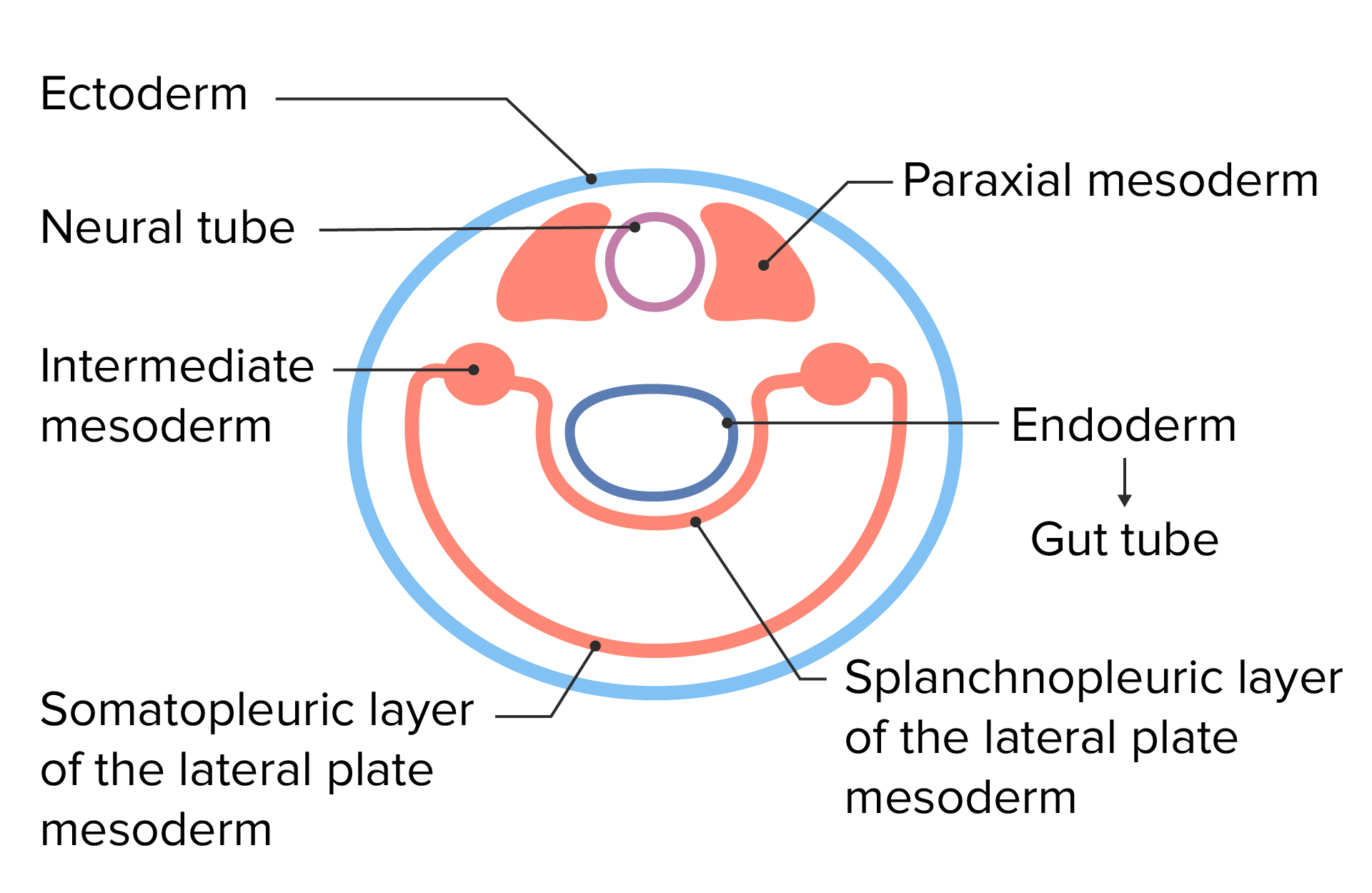
  • El mesodermo de la placa lateral se divide para formar 2 capas separadas por un celoma intraembrionario:
    • Capa esplácnica (también conocida como capa visceral)
    • Capa somática (también conocida como capa parietal Parietal One of a pair of irregularly shaped quadrilateral bones situated between the frontal bone and occipital bone, which together form the sides of the cranium. Skull: Anatomy)
      • Adyacente al AL Amyloidosis ectodermo superficial
      • Da lugar al AL Amyloidosis peritoneo parietal Parietal One of a pair of irregularly shaped quadrilateral bones situated between the frontal bone and occipital bone, which together form the sides of the cranium. Skull: Anatomy que recubre la pared abdominal
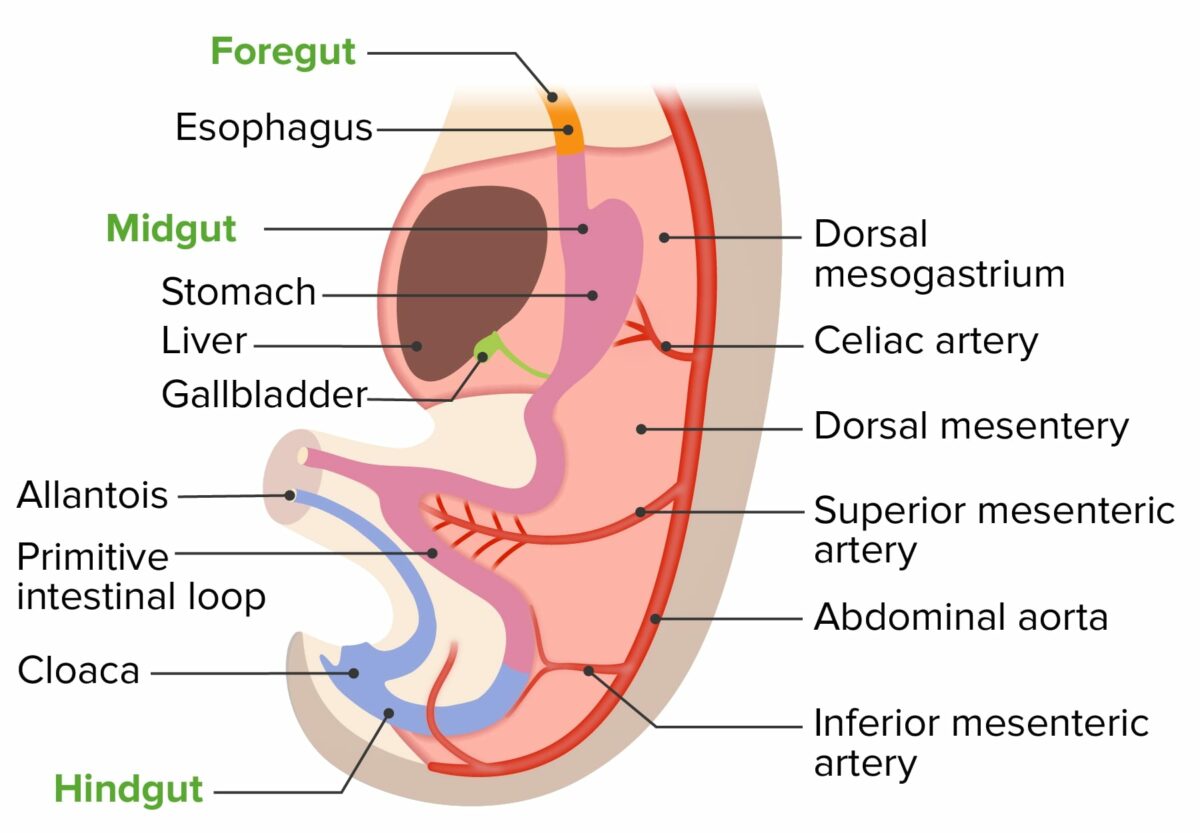
  • Los LOS Neisseria mesenterios suspenden el tubo intestinal primitivo dentro de la cavidad abdominal en EN Erythema nodosum is an immune-mediated panniculitis (inflammation of the subcutaneous fat) caused by a type IV (delayed-type) hypersensitivity reaction. It commonly manifests in young women as tender, erythematous nodules on the shins. Erythema Nodosum desarrollo:
    • Mesenterio anterior:
      • Ancla el tubo intestinal a la pared abdominal anterior
      • Da lugar al AL Amyloidosis epiplón menor
    • Mesenterio posterior:
      • Ancla el tubo intestinal a la pared abdominal posterior
      • Restos como mesenterio
      • También da lugar al AL Amyloidosis epiplón mayor
    • Contiene los LOS Neisseria vasos sanguíneos que irrigan el tubo intestinal primitivo a medida que se aleja de la aorta Aorta The main trunk of the systemic arteries. Mediastinum and Great Vessels: Anatomy abdominal

El Peritoneo y la Cavidad Peritoneal

Anatomía del peritoneo

  • Histológicamente se compone de:
    • Células mesoteliales
    • Capa fina de tejido fibroso
  • Capas peritoneales:
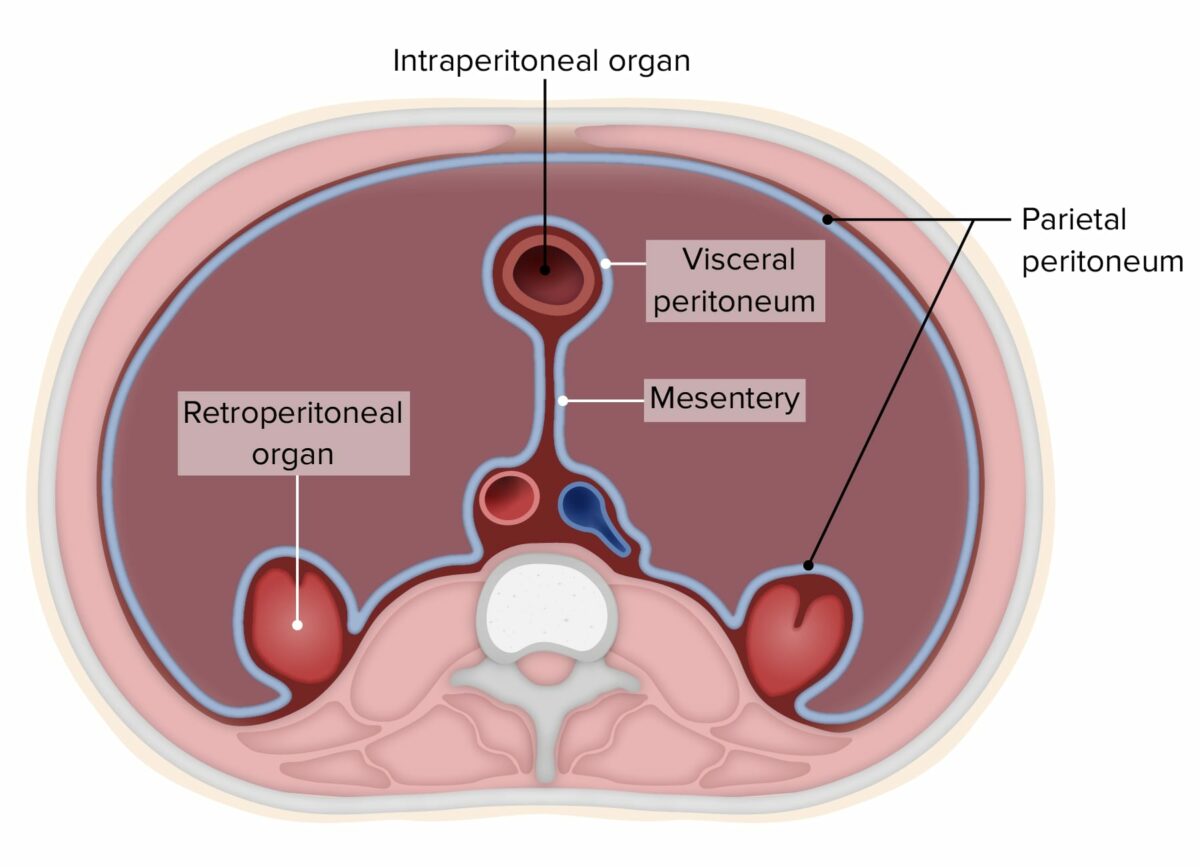
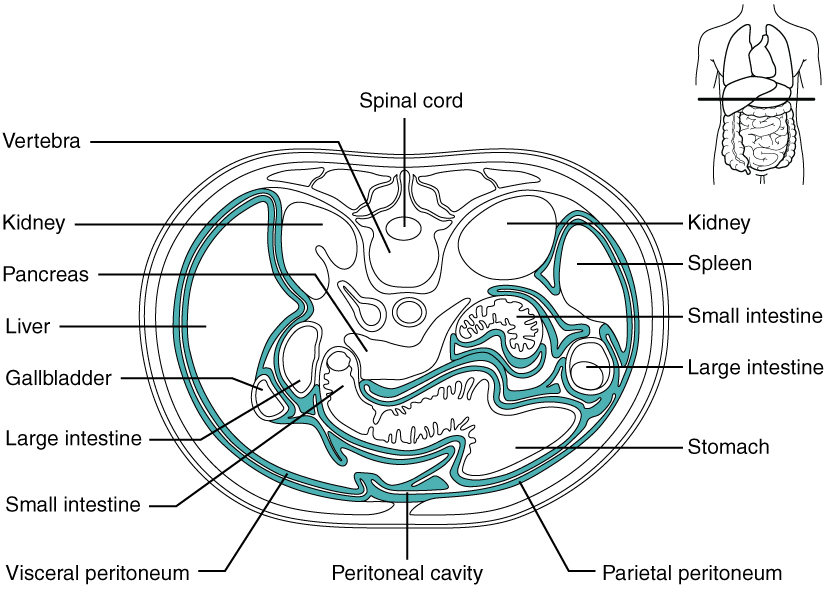
    • Peritoneo visceral: cubre estrechamente los LOS Neisseria órganos viscerales abdominales
    • Peritoneo parietal Parietal One of a pair of irregularly shaped quadrilateral bones situated between the frontal bone and occipital bone, which together form the sides of the cranium. Skull: Anatomy: recubre el interior de la pared corporal abdominopélvica
  • Pliegues peritoneales (para más detalles, véase compartimentos de la cavidad peritoneal):
    • Mesenterio
    • Ligamentos peritoneales
    • Epiplones
  • Subdivisiones de la cavidad peritoneal (ver irrigación e inervación para más detalles):
    • Saco mayor, que contiene:
      • Compartimento supracólico
      • Compartimento infracólico
    • Saco menor

Visualización de la cavidad peritoneal

  • La cavidad peritoneal es el espacio delimitado por el peritoneo parietal Parietal One of a pair of irregularly shaped quadrilateral bones situated between the frontal bone and occipital bone, which together form the sides of the cranium. Skull: Anatomy, que recubre la pared abdominal interna.
  • Los LOS Neisseria órganos viscerales se colocan en EN Erythema nodosum is an immune-mediated panniculitis (inflammation of the subcutaneous fat) caused by a type IV (delayed-type) hypersensitivity reaction. It commonly manifests in young women as tender, erythematous nodules on the shins. Erythema Nodosum este espacio y están revestidos de peritoneo visceral.
  • Entre el peritoneo parietal Parietal One of a pair of irregularly shaped quadrilateral bones situated between the frontal bone and occipital bone, which together form the sides of the cranium. Skull: Anatomy y el peritoneo visceral no hay órganos (solo un líquido seroso).
  • Imagine el peritoneo como un globo que llena la cavidad abdominal:
    • Si se introduce el dedo en EN Erythema nodosum is an immune-mediated panniculitis (inflammation of the subcutaneous fat) caused by a type IV (delayed-type) hypersensitivity reaction. It commonly manifests in young women as tender, erythematous nodules on the shins. Erythema Nodosum el globo, el dedo ocupa espacio y puede moverse dentro del globo sin reventar o perforar el propio globo.
    • Los LOS Neisseria órganos abdominales viscerales sobresalen “dentro” de la cavidad peritoneal (como el dedo que empuja el globo) sin llegar a perforar el peritoneo en EN Erythema nodosum is an immune-mediated panniculitis (inflammation of the subcutaneous fat) caused by a type IV (delayed-type) hypersensitivity reaction. It commonly manifests in young women as tender, erythematous nodules on the shins. Erythema Nodosum sí.

Límites de la cavidad peritoneal

  • Anterior: músculos abdominales anteriores
  • Posterior:
  • Superior: diafragma
  • Inferior: suelo pélvico

Órganos intraperitoneales frente a órganos retroperitoneales

Los LOS Neisseria órganos pueden clasificarse según su cobertura peritoneal:

  • Intraperitoneal Intraperitoneal Peritoneum: Anatomy: completamente contenido en EN Erythema nodosum is an immune-mediated panniculitis (inflammation of the subcutaneous fat) caused by a type IV (delayed-type) hypersensitivity reaction. It commonly manifests in young women as tender, erythematous nodules on the shins. Erythema Nodosum el peritoneo parietal Parietal One of a pair of irregularly shaped quadrilateral bones situated between the frontal bone and occipital bone, which together form the sides of the cranium. Skull: Anatomy
  • Retroperitoneal Retroperitoneal Peritoneum: Anatomy: situado entre la pared del cuerpo y el peritoneo (detrás de la cavidad peritoneal)
    • Retroperitoneales primarios: órganos que nunca estuvieron dentro de la cavidad peritoneal
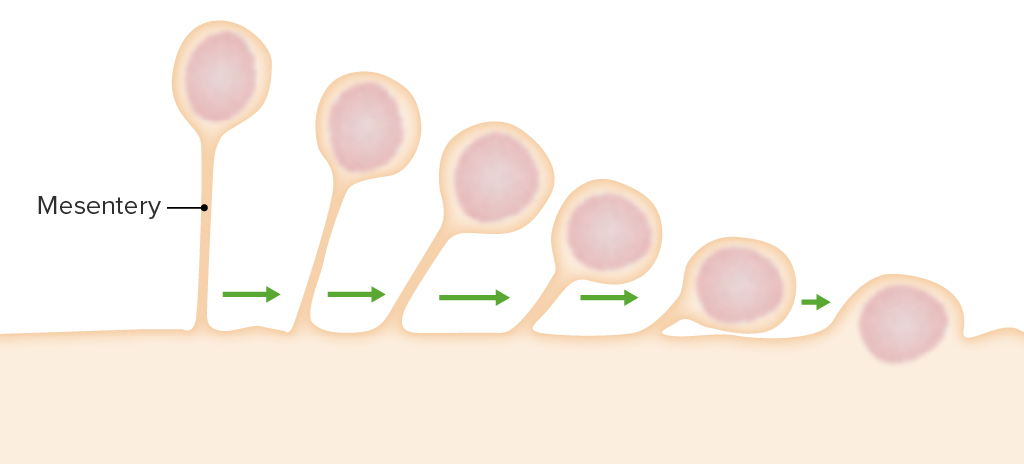
    • Secundariamente retroperitoneales: órganos que comienzan como intraperitoneales durante el desarrollo inicial, pero que terminan como retroperitoneales una vez que se desarrollan completamente
  • Subperitoneal: órgano situado bajo el peritoneo
Tabla: Órganos intraperitoneales frente a órganos retroperitoneales
Localización Órganos
Intraperitoneal Intraperitoneal Peritoneum: Anatomy
  • Estómago
  • 1ra parte del duodeno (parte superior)
  • Yeyuno
  • Íleon
  • Ciego
  • Apéndice
  • Colon Colon The large intestines constitute the last portion of the digestive system. The large intestine consists of the cecum, appendix, colon (with ascending, transverse, descending, and sigmoid segments), rectum, and anal canal. The primary function of the colon is to remove water and compact the stool prior to expulsion from the body via the rectum and anal canal. Colon, Cecum, and Appendix: Anatomy transverso
  • Colon Colon The large intestines constitute the last portion of the digestive system. The large intestine consists of the cecum, appendix, colon (with ascending, transverse, descending, and sigmoid segments), rectum, and anal canal. The primary function of the colon is to remove water and compact the stool prior to expulsion from the body via the rectum and anal canal. Colon, Cecum, and Appendix: Anatomy sigmoide
  • Hígado
  • Vesícula biliar
  • Cola del páncreas
  • Bazo
  • Órganos reproductores femeninos:
    • Útero
    • Trompas de Falopio
    • Ovarios
Secundariamente retroperitoneales
  • 2da–4ta parte del duodeno
  • Cabeza, cuello y cuerpo del páncreas
  • Colon Colon The large intestines constitute the last portion of the digestive system. The large intestine consists of the cecum, appendix, colon (with ascending, transverse, descending, and sigmoid segments), rectum, and anal canal. The primary function of the colon is to remove water and compact the stool prior to expulsion from the body via the rectum and anal canal. Colon, Cecum, and Appendix: Anatomy ascendente
  • Colon Colon The large intestines constitute the last portion of the digestive system. The large intestine consists of the cecum, appendix, colon (with ascending, transverse, descending, and sigmoid segments), rectum, and anal canal. The primary function of the colon is to remove water and compact the stool prior to expulsion from the body via the rectum and anal canal. Colon, Cecum, and Appendix: Anatomy descendente
  • Porción superior del recto
Retroperitoneales primarios
Subperitoneales
  • Vejiga
  • Porción inferior del recto
  • Canal anal
  • Órganos reproductores femeninos: vagina Vagina The vagina is the female genital canal, extending from the vulva externally to the cervix uteri internally. The structures have sexual, reproductive, and urinary functions and a rich blood supply, mainly arising from the internal iliac artery. Vagina, Vulva, and Pelvic Floor: Anatomy
  • Órganos reproductores masculinos:
    • Próstata
    • Vesículas seminales
Desarrollo de órganos retroperitoneales secundarios

Desarrollo de órganos secundariamente retroperitoneales:
Estos órganos comienzan suspendidos por un mesenterio. Sin embargo, a medida que el órgano se desarrolla, el mesenterio retrocede hasta que el órgano queda a ras de la pared posterior y acaba siendo un órgano retroperitoneal.
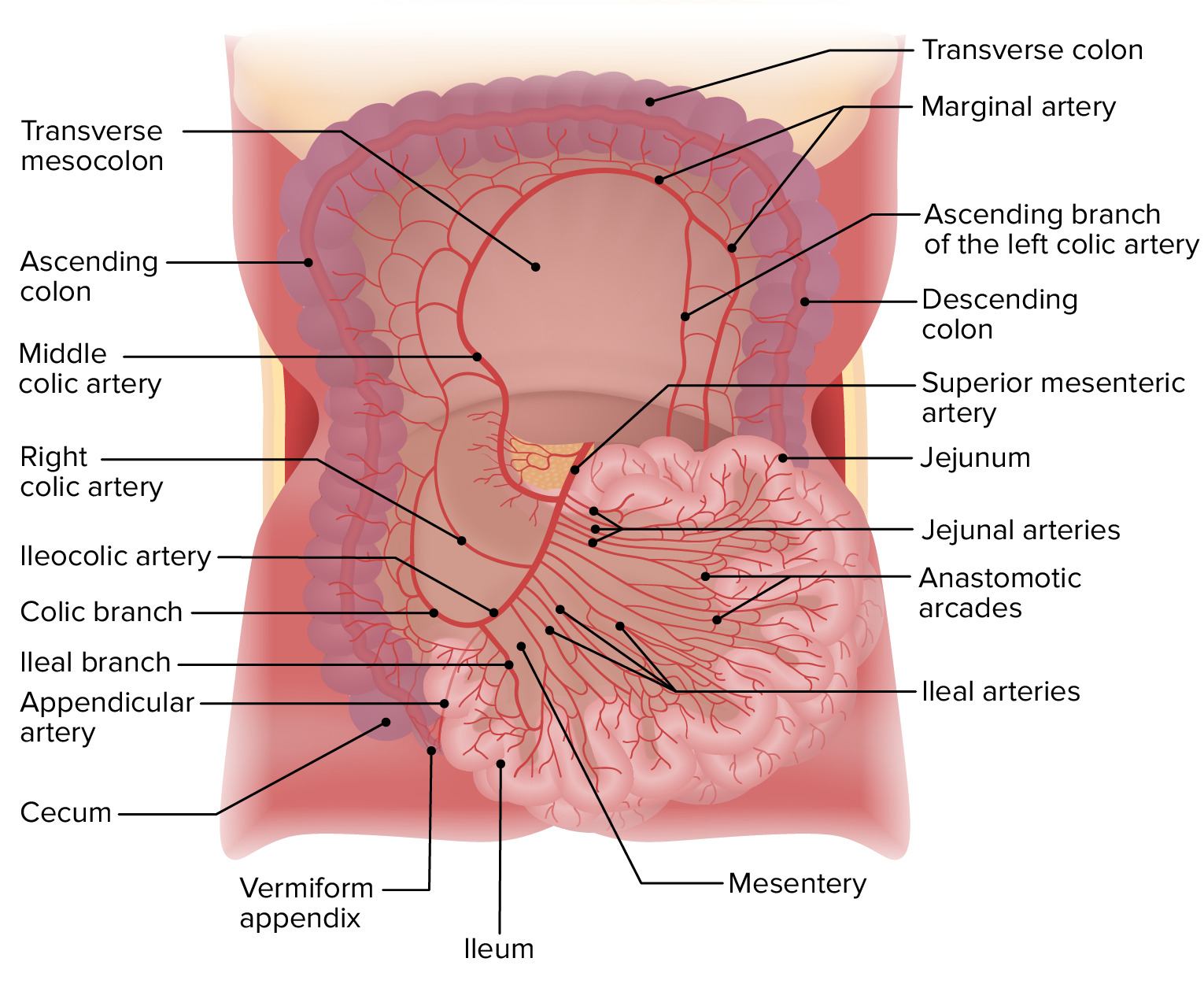
Imagen por Lecturio.

Pliegues Peritoneales

Mesenterio

  • 2 capas de peritoneo
  • Suspende y sujeta los LOS Neisseria órganos viscerales a la pared abdominal posterior
  • Contiene:
    • Arterias y venas
    • Vasos linfáticos
    • Nervios
  • Mesenterios específicos:
    • Mesenterio del intestino delgado:
      • Conecta el yeyuno y el íleon con la pared abdominal posterior
      • Típicamente, se denomina simplemente “el mesenterio”
    • Mesocolon transverso: conecta el colon Colon The large intestines constitute the last portion of the digestive system. The large intestine consists of the cecum, appendix, colon (with ascending, transverse, descending, and sigmoid segments), rectum, and anal canal. The primary function of the colon is to remove water and compact the stool prior to expulsion from the body via the rectum and anal canal. Colon, Cecum, and Appendix: Anatomy transverso con la pared abdominal posterior
    • Mesocolon sigmoide: pliegue peritoneal en EN Erythema nodosum is an immune-mediated panniculitis (inflammation of the subcutaneous fat) caused by a type IV (delayed-type) hypersensitivity reaction. It commonly manifests in young women as tender, erythematous nodules on the shins. Erythema Nodosum forma de V que une el colon Colon The large intestines constitute the last portion of the digestive system. The large intestine consists of the cecum, appendix, colon (with ascending, transverse, descending, and sigmoid segments), rectum, and anal canal. The primary function of the colon is to remove water and compact the stool prior to expulsion from the body via the rectum and anal canal. Colon, Cecum, and Appendix: Anatomy sigmoide a la pared abdominal
Suministro de sangre del intestino delgado
La irrigación sanguínea de los intestinos delgado y grueso corre dentro de los mesenterios
Imagen por Lecturio.

Ligamentos

  • 2 capas de peritoneo
  • Conectan 2 órganos entre sí o fijan un órgano a la pared del cuerpo
  • Algunos ligamentos forman parte del epiplón.
  • Generalmente, obtienen sus nombres de los LOS Neisseria 2 órganos o estructuras que conectan
  • Ligamentos con nombre:
    • Frenocólico: diafragma ↔ colon Colon The large intestines constitute the last portion of the digestive system. The large intestine consists of the cecum, appendix, colon (with ascending, transverse, descending, and sigmoid segments), rectum, and anal canal. The primary function of the colon is to remove water and compact the stool prior to expulsion from the body via the rectum and anal canal. Colon, Cecum, and Appendix: Anatomy transverso
    • Esplenorrenal: bazo ↔ riñón izquierdo
    • Gastrofrénico: estómago ↔ diafragma
    • Gastrocólico: estómago ↔ colon Colon The large intestines constitute the last portion of the digestive system. The large intestine consists of the cecum, appendix, colon (with ascending, transverse, descending, and sigmoid segments), rectum, and anal canal. The primary function of the colon is to remove water and compact the stool prior to expulsion from the body via the rectum and anal canal. Colon, Cecum, and Appendix: Anatomy transverso
    • Gastroesplénico: estómago ↔ bazo
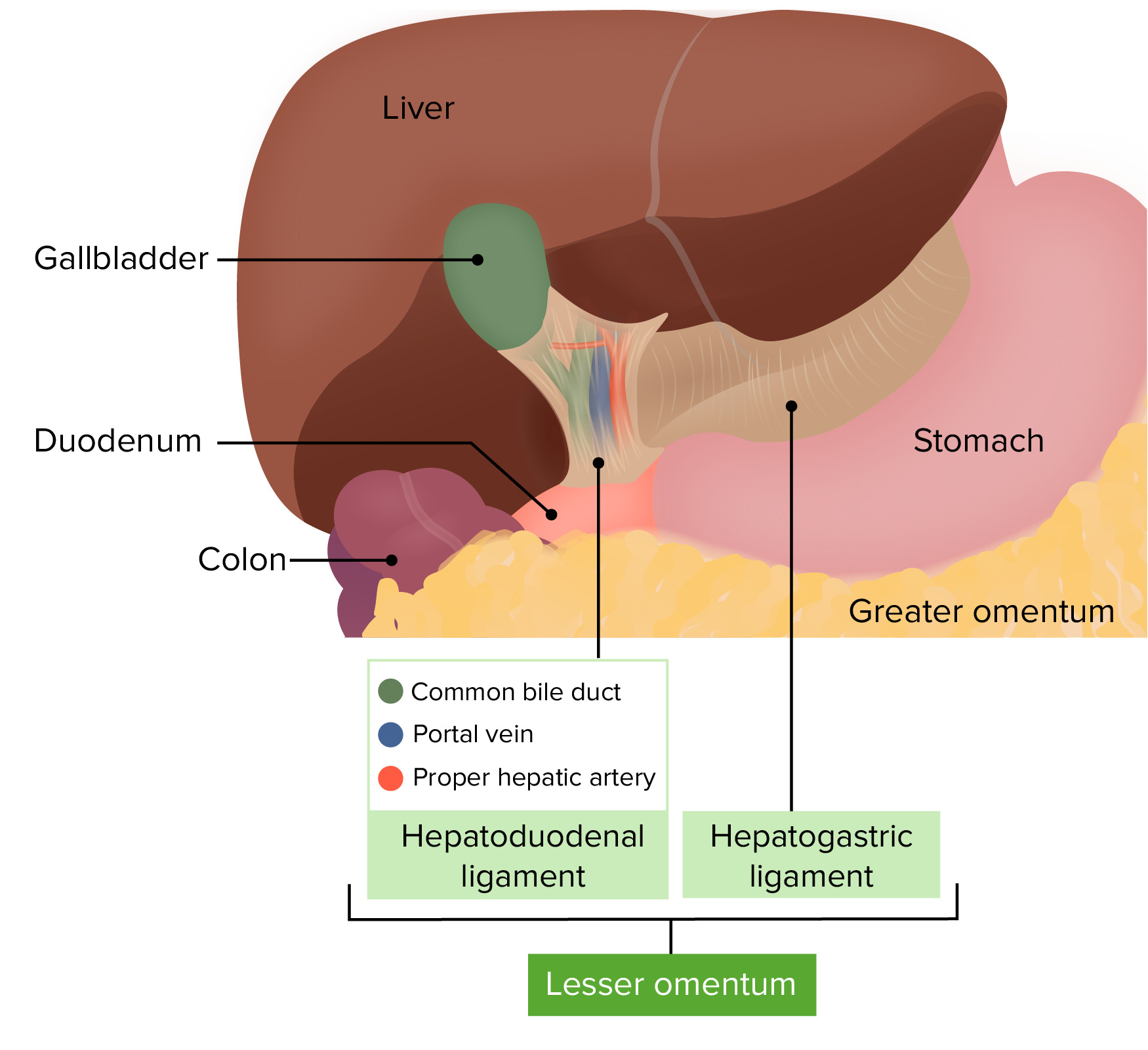
    • Hepatogástrico: hígado ↔ estómago
    • Hepatoduodenal: hígado ↔ duodeno
      • Entre la porta hepatis Porta hepatis Liver: Anatomy del hígado y la parte superior del duodeno
      • Contiene la tríada portal: arteria hepática, vena porta y conducto biliar común
    • Ligamento falciforme: hígado ↔ pared abdominal anterior

Epiplones

Los LOS Neisseria epiplones son láminas de peritoneo en EN Erythema nodosum is an immune-mediated panniculitis (inflammation of the subcutaneous fat) caused by a type IV (delayed-type) hypersensitivity reaction. It commonly manifests in young women as tender, erythematous nodules on the shins. Erythema Nodosum capas. El epiplón mayor y el epiplón menor son los LOS Neisseria 2 epiplones.

Epiplón mayor:
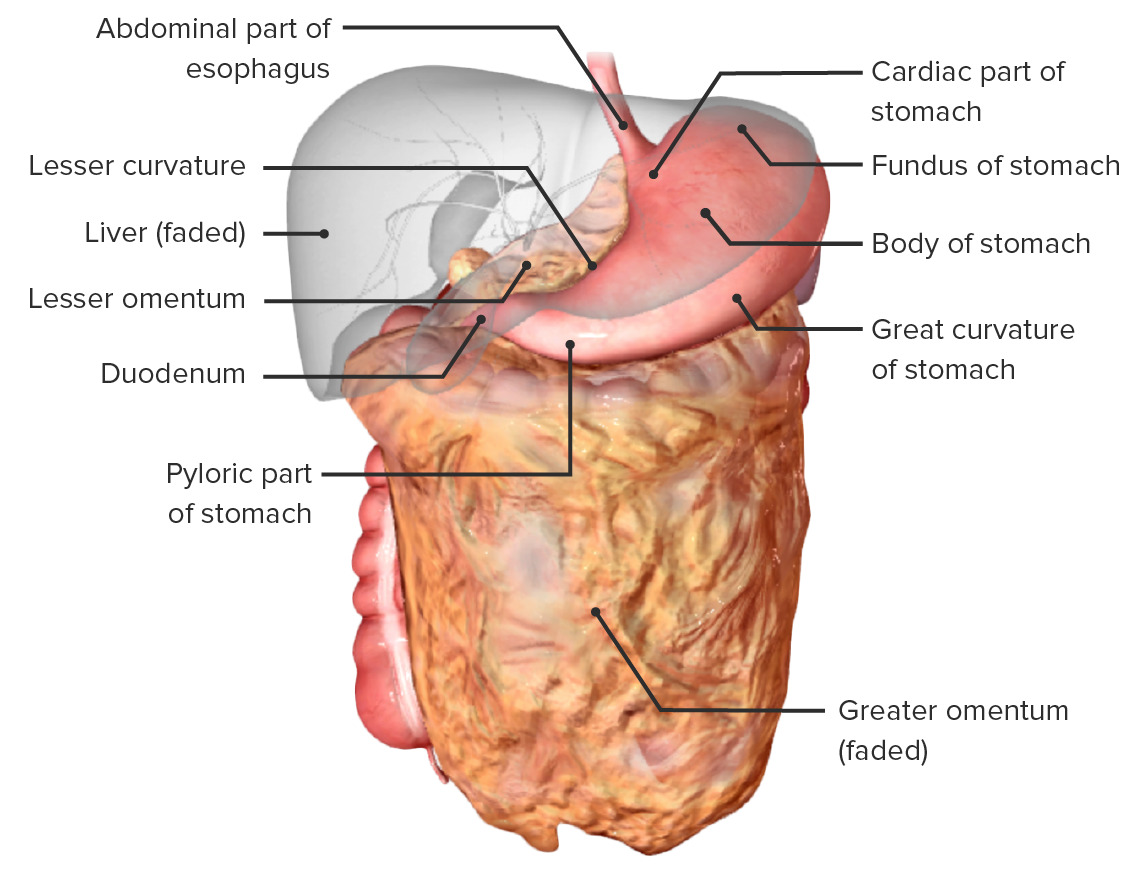
  • Estructura: un pliegue de 4 capas de peritoneo
  • Localización:
    • Colgando de la curva mayor del estómago como un delantal
    • Cubre el colon Colon The large intestines constitute the last portion of the digestive system. The large intestine consists of the cecum, appendix, colon (with ascending, transverse, descending, and sigmoid segments), rectum, and anal canal. The primary function of the colon is to remove water and compact the stool prior to expulsion from the body via the rectum and anal canal. Colon, Cecum, and Appendix: Anatomy transverso y gran parte del intestino delgado
  • Estructura muy móvil
  • Función:
    • Evita la formación de adherencias entre los LOS Neisseria órganos viscerales y la pared abdominal
    • Rodea los LOS Neisseria órganos inflamados → los LOS Neisseria sella para limitar las adherencias
  • Formado por 3 ligamentos primarios:
    • Gastrocólico
    • Gastroesplénico
    • Gastrofrénico

Epiplón menor:

  • Estructura: doble capa de peritoneo
  • Localización: se extiende desde el hígado hasta la curvatura menor del estómago y la porción proximal del duodeno
  • Formado por 2 ligamentos primarios:
    • Ligamento hepatogástrico
    • Ligamento hepatoduodenal
Epiplón menor y foramen omental in situ

Epiplón menor y foramen epiploico in situ

Imagen por Lecturio.

Compartimentos de la Cavidad Peritoneal

Descripción general

La cavidad peritoneal está dividida en EN Erythema nodosum is an immune-mediated panniculitis (inflammation of the subcutaneous fat) caused by a type IV (delayed-type) hypersensitivity reaction. It commonly manifests in young women as tender, erythematous nodules on the shins. Erythema Nodosum varios compartimentos diferentes por los LOS Neisseria epiplones y el mesocolon transversal:
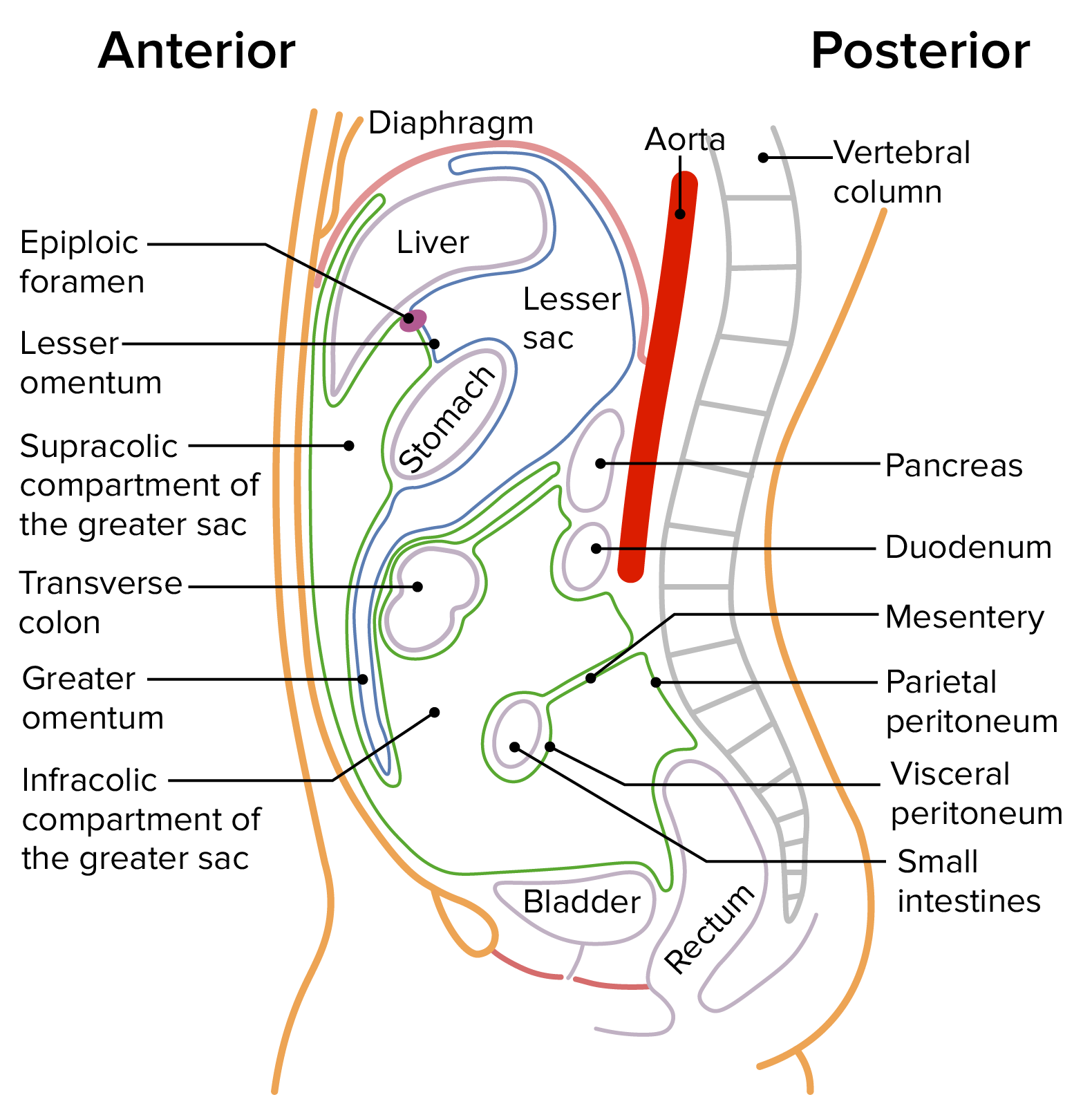
  • Saco mayor:
    • Parte anterior de la cavidad
    • Además, se subdivide en EN Erythema nodosum is an immune-mediated panniculitis (inflammation of the subcutaneous fat) caused by a type IV (delayed-type) hypersensitivity reaction. It commonly manifests in young women as tender, erythematous nodules on the shins. Erythema Nodosum:
      • Compartimento supracólico
      • Compartimento infracólico
  • Saco menor:
    • Situado en EN Erythema nodosum is an immune-mediated panniculitis (inflammation of the subcutaneous fat) caused by a type IV (delayed-type) hypersensitivity reaction. It commonly manifests in young women as tender, erythematous nodules on the shins. Erythema Nodosum la parte superior posterior del abdomen
    • Se comunica con el saco mayor a través del foramen epiploico, situado en EN Erythema nodosum is an immune-mediated panniculitis (inflammation of the subcutaneous fat) caused by a type IV (delayed-type) hypersensitivity reaction. It commonly manifests in young women as tender, erythematous nodules on the shins. Erythema Nodosum el borde libre del epiplón menor
Una sección sagital a través del abdomen que muestra los sacos mayores y menores

Una sección sagital a través del abdomen que muestra los sacos mayores y menores:
El saco mayor está delineado en verde, y el saco menor está delineado en azul.

Imagen por Lecturio.

Saco mayor

El saco mayor está dividido en EN Erythema nodosum is an immune-mediated panniculitis (inflammation of the subcutaneous fat) caused by a type IV (delayed-type) hypersensitivity reaction. It commonly manifests in young women as tender, erythematous nodules on the shins. Erythema Nodosum 2 compartimentos por el mesocolon transversal.

  • Compartimento supracólico:
    • Se encuentra por encima del mesocolon transversal
    • Contiene:
      • Estómago
      • Hígado
      • Bazo
  • Compartimento infracólico:
    • Se encuentra por debajo del mesocolon transversal
    • Contiene:
      • Intestino delgado
      • Colon Colon The large intestines constitute the last portion of the digestive system. The large intestine consists of the cecum, appendix, colon (with ascending, transverse, descending, and sigmoid segments), rectum, and anal canal. The primary function of the colon is to remove water and compact the stool prior to expulsion from the body via the rectum and anal canal. Colon, Cecum, and Appendix: Anatomy ascendente
      • Colon Colon The large intestines constitute the last portion of the digestive system. The large intestine consists of the cecum, appendix, colon (with ascending, transverse, descending, and sigmoid segments), rectum, and anal canal. The primary function of the colon is to remove water and compact the stool prior to expulsion from the body via the rectum and anal canal. Colon, Cecum, and Appendix: Anatomy descendente
    • Se puede subdividir en EN Erythema nodosum is an immune-mediated panniculitis (inflammation of the subcutaneous fat) caused by a type IV (delayed-type) hypersensitivity reaction. It commonly manifests in young women as tender, erythematous nodules on the shins. Erythema Nodosum mitades derecha e izquierda por el mesenterio del intestino delgado
  • Los LOS Neisseria compartimentos supracólico e infracólico se comunican libremente a través de los LOS Neisseria canalones paracólicos.

Saco menor

El saco menor también se conoce como bursa epiploica.

  • Márgenes anatómicos:
    • Anterior:
      • Epiplón menor
      • Estómago
    • Posterior:
      • Páncreas
      • Riñón izquierdo y glándula suprarrenal
    • Inferior: epiplón mayor
    • Superior y medial: hígado
    • Lateral: bazo
  • Conectado al AL Amyloidosis saco mayor a través del foramen epiploico
  • Límites del foramen epiploico:
    • Ligamento hepatoduodenal (que contiene la tríada portal) anteriormente
    • Vena cava inferior posteriormente
    • Lóbulo caudado del hígado superiormente
    • 1ra parte del duodeno inferiormente

Irrigación e Inervación

Tabla: Irrigación e inervación del peritoneo
Peritoneo parietal Parietal One of a pair of irregularly shaped quadrilateral bones situated between the frontal bone and occipital bone, which together form the sides of the cranium. Skull: Anatomy Peritoneo visceral
Irrigación arterial De la irrigación de la pared abdominal Arterias mesentéricas superior e inferior
Drenaje venoso Las venas drenan en EN Erythema nodosum is an immune-mediated panniculitis (inflammation of the subcutaneous fat) caused by a type IV (delayed-type) hypersensitivity reaction. It commonly manifests in young women as tender, erythematous nodules on the shins. Erythema Nodosum la vena cava inferior Las venas drenan en EN Erythema nodosum is an immune-mediated panniculitis (inflammation of the subcutaneous fat) caused by a type IV (delayed-type) hypersensitivity reaction. It commonly manifests in young women as tender, erythematous nodules on the shins. Erythema Nodosum la vena porta
Inervación Inervación somática de los LOS Neisseria nervios espinales T10-L1 (el dolor Dolor Inflammation puede ser localizado) Inervación autonómica (el dolor Dolor Inflammation es difícil de localizar)

Relevancia Clínica

  • Peritonitis Peritonitis Inflammation of the peritoneum lining the abdominal cavity as the result of infectious, autoimmune, or chemical processes. Primary peritonitis is due to infection of the peritoneal cavity via hematogenous or lymphatic spread and without intra-abdominal source. Secondary peritonitis arises from the abdominal cavity itself through rupture or abscess of intra-abdominal organs. Penetrating Abdominal Injury: inflamación del peritoneo. La peritonitis Peritonitis Inflammation of the peritoneum lining the abdominal cavity as the result of infectious, autoimmune, or chemical processes. Primary peritonitis is due to infection of the peritoneal cavity via hematogenous or lymphatic spread and without intra-abdominal source. Secondary peritonitis arises from the abdominal cavity itself through rupture or abscess of intra-abdominal organs. Penetrating Abdominal Injury puede deberse a un absceso intraabdominal, a la rotura de un órgano abdominal infectado o de una víscera hueca (comúnmente el apéndice o un divertículo del colon Colon The large intestines constitute the last portion of the digestive system. The large intestine consists of the cecum, appendix, colon (with ascending, transverse, descending, and sigmoid segments), rectum, and anal canal. The primary function of the colon is to remove water and compact the stool prior to expulsion from the body via the rectum and anal canal. Colon, Cecum, and Appendix: Anatomy sigmoide), o a una infección por diálisis peritoneal, o puede ser espontánea (típicamente en EN Erythema nodosum is an immune-mediated panniculitis (inflammation of the subcutaneous fat) caused by a type IV (delayed-type) hypersensitivity reaction. It commonly manifests in young women as tender, erythematous nodules on the shins. Erythema Nodosum individuos con cirrosis y ascitis).
  • Adherencias peritoneales: conexiones anormales entre el peritoneo visceral de órganos adyacentes o entre las capas parietal Parietal One of a pair of irregularly shaped quadrilateral bones situated between the frontal bone and occipital bone, which together form the sides of the cranium. Skull: Anatomy y visceral del peritoneo. Las adherencias peritoneales suelen ser el resultado de una inflamación y/o lesión del peritoneo. Estas adherencias pueden provocar dolor Dolor Inflammation, obstrucción intestinal y vólvulo. La lisis quirúrgica de las adherencias puede ser ocasionalmente necesaria si el individuo es sintomático, pero a menudo las adherencias son asintomáticas y el tratamiento es innecesario.
  • Ascitis: acumulación patológica de líquido en EN Erythema nodosum is an immune-mediated panniculitis (inflammation of the subcutaneous fat) caused by a type IV (delayed-type) hypersensitivity reaction. It commonly manifests in young women as tender, erythematous nodules on the shins. Erythema Nodosum la cavidad peritoneal. La ascitis se produce a causa de un desequilibrio de la presión osmótica y/o hidrostática, secundario a la hipertensión portal (cirrosis, insuficiencia cardíaca) o a la hipertensión no portal (hipoalbuminemia, neoplasia, infección). Los LOS Neisseria individuos suelen presentar una distensión abdominal progresiva y aumento de peso. El examen abdominal puede revelar una matidez cambiante y una onda de líquido positiva.
  • Ultrasonido abdominal focalizado para trauma abdominal: protocolo de examen con ultrasonido de las cavidades abdominal y torácica realizado en EN Erythema nodosum is an immune-mediated panniculitis (inflammation of the subcutaneous fat) caused by a type IV (delayed-type) hypersensitivity reaction. It commonly manifests in young women as tender, erythematous nodules on the shins. Erythema Nodosum el servicio de urgencias como parte de la inspección secundaria en EN Erythema nodosum is an immune-mediated panniculitis (inflammation of the subcutaneous fat) caused by a type IV (delayed-type) hypersensitivity reaction. It commonly manifests in young women as tender, erythematous nodules on the shins. Erythema Nodosum el soporte vital avanzado para traumatismos. El objetivo principal del examen FAST es identificar el líquido intraperitoneal Intraperitoneal Peritoneum: Anatomy libre (sangre) y el derrame pericárdico de un traumatismo que puede requerir atención quirúrgica urgente. Un individuo puede desangrarse completamente en EN Erythema nodosum is an immune-mediated panniculitis (inflammation of the subcutaneous fat) caused by a type IV (delayed-type) hypersensitivity reaction. It commonly manifests in young women as tender, erythematous nodules on the shins. Erythema Nodosum la cavidad peritoneal.
  • Neoplasias peritoneales: cánceres raros pueden originarse en EN Erythema nodosum is an immune-mediated panniculitis (inflammation of the subcutaneous fat) caused by a type IV (delayed-type) hypersensitivity reaction. It commonly manifests in young women as tender, erythematous nodules on the shins. Erythema Nodosum el peritoneo y/o en EN Erythema nodosum is an immune-mediated panniculitis (inflammation of the subcutaneous fat) caused by a type IV (delayed-type) hypersensitivity reaction. It commonly manifests in young women as tender, erythematous nodules on the shins. Erythema Nodosum el propio epiplón.

Referencias

  1. Richard L.D., Wayne, A.V., Mitchell, A.W.M. (2020). Abdomen. In Richard L.D., et al. (Ed.), Gray’s Anatomy for Students (4th ed. pp. 300–306.) Churchill Livingstone/Elsevier,
  2. Isaza-Restrepo A., et al. (2018). The peritoneum: beyond the tissue—a review. Front Physiol 9:738. Retrieved August 8, 2021, from https://www.ncbi.nlm.nih.gov/pmc/articles/PMC6014125/
  3. Kalra, A., Wehrle, C. (2021). Anatomy, abdomen and pelvis, peritoneum. StatPearls. Retrieved August 25, 2021, from https://www.statpearls.com/articlelibrary/viewarticle/32341/

¡Crea tu cuenta gratis o inicia una sesión para seguir leyendo!

Regístrate ahora y obtén acceso gratuito a Lecturio con páginas de concepto, videos médicos y cuestionarios para tu educación médica.

User Reviews

Que tengas una sesión de estudio alegre y navideña 🎁 Ahorra 50% en todos los planes >>

Details