Domina Conceptos Médicos

Estudia para la escuela de medicina y tus examenes con Lecturio.

Virus del Papiloma Humano (VPH)

El virus Virus Viruses are infectious, obligate intracellular parasites composed of a nucleic acid core surrounded by a protein capsid. Viruses can be either naked (non-enveloped) or enveloped. The classification of viruses is complex and based on many factors, including type and structure of the nucleoid and capsid, the presence of an envelope, the replication cycle, and the host range. Virology del papiloma humano (VPH) es un virus Virus Viruses are infectious, obligate intracellular parasites composed of a nucleic acid core surrounded by a protein capsid. Viruses can be either naked (non-enveloped) or enveloped. The classification of viruses is complex and based on many factors, including type and structure of the nucleoid and capsid, the presence of an envelope, the replication cycle, and the host range. Virology de ácido desoxirribonucleico (ADN) de doble cadena, circular y no envuelto, perteneciente a la familia Papillomaviridae Papillomaviridae A family of small, non-enveloped DNA viruses infecting birds and most mammals, especially humans. They are grouped into multiple genera, but the viruses are highly host-species specific and tissue-restricted. They are commonly divided into hundreds of papillomavirus 'types. Papillomavirus (HPV). Los LOS Neisseria seres humanos son el único reservorio, y la transmisión se produce a través del contacto estrecho piel con piel o sexual. Los LOS Neisseria virus Virus Viruses are infectious, obligate intracellular parasites composed of a nucleic acid core surrounded by a protein capsid. Viruses can be either naked (non-enveloped) or enveloped. The classification of viruses is complex and based on many factors, including type and structure of the nucleoid and capsid, the presence of an envelope, the replication cycle, and the host range. Virology del papiloma humano infectan las células epiteliales basales y pueden afectar a proteínas reguladoras de las células para provocar su proliferación. Existen > 200 genotipos que pueden causar varias afecciones, como verrugas cutáneas, verrugas anogenitales y neoplasias.

Last updated: Dec 15, 2025
Editorial responsibility: Stanley Oiseth, Lindsay Jones, Evelin Maza

Clasificación

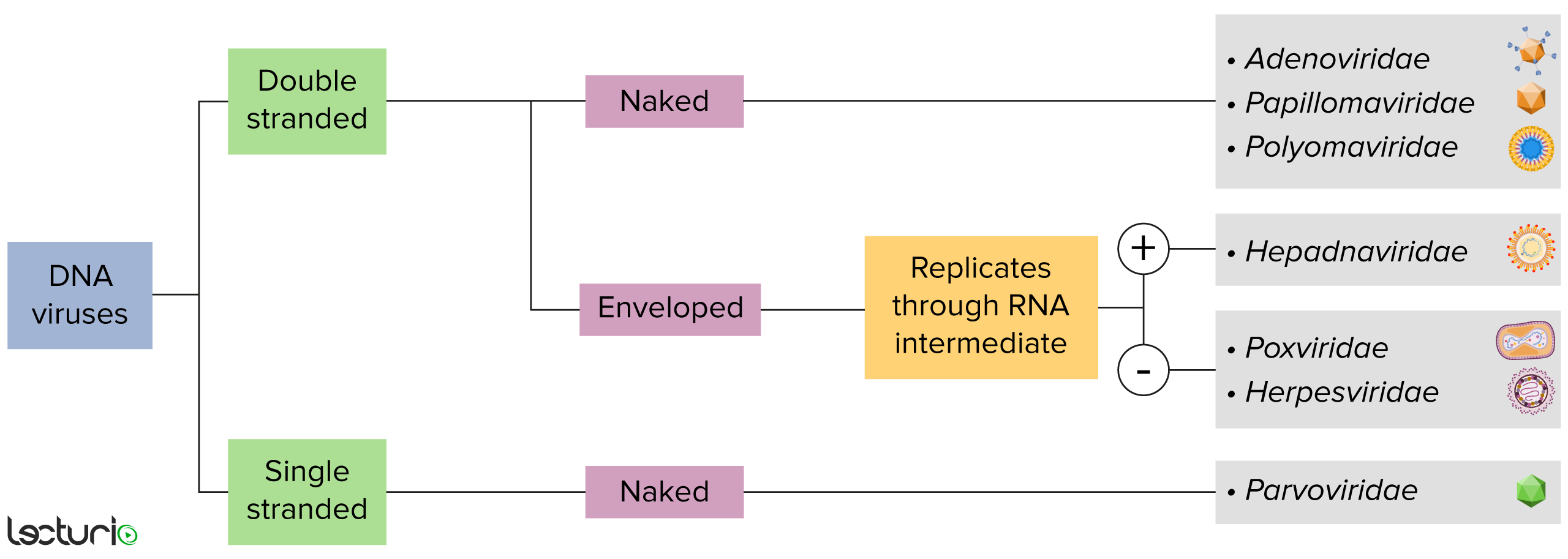
Diagrama de flujo de la clasificación de los virus del ADN

Identificación de virus de ADN:
Los virus pueden clasificarse de muchas maneras. Sin embargo, la mayoría de los virus tienen un genoma formado por ADN o ácido ribonucleico (ARN). Los virus con un genoma de ADN pueden caracterizarse además por el hecho de que ese ADN sea de cadena simple o doble. Si los virus están cubiertos por una fina capa de membrana celular (generalmente tomada de la célula huésped), se denominan virus “envueltos”. Si esa capa está ausente, los virus se denominan “desnudos”. Algunos de los virus con envoltura traducen su ADN en ARN antes de incorporarlo al genoma de la célula huésped.
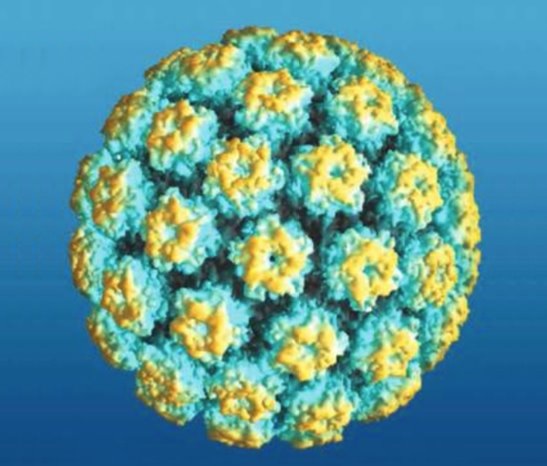
Imagen por Lecturio.

Características Generales

Características básicas del virus Virus Viruses are infectious, obligate intracellular parasites composed of a nucleic acid core surrounded by a protein capsid. Viruses can be either naked (non-enveloped) or enveloped. The classification of viruses is complex and based on many factors, including type and structure of the nucleoid and capsid, the presence of an envelope, the replication cycle, and the host range. Virology del papiloma humano (VPH)

  • Taxonomía:
    • Familia: Papillomaviridae Papillomaviridae A family of small, non-enveloped DNA viruses infecting birds and most mammals, especially humans. They are grouped into multiple genera, but the viruses are highly host-species specific and tissue-restricted. They are commonly divided into hundreds of papillomavirus ‘types. Papillomavirus (HPV)
    • Género:
      • Alphapapillomavirus Alphapapillomavirus A genus of DNA viruses in the family papillomaviridae. They preferentially infect the anogenital and oral mucosa in humans and primates, causing both malignant and benign neoplasms. Cutaneous lesions are also seen. Papillomavirus (HPV)
      • Betapapillomavirus Betapapillomavirus A genus of DNA viruses in the family papillomaviridae, causing cutaneous lesions in humans. Infections exist in latent form in the general population and are activated under conditions of immunosuppression. Papillomavirus (HPV)
      • Gammapapillomavirus Gammapapillomavirus A genus of DNA viruses in the family papillomaviridae, which cause cutaneous lesions in humans. They are histologically distinguishable by intracytoplasmic inclusion bodies which are species specific. Papillomavirus (HPV)
      • Mupapillomavirus Mupapillomavirus A genus of DNA viruses in the family papillomaviridae, causing cutaneous lesions in humans. Papillomavirus (HPV)
      • Nupapillomavirus
  • Virus Virus Viruses are infectious, obligate intracellular parasites composed of a nucleic acid core surrounded by a protein capsid. Viruses can be either naked (non-enveloped) or enveloped. The classification of viruses is complex and based on many factors, including type and structure of the nucleoid and capsid, the presence of an envelope, the replication cycle, and the host range. Virology de ADN:
    • Doble cadena
    • Genoma circular
  • Estructura:
    • No envuelto
    • Cápside icosaédrica
Un modelo de microscopio electrónico de barrido del virus del papiloma humano

Un modelo de microscopio electrónico de barrido del virus del papiloma humano

Imagen: “An atomic model of human papillomavirus” por Zhao et al; BioMed Central Ltd. Licencia: CC BY 2.0

Especies clínicamente relevantes

Hay > 200 genotipos de VPH. Los LOS Neisseria genotipos más destacados son:

  • Subtipos de bajo riesgo (agentes causantes de verrugas genitales):
    • VPH 6
    • VPH 11
  • Subtipos de alto riesgo (asociados con malignidad):
    • VPH 16
    • VPH 18
  • Otros tipos de alto riesgo incluyen los LOS Neisseria VPH 31, 33, 45, 52 y 58, fuertemente asociados con el cáncer de cuello uterino y otros cánceres anogenitales

Enfermedades asociadas

  • Verrugas cutáneas no genitales:
  • Verrugas anogenitales (condiloma acuminado)
  • Neoplasias:
    • Papilomatosis laríngea
    • Cáncer de cuello uterino
    • Cáncer vulvar y vaginal
    • Cáncer anal
    • Cáncer orofaríngeo (cada vez más frecuente en EN Erythema nodosum is an immune-mediated panniculitis (inflammation of the subcutaneous fat) caused by a type IV (delayed-type) hypersensitivity reaction. It commonly manifests in young women as tender, erythematous nodules on the shins. Erythema Nodosum personas jóvenes no fumadoras)
    • Cáncer de pene

Related videos

Patogénesis

Reservorio

Los LOS Neisseria humanos son el único reservorio.
Transmisión

  • Transmisión directa por contacto de piel a piel
  • Actividad sexual
  • Contacto con fómites
  • Transmisión vertical (infección perinatal)

Factores de riesgo del huésped

  • Alto número de parejas sexuales y actividad sexual a una edad temprana
  • Uso de anticonceptivos orales
  • Inmunosupresión (p. ej., coinfección por VIH, especialmente en EN Erythema nodosum is an immune-mediated panniculitis (inflammation of the subcutaneous fat) caused by a type IV (delayed-type) hypersensitivity reaction. It commonly manifests in young women as tender, erythematous nodules on the shins. Erythema Nodosum personas mayores)
  • Tabaquismo
  • Exposición a la radiación/rayos ultravioleta (UV)
  • Alto número de parejas sexuales orogenitales

Fisiopatología

  • El virus Virus Viruses are infectious, obligate intracellular parasites composed of a nucleic acid core surrounded by a protein capsid. Viruses can be either naked (non-enveloped) or enveloped. The classification of viruses is complex and based on many factors, including type and structure of the nucleoid and capsid, the presence of an envelope, the replication cycle, and the host range. Virology entra en EN Erythema nodosum is an immune-mediated panniculitis (inflammation of the subcutaneous fat) caused by a type IV (delayed-type) hypersensitivity reaction. It commonly manifests in young women as tender, erythematous nodules on the shins. Erythema Nodosum el epitelio a través de la alteración de la piel o mucosa.
  • Infecta las células epiteliales basales → puede entrar en EN Erythema nodosum is an immune-mediated panniculitis (inflammation of the subcutaneous fat) caused by a type IV (delayed-type) hypersensitivity reaction. It commonly manifests in young women as tender, erythematous nodules on the shins. Erythema Nodosum una fase latente
  • El ADN viral puede:
    • Integrarse en EN Erythema nodosum is an immune-mediated panniculitis (inflammation of the subcutaneous fat) caused by a type IV (delayed-type) hypersensitivity reaction. It commonly manifests in young women as tender, erythematous nodules on the shins. Erythema Nodosum el genoma del huésped
      • La integración a menudo altera el gen E2 y regula positivamente Eg/E7
    • Permanecer como episoma independiente
  • Proteínas oncogénicas virales (E6 y E7):
    • E6 promueve la degradación del supresor tumoral p53
    • E7 se une e inactiva la proteína del retinoblastoma Retinoblastoma Retinoblastoma is a rare tumor but the most common primary intraocular malignancy of childhood. It is believed that the condition arises from a neuronal progenitor cell. Retinoblastoma can be heritable or non-heritable. Retinoblastoma ( Rb RB Chlamydia), lo que conduce a:
      • Proliferación de células epiteliales basales → verrugas
      • ↓ Capacidad de mantener las células con ADN dañado en EN Erythema nodosum is an immune-mediated panniculitis (inflammation of the subcutaneous fat) caused by a type IV (delayed-type) hypersensitivity reaction. It commonly manifests in young women as tender, erythematous nodules on the shins. Erythema Nodosum fase G1 y ↓ capacidad de iniciar la apoptosis Apoptosis A regulated cell death mechanism characterized by distinctive morphologic changes in the nucleus and cytoplasm, including the endonucleolytic cleavage of genomic DNA, at regularly spaced, internucleosomal sites, I.e., DNA fragmentation. It is genetically-programmed and serves as a balance to mitosis in regulating the size of animal tissues and in mediating pathologic processes associated with tumor growth. Ischemic Cell Damage → más mutaciones son probables → ↑ probabilidad de neoplasia
    • La progresión a malignidad requiere alteraciones genéticas o inmunológicas adicionales del huésped, como la mutación de p53 o la desregulación de citocinas (p. ej., pérdida de la inhibición de IFN-α o TGF-β).
    • La inmunosupresión está relacionada con ↑ infecciones por VPH de alto riesgo y neoplasias malignas relacionadas.
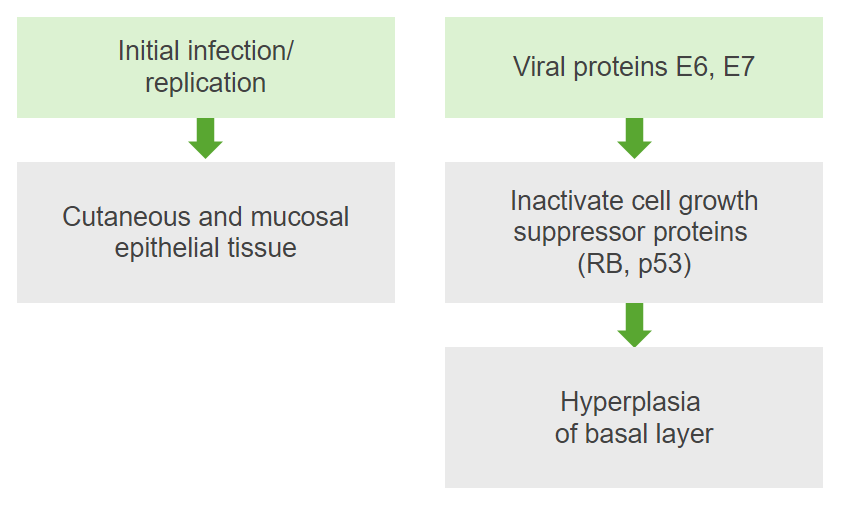
fisiopatología de la infección por el virus del papiloma humano

Diagrama que resume la fisiopatología de una infección por el virus del papiloma humano

Imagen por Lecturio. Licencia: CC BY-NC-SA 4.0

Enfermedades Causadas por el VPH

Tabla: Enfermedades causadas por el VPH
genotipos notables Enfermedad Características clínicas
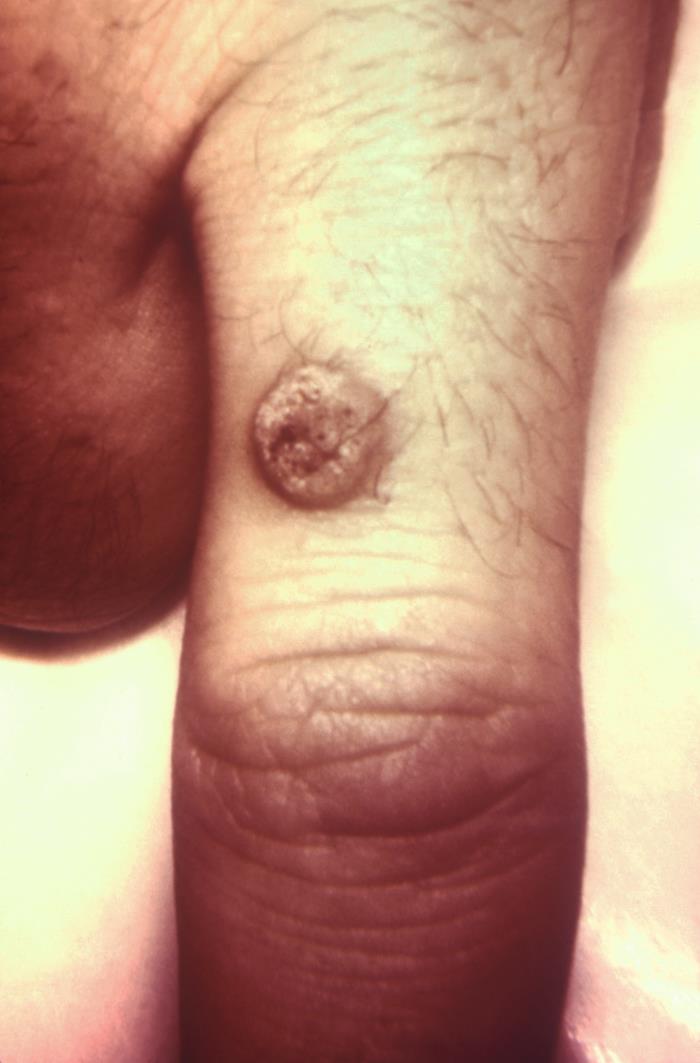
1, 2, 3, 4, 10, 27, 57 Verrugas cutáneas:
  • Común
  • Plantar
  • Planas
  • Benigno
  • Pápulas blandas, de color canela y con aspecto de coliflor
  • Generalmente en EN Erythema nodosum is an immune-mediated panniculitis (inflammation of the subcutaneous fat) caused by a type IV (delayed-type) hypersensitivity reaction. It commonly manifests in young women as tender, erythematous nodules on the shins. Erythema Nodosum las manos y los LOS Neisseria pies
  • Pueden ser individuales o agrupadas
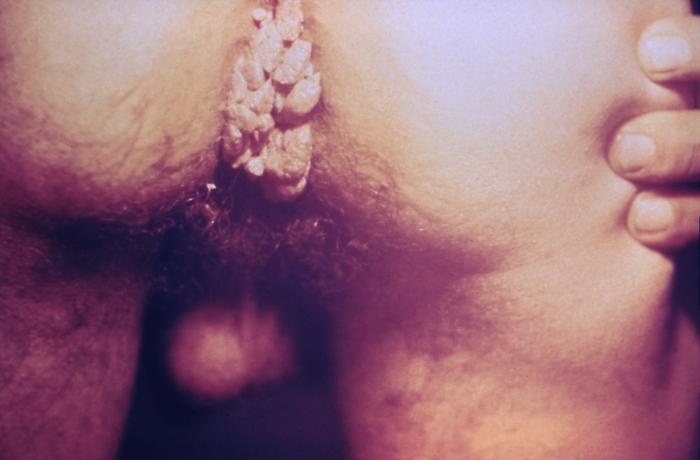
6 y 11 Verrugas anogenitales (condilomas acuminados)
  • Lesiones exofíticas benignas
  • Se encuentra en EN Erythema nodosum is an immune-mediated panniculitis (inflammation of the subcutaneous fat) caused by a type IV (delayed-type) hypersensitivity reaction. It commonly manifests in young women as tender, erythematous nodules on the shins. Erythema Nodosum los LOS Neisseria genitales externos y en EN Erythema nodosum is an immune-mediated panniculitis (inflammation of the subcutaneous fat) caused by a type IV (delayed-type) hypersensitivity reaction. It commonly manifests in young women as tender, erythematous nodules on the shins. Erythema Nodosum la región perianal
Papilomatosis laríngea
  • Tumores laríngeos benignos
  • Podría provocar una obstrucción de las vías respiratorias
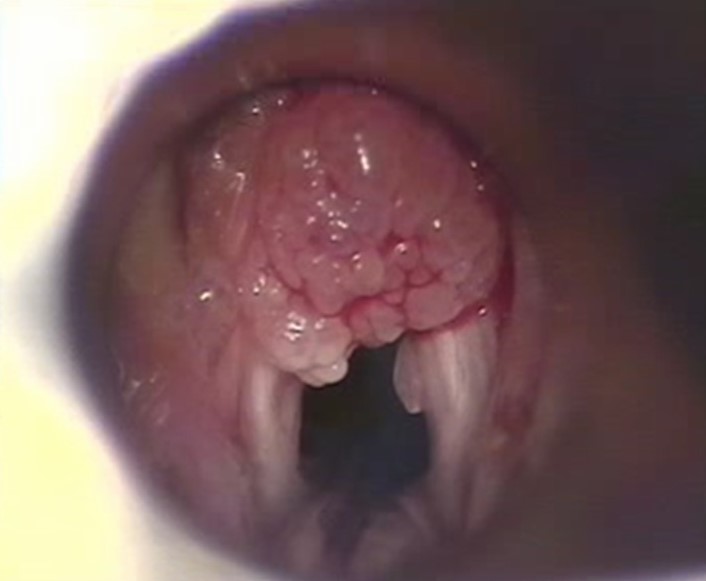
16 y 18
(31, 33, 45, 52 y 58 en EN Erythema nodosum is an immune-mediated panniculitis (inflammation of the subcutaneous fat) caused by a type IV (delayed-type) hypersensitivity reaction. It commonly manifests in young women as tender, erythematous nodules on the shins. Erythema Nodosum personas inmunodeprimidas)
Neoplasia:
  • Cáncer de cuello uterino
  • Cáncer vulvar y vaginal
  • Cáncer de pene
  • Cáncer anal
  • Cáncer orofaríngeo
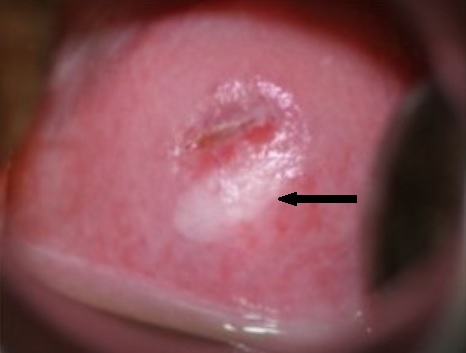
  • Las mutaciones en EN Erythema nodosum is an immune-mediated panniculitis (inflammation of the subcutaneous fat) caused by a type IV (delayed-type) hypersensitivity reaction. It commonly manifests in young women as tender, erythematous nodules on the shins. Erythema Nodosum las células de la mucosa conducen a la displasia.
  • Progresa a carcinoma in situ y carcinoma invasivo

Comparaciones de Virus de ADN Similares

La siguiente tabla compara dos virus Virus Viruses are infectious, obligate intracellular parasites composed of a nucleic acid core surrounded by a protein capsid. Viruses can be either naked (non-enveloped) or enveloped. The classification of viruses is complex and based on many factors, including type and structure of the nucleoid and capsid, the presence of an envelope, the replication cycle, and the host range. Virology de ADN de doble cadena clínicamente similares:

Organismo Virus Virus Viruses are infectious, obligate intracellular parasites composed of a nucleic acid core surrounded by a protein capsid. Viruses can be either naked (non-enveloped) or enveloped. The classification of viruses is complex and based on many factors, including type and structure of the nucleoid and capsid, the presence of an envelope, the replication cycle, and the host range. Virology del papiloma humano Virus Virus Viruses are infectious, obligate intracellular parasites composed of a nucleic acid core surrounded by a protein capsid. Viruses can be either naked (non-enveloped) or enveloped. The classification of viruses is complex and based on many factors, including type and structure of the nucleoid and capsid, the presence of an envelope, the replication cycle, and the host range. Virology del herpes simple
Características
  • No envuelto
  • Circular
  • ADN de doble cadena
  • > 200 genotipos
  • Envuelto
  • Lineal
  • ADN de doble cadena
  • 2 genotipos
Transmisión
  • Contacto directo con la piel
  • Actividad sexual
  • Contacto con saliva Saliva The clear, viscous fluid secreted by the salivary glands and mucous glands of the mouth. It contains mucins, water, organic salts, and ptyalin. Salivary Glands: Anatomy
  • Contacto con lesiones
Cuadro Clínico
  • Verrugas cutáneas
  • Verrugas anogenitales
  • Neoplasias
  • Gingivoestomatitis
  • Herpes genital
  • Panadizo herpético
  • Proctitis Proctitis Inflammation of the mucous membrane of the rectum, the distal end of the large intestine. Chronic Granulomatous Disease
  • Hepatitis
  • Esofagitis
  • Encefalitis y meningitis Meningitis Meningitis is inflammation of the meninges, the protective membranes of the brain, and spinal cord. The causes of meningitis are varied, with the most common being bacterial or viral infection. The classic presentation of meningitis is a triad of fever, altered mental status, and nuchal rigidity. Meningitis aséptica
  • Neumonitis
Diagnóstico
  • Clínico
  • Biopsia
  • Prueba de ADN del VPH
  • Clínico
  • PCR PCR Polymerase chain reaction (PCR) is a technique that amplifies DNA fragments exponentially for analysis. The process is highly specific, allowing for the targeting of specific genomic sequences, even with minuscule sample amounts. The PCR cycles multiple times through 3 phases: denaturation of the template DNA, annealing of a specific primer to the individual DNA strands, and synthesis/elongation of new DNA molecules. Polymerase Chain Reaction (PCR)
  • Cultivo viral
  • Biopsia
  • Pruebas de anticuerpos

Referencias

  1. Nunes, E.M., Talpe-Nunes, V., Sichero, L. (2018) Epidemiology and biology of cutaneous human papillomavirus. Clinics (Sao Paulo); 73(suppl 1):e489s. https://www.ncbi.nlm.nih.gov/pmc/articles/PMC6097087/
  2. Araldi, R.P., Sant’Ana, T.A., Módolo, D.G., de Melo, T.C., Spadacci-Morena, D.D., de Cassia Stocco, R., Cerutti, J.M., de Souza, E.B. (2018). The human papillomavirus (HPV)-related cancer biology: An overview. Biomed Pharmacother. 106, 1537-1556. https://pubmed.ncbi.nlm.nih.gov/30119229/
  3. Van Dyne, E.A., Henley, S.J., Saraiya, M., Thomas, C.C., Markowitz, L.E., Benard, V.B. (2018). Trends in human papillomavirus-associated cancers – United States, 1999-2015. MMWR Morb Mortal Wkly Rep. 67(33), 918-924. https://www.ncbi.nlm.nih.gov/pmc/articles/PMC6107321/
  4. Arrossi, S., Temin, S., Garland, S., Eckert, L.O., Bhatla, N., Castellsagué, X., Alkaff, S.E., Felder, T., Hammouda, D., Konno, R., Lopes, G., Mugisha, E., Murillo, R., Scarinci, I.C., Stanley, M., Tsu, V., Wheeler, C.M., Adewole, I.F., de Sanjosé, S. (2017). Primary Prevention of Cervical Cancer: American Society of Clinical Oncology Resource-Stratified Guideline. J Glob Oncol. 3(5), 611-634. https://www.ncbi.nlm.nih.gov/pmc/articles/PMC5646902/
  5. Palefsky, J.M. (2025, February 25). Human papillomavirus infections: Epidemiology and disease associations. In Hirsch, M.S. & White, N. (Ed.), UpToDate. Retrieved May 5, 2025, from https://www.uptodate.com/contents/human-papillomavirus-infections-epidemiology-and-disease-associations
  6. Palefsky, J.M. (2024, September 11). Virology of human papillomavirus infections and the link to cancer. In Dizon, D.S., Aboulafia, D.M., & White, N. (Ed.), UpToDate. Retrieved May 5, 2025, from https://www.uptodate.com/contents/virology-of-human-papillomavirus-infections-and-the-link-to-cancer
  7. Morris, S.R. (2025, April). Human papillomavirus (HPV) infection. [online] MSD Manual Professional Version. Retrieved May 5, 2025, from https://www.msdmanuals.com/professional/infectious-diseases/sexually-transmitted-diseases-stds/human-papillomavirus-hpv-infection
  8. Luria L, Cardoza-Favarato G. Human Papillomavirus. [Updated 2023 Jan 16]. In: StatPearls [Internet]. Treasure Island (FL): StatPearls Publishing; 2025 Jan-. Available from: https://www.ncbi.nlm.nih.gov/books/NBK448132/
  9. Gearhart, P.A., Randall, T.C., Buckley, Jr., R.M., Higgins, R.V. (2024, August 22). Human papillomavirus (HPV). In Chandrasekar, P.H. (Ed.), Medscape. Retrieved May 5, 2025, from https://emedicine.medscape.com/article/219110-overview
  10. Cox, J.T. & Palefsky, J.M. (2025, April 21). Human papillomavirus vaccination. In Hirsch, M.S., & White, N. (Ed.), UpToDate. Retrieved May 5, 2025, from https://www.uptodate.com/contents/human-papillomavirus-vaccination
  11. Tadese, B. K., You, X., Ndao, T., Tota, J. E., Chen, Y. T., Chowdhary, A., Pan, J., Costa, A. C., & Mugo, N. (2025). The Burden of HPV Infections and HPV-Related Diseases Among People With HIV: A Systematic Literature Review. Journal of medical virology97(4), e70274. https://doi.org/10.1002/jmv.70274
  12. Włoszek, E., Krupa, K., Skrok, E., Budzik, M. P., Deptała, A., & Badowska-Kozakiewicz, A. (2025). HPV and Cervical Cancer—Biology, Prevention, and Treatment Updates. Current Oncology32(3), 122. https://doi.org/10.3390/curroncol32030122
  13. Chen, H., Guo, K., Bai, Z., Lu, L., Liu, B., Zhang, J., Zhong, M., Xu, C., Chen, W., Huang, A., & Ding, Y. (2025). Advances in the Prevention of Cervical Cancer by Anti-Human Papillomavirus Agents. Cancer medicine14(7), e70847. https://doi.org/10.1002/cam4.70847
  14. Ashrafi, G. H., Ozdogan, M., & Cakir, M. O. (2025). Papillomavirus-Induced Oncogenesis: Bridging Molecular Mechanisms, Diagnostics, and Global Prevention Strategies. Viruses17(4), 515. https://doi.org/10.3390/v17040515
  15. Bandi, P., Star, J., Mazzitelli, N., Nargis, N., Islami, F., Siegel, R. L., Yabroff, K. R., & Jemal, A. (2025). Prevalence and Review of Major Modifiable Cancer Risk Factors, HPV Vaccination, and Cancer Screenings in the United States: 2025 Update. Cancer epidemiology, biomarkers & prevention : a publication of the American Association for Cancer Research, cosponsored by the American Society of Preventive Oncology, OF1–OF14. Advance online publication. https://doi.org/10.1158/1055-9965.EPI-24-1835

¡Crea tu cuenta gratis o inicia una sesión para seguir leyendo!

Regístrate ahora y obtén acceso gratuito a Lecturio con páginas de concepto, videos médicos y cuestionarios para tu educación médica.

User Reviews

Que tengas una sesión de estudio alegre y navideña 🎁 Ahorra 50% en todos los planes >>

Details