Domina Conceptos Médicos

Estudia para la escuela de medicina y tus examenes con Lecturio.

Nefropatía por Membrana Basal Delgada

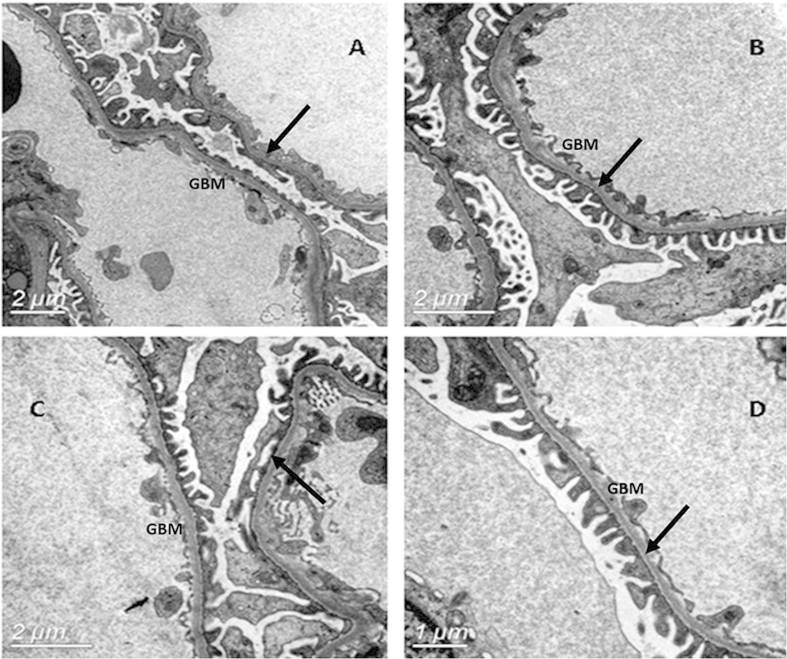
La nefropatía por membrana basal delgada, también llamada hematuria Hematuria Presence of blood in the urine. Renal Cell Carcinoma familiar benigna, es un tipo de síndrome nefrítico causado por el adelgazamiento difuso de la membrana basal glomerular. El síndrome a menudo es familiar y se debe a mutaciones de las cadenas alfa del colágeno tipo IV. La presentación clínica puede variar desde hematuria Hematuria Presence of blood in the urine. Renal Cell Carcinoma microscópica asintomática hasta hematuria Hematuria Presence of blood in the urine. Renal Cell Carcinoma macroscópica, dolor Dolor Inflammation de costado, proteinuria Proteinuria The presence of proteins in the urine, an indicator of kidney diseases. Nephrotic Syndrome in Children e hipertensión. El diagnóstico se realiza mediante evaluación clínica. Rara vez se requiere una biopsia renal, pero mostrará un adelgazamiento difuso de la membrana basal glomerular en EN Erythema nodosum is an immune-mediated panniculitis (inflammation of the subcutaneous fat) caused by a type IV (delayed-type) hypersensitivity reaction. It commonly manifests in young women as tender, erythematous nodules on the shins. Erythema Nodosum el microscopio electrónico. La mayoría de los LOS Neisseria casos son benignos, pero en EN Erythema nodosum is an immune-mediated panniculitis (inflammation of the subcutaneous fat) caused by a type IV (delayed-type) hypersensitivity reaction. It commonly manifests in young women as tender, erythematous nodules on the shins. Erythema Nodosum ciertos casos se pueden usar IECA e ARA.

Last updated: Dec 15, 2025
Editorial responsibility: Stanley Oiseth, Lindsay Jones, Evelin Maza

Descripción General

Epidemiología

  • La frecuencia puede ser de aproximadamente 5%‒9%.
  • Sin embargo, la nefropatía por membrana basal delgada se diagnostica clínicamente en EN Erythema nodosum is an immune-mediated panniculitis (inflammation of the subcutaneous fat) caused by a type IV (delayed-type) hypersensitivity reaction. It commonly manifests in young women as tender, erythematous nodules on the shins. Erythema Nodosum < 1% de la población general.
  • Causa más común de hematuria Hematuria Presence of blood in the urine. Renal Cell Carcinoma persistente

Etiología

  • Herencia autosómica dominante
  • En EN Erythema nodosum is an immune-mediated panniculitis (inflammation of the subcutaneous fat) caused by a type IV (delayed-type) hypersensitivity reaction. It commonly manifests in young women as tender, erythematous nodules on the shins. Erythema Nodosum algunas familias, la nefropatía por membrana basal delgada parece estar causada por mutaciones en EN Erythema nodosum is an immune-mediated panniculitis (inflammation of the subcutaneous fat) caused by a type IV (delayed-type) hypersensitivity reaction. It commonly manifests in young women as tender, erythematous nodules on the shins. Erythema Nodosum:
  • Similar al AL Amyloidosis síndrome de Alport

Fisiopatología

  • Las cadenas alfa-3 y alfa-4 se combinan con la cadena alfa-5 → molécula de colágeno tipo IV (un componente estructural importante de la membrana basal glomerular)
  • Anormalidades en EN Erythema nodosum is an immune-mediated panniculitis (inflammation of the subcutaneous fat) caused by a type IV (delayed-type) hypersensitivity reaction. It commonly manifests in young women as tender, erythematous nodules on the shins. Erythema Nodosum el colágeno tipo IV → adelgazamiento de la membrana basal glomerular

Presentación Clínica

  • La mayoría de los LOS Neisseria pacientes son asintomáticos.
  • Presentación clásica: asintomática, hematuria Hematuria Presence of blood in the urine. Renal Cell Carcinoma microscópica (puede estar persistente o intermitente)
  • Pueden ocurrir episodios de hematuria Hematuria Presence of blood in the urine. Renal Cell Carcinoma macroscópica.
    • A veces precedido por una infección del tracto respiratorio superior
    • Puede asociarse con dolor Dolor Inflammation de costado
  • Presión sanguínea:
    • Generalmente, es normal en EN Erythema nodosum is an immune-mediated panniculitis (inflammation of the subcutaneous fat) caused by a type IV (delayed-type) hypersensitivity reaction. It commonly manifests in young women as tender, erythematous nodules on the shins. Erythema Nodosum la mayoría de los LOS Neisseria pacientes
    • Algunos pueden desarrollar hipertensión.

Diagnóstico y Tratamiento

Diagnóstico

  • El diagnóstico es sospechado por:
    • Presentación y curso benignos
    • Antecedentes familiares positivos de hematuria Hematuria Presence of blood in the urine. Renal Cell Carcinoma
    • Antecedentes familiares negativos de insuficiencia renal
  • Hallazgos de laboratorio:
    • La hematuria Hematuria Presence of blood in the urine. Renal Cell Carcinoma microscópica se puede observar de manera incidental en EN Erythema nodosum is an immune-mediated panniculitis (inflammation of the subcutaneous fat) caused by a type IV (delayed-type) hypersensitivity reaction. It commonly manifests in young women as tender, erythematous nodules on the shins. Erythema Nodosum el análisis de orina de rutina.
      • Intermitente o persistente
      • Eritrocitos dismórficos y cilindros de eritrocitos
    • Proteínas en EN Erythema nodosum is an immune-mediated panniculitis (inflammation of the subcutaneous fat) caused by a type IV (delayed-type) hypersensitivity reaction. It commonly manifests in young women as tender, erythematous nodules on the shins. Erythema Nodosum orina
      • Generalmente normal
      • En EN Erythema nodosum is an immune-mediated panniculitis (inflammation of the subcutaneous fat) caused by a type IV (delayed-type) hypersensitivity reaction. It commonly manifests in young women as tender, erythematous nodules on the shins. Erythema Nodosum algunos individuos se presenta proteinuria Proteinuria The presence of proteins in the urine, an indicator of kidney diseases. Nephrotic Syndrome in Children de leve a moderada.
    • Creatinina
      • Usualmente normal
      • En EN Erythema nodosum is an immune-mediated panniculitis (inflammation of the subcutaneous fat) caused by a type IV (delayed-type) hypersensitivity reaction. It commonly manifests in young women as tender, erythematous nodules on the shins. Erythema Nodosum casos raros, se puede desarrollar insuficiencia renal.
  • Biopsia renal:
    • Generalmente no se realiza
    • Limitado a pacientes con sospecha de nefropatía por membrana basal delgada que también tienen proteinuria Proteinuria The presence of proteins in the urine, an indicator of kidney diseases. Nephrotic Syndrome in Children
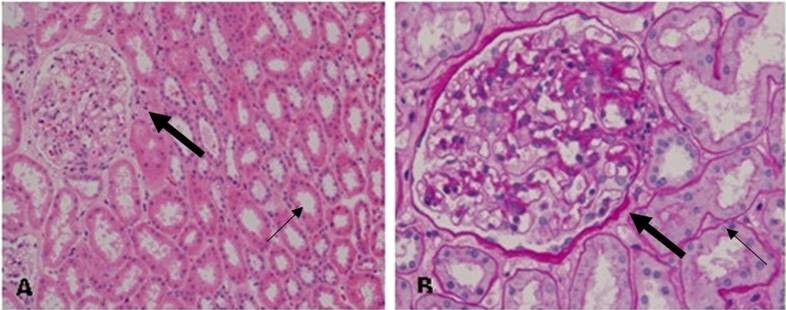
    • La microscopía óptica es insuficiente para el diagnóstico.
    • La microscopía electrónica es necesaria para mostrar un adelgazamiento difuso de la membrana basal glomerular.

Tratamiento y pronóstico

  • La mayoría de los LOS Neisseria casos son benignos y no requieren tratamiento.
  • IECA o ARA:
  • El pronóstico a largo plazo es bueno en EN Erythema nodosum is an immune-mediated panniculitis (inflammation of the subcutaneous fat) caused by a type IV (delayed-type) hypersensitivity reaction. It commonly manifests in young women as tender, erythematous nodules on the shins. Erythema Nodosum la mayoría de los LOS Neisseria casos.
  • Los LOS Neisseria individuos con mutaciones heterozigotas COL4A3/COL4A4 tienen ↑ riesgo para enfermedad renal crónica.

Diagnóstico Diferencial

  • Síndrome de Alport: trastorno genético similar a la nefropatía por membrana basal delgada caracterizado por una mutación en EN Erythema nodosum is an immune-mediated panniculitis (inflammation of the subcutaneous fat) caused by a type IV (delayed-type) hypersensitivity reaction. It commonly manifests in young women as tender, erythematous nodules on the shins. Erythema Nodosum genes Genes A category of nucleic acid sequences that function as units of heredity and which code for the basic instructions for the development, reproduction, and maintenance of organisms. DNA Types and Structure que codifican cadenas alfa del colágeno tipo IV. Los LOS Neisseria pacientes presentan glomerulonefritis, hematuria Hematuria Presence of blood in the urine. Renal Cell Carcinoma, proteinuria Proteinuria The presence of proteins in the urine, an indicator of kidney diseases. Nephrotic Syndrome in Children e hipertensión. Los LOS Neisseria pacientes también pueden tener pérdida auditiva neurosensorial y síntomas oftálmicos, que ayudan a diferenciar esta condición de la nefropatía por membrana basal delgada. El diagnóstico se basa en EN Erythema nodosum is an immune-mediated panniculitis (inflammation of the subcutaneous fat) caused by a type IV (delayed-type) hypersensitivity reaction. It commonly manifests in young women as tender, erythematous nodules on the shins. Erythema Nodosum los LOS Neisseria antecedentes, incluidos los LOS Neisseria antecedentes familiares, análisis de orina y biopsia renal o cutánea. El tratamiento se centra en EN Erythema nodosum is an immune-mediated panniculitis (inflammation of the subcutaneous fat) caused by a type IV (delayed-type) hypersensitivity reaction. It commonly manifests in young women as tender, erythematous nodules on the shins. Erythema Nodosum limitar la progresión de la enfermedad con los LOS Neisseria ARA e IECA.
  • Nefropatía por IgA IgA Represents 15-20% of the human serum immunoglobulins, mostly as the 4-chain polymer in humans or dimer in other mammals. Secretory iga is the main immunoglobulin in secretions. Immunoglobulins: Types and Functions: enfermedad renal caracterizada por el depósito de inmunocomplejos IgA IgA Represents 15-20% of the human serum immunoglobulins, mostly as the 4-chain polymer in humans or dimer in other mammals. Secretory iga is the main immunoglobulin in secretions. Immunoglobulins: Types and Functions en EN Erythema nodosum is an immune-mediated panniculitis (inflammation of the subcutaneous fat) caused by a type IV (delayed-type) hypersensitivity reaction. It commonly manifests in young women as tender, erythematous nodules on the shins. Erythema Nodosum el mesangio. La enfermedad puede manifestarse como hematuria Hematuria Presence of blood in the urine. Renal Cell Carcinoma de progresión lenta, proteinuria Proteinuria The presence of proteins in the urine, an indicator of kidney diseases. Nephrotic Syndrome in Children e insuficiencia renal. El diagnóstico se realiza mediante análisis de orina y biopsia renal. Las opciones de tratamiento incluyen IECA, ARA, corticosteroides e inmunosupresores.
  • Glomerulopatías C3: formas rarass de glomerulonefritis que incluye la enfermedad por depósitos densos y la glomerulonefritis C3. Estas condiciones son el resultado de una regulación anormal de la vía alternativa del complemento. La presentación clínica es variable Variable Variables represent information about something that can change. The design of the measurement scales, or of the methods for obtaining information, will determine the data gathered and the characteristics of that data. As a result, a variable can be qualitative or quantitative, and may be further classified into subgroups. Types of Variables y puede incluir proteinuria Proteinuria The presence of proteins in the urine, an indicator of kidney diseases. Nephrotic Syndrome in Children, hematuria Hematuria Presence of blood in the urine. Renal Cell Carcinoma, insuficiencia renal y/o hipertensión. El diagnóstico se realiza mediante niveles bajos de complemento y biopsia renal. Dado que la condición es poco común, existe escasez de información para guiar la terapia. Sin embargo, el tratamiento puede incluir IECA, ARA y agentes inmunosupresores.
  • Glomerulonefritis postestreptocócica: un tipo autolimitado de glomerulonefritis que se presenta de forma más común en EN Erythema nodosum is an immune-mediated panniculitis (inflammation of the subcutaneous fat) caused by a type IV (delayed-type) hypersensitivity reaction. It commonly manifests in young women as tender, erythematous nodules on the shins. Erythema Nodosum niños. La condición es mediada por complejos inmunitarios, a menudo precedida por faringitis por estreptococos beta-hemolíticos del grupo A o infecciones de la piel. Los LOS Neisseria resultados de laboratorio muestran niveles reducidos de complemento, niveles elevados de antiestreptolisina-O y anti-DNasa B. La inmunofluorescencia revela el depósito de inmunocomplejos granulares a lo largo de la membrana basal glomerular. El tratamiento es de soporte.

Referencias

  1. Glassock, RJ, et al. (Ed.). (2020). Thin basement membrane nephropathy (benign familial hematuria). UpToDate. Retrieved August 10, 2021, from https://www.uptodate.com/contents/thin-basement-membrane-nephropathy-benign-familial-hematuria
  2. O’Brien, F. (2021). Thin basement membrane disease. MSD Manual Professional Version. Retrieved August 10, 2021, from https://www.msdmanuals.com/professional/genitourinary-disorders/glomerular-disorders/thin-basement-membrane-disease
  3. Kashtan, CE, et al. (2020). Isolated and persistent glomerular hematuria in adults. Glassock, RJ, et al. (Eds.), UpToDate. Retrieved August 11, 2021, from https://www.uptodate.com/contents/isolated-and-persistent-glomerular-hematuria-in-adults
  4. Boyer, OG. (2020). Evaluation of microscopic hematuria in children. In Niaudet, P, et al. (Eds.), UpToDate. Retrieved on August 11, 2021, from https://www.uptodate.com/contents/evaluation-of-microscopic-hematuria-in-children

¡Crea tu cuenta gratis o inicia una sesión para seguir leyendo!

Regístrate ahora y obtén acceso gratuito a Lecturio con páginas de concepto, videos médicos y cuestionarios para tu educación médica.

User Reviews

Que tengas una sesión de estudio alegre y navideña 🎁 Ahorra 50% en todos los planes >>

Details