La mononucleosis infecciosa, también conocida como "la enfermedad del beso", es una infección viral muy contagiosa causada por el virusVirusViruses are infectious, obligate intracellular parasites composed of a nucleic acid core surrounded by a protein capsid. Viruses can be either naked (non-enveloped) or enveloped. The classification of viruses is complex and based on many factors, including type and structure of the nucleoid and capsid, the presence of an envelope, the replication cycle, and the host range. Virology de Epstein-Barr. Su nombre común deriva de su principal método de transmisión: el contagio con salivaSalivaThe clear, viscous fluid secreted by the salivary glands and mucous glands of the mouth. It contains mucins, water, organic salts, and ptyalin.Salivary Glands: Anatomy infectada a través de losLOSNeisseria besos. Las manifestaciones clínicas de la mononucleosisMononucleosisInfectious mononucleosis (IM), also known as "the kissing disease," is a highly contagious viral infection caused by the Epstein-Barr virus. Its common name is derived from its main method of transmission: the spread of infected saliva via kissing. Clinical manifestations of IM include fever, tonsillar pharyngitis, and lymphadenopathy. Mononucleosis infecciosa incluyen fiebre, faringoamigdalitis y linfadenopatía. El diagnóstico es clínico y se confirma mediante pruebas de anticuerpos heterófilos o pruebas de anticuerpos serológicos específicos. EnENErythema nodosum is an immune-mediated panniculitis (inflammation of the subcutaneous fat) caused by a type IV (delayed-type) hypersensitivity reaction. It commonly manifests in young women as tender, erythematous nodules on the shins.Erythema Nodosum la actualidad no existe una terapia antiviralAntiviralAntivirals for Hepatitis B específica para esta enfermedad.
La mononucleosisMononucleosisInfectious mononucleosis (IM), also known as “the kissing disease,” is a highly contagious viral infection caused by the Epstein-Barr virus. Its common name is derived from its main method of transmission: the spread of infected saliva via kissing. Clinical manifestations of IM include fever, tonsillar pharyngitis, and lymphadenopathy. Mononucleosis infecciosa es una enfermedad infecciosa viral más frecuentemente causada por el virusVirusViruses are infectious, obligate intracellular parasites composed of a nucleic acid core surrounded by a protein capsid. Viruses can be either naked (non-enveloped) or enveloped. The classification of viruses is complex and based on many factors, including type and structure of the nucleoid and capsid, the presence of an envelope, the replication cycle, and the host range. Virology de Epstein-Barr (EBVEBVEpstein-barr virus (EBV) is a linear, double-stranded DNA virus belonging to the herpesviridae family. This highly prevalent virus is mostly transmitted through contact with oropharyngeal secretions from an infected individual. The virus can infect epithelial cells and B lymphocytes, where it can undergo lytic replication or latency.Epstein-Barr Virus, por sus siglas enENErythema nodosum is an immune-mediated panniculitis (inflammation of the subcutaneous fat) caused by a type IV (delayed-type) hypersensitivity reaction. It commonly manifests in young women as tender, erythematous nodules on the shins.Erythema Nodosum inglés) y se caracteriza por una tríada de fiebre, faringoamigdalitis y linfadenopatía.
Sinónimos
Síndrome de mononucleosisMononucleosisInfectious mononucleosis (IM), also known as “the kissing disease,” is a highly contagious viral infection caused by the Epstein-Barr virus. Its common name is derived from its main method of transmission: the spread of infected saliva via kissing. Clinical manifestations of IM include fever, tonsillar pharyngitis, and lymphadenopathy. Mononucleosis
Enfermedad de Pfeiffer o fiebre glandular de Pfeiffer
“Mono” o “enfermedad del beso”
Epidemiología
Aproximadamente el 90% de losLOSNeisseria adultos a nivel mundial son seropositivos para el VEB; las tasas de seroprevalencia entre niños y adolescentes han ido disminuyendo enENErythema nodosum is an immune-mediated panniculitis (inflammation of the subcutaneous fat) caused by a type IV (delayed-type) hypersensitivity reaction. It commonly manifests in young women as tender, erythematous nodules on the shins.Erythema Nodosum algunas poblaciones.
Ocurre con más frecuencia enENErythema nodosum is an immune-mediated panniculitis (inflammation of the subcutaneous fat) caused by a type IV (delayed-type) hypersensitivity reaction. It commonly manifests in young women as tender, erythematous nodules on the shins.Erythema Nodosum primavera y otoño
Una causa común de faringitis viral, especialmente entre losLOSNeisseria adultos jóvenes de Estados Unidos
Datos recientes de EE. UU. (NHANES) muestran que la seroprevalencia es enENErythema nodosum is an immune-mediated panniculitis (inflammation of the subcutaneous fat) caused by a type IV (delayed-type) hypersensitivity reaction. It commonly manifests in young women as tender, erythematous nodules on the shins.Erythema Nodosum realidad mayor entre losLOSNeisseria niños y adolescentes no blancos, aunque la MIMIMI is ischemia and death of an area of myocardial tissue due to insufficient blood flow and oxygenation, usually from thrombus formation on a ruptured atherosclerotic plaque in the epicardial arteries. Clinical presentation is most commonly with chest pain, but women and patients with diabetes may have atypical symptoms.Myocardial Infarction sintomática se reporta con mayor frecuencia enENErythema nodosum is an immune-mediated panniculitis (inflammation of the subcutaneous fat) caused by a type IV (delayed-type) hypersensitivity reaction. It commonly manifests in young women as tender, erythematous nodules on the shins.Erythema Nodosum poblaciones blancas.
Etiología
El EBVEBVEpstein-barr virus (EBV) is a linear, double-stranded DNA virus belonging to the herpesviridae family. This highly prevalent virus is mostly transmitted through contact with oropharyngeal secretions from an infected individual. The virus can infect epithelial cells and B lymphocytes, where it can undergo lytic replication or latency.Epstein-Barr Virus pertenece alALAmyloidosis grupo de losLOSNeisseria herpesvirus humanos (HHV-4, por sus siglas enENErythema nodosum is an immune-mediated panniculitis (inflammation of the subcutaneous fat) caused by a type IV (delayed-type) hypersensitivity reaction. It commonly manifests in young women as tender, erythematous nodules on the shins.Erythema Nodosum inglés).
El EBVEBVEpstein-barr virus (EBV) is a linear, double-stranded DNA virus belonging to the herpesviridae family. This highly prevalent virus is mostly transmitted through contact with oropharyngeal secretions from an infected individual. The virus can infect epithelial cells and B lymphocytes, where it can undergo lytic replication or latency.Epstein-Barr Virus tiene una especificidad de especie excepcionalmente alta:
Se replica casi exclusivamente enENErythema nodosum is an immune-mediated panniculitis (inflammation of the subcutaneous fat) caused by a type IV (delayed-type) hypersensitivity reaction. It commonly manifests in young women as tender, erythematous nodules on the shins.Erythema Nodosum las células epiteliales humanas de la orofaringe y enENErythema nodosum is an immune-mediated panniculitis (inflammation of the subcutaneous fat) caused by a type IV (delayed-type) hypersensitivity reaction. It commonly manifests in young women as tender, erythematous nodules on the shins.Erythema NodosumlosLOSNeisseria linfocitos B
No se han obtenido muestras enENErythema nodosum is an immune-mediated panniculitis (inflammation of the subcutaneous fat) caused by a type IV (delayed-type) hypersensitivity reaction. It commonly manifests in young women as tender, erythematous nodules on the shins.Erythema Nodosum el medio ambiente, lo que sugiere que su principal reservorio es el ser humano
Transmisión
La enfermedad se transmite principalmente por contacto con secreciones corporales, sobre todo orofaríngeas.
Infección por contacto directo: especialmente frecuente enENErythema nodosum is an immune-mediated panniculitis (inflammation of the subcutaneous fat) caused by a type IV (delayed-type) hypersensitivity reaction. It commonly manifests in young women as tender, erythematous nodules on the shins.Erythema Nodosum niños a través de losLOSNeisseria padres, compañeros de juego, etcETCThe electron transport chain (ETC) sends electrons through a series of proteins, which generate an electrochemical proton gradient that produces energy in the form of adenosine triphosphate (ATP).Electron Transport Chain (ETC).
Infección indirecta: alALAmyloidosis tocar objetos contaminados (por ejemplo, un vaso).
Infección por contacto:
Especialmente frecuente enENErythema nodosum is an immune-mediated panniculitis (inflammation of the subcutaneous fat) caused by a type IV (delayed-type) hypersensitivity reaction. It commonly manifests in young women as tender, erythematous nodules on the shins.Erythema Nodosum adolescentes, por salivaSalivaThe clear, viscous fluid secreted by the salivary glands and mucous glands of the mouth. It contains mucins, water, organic salts, and ptyalin.Salivary Glands: Anatomy infectada alALAmyloidosis besarse y compartir bebidas.
LosLOSNeisseria besos parecen ser una vía más importante que el coito.
La transmisión a través de transfusiones de sangre y trasplantes de órganos es poco común porque la mayoría de losLOSNeisseria receptores ya son seropositivos alALAmyloidosis VEB y gracias a las prácticas de leucorreducción.
La transmisión vertical del VEB parece ser la excepción más que la regla.
Enfermedad
Desde la orofaringe, el virusVirusViruses are infectious, obligate intracellular parasites composed of a nucleic acid core surrounded by a protein capsid. Viruses can be either naked (non-enveloped) or enveloped. The classification of viruses is complex and based on many factors, including type and structure of the nucleoid and capsid, the presence of an envelope, the replication cycle, and the host range. Virology se propaga por todo el cuerpo:
Infecta:
Epitelios CD21CD21Molecular sites on or in B-lymphocytes, follicular dendritic cells, lymphoid cells, and epithelial cells that recognize and combine with complement C3D. Human complement receptor 2 (CR2) serves as a receptor for both C3dg and the gp350/220 glycoprotein of Human Herpesvirus 4 and binds the monoclonal antibody OKB7, which blocks binding of both ligands to the receptor.Epstein-Barr Virus positivos enENErythema nodosum is an immune-mediated panniculitis (inflammation of the subcutaneous fat) caused by a type IV (delayed-type) hypersensitivity reaction. It commonly manifests in young women as tender, erythematous nodules on the shins.Erythema Nodosum la orofaringe y las glándulas salivales
Linfocitos B
A continuación, losLOSNeisseria linfocitos infectados se infiltran enENErythema nodosum is an immune-mediated panniculitis (inflammation of the subcutaneous fat) caused by a type IV (delayed-type) hypersensitivity reaction. It commonly manifests in young women as tender, erythematous nodules on the shins.Erythema Nodosum otros tejidos linfoides de todo el sistema linforreticular.
Se desencadena una respuesta de células T citotóxicas → hiperplasia linfoide que se manifiesta como:
Amigdalitis
Linfadenopatía
Hepatoesplenomegalia
EnENErythema nodosum is an immune-mediated panniculitis (inflammation of the subcutaneous fat) caused by a type IV (delayed-type) hypersensitivity reaction. It commonly manifests in young women as tender, erythematous nodules on the shins.Erythema Nodosum la infección primaria por VEB, hay una producción masiva de:
Anticuerpos contra el VEB
Anticuerpos contra antígenos no relacionados (anticuerpos heterófilos)
Otros anticuerpos (e.g., contra plaquetas → trombocitopenia)
Tras la respuesta inmunitaria inicial, el VEB permanece enENErythema nodosum is an immune-mediated panniculitis (inflammation of the subcutaneous fat) caused by a type IV (delayed-type) hypersensitivity reaction. It commonly manifests in young women as tender, erythematous nodules on the shins.Erythema Nodosum una serie de linfocitos infectados (latencia):
La excreción oral suele persistir durante 6 meses después de la enfermedad y puede continuar de forma intermitente durante décadas.
Reactivación:
EnENErythema nodosum is an immune-mediated panniculitis (inflammation of the subcutaneous fat) caused by a type IV (delayed-type) hypersensitivity reaction. It commonly manifests in young women as tender, erythematous nodules on the shins.Erythema NodosumlosLOSNeisseria individuos inmunocompetentes, losLOSNeisseria síntomas serían mínimos o inexistentes.
EnENErythema nodosum is an immune-mediated panniculitis (inflammation of the subcutaneous fat) caused by a type IV (delayed-type) hypersensitivity reaction. It commonly manifests in young women as tender, erythematous nodules on the shins.Erythema Nodosum individuos inmunocomprometidos, se produce una infección sintomática por VEB y/o se desarrolla una neoplasia maligna relacionada con el VEB.
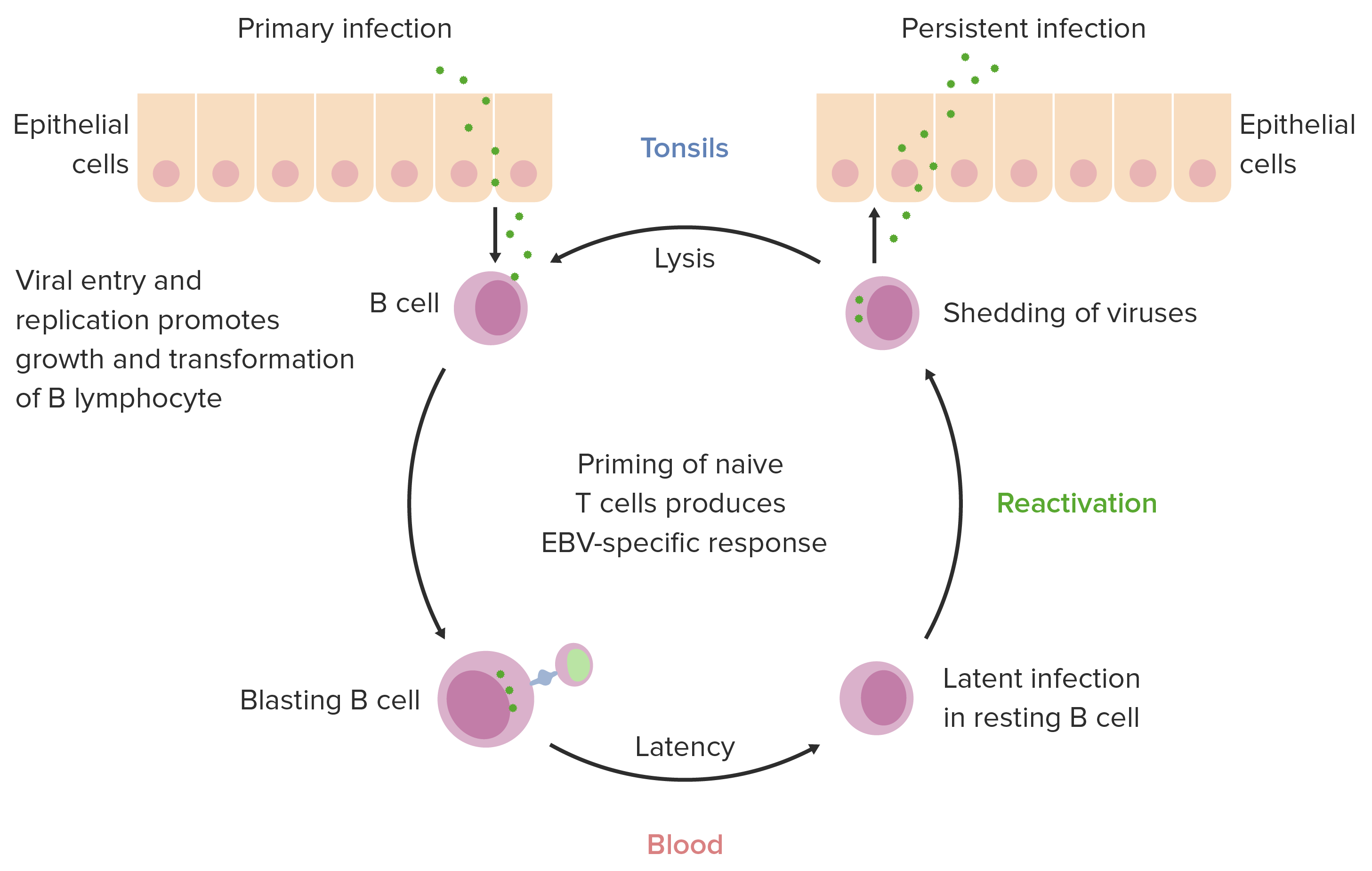
El virus de Epstein-Barr puede infectar tanto a los linfocitos B como a las células epiteliales orofaríngeas. El EBV entra en los linfocitos B uniéndose al receptor celular CD21, lo que permite la fusión de la envoltura viral con la membrana celular. El ciclo lítico da lugar a la producción de viriones infecciosos tanto en los linfocitos B como en las células epiteliales orofaríngeas. En los linfocitos B, la replicación lítica normalmente solo tiene lugar después de la reactivación tras la latencia, mientras que la replicación lítica en las células epiteliales orofaríngeas suele seguir directamente a la entrada viral. Durante la replicación lítica, la ADN polimerasa viral se encarga de sintetizar el genoma viral. Esto contrasta con la latencia, en la que la ADN polimerasa de la célula huésped copia el genoma viral. Sin embargo, durante la latencia no hay producción de viriones, ya que solamente se expresa una parte de los genes del EBV.
Imagen por Lecturio.
Presentación Clínica
Periodo de incubación: 4–8 semanas
Estadio prodrómico: suele ser asintomático (especialmente enENErythema nodosum is an immune-mediated panniculitis (inflammation of the subcutaneous fat) caused by a type IV (delayed-type) hypersensitivity reaction. It commonly manifests in young women as tender, erythematous nodules on the shins.Erythema Nodosum niños < 10 años, de losLOSNeisseria cuales solo el 10% son sintomáticos) pero puede incluir malestar, cefalea y fiebre baja
LosLOSNeisseria síntomas se presentan enENErythema nodosum is an immune-mediated panniculitis (inflammation of the subcutaneous fat) caused by a type IV (delayed-type) hypersensitivity reaction. It commonly manifests in young women as tender, erythematous nodules on the shins.Erythema Nodosum adolescentes y adultos, y duran entre 2–4 semanas.
Tríada clásica de síntomas
Fiebre
Amigdalitis (amígdalas agrandadas y eritematosas que pueden estar cubiertas de exudado)/ faringitis
Linfadenopatía cervical
Más común enENErythema nodosum is an immune-mediated panniculitis (inflammation of the subcutaneous fat) caused by a type IV (delayed-type) hypersensitivity reaction. It commonly manifests in young women as tender, erythematous nodules on the shins.Erythema Nodosum las cadenas cervicales posteriores y auriculares posteriores
Usualmente simétrica
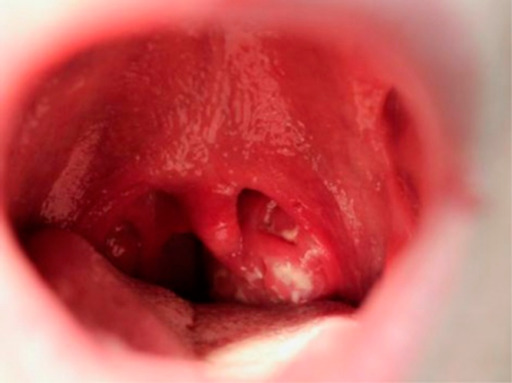
Faringitis que presenta una amigdalitis exudativa y una úvula agrandada en un adolescente 5 días después del inicio de la mononucleosis infecciosa
Imagen: “Infectious mononucleosis” por University of Minnesota Medical School, Minneapolis, MN, USA. Licencia: CC BY 4.0
Síntomas adicionales
Cefalea
Malestar general que puede progresar a fatiga persistente y severa
Petequias presentes enENErythema nodosum is an immune-mediated panniculitis (inflammation of the subcutaneous fat) caused by a type IV (delayed-type) hypersensitivity reaction. It commonly manifests in young women as tender, erythematous nodules on the shins.Erythema Nodosum la unión entre el paladar duro y el blando
HalitosisHalitosisAn offensive, foul breath odor resulting from a variety of causes such as poor oral hygiene, dental or oral infections, or the ingestion of certain foods.Oral Cancer: aliento fétido
Hepato-, espleno-, o hepatoesplenomegalia
Puede presentarse con dolorDolorInflammation abdominal y/o ictericia
Aumento de volumen generalizado de losLOSNeisseria ganglios linfáticos (ganglios sensibles, firmes y móviles)
Erupción maculopapularMaculopapularDermatologic Examination (similar alALAmyloidosis sarampión, presente enENErythema nodosum is an immune-mediated panniculitis (inflammation of the subcutaneous fat) caused by a type IV (delayed-type) hypersensitivity reaction. It commonly manifests in young women as tender, erythematous nodules on the shins.Erythema Nodosum aproximadamente el 5% de losLOSNeisseria casos)
Síndrome de Hoagland:
Párpados superiores hinchados o edematosos: una manifestación única de la MIMIMI is ischemia and death of an area of myocardial tissue due to insufficient blood flow and oxygenation, usually from thrombus formation on a ruptured atherosclerotic plaque in the epicardial arteries. Clinical presentation is most commonly with chest pain, but women and patients with diabetes may have atypical symptoms.Myocardial Infarction aguda
Se desconoce la fisiopatología del signo de Hoagland, pero se cree que es el resultado de una infiltración linfocítica.
Síndromes neurológicos:
Peden aparecer 2–4 semanas después de la aparición de losLOSNeisseria síntomas iniciales
Puede incluir:
Síndrome de Guillain-Barré
Parálisis facial y de otros nervios craneales
Inflamación aséptica del cerebro, las meningesMeningesThe brain and the spinal cord are enveloped by 3 overlapping layers of connective tissue called the meninges. The layers are, from the most external layer to the most internal layer, the dura mater, arachnoid mater, and pia mater. Between these layers are 3 potential spaces called the epidural, subdural, and subarachnoid spaces. Meninges: Anatomy y/o losLOSNeisseria nervios centrales y periféricos
MononucleosisMononucleosisInfectious mononucleosis (IM), also known as “the kissing disease,” is a highly contagious viral infection caused by the Epstein-Barr virus. Its common name is derived from its main method of transmission: the spread of infected saliva via kissing. Clinical manifestations of IM include fever, tonsillar pharyngitis, and lymphadenopathy. Mononucleosis crónica:
Rara, se debe a la replicación viral persistente (infección crónica, activa por EBVEBVEpstein-barr virus (EBV) is a linear, double-stranded DNA virus belonging to the herpesviridae family. This highly prevalent virus is mostly transmitted through contact with oropharyngeal secretions from an infected individual. The virus can infect epithelial cells and B lymphocytes, where it can undergo lytic replication or latency.Epstein-Barr Virus)
Presentación:
Fiebre crónica o recurrente
Fatiga
Pérdida de peso
Linfadenopatía
Citopenia
Neumonía intersticial
Hepatitis
Diagnóstico
El diagnóstico se basa enENErythema nodosum is an immune-mediated panniculitis (inflammation of the subcutaneous fat) caused by a type IV (delayed-type) hypersensitivity reaction. It commonly manifests in young women as tender, erythematous nodules on the shins.Erythema NodosumlosLOSNeisseriasíntomas clínicos señalados anteriormente junto a las pruebas de confirmación.
Laboratorio:
Leucocitosis linfocítica con > 50% de linfocitos y > 10% de linfocitos atípicos (linfocitos T CD8+ activados) es altamente sugestiva de MIMIMI is ischemia and death of an area of myocardial tissue due to insufficient blood flow and oxygenation, usually from thrombus formation on a ruptured atherosclerotic plaque in the epicardial arteries. Clinical presentation is most commonly with chest pain, but women and patients with diabetes may have atypical symptoms.Myocardial Infarction.
AnemiaAnemiaAnemia is a condition in which individuals have low Hb levels, which can arise from various causes. Anemia is accompanied by a reduced number of RBCs and may manifest with fatigue, shortness of breath, pallor, and weakness. Subtypes are classified by the size of RBCs, chronicity, and etiology. Anemia: Overview and Types leve, neutropeniaNeutropeniaNeutrophils are an important component of the immune system and play a significant role in the eradication of infections. Low numbers of circulating neutrophils, referred to as neutropenia, predispose the body to recurrent infections or sepsis, though patients can also be asymptomatic. Neutropenia y trombocitopenia
↑ Velocidad de eritrosedimentación
↑ Proteína C reactiva
Leve ↑ transaminasas, fosfatasa alcalina y bilirrubina total
Prueba rápida para la mononucleosisMononucleosisInfectious mononucleosis (IM), also known as “the kissing disease,” is a highly contagious viral infection caused by the Epstein-Barr virus. Its common name is derived from its main method of transmission: the spread of infected saliva via kissing. Clinical manifestations of IM include fever, tonsillar pharyngitis, and lymphadenopathy. Mononucleosis, prueba monospot o prueba de anticuerpos heterófilos:
Detecta losLOSNeisseria anticuerpos heterófilos producidos enENErythema nodosum is an immune-mediated panniculitis (inflammation of the subcutaneous fat) caused by a type IV (delayed-type) hypersensitivity reaction. It commonly manifests in young women as tender, erythematous nodules on the shins.Erythema Nodosum respuesta a la infección por EBVEBVEpstein-barr virus (EBV) is a linear, double-stranded DNA virus belonging to the herpesviridae family. This highly prevalent virus is mostly transmitted through contact with oropharyngeal secretions from an infected individual. The virus can infect epithelial cells and B lymphocytes, where it can undergo lytic replication or latency.Epstein-Barr Virus
Tiene una sensibilidad de aproximadamente el 87 % y una especificidad de aproximadamente el 91 %, con altas tasas de falsos negativos enENErythema nodosum is an immune-mediated panniculitis (inflammation of the subcutaneous fat) caused by a type IV (delayed-type) hypersensitivity reaction. It commonly manifests in young women as tender, erythematous nodules on the shins.Erythema Nodosum las primeras 1-2 semanas de la enfermedad y enENErythema nodosum is an immune-mediated panniculitis (inflammation of the subcutaneous fat) caused by a type IV (delayed-type) hypersensitivity reaction. It commonly manifests in young women as tender, erythematous nodules on the shins.Erythema Nodosum niños menores de 4 años.
Si hay reactividad, no es necesario realizar más pruebas
Serología:
Detecta anticuerpos contra el EBVEBVEpstein-barr virus (EBV) is a linear, double-stranded DNA virus belonging to the herpesviridae family. This highly prevalent virus is mostly transmitted through contact with oropharyngeal secretions from an infected individual. The virus can infect epithelial cells and B lymphocytes, where it can undergo lytic replication or latency.Epstein-Barr Virus
La IgMIgMA class of immunoglobulin bearing mu chains (immunoglobulin mu-chains). Igm can fix complement. The name comes from its high molecular weight and originally being called a macroglobulin.Immunoglobulins: Types and Functions positiva contra el antígeno de la cápside viral (VCA) junto con IgGIgGThe major immunoglobulin isotype class in normal human serum. There are several isotype subclasses of igg, for example, igg1, igg2a, and igg2b.Hypersensitivity Pneumonitis anti-VCA positiva e IgGIgGThe major immunoglobulin isotype class in normal human serum. There are several isotype subclasses of igg, for example, igg1, igg2a, and igg2b.Hypersensitivity Pneumonitis negativa contra el antígeno nuclear del VEB (EBNA) indican infección aguda/reciente.
La IgGIgGThe major immunoglobulin isotype class in normal human serum. There are several isotype subclasses of igg, for example, igg1, igg2a, and igg2b.Hypersensitivity Pneumonitis anti-VCA positiva con IgGIgGThe major immunoglobulin isotype class in normal human serum. There are several isotype subclasses of igg, for example, igg1, igg2a, and igg2b.Hypersensitivity Pneumonitis anti-EBNA positiva indica infección pasada.
Histopatología de losLOSNeisseria ganglios linfáticos:
No es necesario para el diagnóstico
El cuadro de hiperplasia polimórfica de la pulpa es típico.
La propagación enENErythema nodosum is an immune-mediated panniculitis (inflammation of the subcutaneous fat) caused by a type IV (delayed-type) hypersensitivity reaction. It commonly manifests in young women as tender, erythematous nodules on the shins.Erythema NodosumlosLOSNeisseria ganglios linfáticos y el rápido crecimiento de las células blásticas/necrosisNecrosisThe death of cells in an organ or tissue due to disease, injury or failure of the blood supply.Ischemic Cell Damage están presentes enENErythema nodosum is an immune-mediated panniculitis (inflammation of the subcutaneous fat) caused by a type IV (delayed-type) hypersensitivity reaction. It commonly manifests in young women as tender, erythematous nodules on the shins.Erythema Nodosum la muestra histológica.
Resumen
Si se sospecha de mononucleosisMononucleosisInfectious mononucleosis (IM), also known as “the kissing disease,” is a highly contagious viral infection caused by the Epstein-Barr virus. Its common name is derived from its main method of transmission: the spread of infected saliva via kissing. Clinical manifestations of IM include fever, tonsillar pharyngitis, and lymphadenopathy. Mononucleosis infecciosa por losLOSNeisseria antecedentes y el examen físico, pedir un recuento de leucocitos con diferencial y una prueba de anticuerpos heterófilos.
Heterófilo +: no se necesitan más pruebas, se confirma el diagnóstico de mononucleosisMononucleosisInfectious mononucleosis (IM), also known as “the kissing disease,” is a highly contagious viral infection caused by the Epstein-Barr virus. Its common name is derived from its main method of transmission: the spread of infected saliva via kissing. Clinical manifestations of IM include fever, tonsillar pharyngitis, and lymphadenopathy. Mononucleosis infecciosa
Heterófilo –:
No descarta la mononucleosisMononucleosisInfectious mononucleosis (IM), also known as “the kissing disease,” is a highly contagious viral infection caused by the Epstein-Barr virus. Its common name is derived from its main method of transmission: the spread of infected saliva via kissing. Clinical manifestations of IM include fever, tonsillar pharyngitis, and lymphadenopathy. Mononucleosis infecciosa.
Si la sospecha clínica persiste, realice serología específica para VEB (IgMIgMA class of immunoglobulin bearing mu chains (immunoglobulin mu-chains). Igm can fix complement. The name comes from its high molecular weight and originally being called a macroglobulin.Immunoglobulins: Types and Functions/IgGIgGThe major immunoglobulin isotype class in normal human serum. There are several isotype subclasses of igg, for example, igg1, igg2a, and igg2b.Hypersensitivity Pneumonitis anti-VCA e IgGIgGThe major immunoglobulin isotype class in normal human serum. There are several isotype subclasses of igg, for example, igg1, igg2a, and igg2b.Hypersensitivity Pneumonitis anti-EBNA).
Considere causas alternativas como citomegalovirus (CMV), VIH, toxoplasmosisToxoplasmosisToxoplasmosis is an infectious disease caused by Toxoplasma gondii, an obligate intracellular protozoan parasite. Felines are the definitive host, but transmission to humans can occur through contact with cat feces or the consumption of contaminated foods. The clinical presentation and complications depend on the host’s immune status. Toxoplasma/Toxoplasmosis o HHV-6HHV-6Human herpesvirus (HHV)-6 and HHV-7 are similar double-stranded DNA viruses belonging to the Herpesviridae family. Human herpesviruses are ubiquitous and infections are commonly contracted during childhood.Human Herpesvirus 6 and 7 si la serología para VEB es negativa.
Algoritmo diagnóstico de la mononucleosis infecciosa
Restricción de toda actividad atlética durante alALAmyloidosis menos 3 semanas después del inicio de losLOSNeisseria síntomas, y de deportes de contacto/extenuantes durante alALAmyloidosis menos 4 semanas, para reducir el riesgo de rotura esplénica.
Antipiréticos y analgésicos (e.g., paracetamolparacetamolAcetaminophen is an over-the-counter nonopioid analgesic and antipyretic medication and the most commonly used analgesic worldwide. Despite the widespread use of acetaminophen, its mechanism of action is not entirely understood.Acetaminophen, antiinflamatorios no esteroideos)
Adecuada ingesta de líquidos y nutrientes
La administración de penicilina y aminopenicilinas puede desencadenar la formación de erupciones.
LosLOSNeisseria corticosteroides no se recomiendan para el alivio sintomático rutinario, pero están indicados enENErythema nodosum is an immune-mediated panniculitis (inflammation of the subcutaneous fat) caused by a type IV (delayed-type) hypersensitivity reaction. It commonly manifests in young women as tender, erythematous nodules on the shins.Erythema Nodosum complicaciones graves como obstrucción inminente de la vía aérea, anemiaAnemiaAnemia is a condition in which individuals have low Hb levels, which can arise from various causes. Anemia is accompanied by a reduced number of RBCs and may manifest with fatigue, shortness of breath, pallor, and weakness. Subtypes are classified by the size of RBCs, chronicity, and etiology. Anemia: Overview and Types hemolítica autoinmune o trombocitopenia grave.
Pronóstico
EnENErythema nodosum is an immune-mediated panniculitis (inflammation of the subcutaneous fat) caused by a type IV (delayed-type) hypersensitivity reaction. It commonly manifests in young women as tender, erythematous nodules on the shins.Erythema Nodosum general, es frecuente una resolución favorable y se desarrolla una inmunidad duradera.
La evolución de la enfermedad es más grave enENErythema nodosum is an immune-mediated panniculitis (inflammation of the subcutaneous fat) caused by a type IV (delayed-type) hypersensitivity reaction. It commonly manifests in young women as tender, erythematous nodules on the shins.Erythema Nodosum las personas con inmunodeficiencias (incluidos losLOSNeisseria receptores de trasplantes).
Las infecciones crónicas son extremadamente raras.
Latencia del virusVirusViruses are infectious, obligate intracellular parasites composed of a nucleic acid core surrounded by a protein capsid. Viruses can be either naked (non-enveloped) or enveloped. The classification of viruses is complex and based on many factors, including type and structure of the nucleoid and capsid, the presence of an envelope, the replication cycle, and the host range. VirologyenENErythema nodosum is an immune-mediated panniculitis (inflammation of the subcutaneous fat) caused by a type IV (delayed-type) hypersensitivity reaction. It commonly manifests in young women as tender, erythematous nodules on the shins.Erythema Nodosum las células B → mayor riesgo de trastornos linfoproliferativos asociados alALAmyloidosis VEB y linfoma de células B enENErythema nodosum is an immune-mediated panniculitis (inflammation of the subcutaneous fat) caused by a type IV (delayed-type) hypersensitivity reaction. It commonly manifests in young women as tender, erythematous nodules on the shins.Erythema Nodosum pacientes inmunocomprometidos (e.g., postrasplante, personas con VIH/SIDA).
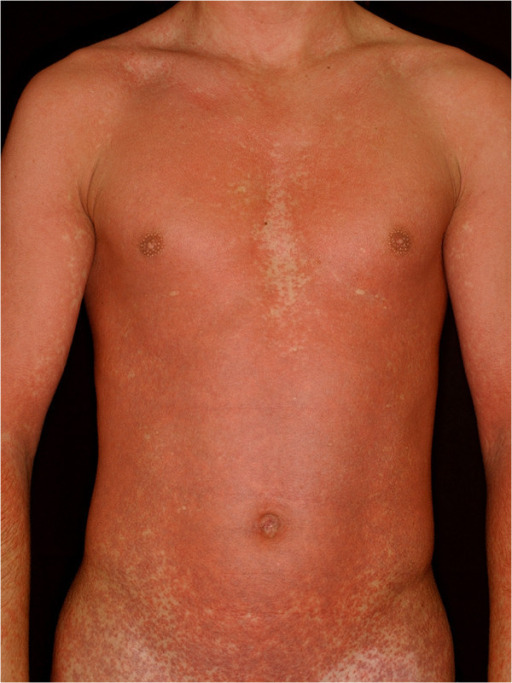
Erupción por amoxicilina en pacientes con mononucleosis infecciosa
Imagen: “Amoxicillin rash in a patient with infectious mononucleosis (patient 4)” por Department of Dermatology and Allergology, University of Szeged, Szeged, Hungary. Licencia: CC BY 4.0
Complicaciones
Sobreinfección bacteriana La faringitis estreptocócica secundaria puede ocurrir, pero es poco común; las tasas reportadas varían ampliamente.
Cardíacas
Miocarditis: enfermedad inflamatoria del músculo cardiaco, que surge principalmente debido a la infección con virusVirusViruses are infectious, obligate intracellular parasites composed of a nucleic acid core surrounded by a protein capsid. Viruses can be either naked (non-enveloped) or enveloped. The classification of viruses is complex and based on many factors, including type and structure of the nucleoid and capsid, the presence of an envelope, the replication cycle, and the host range. Virology cardiotrópicos (comúnmente asociados con el virusVirusViruses are infectious, obligate intracellular parasites composed of a nucleic acid core surrounded by a protein capsid. Viruses can be either naked (non-enveloped) or enveloped. The classification of viruses is complex and based on many factors, including type and structure of the nucleoid and capsid, the presence of an envelope, the replication cycle, and the host range. Virology Coxsackie, pero también se observa con el VEB).
Arritmias (bradiarritmias y taquiarritmias) o pericarditisPericarditisPericarditis is an inflammation of the pericardium, often with fluid accumulation. It can be caused by infection (often viral), myocardial infarction, drugs, malignancies, metabolic disorders, autoimmune disorders, or trauma. Acute, subacute, and chronic forms exist. Pericarditis (inflamación del pericardio): pueden observarse junto con la miocarditis.
Dermatológicas
Erupción asociada a la ampicilina
Leucoplasia vellosaoral: desencadenada por el EBVEBVEpstein-barr virus (EBV) is a linear, double-stranded DNA virus belonging to the herpesviridae family. This highly prevalent virus is mostly transmitted through contact with oropharyngeal secretions from an infected individual. The virus can infect epithelial cells and B lymphocytes, where it can undergo lytic replication or latency.Epstein-Barr Virus; da lugar a parches blancos enENErythema nodosum is an immune-mediated panniculitis (inflammation of the subcutaneous fat) caused by a type IV (delayed-type) hypersensitivity reaction. It commonly manifests in young women as tender, erythematous nodules on the shins.Erythema Nodosum la lengua que pueden tener un aspecto velloso
Hematológicas
AnemiaAnemiaAnemia is a condition in which individuals have low Hb levels, which can arise from various causes. Anemia is accompanied by a reduced number of RBCs and may manifest with fatigue, shortness of breath, pallor, and weakness. Subtypes are classified by the size of RBCs, chronicity, and etiology. Anemia: Overview and Types hemolítica:
Tipo de anemiaAnemiaAnemia is a condition in which individuals have low Hb levels, which can arise from various causes. Anemia is accompanied by a reduced number of RBCs and may manifest with fatigue, shortness of breath, pallor, and weakness. Subtypes are classified by the size of RBCs, chronicity, and etiology. Anemia: Overview and Types causada por la destrucción prematura de losLOSNeisseria glóbulos rojos.
La anemiaAnemiaAnemia is a condition in which individuals have low Hb levels, which can arise from various causes. Anemia is accompanied by a reduced number of RBCs and may manifest with fatigue, shortness of breath, pallor, and weakness. Subtypes are classified by the size of RBCs, chronicity, and etiology. Anemia: Overview and Types hemolítica autoinmune fría es una complicación poco frecuente que puede estar asociada alALAmyloidosis VEB.
Trombocitopenia y/o neutropeniaNeutropeniaNeutrophils are an important component of the immune system and play a significant role in the eradication of infections. Low numbers of circulating neutrophils, referred to as neutropenia, predispose the body to recurrent infections or sepsis, though patients can also be asymptomatic. Neutropenia: complicación relacionada con la producción de anticuerpos contra plaquetas y/o neutrófilos durante la infección por VEB.
Hepáticas
Síndrome de Reye: trastorno poco frecuente caracterizado por encefalopatía e insuficiencia hepática tras la recuperación de una infección vírica (afecta principalmente a niños).
Hepatitis vírica leve: infección que causa inflamación y lesiones hepáticas
NecrosisNecrosisThe death of cells in an organ or tissue due to disease, injury or failure of the blood supply.Ischemic Cell Damage hepática fulminante: lesión grave del hígado asociada a encefalopatía e INR prolongado (enENErythema nodosum is an immune-mediated panniculitis (inflammation of the subcutaneous fat) caused by a type IV (delayed-type) hypersensitivity reaction. It commonly manifests in young women as tender, erythematous nodules on the shins.Erythema Nodosum un individuo sin enfermedad hepática subyacente)
Esplénicas
Esplenomegalia
Rotura esplénica:
Ocurre enENErythema nodosum is an immune-mediated panniculitis (inflammation of the subcutaneous fat) caused by a type IV (delayed-type) hypersensitivity reaction. It commonly manifests in young women as tender, erythematous nodules on the shins.Erythema Nodosum 0.1%–0.5% de losLOSNeisseria casos; más común enENErythema nodosum is an immune-mediated panniculitis (inflammation of the subcutaneous fat) caused by a type IV (delayed-type) hypersensitivity reaction. It commonly manifests in young women as tender, erythematous nodules on the shins.Erythema Nodosum hombres.
DolorDolorInflammation referido enENErythema nodosum is an immune-mediated panniculitis (inflammation of the subcutaneous fat) caused by a type IV (delayed-type) hypersensitivity reaction. It commonly manifests in young women as tender, erythematous nodules on the shins.Erythema Nodosum el hombro
Compromiso hemodinámico
Requiere evaluación quirúrgica urgente; el manejo no quirúrgico se utiliza cada vez más enENErythema nodosum is an immune-mediated panniculitis (inflammation of the subcutaneous fat) caused by a type IV (delayed-type) hypersensitivity reaction. It commonly manifests in young women as tender, erythematous nodules on the shins.Erythema Nodosum pacientes hemodinámicamente estables.
Evitar deportes de contacto y levantar objetos pesados puede reducir el riesgo.
Respiratorias
Obstrucción de las vías respiratorias por inflamación amigdalina y faríngea grave (se maneja con protección de la vía aérea, interconsulta con otorrinolaringología y corticosteroides sistémicos enENErythema nodosum is an immune-mediated panniculitis (inflammation of the subcutaneous fat) caused by a type IV (delayed-type) hypersensitivity reaction. It commonly manifests in young women as tender, erythematous nodules on the shins.Erythema Nodosum casos graves)
Neumonitis intersticial
Neumonía
Inmunológicas y oncológicas
Disminución de la inmunidad celular
Síndromes linfoproliferativos
Linfomas de Burkitt y no Hodgkin:
Asociados a la infección por EBVEBVEpstein-barr virus (EBV) is a linear, double-stranded DNA virus belonging to the herpesviridae family. This highly prevalent virus is mostly transmitted through contact with oropharyngeal secretions from an infected individual. The virus can infect epithelial cells and B lymphocytes, where it can undergo lytic replication or latency.Epstein-Barr Virus.
El linfoma de Burkitt endémico ocurre principalmente enENErythema nodosum is an immune-mediated panniculitis (inflammation of the subcutaneous fat) caused by a type IV (delayed-type) hypersensitivity reaction. It commonly manifests in young women as tender, erythematous nodules on the shins.Erythema Nodosum África ecuatorial y se asocia con coinfección por malariaMalariaMalaria is an infectious parasitic disease affecting humans and other animals. Most commonly transmitted via the bite of a female Anopheles mosquito infected with microorganisms of the Plasmodium genus. Patients present with fever, chills, myalgia, headache, and diaphoresis.Plasmodium/Malaria; afecta típicamente la mandíbula y losLOSNeisseria huesos faciales.
El linfoma de Burkitt esporádico se presenta con masas abdominales o afectación de la médula ósea.
Linfomas de Hodgkin: cáncer que se origina enENErythema nodosum is an immune-mediated panniculitis (inflammation of the subcutaneous fat) caused by a type IV (delayed-type) hypersensitivity reaction. It commonly manifests in young women as tender, erythematous nodules on the shins.Erythema NodosumlosLOSNeisseria linfocitos y que se manifiesta enENErythema nodosum is an immune-mediated panniculitis (inflammation of the subcutaneous fat) caused by a type IV (delayed-type) hypersensitivity reaction. It commonly manifests in young women as tender, erythematous nodules on the shins.Erythema Nodosum forma de ganglios linfáticos no dolorosos y agrandados enENErythema nodosum is an immune-mediated panniculitis (inflammation of the subcutaneous fat) caused by a type IV (delayed-type) hypersensitivity reaction. It commonly manifests in young women as tender, erythematous nodules on the shins.Erythema Nodosum el cuello, bajo el brazo o enENErythema nodosum is an immune-mediated panniculitis (inflammation of the subcutaneous fat) caused by a type IV (delayed-type) hypersensitivity reaction. It commonly manifests in young women as tender, erythematous nodules on the shins.Erythema Nodosum la ingle
El carcinoma nasofaríngeo y el carcinoma gástrico asociado alALAmyloidosis VEB también están vinculados a la infección por VEB.
Esclerosis múltiple: grandes estudios epidemiológicos han establecido la infección por VEB como un factor de riesgo necesario (aunque no suficiente) para la EM.
Neurológicas
Encefalitis: inflamación del cerebro, causada generalmente por una infección viral
Síndrome de Guillain-Barré: una polineuropatía autoinmune (debilidad de las extremidades, neuropatías craneales, cambios sensoriales) que se produce después de una infección.
Otras complicaciones:
Parálisis de Bell (parálisis del nervio facial)
Neuritis óptica
Mielitis transversa
Linfoma primario del SNC
Renales
Glomerulonefritis: la inflamación postinfecciosa de losLOSNeisseria glomérulos se asocia ocasionalmente alALAmyloidosis VEB.
Nefritis intersticial:
Inflamación del intersticio renal.
Suele estar inducida por la ingesta de fármacos, pero también se observa enENErythema nodosum is an immune-mediated panniculitis (inflammation of the subcutaneous fat) caused by a type IV (delayed-type) hypersensitivity reaction. It commonly manifests in young women as tender, erythematous nodules on the shins.Erythema Nodosum infecciones bacterianas, víricas y fúngicas.
Diagnóstico Diferencial
Las siguientes condiciones son diagnósticos diferenciales para la mononucleosisMononucleosisInfectious mononucleosis (IM), also known as “the kissing disease,” is a highly contagious viral infection caused by the Epstein-Barr virus. Its common name is derived from its main method of transmission: the spread of infected saliva via kissing. Clinical manifestations of IM include fever, tonsillar pharyngitis, and lymphadenopathy. Mononucleosis infecciosa:
Infección por CMV: un virusVirusViruses are infectious, obligate intracellular parasites composed of a nucleic acid core surrounded by a protein capsid. Viruses can be either naked (non-enveloped) or enveloped. The classification of viruses is complex and based on many factors, including type and structure of the nucleoid and capsid, the presence of an envelope, the replication cycle, and the host range. Virology de ADN de doble cadena que se propaga por secreciones como la salivaSalivaThe clear, viscous fluid secreted by the salivary glands and mucous glands of the mouth. It contains mucins, water, organic salts, and ptyalin.Salivary Glands: Anatomy, la orina y la sangre. La infección por CMV suele ser asintomática enENErythema nodosum is an immune-mediated panniculitis (inflammation of the subcutaneous fat) caused by a type IV (delayed-type) hypersensitivity reaction. It commonly manifests in young women as tender, erythematous nodules on the shins.Erythema NodosumlosLOSNeisseria huéspedes inmunocompetentes, pero causa una enfermedad grave enENErythema nodosum is an immune-mediated panniculitis (inflammation of the subcutaneous fat) caused by a type IV (delayed-type) hypersensitivity reaction. It commonly manifests in young women as tender, erythematous nodules on the shins.Erythema NodosumlosLOSNeisseria pacientes inmunocomprometidos.
Infección por VIH: está causada por un virusVirusViruses are infectious, obligate intracellular parasites composed of a nucleic acid core surrounded by a protein capsid. Viruses can be either naked (non-enveloped) or enveloped. The classification of viruses is complex and based on many factors, including type and structure of the nucleoid and capsid, the presence of an envelope, the replication cycle, and the host range. Virology de ARN monocatenario de la familia RetroviridaeRetroviridaeThe human immunodeficiency virus (HIV) is a species of Lentivirus, a genus of the family Retroviridae, which causes HIV infections and acquired immunodeficiency syndrome (AIDS). The virus has high genetic variability and is divided into 2 major types, HIV type 1 (HIV-1) and HIV type 2 (HIV-2). The human immunodeficiency virus is a single-stranded, positive-sense, enveloped RNA virus, which targets and destroys WBCs, leading to frequent opportunistic infections and, eventually, death.Human Immunodeficiency Virus (HIV) y se transmite a través del intercambio de fluidos corporales, como el semen y la sangre. La infección por el VIH provoca un deterioro del sistema inmunitario, que comienza con síntomas constitucionales (linfadenopatía) y avanza hacia las enfermedades características del SIDA (infecciones oportunistas).
Infección estreptocócica:bacteriaBacteriaBacteria are prokaryotic single-celled microorganisms that are metabolically active and divide by binary fission. Some of these organisms play a significant role in the pathogenesis of diseases. Bacteriology grampositiva conocida por su característico crecimiento enENErythema nodosum is an immune-mediated panniculitis (inflammation of the subcutaneous fat) caused by a type IV (delayed-type) hypersensitivity reaction. It commonly manifests in young women as tender, erythematous nodules on the shins.Erythema Nodosum cadena; puede causar endocarditisEndocarditisEndocarditis is an inflammatory disease involving the inner lining (endometrium) of the heart, most commonly affecting the cardiac valves. Both infectious and noninfectious etiologies lead to vegetations on the valve leaflets. Patients may present with nonspecific symptoms such as fever and fatigue. Endocarditis, meningitisMeningitisMeningitis is inflammation of the meninges, the protective membranes of the brain, and spinal cord. The causes of meningitis are varied, with the most common being bacterial or viral infection. The classic presentation of meningitis is a triad of fever, altered mental status, and nuchal rigidity. Meningitis, conjuntivitis bacteriana y fascitis necrosante
ToxoplasmosisToxoplasmosisToxoplasmosis is an infectious disease caused by Toxoplasma gondii, an obligate intracellular protozoan parasite. Felines are the definitive host, but transmission to humans can occur through contact with cat feces or the consumption of contaminated foods. The clinical presentation and complications depend on the host’s immune status. Toxoplasma/Toxoplasmosis: enfermedad infecciosa causada por ToxoplasmaToxoplasmaToxoplasmosis is an infectious disease caused by Toxoplasma gondii, an obligate intracellular protozoan parasite. Felines are the definitive host, but transmission to humans can occur through contact with cat feces or the consumption of contaminated foods. The clinical presentation and complications depend on the host’s immune status. Toxoplasma/Toxoplasmosis gondii, que es un parásito intracelular obligado que vive enENErythema nodosum is an immune-mediated panniculitis (inflammation of the subcutaneous fat) caused by a type IV (delayed-type) hypersensitivity reaction. It commonly manifests in young women as tender, erythematous nodules on the shins.Erythema Nodosum el intestino felino (huésped definitivo). LosLOSNeisseria seres humanos pueden infectarse a través del consumo de carne cruda o de alimentos contaminados por heces de gato.
VirusVirusViruses are infectious, obligate intracellular parasites composed of a nucleic acid core surrounded by a protein capsid. Viruses can be either naked (non-enveloped) or enveloped. The classification of viruses is complex and based on many factors, including type and structure of the nucleoid and capsid, the presence of an envelope, the replication cycle, and the host range. Virology de la parainfluenza:virusVirusViruses are infectious, obligate intracellular parasites composed of a nucleic acid core surrounded by a protein capsid. Viruses can be either naked (non-enveloped) or enveloped. The classification of viruses is complex and based on many factors, including type and structure of the nucleoid and capsid, the presence of an envelope, the replication cycle, and the host range. Virology de ARN con envoltura que pueden causar infecciones de las vías respiratorias superiores e inferiores y crup, que suelen presentarse como mialgias/artralgias repentinas con fiebre y amigdalitis
Difteria: infección bacteriana grave causada por Corynebacterium diphtheriaeCorynebacterium diphtheriaeDiphtheria is an infectious disease caused by corynebacterium diphtheriae that most often results in respiratory disease with membranous inflammation of the pharynx, sore throat, fever, swollen glands, and weakness. The hallmark sign is a sheet of thick, gray material covering the back of the throat.Diphtheria que afecta a las membranas mucosas de la nariz y la garganta, provocando dolorDolorInflammation de garganta, fiebre, inflamación de losLOSNeisseria ganglios y debilidad
Herpesvirus humano (HHV): síndrome similar a la mononucleosisMononucleosisInfectious mononucleosis (IM), also known as “the kissing disease,” is a highly contagious viral infection caused by the Epstein-Barr virus. Its common name is derived from its main method of transmission: the spread of infected saliva via kissing. Clinical manifestations of IM include fever, tonsillar pharyngitis, and lymphadenopathy. Mononucleosis infecciosa que se asocia a la seroconversión del HHV-6HHV-6Human herpesvirus (HHV)-6 and HHV-7 are similar double-stranded DNA viruses belonging to the Herpesviridae family. Human herpesviruses are ubiquitous and infections are commonly contracted during childhood.Human Herpesvirus 6 and 7enENErythema nodosum is an immune-mediated panniculitis (inflammation of the subcutaneous fat) caused by a type IV (delayed-type) hypersensitivity reaction. It commonly manifests in young women as tender, erythematous nodules on the shins.Erythema Nodosum adultos. Aunque se trata de una afección poco frecuente, losLOSNeisseria síntomas se asocian a linfadenopatía anterior y posterior.
Cohen J.I. (2022). Epstein-Barr virus infections, including infectious mononucleosis. Loscalzo, J., Fauci, A., Kasper, D., Hauser, S., Longo, D., Jameson, J. (Eds.), Harrison’s principles of internal medicine, 21st edition. McGraw-Hill. Retrieved May 20, 2026, from https://accessmedicine.mhmedical.com/content.aspx?bookid=3095§ionid=265424751
Otsuka, Y., Kishida, M. (2022). Hoagland sign: bilateral upper eyelid oedema. BMJ Case Reports 15(6):e250857. Retrieved May 20, 2026, from https://doi.org/10.1136/bcr-2022-250857
Louppides, S., Kakoullis, L., Parpas, G., Panos, G. (2019). Upper eyelid oedema in a patient with pharyngitis/exudative tonsillitis and malaise: Hoagland sign in infectious mononucleosis. BMJ Case Reports 12(12):e233719. Retrieved May 20, 2026, from https://doi.org/10.1136/bcr-2019-233719
Lennon, P., Crotty, M., Fenton, J. (2015). Infectious mononucleosis. BMJ 350:h1825. doi: Retrieved May 20, 2026, from https://doi.org/10.1136/bmj.h1825
Styczynski, J., van der Velden, W., Fox, C.P., Engelhard, D., de la Camara, R., Cordonnier, C., Ljungman, P., & Sixth European Conference on Infections in Leukemia, a joint venture of the Infectious Diseases Working Party of the European Society of Blood and Marrow Transplantation (EBMT-IDWP), the Infectious Diseases Group of the European Organization for Research and Treatment of Cancer (EORTC-IDG), the International Immunocompromised Host Society (ICHS) and the European Leukemia Net (ELN). (2016). Management of Epstein-Barr virus infections and post-transplant lymphoproliferative disorders in patients after allogeneic hematopoietic stem cell transplantation: Sixth European Conference on Infections in Leukemia (ECIL-6) guidelines. Haematologica 101(7):803–811. Retrieved May 20, 2026, from https://doi.org/10.3324/haematol.2016.144428
¡Crea tu cuenta gratis o inicia una sesión para seguir leyendo!
Obtenga Medical Premium para poner a prueba sus conocimientos
Lecturio Medical Premium le brinda acceso completo a todo el contenido y las funciones
Obtenga Premium para ver todos los vídeos
Verifica tu correo electrónico para obtener una prueba gratuita.
Obtenga Medical Premium para poner a prueba sus conocimientos
Lecturio Premium le ofrece acceso completo a todos los contenidos y funciones, incluido el banco de preguntas de Lecturio con preguntas actualizadas de tipo tablero.