
Los LOS Neisseria componentes del sistema nervioso humano pesan alrededor de 2,04 kg (4,5 lb) en EN Erythema nodosum is an immune-mediated panniculitis (inflammation of the subcutaneous fat) caused by a type IV (delayed-type) hypersensitivity reaction. It commonly manifests in young women as tender, erythematous nodules on the shins. Erythema Nodosum total, lo que representa aproximadamente el 3% del peso corporal total. El sistema nervioso es un sistema pequeño y complejo que consta de una intrincada red de células neurales (o neuronas) y aún más células gliales (para soporte y aislamiento). El sistema se divide según sus componentes anatómicos así como sus características funcionales. El cerebro y la médula espinal se denominan sistema nervioso central, y las ramas de los LOS Neisseria nervios de estas estructuras se denominan sistema nervioso periférico.
Last updated: Dec 15, 2025
El sistema nervioso se divide en EN Erythema nodosum is an immune-mediated panniculitis (inflammation of the subcutaneous fat) caused by a type IV (delayed-type) hypersensitivity reaction. It commonly manifests in young women as tender, erythematous nodules on the shins. Erythema Nodosum sistema nervioso central (SNC) y periférico. Además, los LOS Neisseria sistemas nerviosos simpático, parasimpático y entérico actúan como partes del sistema nervioso autónomo.
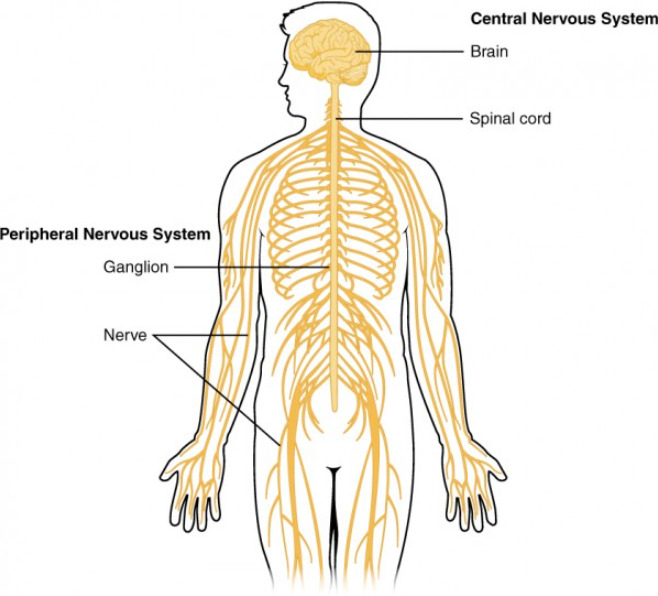
Sistema nervioso central y periférico
Imagen por Lecturio.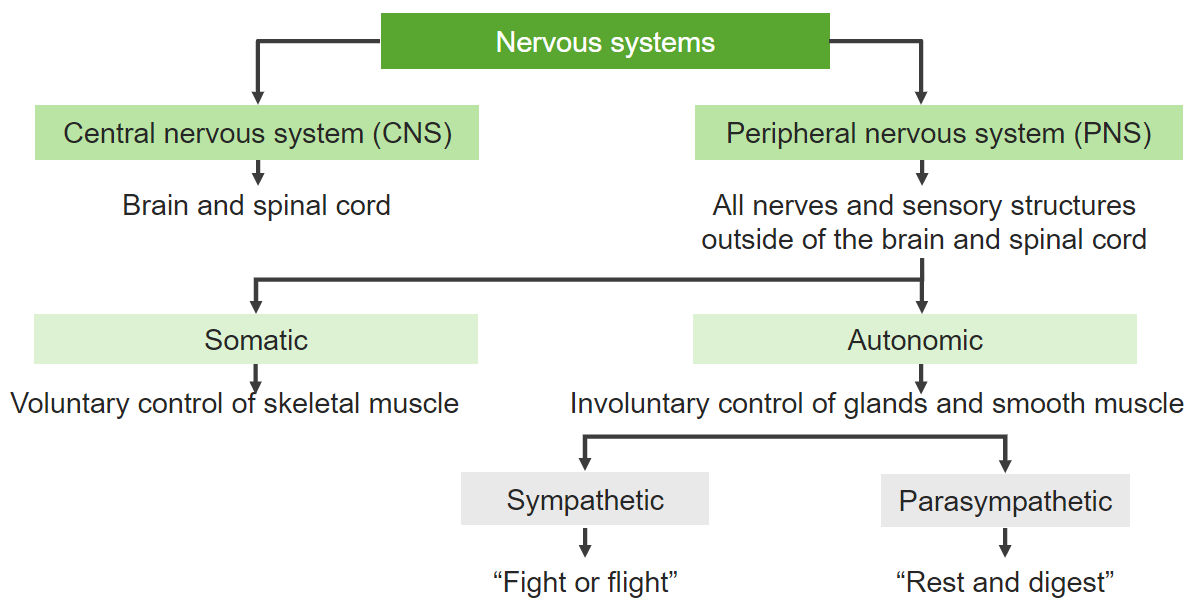
Esquema que muestra las divisiones anatómicas del sistema nervioso
Imagen por Lecturio.El SNC está constituido por el encéfalo, el tronco encefálico, el cerebelo y la médula espinal. Cada una de estas estructuras está cubierta por meninges Meninges The brain and the spinal cord are enveloped by 3 overlapping layers of connective tissue called the meninges. The layers are, from the most external layer to the most internal layer, the dura mater, arachnoid mater, and pia mater. Between these layers are 3 potential spaces called the epidural, subdural, and subarachnoid spaces. Meninges: Anatomy y LCR.
El SNC está contenido dentro del cráneo y la columna vertebral. Los LOS Neisseria componentes de este sistema incluyen:
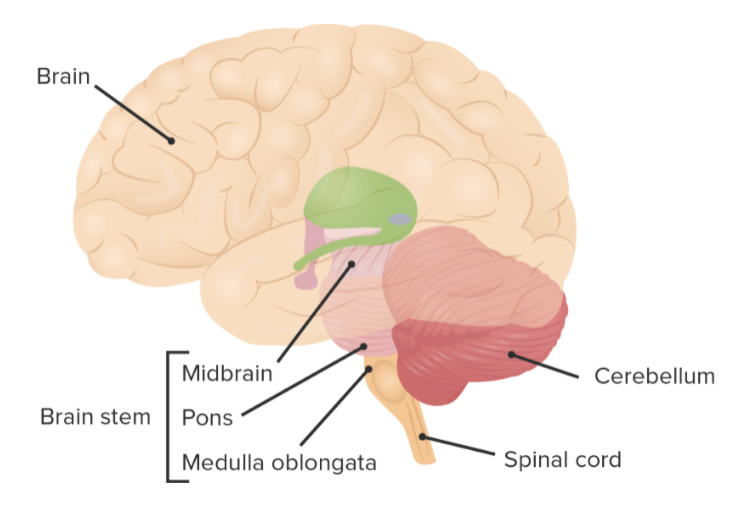
Vista sagital del cerebro, tronco encefálico, cerebelo y médula espinal proximal
Imagen por Lecturio.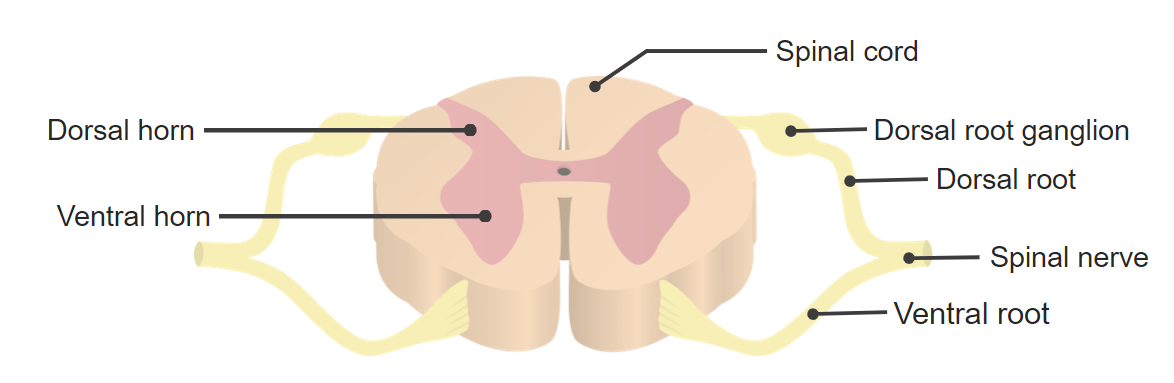
Puntos de referencia anatómicos de la médula espinal
Imagen por Lecturio.Las meninges Meninges The brain and the spinal cord are enveloped by 3 overlapping layers of connective tissue called the meninges. The layers are, from the most external layer to the most internal layer, the dura mater, arachnoid mater, and pia mater. Between these layers are 3 potential spaces called the epidural, subdural, and subarachnoid spaces. Meninges: Anatomy proporcionan una cubierta protectora para el cerebro y la médula espinal. Las meninges Meninges The brain and the spinal cord are enveloped by 3 overlapping layers of connective tissue called the meninges. The layers are, from the most external layer to the most internal layer, the dura mater, arachnoid mater, and pia mater. Between these layers are 3 potential spaces called the epidural, subdural, and subarachnoid spaces. Meninges: Anatomy están compuestas por:
El sistema nervioso periférico está constituido por componentes neurales que se extienden desde el SNC. Las 2 divisiones del sistema nervioso periférico son el sistema nervioso somático y el sistema nervioso autónomo.
El sistema nervioso somático está constituido por los LOS Neisseria pares craneales y los LOS Neisseria nervios espinales que se encuentran fuera del SNC. Hay 12 pares de nervios craneales y 31 espinales:
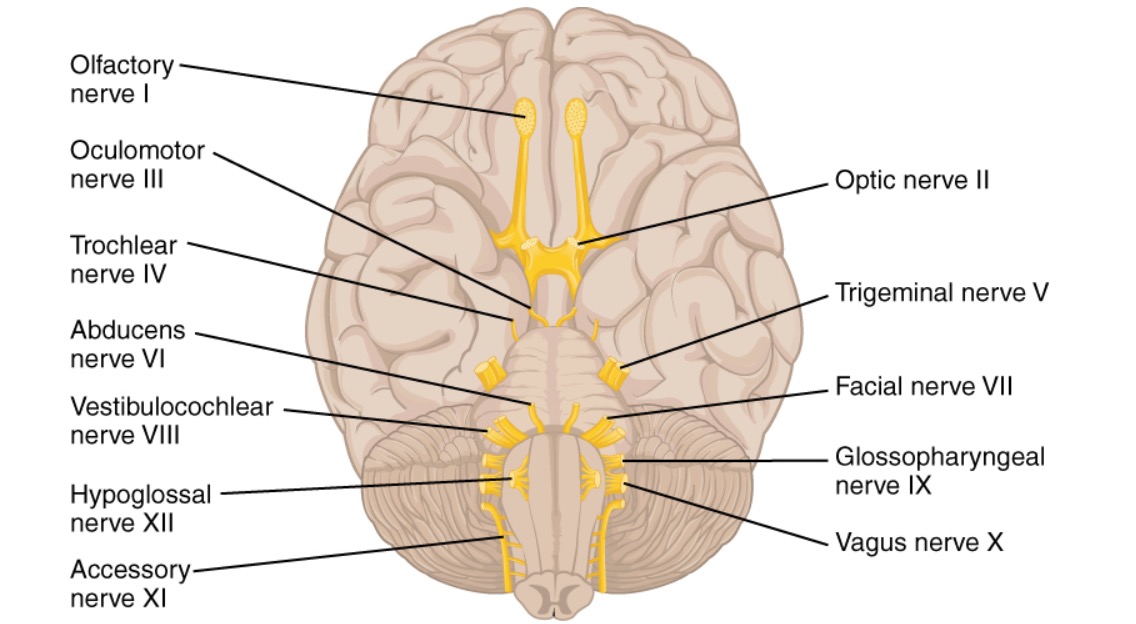
Los 12 pares craneales a medida que salen del cerebro
Imagen: “Roots of the cranial nerves” por Phil Schatz. Licencia: CC BY 4.0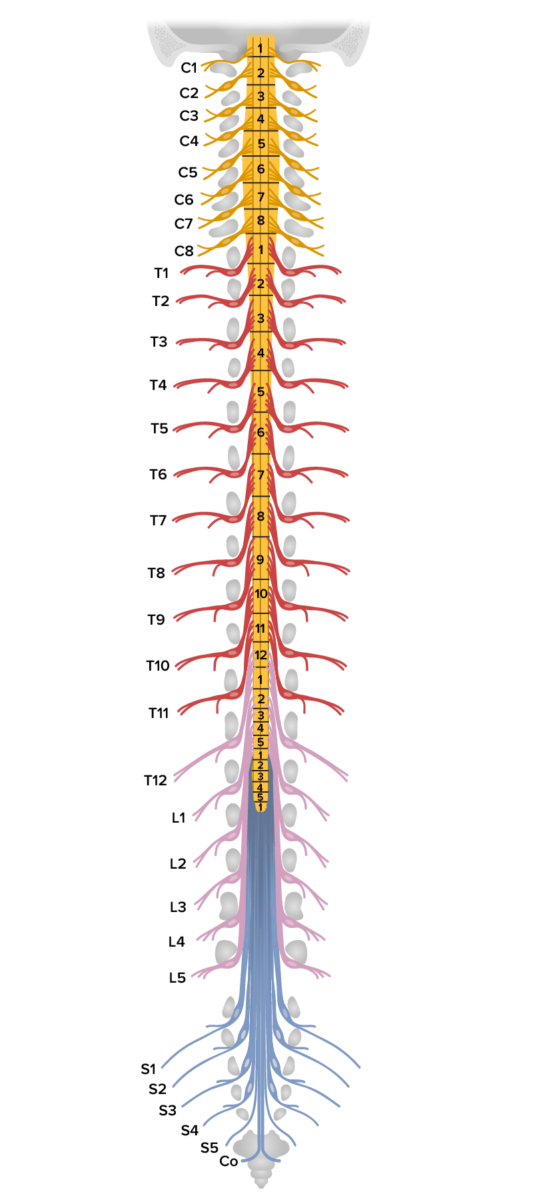
Nervios espinales y sus relaciones con las vértebras vecinas a medida que salen de la columna vertebral
Imagen por Lecturio.El sistema nervioso somático está constituido por:
Puntos de referencia anatómicos de la médula espinal
Imagen por Lecturio.El sistema nervioso somático está involucrado en EN Erythema nodosum is an immune-mediated panniculitis (inflammation of the subcutaneous fat) caused by a type IV (delayed-type) hypersensitivity reaction. It commonly manifests in young women as tender, erythematous nodules on the shins. Erythema Nodosum:
El sistema nervioso autónomo supervisa y controla las funciones de los LOS Neisseria órganos internos. El sistema nervioso autónomo está constituido por los LOS Neisseria sistemas nerviosos parasimpático y simpático. Las fibras nerviosas del sistema nervioso autónomo se originan en EN Erythema nodosum is an immune-mediated panniculitis (inflammation of the subcutaneous fat) caused by a type IV (delayed-type) hypersensitivity reaction. It commonly manifests in young women as tender, erythematous nodules on the shins. Erythema Nodosum el SNC y hacen sinapsis con los LOS Neisseria ganglios de la periferia.