
Domina Conceptos Médicos

Estudia para la escuela de medicina y tus examenes con Lecturio.

Enfermedad por Descompresión

La enfermedad por descompresión, conocida informalmente como "la enfermedad del buzo", es una afección causada por la compresión y la descompresión de los LOS Neisseria gases contenidos en EN Erythema nodosum is an immune-mediated panniculitis (inflammation of the subcutaneous fat) caused by a type IV (delayed-type) hypersensitivity reaction. It commonly manifests in young women as tender, erythematous nodules on the shins. Erythema Nodosum el cuerpo durante el descenso y el rápido ascenso durante el buceo. La presentación clínica de la enfermedad por descompresión puede ser inespecífica y variable Variable Variables represent information about something that can change. The design of the measurement scales, or of the methods for obtaining information, will determine the data gathered and the characteristics of that data. As a result, a variable can be qualitative or quantitative, and may be further classified into subgroups. Types of Variables, con un tiempo de aparición que puede variar desde inmediatamente hasta 12 horas después de salir a la superficie. El diagnóstico se realiza clínicamente. El tratamiento consta de terapia de soporte temprana y un tratamiento de recompresión hiperbárica realizado en EN Erythema nodosum is an immune-mediated panniculitis (inflammation of the subcutaneous fat) caused by a type IV (delayed-type) hypersensitivity reaction. It commonly manifests in young women as tender, erythematous nodules on the shins. Erythema Nodosum un centro especializado.

Last updated: Apr 4, 2025

Editorial responsibility: Stanley Oiseth, Lindsay Jones, Evelin Maza

Descripción General

Epidemiología

  • Estadísticas de población:
    • Buceo deportivo: 3 casos por cada 10 000 inmersiones
    • Buceo comercial: 1,5–10 casos por cada 10 000 inmersiones
    • 2,5 veces más probable en EN Erythema nodosum is an immune-mediated panniculitis (inflammation of the subcutaneous fat) caused by a type IV (delayed-type) hypersensitivity reaction. It commonly manifests in young women as tender, erythematous nodules on the shins. Erythema Nodosum hombres que en EN Erythema nodosum is an immune-mediated panniculitis (inflammation of the subcutaneous fat) caused by a type IV (delayed-type) hypersensitivity reaction. It commonly manifests in young women as tender, erythematous nodules on the shins. Erythema Nodosum mujeres
  • Factores de riesgo:
    • Detalles de la inmersión:
      • Profundidad
      • Duración
      • Número de inmersiones
      • Tiempo de salida a la superficie entre inmersiones
      • Condiciones del agua
    • Buzo:
      • Peso (la obesidad es predisponente)
      • Antecedentes de enfermedades pulmonares o cardíacas
      • Cortocircuitos cardíacos de derecha a izquierda (e.g., foramen oval permeable)
      • Los LOS Neisseria buzos inexpertos son los LOS Neisseria más afectados.
      • Velocidad de ascenso
      • Duración del tiempo entre la altitud baja (buceo con escafandra autónoma) y la altitud elevada (viaje en EN Erythema nodosum is an immune-mediated panniculitis (inflammation of the subcutaneous fat) caused by a type IV (delayed-type) hypersensitivity reaction. It commonly manifests in young women as tender, erythematous nodules on the shins. Erythema Nodosum avión o ascenso por tierra)

Etiología

La enfermedad por descompresión comprende diversos síntomas causados por las burbujas de gas que salen de la solución en EN Erythema nodosum is an immune-mediated panniculitis (inflammation of the subcutaneous fat) caused by a type IV (delayed-type) hypersensitivity reaction. It commonly manifests in young women as tender, erythematous nodules on the shins. Erythema Nodosum el cuerpo luego de ascender tras una inmersión profunda.

  • Es más probable que ocurra cuando:
    • El buceo con escafandra autónoma es seguido por viajes a grandes altitudes
    • Los LOS Neisseria buzos no se adhieren a los LOS Neisseria protocolos de inmersión
  • El pánico puede hacer que los LOS Neisseria buzos asciendan demasiado rápido.

Clasificación

Según la gravedad de los LOS Neisseria síntomas y la localización de las burbujas de gas:
  • Tipo I: formación leve de burbujas en EN Erythema nodosum is an immune-mediated panniculitis (inflammation of the subcutaneous fat) caused by a type IV (delayed-type) hypersensitivity reaction. It commonly manifests in young women as tender, erythematous nodules on the shins. Erythema Nodosum:
    • Sistema linfático
    • Piel
    • Músculos y articulaciones
  • Tipo II: formación grave/letal de burbujas en EN Erythema nodosum is an immune-mediated panniculitis (inflammation of the subcutaneous fat) caused by a type IV (delayed-type) hypersensitivity reaction. It commonly manifests in young women as tender, erythematous nodules on the shins. Erythema Nodosum:
    • Corazón
    • Pulmones
    • Sistema nervioso central

Fisiopatología

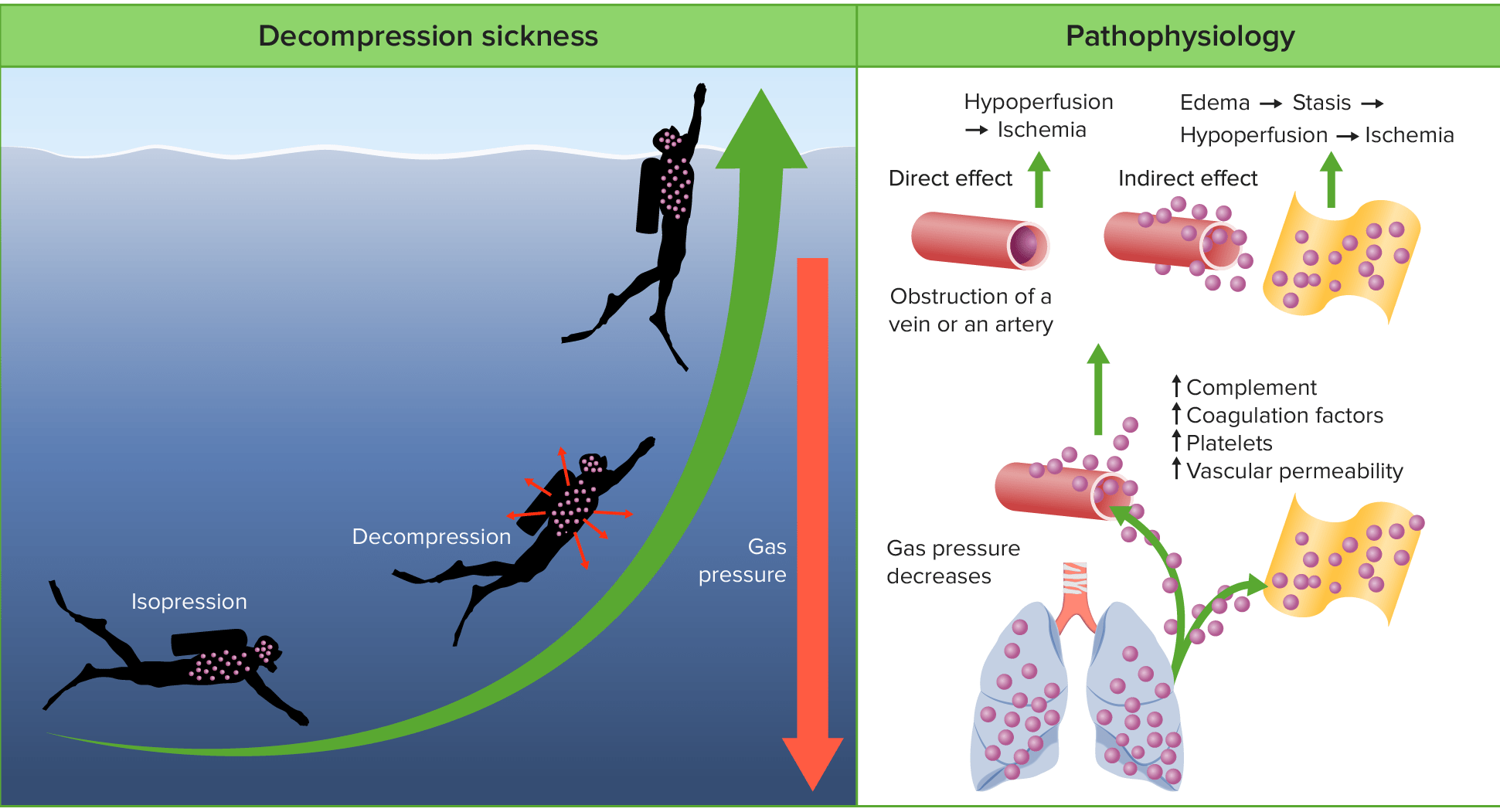
  • Descenso: gas en EN Erythema nodosum is an immune-mediated panniculitis (inflammation of the subcutaneous fat) caused by a type IV (delayed-type) hypersensitivity reaction. It commonly manifests in young women as tender, erythematous nodules on the shins. Erythema Nodosum el cuerpo bajo una mayor presión atmosférica → se disuelve en EN Erythema nodosum is an immune-mediated panniculitis (inflammation of the subcutaneous fat) caused by a type IV (delayed-type) hypersensitivity reaction. It commonly manifests in young women as tender, erythematous nodules on the shins. Erythema Nodosum los LOS Neisseria tejidos y la sangre
  • Ascenso rápido: presión parcial del gas > presión ambiental → el gas sale de la solución → formación de burbujas
  • Las burbujas afectan:
    • Tejidos de órganos
      • Destrucción/daño mecánico de los LOS Neisseria tejidos
      • Alteración de la funcionalidad de estructuras importantes
    • Circulación venosa → recoge los LOS Neisseria gases de los LOS Neisseria tejidos
      • En EN Erythema nodosum is an immune-mediated panniculitis (inflammation of the subcutaneous fat) caused by a type IV (delayed-type) hypersensitivity reaction. It commonly manifests in young women as tender, erythematous nodules on the shins. Erythema Nodosum cantidades ↓ → las burbujas son asintomáticas y se filtran en EN Erythema nodosum is an immune-mediated panniculitis (inflammation of the subcutaneous fat) caused by a type IV (delayed-type) hypersensitivity reaction. It commonly manifests in young women as tender, erythematous nodules on the shins. Erythema Nodosum los LOS Neisseria capilares pulmonares
      • En EN Erythema nodosum is an immune-mediated panniculitis (inflammation of the subcutaneous fat) caused by a type IV (delayed-type) hypersensitivity reaction. It commonly manifests in young women as tender, erythematous nodules on the shins. Erythema Nodosum cantidades ↑, las burbujas pueden causar:
        • Respuesta inflamatoria
        • Activación de la cascada de coagulación
        • Daños en EN Erythema nodosum is an immune-mediated panniculitis (inflammation of the subcutaneous fat) caused by a type IV (delayed-type) hypersensitivity reaction. It commonly manifests in young women as tender, erythematous nodules on the shins. Erythema Nodosum el endotelio
        • Activación de la agregación plaquetaria
        • Oclusión del flujo sanguíneo
        • Fuga capilar
Decompression Sickness (DCS)

Fisiopatología de la enfermedad por descompresión:
Durante el descenso, el aumento de la presión hace que los gases se disuelvan en los tejidos y la sangre del cuerpo. Durante la descompresión, los tejidos se sobresaturan con estos gases, dando lugar a la formación de gas libre. Estas burbujas de gas pueden filtrarse en los capilares pulmonares en pequeñas cantidades. Sin embargo, en grandes cantidades, los gases pueden provocar una obstrucción vascular directa, la activación de las plaquetas y de las cascadas de coagulación, fugas capilares y respuestas inflamatorias.

Imagen por Lecturio.

Presentación Clínica

  • Inespecífica, depende de:
    • Ubicación de las burbujas de gas
    • Compresibilidad de los LOS Neisseria gases en EN Erythema nodosum is an immune-mediated panniculitis (inflammation of the subcutaneous fat) caused by a type IV (delayed-type) hypersensitivity reaction. It commonly manifests in young women as tender, erythematous nodules on the shins. Erythema Nodosum el cuerpo
  • Inicio más rápido de los LOS Neisseria síntomas = ↑ gravedad
    • Los LOS Neisseria casos graves comienzan < 30 minutos después de salir a la superficie.
    • Los LOS Neisseria síntomas leves pueden tardar 6 horas en EN Erythema nodosum is an immune-mediated panniculitis (inflammation of the subcutaneous fat) caused by a type IV (delayed-type) hypersensitivity reaction. It commonly manifests in young women as tender, erythematous nodules on the shins. Erythema Nodosum aparecer.
    • El 75% de los LOS Neisseria casos presentan síntomas en EN Erythema nodosum is an immune-mediated panniculitis (inflammation of the subcutaneous fat) caused by a type IV (delayed-type) hypersensitivity reaction. It commonly manifests in young women as tender, erythematous nodules on the shins. Erythema Nodosum < 1 hora.
  • La mayoría de los LOS Neisseria casos son leves.
  • Las manifestaciones pulmonares/cardiovasculares pueden ser letales.
Tabla: Manifestaciones clínicas de la enfermedad por descompresión
Neurológicas: cerebral
  • Confusión
  • Alteraciones visuales y del habla
Neurológicas: médula espinal
  • Debilidad muscular
  • Signos de motoneurona superior
  • Parálisis
  • Incontinencia urinaria
  • Alteraciones sensitivas dermatológicas
  • Dolor Dolor Inflammation abdominal
  • Dolor Dolor Inflammation en EN Erythema nodosum is an immune-mediated panniculitis (inflammation of the subcutaneous fat) caused by a type IV (delayed-type) hypersensitivity reaction. It commonly manifests in young women as tender, erythematous nodules on the shins. Erythema Nodosum cinturón
Neurológicas: vestibulococlear
  • Enfermedad de descompresión laberíntica (“ los LOS Neisseria tambaleos”): vértigo central
  • Pérdida de la audición
  • Náuseas y vómitos
Neurológicas: periférico Alteración sensitiva no dermatológica en EN Erythema nodosum is an immune-mediated panniculitis (inflammation of the subcutaneous fat) caused by a type IV (delayed-type) hypersensitivity reaction. It commonly manifests in young women as tender, erythematous nodules on the shins. Erythema Nodosum forma de parches
Musculoesqueléticas Dolor Dolor Inflammation en EN Erythema nodosum is an immune-mediated panniculitis (inflammation of the subcutaneous fat) caused by a type IV (delayed-type) hypersensitivity reaction. It commonly manifests in young women as tender, erythematous nodules on the shins. Erythema Nodosum las articulaciones (“las curvas”)
Oculares
  • Uveítis
  • Conjuntivitis
Pulmonares
  • Tos TOS Thoracic outlet syndrome (TOS) is a broad term used for a spectrum of syndromes related to the general region of the thoracic outlet, which involves the compression or irritation of elements of the brachial plexus, subclavian artery, or subclavian vein. Thoracic Outlet Syndrome
  • Disnea
Cardiovasculares
  • Hemoconcentración
  • Coagulopatía
  • Hipotensión
  • Síndrome coronario agudo
Cutáneas
  • Erupción
  • Prurito
  • Ardor
Linfáticas Edema Edema Edema is a condition in which excess serous fluid accumulates in the body cavity or interstitial space of connective tissues. Edema is a symptom observed in several medical conditions. It can be categorized into 2 types, namely, peripheral (in the extremities) and internal (in an organ or body cavity). Edema de tejidos blandos
Constitucionales Fatiga y malestar

Diagnóstico

El diagnóstico se basa en EN Erythema nodosum is an immune-mediated panniculitis (inflammation of the subcutaneous fat) caused by a type IV (delayed-type) hypersensitivity reaction. It commonly manifests in young women as tender, erythematous nodules on the shins. Erythema Nodosum:

  • Antecedentes: relación de los LOS Neisseria síntomas con un evento de buceo
    • La enfermedad por descompresión debe considerarse en EN Erythema nodosum is an immune-mediated panniculitis (inflammation of the subcutaneous fat) caused by a type IV (delayed-type) hypersensitivity reaction. It commonly manifests in young women as tender, erythematous nodules on the shins. Erythema Nodosum cualquier buzo que manifieste síntomas que no puedan explicarse por otros mecanismos.
  • Imagenología:
    • La tomografía computarizada (TC) puede utilizarse para detectar el fenómeno del vacío del gas atrapado.
    • Resonancia magnética (RM): la más precisa para la detección de lesiones cerebrales y de la médula espinal
Diagnóstico por imagen de la enfermedad por descompresión

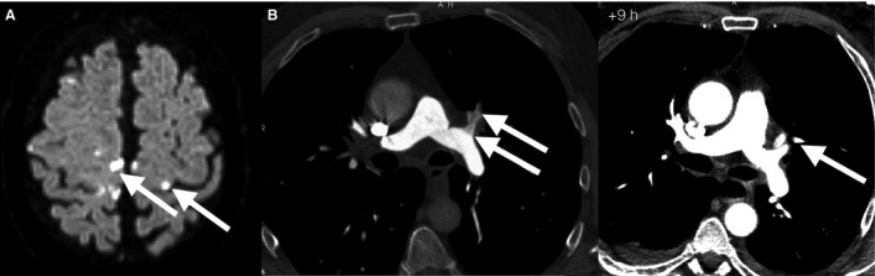
Varón de 61 años con experiencia en buceo que se presenta con un diagnóstico de enfermedad por descompresión:
(A) RM de la cabeza que muestra múltiples tromboembolismos cerebrales.
(B) TC del tórax 6 horas después de los primeros síntomas que muestra múltiples tromboembolismos pulmonares de las arterias segmentarias.
TC de seguimiento del tórax 9 horas después: no hay tromboembolismo pulmonar de las mismas arterias segmentarias.

Imagen: “Decompression illness” por Sebastian Klapa et al. Licencia: CC BY 4.0

Tratamiento y Pronóstico

El objetivo principal de la terapia es disolver las burbujas y recomprimir el gas en EN Erythema nodosum is an immune-mediated panniculitis (inflammation of the subcutaneous fat) caused by a type IV (delayed-type) hypersensitivity reaction. It commonly manifests in young women as tender, erythematous nodules on the shins. Erythema Nodosum los LOS Neisseria fluidos corporales.

Primeros auxilios

  • Posición de Trendelenburg → coloca el tracto de salida del ventrículo derecho por debajo de la cavidad ventricular derecha → el aire migra hacia arriba y se aparta del flujo sanguíneo
  • Líquidos intravenosos
  • Oxígeno suplementario → acelera el lavado de gases inertes

Terapia definitiva

  • Terapia de recompresión en EN Erythema nodosum is an immune-mediated panniculitis (inflammation of the subcutaneous fat) caused by a type IV (delayed-type) hypersensitivity reaction. It commonly manifests in young women as tender, erythematous nodules on the shins. Erythema Nodosum un centro de tratamiento hiperbárico
    • Oxígeno hiperbárico
    • Nunca debe negarse, aunque se retrase el inicio
  • Líquidos intravenosos
  • Se requiere una consulta con un especialista en EN Erythema nodosum is an immune-mediated panniculitis (inflammation of the subcutaneous fat) caused by a type IV (delayed-type) hypersensitivity reaction. It commonly manifests in young women as tender, erythematous nodules on the shins. Erythema Nodosum medicina de buceo/oxígeno hiperbárico, incluso si los LOS Neisseria síntomas se resuelven.

Prevención

  • Educación de los LOS Neisseria buzos
  • Examen médico previo a la inmersión y planificación de la inmersión
  • Cumplimiento estricto del curso, el tiempo y la profundidad de la inmersión
  • Ascenso lento y controlado (paradas de descompresión: Los LOS Neisseria buzos experimentados controlan su ascenso mediante algoritmos que indican cuándo debe detenerse el ascenso a diferentes profundidades para permitir el lavado de gases).
  • Recomendación de evitar las alturas durante las 24 horas posteriores a la inmersión

Contraindicaciones para el buceo en EN Erythema nodosum is an immune-mediated panniculitis (inflammation of the subcutaneous fat) caused by a type IV (delayed-type) hypersensitivity reaction. It commonly manifests in young women as tender, erythematous nodules on the shins. Erythema Nodosum aguas profundas

  • Asma ASMA Autoimmune Hepatitis activa
  • Función pulmonar reducida
  • Quistes pulmonares
  • Traumatismo torácico reciente o neumotórax
  • Enfermedades cardiovasculares
  • Antecedentes de obstrucción intestinal
  • Cirugía cerebral u ocular reciente
  • Convulsiones
  • Diabetes Diabetes Diabetes mellitus (DM) is a metabolic disease characterized by hyperglycemia and dysfunction of the regulation of glucose metabolism by insulin. Type 1 DM is diagnosed mostly in children and young adults as the result of autoimmune destruction of β cells in the pancreas and the resulting lack of insulin. Type 2 DM has a significant association with obesity and is characterized by insulin resistance. Diabetes Mellitus mellitus y episodios de hipoglucemia
  • Antecedentes de síncope

Pronóstico

  • El 75% de los LOS Neisseria casos se resuelven completamente.
  • El 16% de los LOS Neisseria casos puede tener síntomas residuales durante hasta 3 meses.
  • La afectación de la médula espinal suele causar daños permanentes.

Relevancia Clínica

Las siguientes afecciones aumentan en EN Erythema nodosum is an immune-mediated panniculitis (inflammation of the subcutaneous fat) caused by a type IV (delayed-type) hypersensitivity reaction. It commonly manifests in young women as tender, erythematous nodules on the shins. Erythema Nodosum gran medida la probabilidad de desarrollar enfermedad de descompresión:

  • Asma ASMA Autoimmune Hepatitis: afección inflamatoria crónica de las vías respiratorias caracterizada por la hiperreactividad bronquial, que se presenta como sibilancias, tos TOS Thoracic outlet syndrome (TOS) is a broad term used for a spectrum of syndromes related to the general region of the thoracic outlet, which involves the compression or irritation of elements of the brachial plexus, subclavian artery, or subclavian vein. Thoracic Outlet Syndrome y disnea. Las personas con asma ASMA Autoimmune Hepatitis tienen un mayor riesgo de sufrir barotraumatismo pulmonar y enfermedad por descompresión, que pueden provocar un neumotórax y dificultades respiratorias. El tratamiento suele requerir la intubación.
  • Neumotórax: acumulación de aire en EN Erythema nodosum is an immune-mediated panniculitis (inflammation of the subcutaneous fat) caused by a type IV (delayed-type) hypersensitivity reaction. It commonly manifests in young women as tender, erythematous nodules on the shins. Erythema Nodosum el espacio pleural que puede producirse por disbarismo, provocando falta de aire e hipoxia. El tratamiento amerita la colocación de un drenaje pleural y oxígeno.
  • Obstrucción intestinal: interrupción del tránsito normal del contenido intestinal, ya sea por una disminución funcional del peristaltismo o por una obstrucción mecánica. La sobrepresurización de los LOS Neisseria intestinos puede provocar ruptura gástrica, perforación intestinal o neumoperitoneo. El tratamiento suele requerir una intervención quirúrgica.

Referencias

  1. Sadler, C. (2024, May 20). Complications of SCUBA diving. In Danzl, D.F. & Grayzel, J.S. (Ed.).UpToDate. Retrieved April 3, 2025, from https://www.uptodate.com/contents/complications-of-scuba-diving.
  2. Nemer J.A., & Juarez M.A. (2023). Dysbarism & decompression sickness. Papadakis M.A., & McPhee S.J., & Rabow M.W., & McQuaid K.R.(Eds.), Current Medical Diagnosis & Treatment 2023. McGraw-Hill Education. https://accessmedicine.mhmedical.com/content.aspx?bookid=3212&sectionid=269155450
  3. Mitchell, S. J. (2024). Decompression illness: A comprehensive overview. Diving and Hyperbaric Medicine, 54(1 Suppl), 1–53. https://doi.org/10.28920/dhm54.1.suppl.1-53
  4. Bennett, M. H., & Mitchell, S. J. (2018). Hyperbaric and diving medicine. In J. L. Jameson, Harrison’s principles of internal medicine, 20e. New York, NY: McGraw-Hill Education. http://accessmedicine.mhmedical.com/content.aspx?aid=1164035738

¡Crea tu cuenta gratis o inicia una sesión para seguir leyendo!

Regístrate ahora y obtén acceso gratuito a Lecturio con páginas de concepto, videos médicos y cuestionarios para tu educación médica.

User Reviews

Que tengas una sesión de estudio alegre y navideña 🎁 Ahorra 50% en todos los planes >>

Details