Domina Conceptos Médicos

Estudia para la escuela de medicina y tus examenes con Lecturio.

Determinación del Sexo

Hay 2 tipos de cromosomas sexuales en EN Erythema nodosum is an immune-mediated panniculitis (inflammation of the subcutaneous fat) caused by a type IV (delayed-type) hypersensitivity reaction. It commonly manifests in young women as tender, erythematous nodules on the shins. Erythema Nodosum humanos: X e Y. El sexo cromosómico es masculino cuando está presente un cromosoma Y (e.g., 46,XY o 47, XXY XXY Klinefelter syndrome is a chromosomal aneuploidy characterized by the presence of 1 or more extra X chromosomes in a male karyotype, most commonly leading to karyotype 47,XXY. Klinefelter syndrome is associated with decreased levels of testosterone and is the most common cause of congenital hypogonadism. Klinefelter Syndrome) y femenino cuando el cromosoma Y está ausente (e.g., 46,XX o 45,X). Los LOS Neisseria fenotipos masculinos se desarrollan cuando está presente un gen específico, llamado gen SRY (que generalmente se encuentra en EN Erythema nodosum is an immune-mediated panniculitis (inflammation of the subcutaneous fat) caused by a type IV (delayed-type) hypersensitivity reaction. It commonly manifests in young women as tender, erythematous nodules on the shins. Erythema Nodosum el cromosoma Y), que estimula la diferenciación de las gónadas en EN Erythema nodosum is an immune-mediated panniculitis (inflammation of the subcutaneous fat) caused by a type IV (delayed-type) hypersensitivity reaction. It commonly manifests in young women as tender, erythematous nodules on the shins. Erythema Nodosum testículos. Luego, los LOS Neisseria testículos producen testosterona (que desencadena el desarrollo del pene y el escroto externamente y del sistema eyaculador internamente) y la hormona antimülleriana, que provoca la regresión de los LOS Neisseria conductos müllerianos. Sin el gen SRY, se desarrollan los LOS Neisseria ovarios; sin testosterona, se desarrollan los LOS Neisseria genitales femeninos externos; y sin la hormona antimülleriana, los LOS Neisseria conductos müllerianos persisten y se diferencian en EN Erythema nodosum is an immune-mediated panniculitis (inflammation of the subcutaneous fat) caused by a type IV (delayed-type) hypersensitivity reaction. It commonly manifests in young women as tender, erythematous nodules on the shins. Erythema Nodosum las trompas de Falopio, el útero y la parte superior de la vagina Vagina The vagina is the female genital canal, extending from the vulva externally to the cervix uteri internally. The structures have sexual, reproductive, and urinary functions and a rich blood supply, mainly arising from the internal iliac artery. Vagina, Vulva, and Pelvic Floor: Anatomy.

Last updated: Dec 15, 2025

Editorial responsibility: Stanley Oiseth, Lindsay Jones, Evelin Maza

Descripción General

Definiciones

Las siguientes definiciones son relevantes para la comprensión del desarrollo sexual normal:
  • Sexo cromosómico (también conocido como sexo genético): el sexo definido por los LOS Neisseria cromosomas de una persona:
    • Hombres: Incluyen un cromosoma Y, típicamente 46,XY.
    • Mujeres: No incluyen un cromosoma Y, típicamente 46,XX.
  • Sexo gonadal: Describe el tipo de gónadas presentes en EN Erythema nodosum is an immune-mediated panniculitis (inflammation of the subcutaneous fat) caused by a type IV (delayed-type) hypersensitivity reaction. It commonly manifests in young women as tender, erythematous nodules on the shins. Erythema Nodosum un individuo.
    • Hombres: testículos
    • Mujeres: ovarios
    • Ovotestículo (diferencias ovotesticulares del desarrollo sexual): gónada que contiene tejido ovárico y testicular
  • Sexo fenotípico: la apariencia de los LOS Neisseria genitales externos (desde el nacimiento) y las características sexuales secundarias ( en EN Erythema nodosum is an immune-mediated panniculitis (inflammation of the subcutaneous fat) caused by a type IV (delayed-type) hypersensitivity reaction. It commonly manifests in young women as tender, erythematous nodules on the shins. Erythema Nodosum la pubertad)
  • Determinación del sexo: proceso de transformación de la gónada indiferenciada en EN Erythema nodosum is an immune-mediated panniculitis (inflammation of the subcutaneous fat) caused by a type IV (delayed-type) hypersensitivity reaction. It commonly manifests in young women as tender, erythematous nodules on the shins. Erythema Nodosum testículo u ovario
  • Diferenciación sexual: desarrollo del fenotipo como expresión de hormonas producidas por las gónadas específicas
  • Asignación de género (sexo): designación de género masculino o femenino al AL Amyloidosis nacer
  • Identidad de género: el sentido de la propia persona como hombre o mujer
  • Orientación sexual: Se refiere al AL Amyloidosis objeto de la excitación sexual y es independiente de la identidad de género de la persona.

Descripción general del desarrollo sexual típico

  • Sexo cromosómico → determina el sexo gonadal → determina el sexo fenotípico
  • Hasta las 6 semanas de gestación, el desarrollo sexual es idéntico y no binario; las estructuras en EN Erythema nodosum is an immune-mediated panniculitis (inflammation of the subcutaneous fat) caused by a type IV (delayed-type) hypersensitivity reaction. It commonly manifests in young women as tender, erythematous nodules on the shins. Erythema Nodosum el desarrollo incluyen:
    • Gónadas no binarias, bipotentes e indiferenciadas
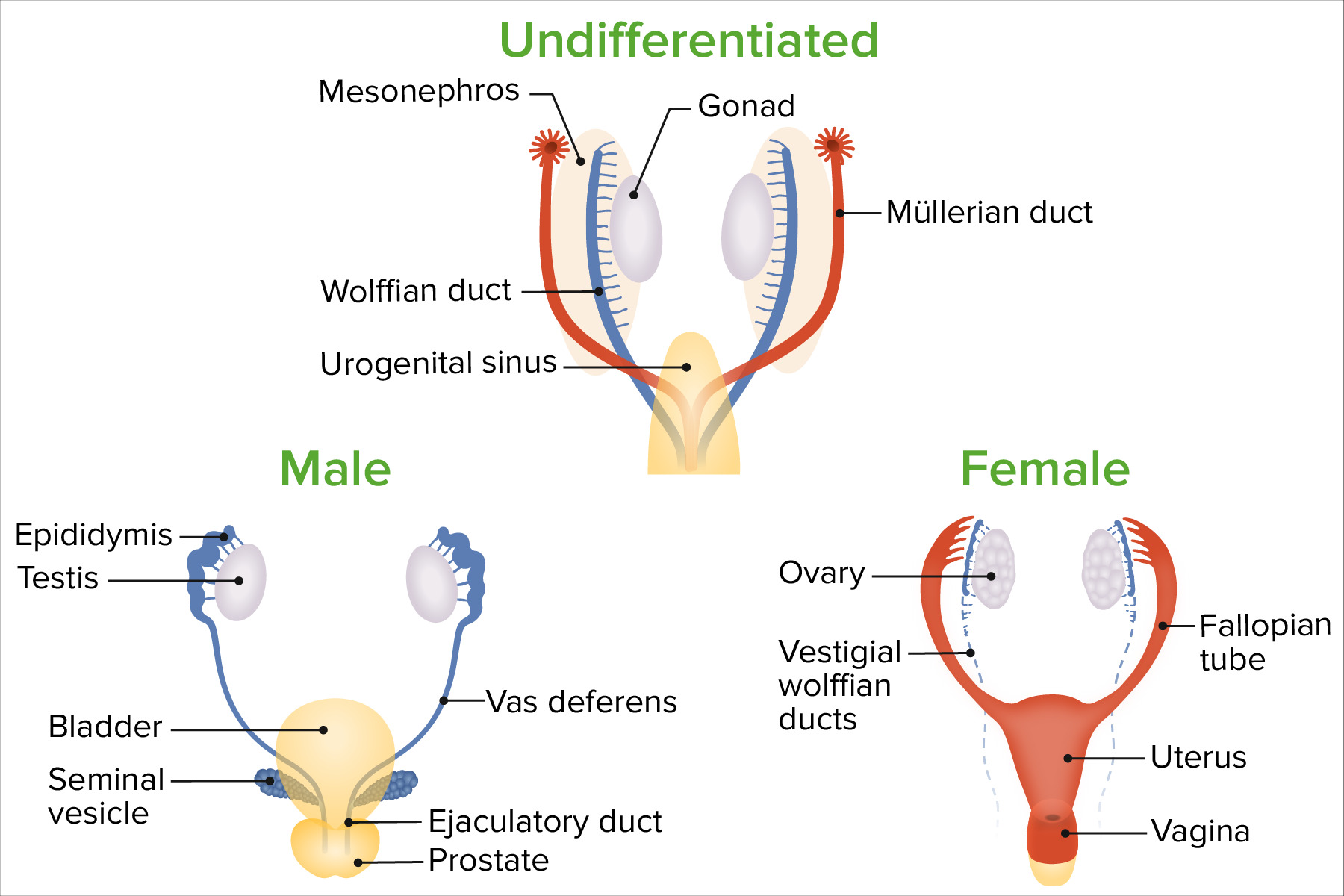
    • Conductos de Wolff y de Müller (ambos están presentes inicialmente en EN Erythema nodosum is an immune-mediated panniculitis (inflammation of the subcutaneous fat) caused by a type IV (delayed-type) hypersensitivity reaction. It commonly manifests in young women as tender, erythematous nodules on the shins. Erythema Nodosum ambos sexos)
    • Seno urogenital
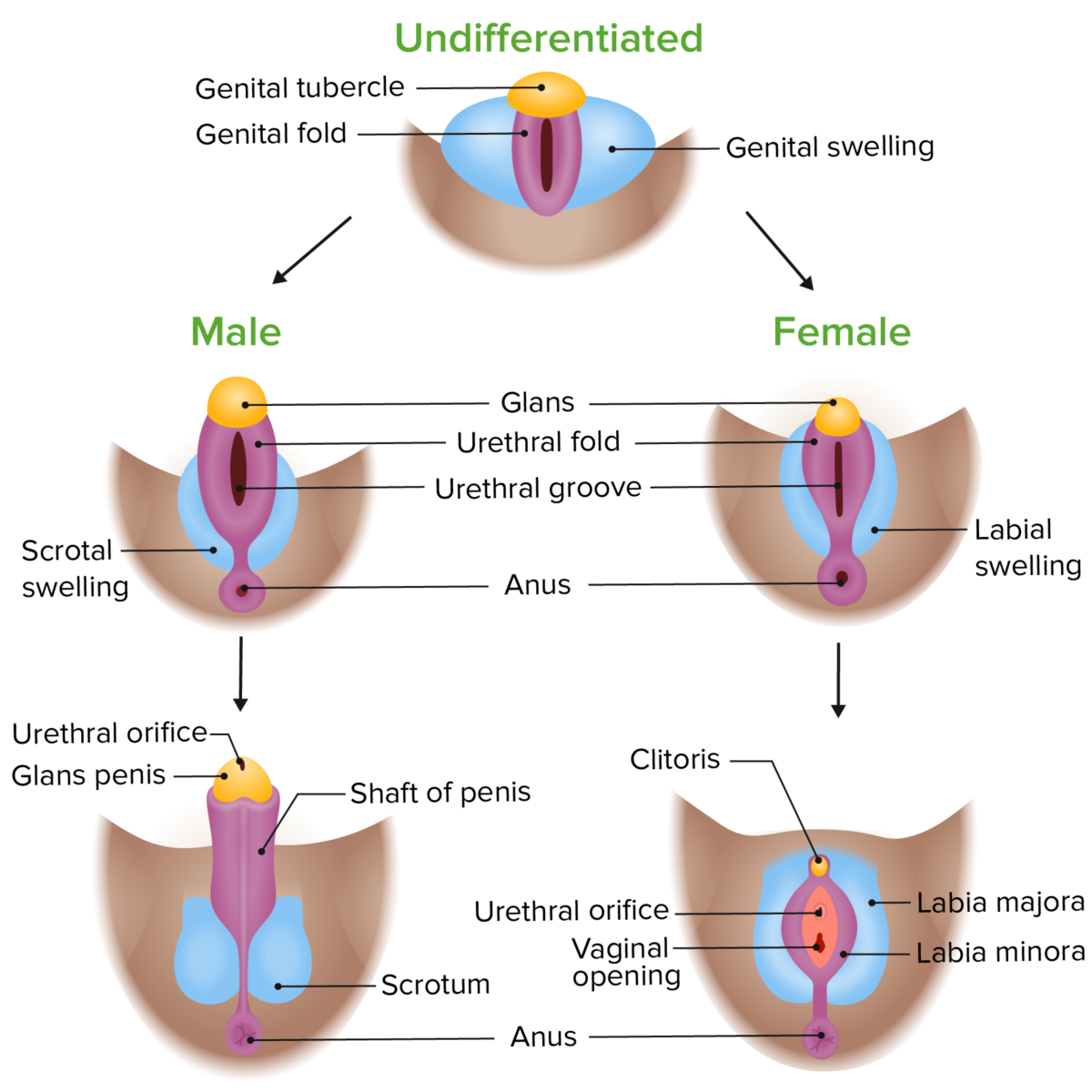
    • El tubérculo genital, los LOS Neisseria pliegues labioescrotales y los LOS Neisseria pliegues urogenitales
  • Los LOS Neisseria genes Genes A category of nucleic acid sequences that function as units of heredity and which code for the basic instructions for the development, reproduction, and maintenance of organisms. DNA Types and Structure presentes en EN Erythema nodosum is an immune-mediated panniculitis (inflammation of the subcutaneous fat) caused by a type IV (delayed-type) hypersensitivity reaction. It commonly manifests in young women as tender, erythematous nodules on the shins. Erythema Nodosum la fertilización determinarán cómo se diferencian las gónadas bipotenciales en EN Erythema nodosum is an immune-mediated panniculitis (inflammation of the subcutaneous fat) caused by a type IV (delayed-type) hypersensitivity reaction. It commonly manifests in young women as tender, erythematous nodules on the shins. Erythema Nodosum el desarrollo (e.g., en EN Erythema nodosum is an immune-mediated panniculitis (inflammation of the subcutaneous fat) caused by a type IV (delayed-type) hypersensitivity reaction. It commonly manifests in young women as tender, erythematous nodules on the shins. Erythema Nodosum un testículo o en EN Erythema nodosum is an immune-mediated panniculitis (inflammation of the subcutaneous fat) caused by a type IV (delayed-type) hypersensitivity reaction. It commonly manifests in young women as tender, erythematous nodules on the shins. Erythema Nodosum un ovario).
  • Las gónadas en EN Erythema nodosum is an immune-mediated panniculitis (inflammation of the subcutaneous fat) caused by a type IV (delayed-type) hypersensitivity reaction. It commonly manifests in young women as tender, erythematous nodules on the shins. Erythema Nodosum desarrollo luego secretarán hormonas.
    • La presencia y/o ausencia de hormonas específicas determinará cómo se diferencian las estructuras restantes.
    • En general, los órganos y estructuras femeninas son el fenotipo “predeterminado” si no hay genes Genes A category of nucleic acid sequences that function as units of heredity and which code for the basic instructions for the development, reproduction, and maintenance of organisms. DNA Types and Structure y hormonas específicos que estimulen la diferenciación masculina.
  • Las estructuras genitales internas y externas se desarrollan en EN Erythema nodosum is an immune-mediated panniculitis (inflammation of the subcutaneous fat) caused by a type IV (delayed-type) hypersensitivity reaction. It commonly manifests in young women as tender, erythematous nodules on the shins. Erythema Nodosum respuesta a las hormonas in utero.
  • Las características sexuales secundarias se desarrollan en EN Erythema nodosum is an immune-mediated panniculitis (inflammation of the subcutaneous fat) caused by a type IV (delayed-type) hypersensitivity reaction. It commonly manifests in young women as tender, erythematous nodules on the shins. Erythema Nodosum respuesta a las hormonas en EN Erythema nodosum is an immune-mediated panniculitis (inflammation of the subcutaneous fat) caused by a type IV (delayed-type) hypersensitivity reaction. It commonly manifests in young women as tender, erythematous nodules on the shins. Erythema Nodosum la pubertad.
Descripción general de las estructuras genitales

  • Gónadas: Se desarrollan según el cariotipo/ genes Genes A category of nucleic acid sequences that function as units of heredity and which code for the basic instructions for the development, reproduction, and maintenance of organisms. DNA Types and Structure presentes.
    • Testículos:
      • Se desarrollan cuando está presente la región determinante del sexo del cromosoma Y (gen SRY).
      • Secretan testosterona y hormona antimülleriana.
    • Ovarios: Se desarrollan cuando el gen SRY está ausente.
    • Ovotestículo (DSD ovotesticular): gónada que contiene tejido ovárico y testicular
  • Estructuras wolffianas: Se diferencian de los LOS Neisseria conductos wolffianos (mesonéfricos) en EN Erythema nodosum is an immune-mediated panniculitis (inflammation of the subcutaneous fat) caused by a type IV (delayed-type) hypersensitivity reaction. It commonly manifests in young women as tender, erythematous nodules on the shins. Erythema Nodosum presencia de testosterona:
    • Epidídimo
    • Conductos deferentes
    • Vesículas seminales
    • Conductos eyaculadores
  • Estructuras müllerianas: Se diferencian de los LOS Neisseria conductos müllerianos (paramesonéfricos) cuando la hormona antimülleriana está ausente:
    • Útero
    • Trompas de Falopio
    • Tercio superior de la vagina Vagina The vagina is the female genital canal, extending from the vulva externally to the cervix uteri internally. The structures have sexual, reproductive, and urinary functions and a rich blood supply, mainly arising from the internal iliac artery. Vagina, Vulva, and Pelvic Floor: Anatomy
  • Genitales externos: Se desarrollan a partir de un tubérculo genital indiferenciado, pliegues labioescrotales y los LOS Neisseria pliegues urogenitales en EN Erythema nodosum is an immune-mediated panniculitis (inflammation of the subcutaneous fat) caused by a type IV (delayed-type) hypersensitivity reaction. It commonly manifests in young women as tender, erythematous nodules on the shins. Erythema Nodosum función de la presencia o ausencia de testosterona.
    • Hombre: testosterona
      • Pene
      • Escroto
    • Mujer: falta de testosterona
      • Clítoris
      • Labios mayores
      • Labios menores

Características sexuales secundarias

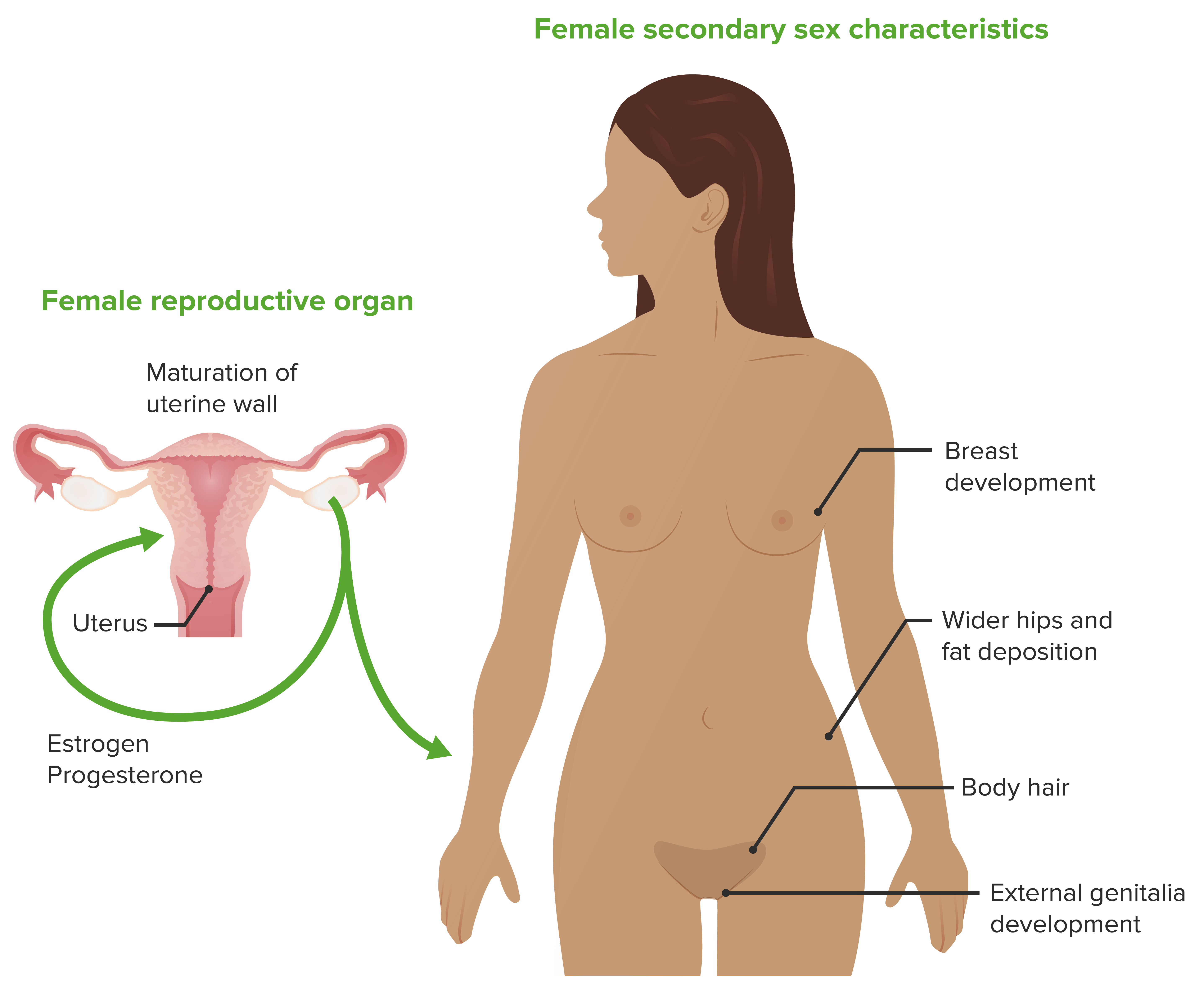
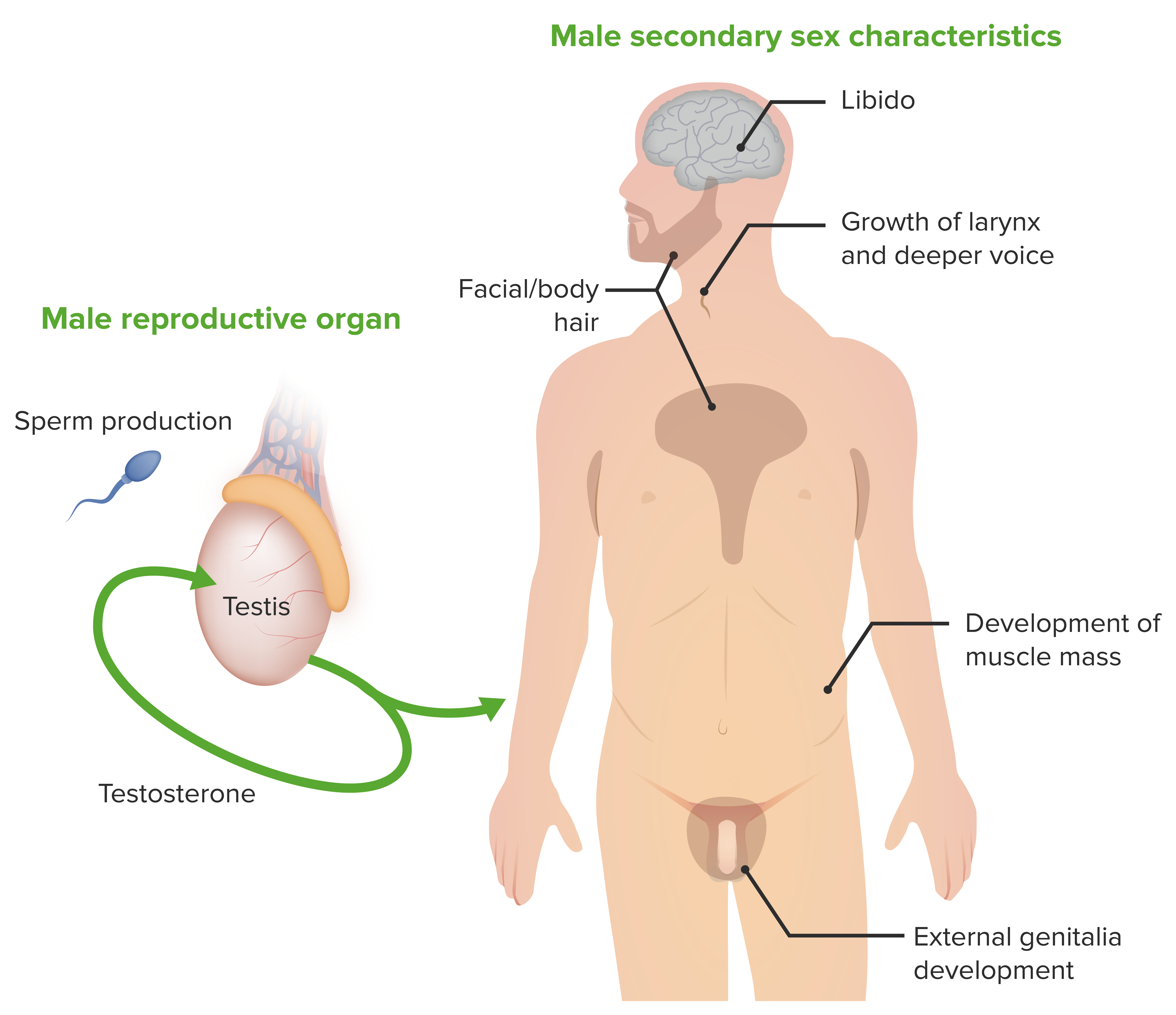
Las características sexuales secundarias se desarrollan en EN Erythema nodosum is an immune-mediated panniculitis (inflammation of the subcutaneous fat) caused by a type IV (delayed-type) hypersensitivity reaction. It commonly manifests in young women as tender, erythematous nodules on the shins. Erythema Nodosum función del entorno hormonal en EN Erythema nodosum is an immune-mediated panniculitis (inflammation of the subcutaneous fat) caused by a type IV (delayed-type) hypersensitivity reaction. It commonly manifests in young women as tender, erythematous nodules on the shins. Erythema Nodosum la pubertad.

  • Características androgénicas (i.e., “masculino”): debido a la presencia de testosterona y/o dihidrotestosterona:
    • Vello púbico y axilar
    • Vello facial y corporal de distribución y calidad androgénica (oscuro y grueso)
    • Engrosamiento de la voz
    • ↑ Masa muscular
  • Características estrogénicas (i.e., “femenino”): debido a la presencia de estrógeno
    • Desarrollo mamario
    • Caderas más anchas

Cromosomas Sexuales

Hay 2 cromosomas sexuales en EN Erythema nodosum is an immune-mediated panniculitis (inflammation of the subcutaneous fat) caused by a type IV (delayed-type) hypersensitivity reaction. It commonly manifests in young women as tender, erythematous nodules on the shins. Erythema Nodosum humanos: X e Y.
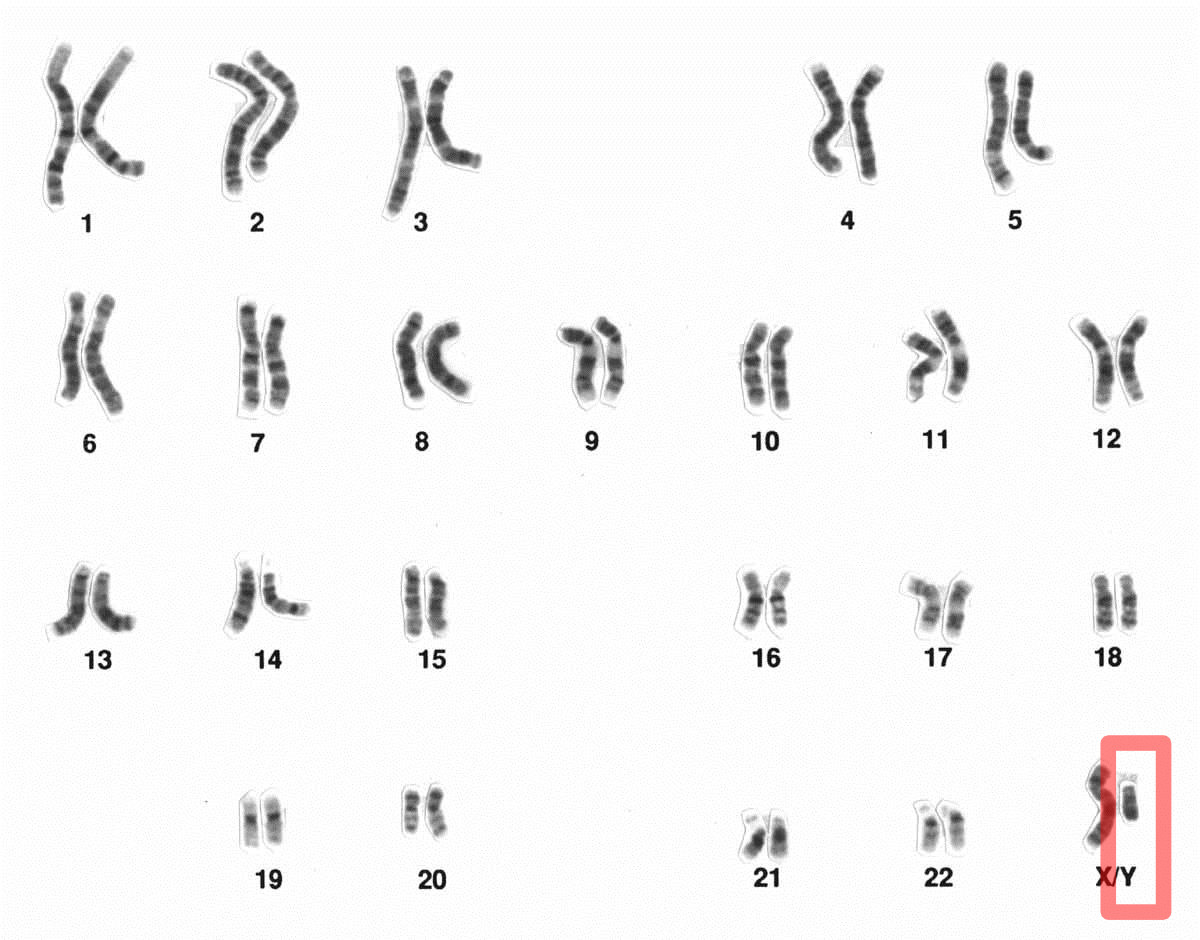
Cromosoma Y

  • Aproximadamente 58 millones de pares de bases Bases Usually a hydroxide of lithium, sodium, potassium, rubidium or cesium, but also the carbonates of these metals, ammonia, and the amines. Acid-Base Balance
  • Se estima que tiene entre 70–200 genes Genes A category of nucleic acid sequences that function as units of heredity and which code for the basic instructions for the development, reproduction, and maintenance of organisms. DNA Types and Structure.
  • Cromosoma acrocéntrico
  • El cromosoma Y es por excelencia el cromosoma “determinante del sexo”.
    • Contiene el gen SRY, que es clave para el desarrollo masculino.
    • Los LOS Neisseria rasgos ligados a Y se heredan de hombre a hombre solamente.
  • Se empareja con el cromosoma X durante la división celular.
  • Región pseudoautosómica:
    • Un área en EN Erythema nodosum is an immune-mediated panniculitis (inflammation of the subcutaneous fat) caused by a type IV (delayed-type) hypersensitivity reaction. It commonly manifests in young women as tender, erythematous nodules on the shins. Erythema Nodosum el brazo corto del cromosoma Y que es homóloga a una región en EN Erythema nodosum is an immune-mediated panniculitis (inflammation of the subcutaneous fat) caused by a type IV (delayed-type) hypersensitivity reaction. It commonly manifests in young women as tender, erythematous nodules on the shins. Erythema Nodosum el brazo corto del cromosoma X
    • En EN Erythema nodosum is an immune-mediated panniculitis (inflammation of the subcutaneous fat) caused by a type IV (delayed-type) hypersensitivity reaction. It commonly manifests in young women as tender, erythematous nodules on the shins. Erythema Nodosum esta ubicación es posible algún cruce entre los LOS Neisseria cromosomas X e Y.
Un conjunto masculino de cromosomas.

Un conjunto de cromosomas masculinos:
El cromosoma Y está resaltado.

Imagen : Human male karyotpe high resolution – Chromosome Y” by National Human Genome Research Institute. Licencia: Dominio Público

Cromosoma X

  • Aproximadamente 155 millones de pares de bases Bases Usually a hydroxide of lithium, sodium, potassium, rubidium or cesium, but also the carbonates of these metals, ammonia, and the amines. Acid-Base Balance
  • Se estima que tiene entre 800–900 genes Genes A category of nucleic acid sequences that function as units of heredity and which code for the basic instructions for the development, reproduction, and maintenance of organisms. DNA Types and Structure.
  • Trastornos genéticos causados por mutaciones en EN Erythema nodosum is an immune-mediated panniculitis (inflammation of the subcutaneous fat) caused by a type IV (delayed-type) hypersensitivity reaction. It commonly manifests in young women as tender, erythematous nodules on the shins. Erythema Nodosum genes Genes A category of nucleic acid sequences that function as units of heredity and which code for the basic instructions for the development, reproduction, and maintenance of organisms. DNA Types and Structure del cromosoma X:
    • Llamados trastornos ligados a X
    • Puede heredarse de forma dominante o recesiva.
    • Afecta más a menudo a los LOS Neisseria hombres, que tienen solo 1 copia del cromosoma X.
  • Inactivación de X:
    • También llamada lionización
    • Todos los LOS Neisseria cromosomas X excepto 1 se inactivan temprano en EN Erythema nodosum is an immune-mediated panniculitis (inflammation of the subcutaneous fat) caused by a type IV (delayed-type) hypersensitivity reaction. It commonly manifests in young women as tender, erythematous nodules on the shins. Erythema Nodosum el desarrollo embriológico en EN Erythema nodosum is an immune-mediated panniculitis (inflammation of the subcutaneous fat) caused by a type IV (delayed-type) hypersensitivity reaction. It commonly manifests in young women as tender, erythematous nodules on the shins. Erythema Nodosum las mujeres:
      • En EN Erythema nodosum is an immune-mediated panniculitis (inflammation of the subcutaneous fat) caused by a type IV (delayed-type) hypersensitivity reaction. It commonly manifests in young women as tender, erythematous nodules on the shins. Erythema Nodosum individuos con un genotipo 46,XX, se inactivará 1 cromosoma X.
      • En EN Erythema nodosum is an immune-mediated panniculitis (inflammation of the subcutaneous fat) caused by a type IV (delayed-type) hypersensitivity reaction. It commonly manifests in young women as tender, erythematous nodules on the shins. Erythema Nodosum individuos con un genotipo 47, XXY XXY Klinefelter syndrome is a chromosomal aneuploidy characterized by the presence of 1 or more extra X chromosomes in a male karyotype, most commonly leading to karyotype 47,XXY. Klinefelter syndrome is associated with decreased levels of testosterone and is the most common cause of congenital hypogonadism. Klinefelter Syndrome, se inactivarán 2 cromosomas X.
    • El cromosoma inactivado se compacta en EN Erythema nodosum is an immune-mediated panniculitis (inflammation of the subcutaneous fat) caused by a type IV (delayed-type) hypersensitivity reaction. It commonly manifests in young women as tender, erythematous nodules on the shins. Erythema Nodosum heterocromatina, creando una estructura conocida como cuerpo de Barr.
    • Parcialmente responsable del fenómeno conocido como compensación de dosis, que es la razón por la cual las aneuploidías de los LOS Neisseria cromosomas sexuales tienen un impacto sustancialmente menor en EN Erythema nodosum is an immune-mediated panniculitis (inflammation of the subcutaneous fat) caused by a type IV (delayed-type) hypersensitivity reaction. It commonly manifests in young women as tender, erythematous nodules on the shins. Erythema Nodosum un individuo en EN Erythema nodosum is an immune-mediated panniculitis (inflammation of the subcutaneous fat) caused by a type IV (delayed-type) hypersensitivity reaction. It commonly manifests in young women as tender, erythematous nodules on the shins. Erythema Nodosum comparación con las aneuploidías autosómicas.
  • La aneuploidía del cromosoma X es una de las anomalías cromosómicas más comunes.

Genética de la Determinación Sexual

Desarrollo masculino típico

  • El desarrollo masculino comienza debido a la presencia de la región determinante del sexo del gen del cromosoma Y (gen SRY ).
    • Ubicado en EN Erythema nodosum is an immune-mediated panniculitis (inflammation of the subcutaneous fat) caused by a type IV (delayed-type) hypersensitivity reaction. It commonly manifests in young women as tender, erythematous nodules on the shins. Erythema Nodosum el brazo corto del cromosoma Y en EN Erythema nodosum is an immune-mediated panniculitis (inflammation of the subcutaneous fat) caused by a type IV (delayed-type) hypersensitivity reaction. It commonly manifests in young women as tender, erythematous nodules on the shins. Erythema Nodosum Yp11.3
    • Produce un factor de transcripción llamado factor determinante testicular, que también se conoce como proteína SRY.
  • Factor determinante testicular:
    • Altera la expresión de múltiples factores de transcripción, que desencadenan la diferenciación de estructuras exclusivas de los LOS Neisseria testículos:
      • Células de Sertoli
      • Células de Leydig
      • Túbulos seminíferos
    • Suprime la expresión de genes Genes A category of nucleic acid sequences that function as units of heredity and which code for the basic instructions for the development, reproduction, and maintenance of organisms. DNA Types and Structure necesarios para el desarrollo ovárico:
      • Wnt4
      • R-espondina 1 (RSPO1)
  • Las células de Sertoli secretan hormona antimülleriana:
    • También llamada sustancia inhibidora de Müller o factor inhibidor de Müller
    • La hormona antimülleriana provoca la regresión de los LOS Neisseria conductos paramesonéfricos (es decir, müllerianos).
    • Sin hormona antimülleriana, los LOS Neisseria conductos paramesonéfricos se diferenciarían en EN Erythema nodosum is an immune-mediated panniculitis (inflammation of the subcutaneous fat) caused by a type IV (delayed-type) hypersensitivity reaction. It commonly manifests in young women as tender, erythematous nodules on the shins. Erythema Nodosum estructuras femeninas (las trompas de Falopio, el útero y tercio superior de la vagina Vagina The vagina is the female genital canal, extending from the vulva externally to the cervix uteri internally. The structures have sexual, reproductive, and urinary functions and a rich blood supply, mainly arising from the internal iliac artery. Vagina, Vulva, and Pelvic Floor: Anatomy).
  • Las células de Leydig secretan testosterona:
    • Estimulan la diferenciación de los LOS Neisseria conductos wolffianos/mesonéfricos en EN Erythema nodosum is an immune-mediated panniculitis (inflammation of the subcutaneous fat) caused by a type IV (delayed-type) hypersensitivity reaction. It commonly manifests in young women as tender, erythematous nodules on the shins. Erythema Nodosum:
      • Epidídimo
      • Conductos deferentes
      • Vesículas seminales
      • Conductos eyaculadores
    • Convertido en EN Erythema nodosum is an immune-mediated panniculitis (inflammation of the subcutaneous fat) caused by a type IV (delayed-type) hypersensitivity reaction. It commonly manifests in young women as tender, erythematous nodules on the shins. Erythema Nodosum dihidrotestosterona por la 5α-reductasa → estimula el desarrollo de:
      • La próstata del seno urogenital
      • Genitales masculinos externos: pene y escroto
  • Genes Genes A category of nucleic acid sequences that function as units of heredity and which code for the basic instructions for the development, reproduction, and maintenance of organisms. DNA Types and Structure/proteínas clave implicados en EN Erythema nodosum is an immune-mediated panniculitis (inflammation of the subcutaneous fat) caused by a type IV (delayed-type) hypersensitivity reaction. It commonly manifests in young women as tender, erythematous nodules on the shins. Erythema Nodosum la diferenciación testicular:
    • Gen SRY /factor determinante testicular:
      • Regula al AL Amyloidosis alza un gen autosómico llamado SOX9.
      • Suprime la expresión de genes Genes A category of nucleic acid sequences that function as units of heredity and which code for the basic instructions for the development, reproduction, and maintenance of organisms. DNA Types and Structure necesarios para el desarrollo ovárico.
    • SOX9 :
      • Induce cambios morfológicos que son críticos en EN Erythema nodosum is an immune-mediated panniculitis (inflammation of the subcutaneous fat) caused by a type IV (delayed-type) hypersensitivity reaction. It commonly manifests in young women as tender, erythematous nodules on the shins. Erythema Nodosum la diferenciación de células de Sertoli y túbulos seminíferos de células precursoras.
      • Se une a la región promotora del gen AMH AMH A glycoprotein that causes regression of mullerian ducts. It is produced by sertoli cells of the testes. In the absence of this hormone, the mullerian ducts develop into structures of the female reproductive tract. In males, defects of this hormone result in persistent mullerian duct, a form of male pseudohermaphroditism. Primary Amenorrhea → produce hormona antimülleriana.
      • Junto con el factor determinante testicular, la SOX9 se considera esencial para el desarrollo de los LOS Neisseria testículos.
    • Factor esteroidogénico 1: Trabaja con la SOX9 en EN Erythema nodosum is an immune-mediated panniculitis (inflammation of the subcutaneous fat) caused by a type IV (delayed-type) hypersensitivity reaction. It commonly manifests in young women as tender, erythematous nodules on the shins. Erythema Nodosum la región promotora del gen AMH AMH A glycoprotein that causes regression of mullerian ducts. It is produced by sertoli cells of the testes. In the absence of this hormone, the mullerian ducts develop into structures of the female reproductive tract. In males, defects of this hormone result in persistent mullerian duct, a form of male pseudohermaphroditism. Primary Amenorrhea para ↑ la producción de la hormona antimülleriana en EN Erythema nodosum is an immune-mediated panniculitis (inflammation of the subcutaneous fat) caused by a type IV (delayed-type) hypersensitivity reaction. It commonly manifests in young women as tender, erythematous nodules on the shins. Erythema Nodosum las células de Sertoli.
    • WT1: factor de transcripción que trabaja con factor esteroidogénico 1 para aumentar aún más la producción de la hormona antimülleriana
    • Homologo de Hedgehog: producido en EN Erythema nodosum is an immune-mediated panniculitis (inflammation of the subcutaneous fat) caused by a type IV (delayed-type) hypersensitivity reaction. It commonly manifests in young women as tender, erythematous nodules on the shins. Erythema Nodosum las células de Sertoli para ayudar a estimular la diferenciación de las células de Leydig
    • Inversión sexual sensible a la dosis, región crítica de hipoplasia suprarrenal, en EN Erythema nodosum is an immune-mediated panniculitis (inflammation of the subcutaneous fat) caused by a type IV (delayed-type) hypersensitivity reaction. It commonly manifests in young women as tender, erythematous nodules on the shins. Erythema Nodosum el cromosoma X, gen 1 (DAX1):
      • Reprime al AL Amyloidosis factor esteroidogénico 1 → ↓ producción de hormona antimülleriana.
      • Situado en EN Erythema nodosum is an immune-mediated panniculitis (inflammation of the subcutaneous fat) caused by a type IV (delayed-type) hypersensitivity reaction. It commonly manifests in young women as tender, erythematous nodules on the shins. Erythema Nodosum el brazo corto del cromosoma X

Desarrollo femenino típico

La diferenciación y el desarrollo de los LOS Neisseria conductos müllerianos y los LOS Neisseria genitales externos continuarán cuando los LOS Neisseria andrógenos testiculares y la hormona antimülleriana estén ausentes.
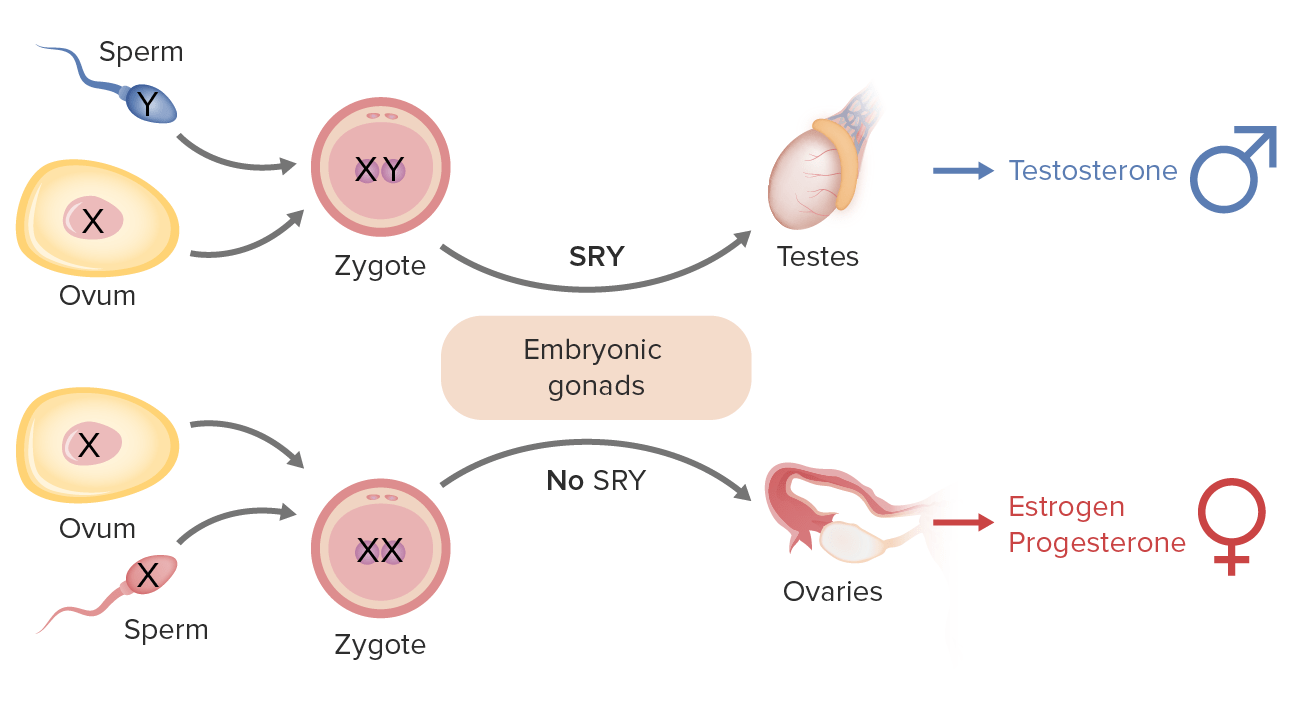
  • El desarrollo del ovario a partir de la gónada bipotente requiere la ausencia de SRY (previniendo la diferenciación en EN Erythema nodosum is an immune-mediated panniculitis (inflammation of the subcutaneous fat) caused by a type IV (delayed-type) hypersensitivity reaction. It commonly manifests in young women as tender, erythematous nodules on the shins. Erythema Nodosum testículos).
  • Otros genes Genes A category of nucleic acid sequences that function as units of heredity and which code for the basic instructions for the development, reproduction, and maintenance of organisms. DNA Types and Structure/proteínas clave implicados en EN Erythema nodosum is an immune-mediated panniculitis (inflammation of the subcutaneous fat) caused by a type IV (delayed-type) hypersensitivity reaction. It commonly manifests in young women as tender, erythematous nodules on the shins. Erythema Nodosum la determinación del sexo femenino:
    • Genes Genes A category of nucleic acid sequences that function as units of heredity and which code for the basic instructions for the development, reproduction, and maintenance of organisms. DNA Types and Structure autosómicos que reprimen SOX9:
      • Wnt4
      • Rspo1
      • FOXL2
    • DAX1
  • Sin SOX9 y con DAX1:
    • ↓ La producción de la hormona antimülleriana permite que los LOS Neisseria conductos müllerianos persistan y se desarrollen.
    • No hay células de Leydig → no hay testosterona → se desarrollan genitales externos femeninos.
  • Los LOS Neisseria embriones se desarrollan en EN Erythema nodosum is an immune-mediated panniculitis (inflammation of the subcutaneous fat) caused by a type IV (delayed-type) hypersensitivity reaction. It commonly manifests in young women as tender, erythematous nodules on the shins. Erythema Nodosum el “ambiente hormonal femenino” dentro de su madre, por lo que no está claro si las hormonas producidas por el feto son necesarias para su desarrollo embriológico.
  • En EN Erythema nodosum is an immune-mediated panniculitis (inflammation of the subcutaneous fat) caused by a type IV (delayed-type) hypersensitivity reaction. It commonly manifests in young women as tender, erythematous nodules on the shins. Erythema Nodosum la pubertad, el estrógeno estimula:
    • Desarrollo mamario
    • Ensanchamiento de las caderas
Sex determination in Humans

Determinación del sexo en el ser humano:
El cromosoma Y incluye el gen SRY (Sex-determining Region Y) que codifica el factor determinante de los testículos (TDF), lo que hace que las gónadas embrionarias se conviertan en testículos (gónadas masculinas) y den lugar a un desarrollo masculino.
En ausencia de la proteína TDF (es decir, sin cromosoma Y), las gónadas embrionarias se convierten en ovarios (gónadas femeninas).
Las hembras poseen 2 copias del cromosoma X (XX);
Los hombres poseen 1 cromosoma X y 1 Y (más corto) (XY).

Imagen por Lecturio.

Related videos

Relevancia Clínica: Trastornos del Desarrollo Sexual

  • Los LOS Neisseria trastornos del desarrollo sexual: Son un grupo de condiciones caracterizadas por un desarrollo sexual atípico en EN Erythema nodosum is an immune-mediated panniculitis (inflammation of the subcutaneous fat) caused by a type IV (delayed-type) hypersensitivity reaction. It commonly manifests in young women as tender, erythematous nodules on the shins. Erythema Nodosum un individuo, que puede implicar anomalías en EN Erythema nodosum is an immune-mediated panniculitis (inflammation of the subcutaneous fat) caused by a type IV (delayed-type) hypersensitivity reaction. It commonly manifests in young women as tender, erythematous nodules on the shins. Erythema Nodosum la estructura y/o función de los LOS Neisseria órganos reproductivos internos y/o genitales externos.
  • Hiperplasia suprarrenal congénita: aumento de la formación de hormonas sexuales masculinas (andrógenos) con virilización de los LOS Neisseria genitales femeninos externos. Caracterizado por bajos niveles de cortisol Cortisol Glucocorticoids, altos niveles de ACTH e hiperplasia suprarrenal
  • Síndrome de insensibilidad a los LOS Neisseria andrógenos: Las mutaciones en EN Erythema nodosum is an immune-mediated panniculitis (inflammation of the subcutaneous fat) caused by a type IV (delayed-type) hypersensitivity reaction. It commonly manifests in young women as tender, erythematous nodules on the shins. Erythema Nodosum los LOS Neisseria receptores de andrógenos causan resistencia parcial o completa a la testosterona. Genotípicamente, los LOS Neisseria individuos afectados tienen un cariotipo 46,XY y testículos presentes internamente. Los LOS Neisseria niveles de testosterona están elevados y parte de esta testosterona se convierte periféricamente en EN Erythema nodosum is an immune-mediated panniculitis (inflammation of the subcutaneous fat) caused by a type IV (delayed-type) hypersensitivity reaction. It commonly manifests in young women as tender, erythematous nodules on the shins. Erythema Nodosum estrógeno. Clínicamente, las personas con síndrome de insensibilidad a los LOS Neisseria andrógenos completo no presentarán vello sexual y tendrán genitales femeninos externos de apariencia normal. A los LOS Neisseria individuos generalmente se les asigna el género femenino al AL Amyloidosis nacer y se presentarán en EN Erythema nodosum is an immune-mediated panniculitis (inflammation of the subcutaneous fat) caused by a type IV (delayed-type) hypersensitivity reaction. It commonly manifests in young women as tender, erythematous nodules on the shins. Erythema Nodosum la pubertad con amenorrea.
  • Deficiencia de aromatasa: Da como resultado una incapacidad para convertir la testosterona en EN Erythema nodosum is an immune-mediated panniculitis (inflammation of the subcutaneous fat) caused by a type IV (delayed-type) hypersensitivity reaction. It commonly manifests in young women as tender, erythematous nodules on the shins. Erythema Nodosum estrógeno, lo que provoca principalmente la virilización de los LOS Neisseria genitales externos en EN Erythema nodosum is an immune-mediated panniculitis (inflammation of the subcutaneous fat) caused by a type IV (delayed-type) hypersensitivity reaction. It commonly manifests in young women as tender, erythematous nodules on the shins. Erythema Nodosum las mujeres.
  • Deficiencia de 5α-reductasa: Trastorno autosómico recesivo que altera la conversión de testosterona en EN Erythema nodosum is an immune-mediated panniculitis (inflammation of the subcutaneous fat) caused by a type IV (delayed-type) hypersensitivity reaction. It commonly manifests in young women as tender, erythematous nodules on the shins. Erythema Nodosum dihidrotestosterona, impidiendo el desarrollo completo de los LOS Neisseria genitales externos en EN Erythema nodosum is an immune-mediated panniculitis (inflammation of the subcutaneous fat) caused by a type IV (delayed-type) hypersensitivity reaction. It commonly manifests in young women as tender, erythematous nodules on the shins. Erythema Nodosum los LOS Neisseria hombres. Este trastorno da como resultado genitales ambiguos en EN Erythema nodosum is an immune-mediated panniculitis (inflammation of the subcutaneous fat) caused by a type IV (delayed-type) hypersensitivity reaction. It commonly manifests in young women as tender, erythematous nodules on the shins. Erythema Nodosum individuos 46,XY al AL Amyloidosis nacer.
  • Disgenesia gonadal pura: Resulta en EN Erythema nodosum is an immune-mediated panniculitis (inflammation of the subcutaneous fat) caused by a type IV (delayed-type) hypersensitivity reaction. It commonly manifests in young women as tender, erythematous nodules on the shins. Erythema Nodosum gónadas no funcionales. En EN Erythema nodosum is an immune-mediated panniculitis (inflammation of the subcutaneous fat) caused by a type IV (delayed-type) hypersensitivity reaction. It commonly manifests in young women as tender, erythematous nodules on the shins. Erythema Nodosum individuos 46,XX, la disgenesia gonadal pura se presenta con insuficiencia ovárica prematura (es decir, menopausia prematura) en EN Erythema nodosum is an immune-mediated panniculitis (inflammation of the subcutaneous fat) caused by a type IV (delayed-type) hypersensitivity reaction. It commonly manifests in young women as tender, erythematous nodules on the shins. Erythema Nodosum mujeres de apariencia normal. En EN Erythema nodosum is an immune-mediated panniculitis (inflammation of the subcutaneous fat) caused by a type IV (delayed-type) hypersensitivity reaction. It commonly manifests in young women as tender, erythematous nodules on the shins. Erythema Nodosum individuos 46,XY, la condición se conoce como síndrome de Swyer; sin testículos funcionales, no se producen testosterona ni factor antimülleriano, por lo que los LOS Neisseria individuos tienen genitales femeninos externos y estructuras müllerianas normales. Los LOS Neisseria individuos afectados se presentan en EN Erythema nodosum is an immune-mediated panniculitis (inflammation of the subcutaneous fat) caused by a type IV (delayed-type) hypersensitivity reaction. It commonly manifests in young women as tender, erythematous nodules on the shins. Erythema Nodosum la adolescencia con amenorrea primaria y ausencia de todas las características sexuales secundarias.
  • Síndrome de Klinefelter: Aneuploidía cromosómica caracterizada por la existencia de ≥ 1 cromosoma X adicional en EN Erythema nodosum is an immune-mediated panniculitis (inflammation of the subcutaneous fat) caused by a type IV (delayed-type) hypersensitivity reaction. It commonly manifests in young women as tender, erythematous nodules on the shins. Erythema Nodosum un cariotipo masculino (e.g., 47, XXY XXY Klinefelter syndrome is a chromosomal aneuploidy characterized by the presence of 1 or more extra X chromosomes in a male karyotype, most commonly leading to karyotype 47,XXY. Klinefelter syndrome is associated with decreased levels of testosterone and is the most common cause of congenital hypogonadism. Klinefelter Syndrome o 48,XXXY). Los LOS Neisseria síntomas no suelen observarse durante la infancia. Durante la edad adulta, los LOS Neisseria individuos suelen ser hombres altos que presentan ginecomastia e infertilidad relacionada con el hipogonadismo. Las dificultades educativas también son comunes.
  • Síndrome de Turner: Aneuploidía cromosómica caracterizada por la ausencia de un cromosoma X en EN Erythema nodosum is an immune-mediated panniculitis (inflammation of the subcutaneous fat) caused by a type IV (delayed-type) hypersensitivity reaction. It commonly manifests in young women as tender, erythematous nodules on the shins. Erythema Nodosum un cariotipo femenino (p. ej., 45,X). Las manifestaciones clínicas incluyen un fenotipo característico (baja estatura, cuello palmeado, pezones muy separados) y múltiples anomalías que generalmente afectan los LOS Neisseria sistemas cardíaco, renal, reproductivo, esquelético y linfático. Es probable que haya disgenesia gonadal e infertilidad.
  • Hermafroditismo verdadero: Presencia de una gónada ovotesticular que contiene elementos ováricos y testiculares. Los LOS Neisseria individuos afectados suelen nacer con genitales ambiguos y las estructuras internas dependen del tejido gonadal adyacente. El cariotipo más común es el 46,XX.

Referencias

  1. Wilhelm, D., Palmer, S., & Koopman, P. (2007). Sex determination and gonadal development in mammals. Physiol Rev 87, pp. 1–28. https://doi.org/10.1152/physrev.00009.2006
  2. Syryn, H., Van De Vijver, K., & Cools, M. (2023). Ovotesticular difference of sex development: Genetic background, histological features, and clinical management. Hormone Research in Paediatrics, 96(2), 180–189. https://doi.org/10.1159/000519323
  3. Bashamboo, A., & McElreavey, K. (2016). Mechanism of sex determination in humans: insights from disorders of sex development. Sex Dev 10, pp. 313–325. https://doi.org/10.1159/000452637
  4. McClelland, K., Bowles, J., & Koopman, P. (2012). Male sex determination: insights into molecular mechanisms. Asian J Androl 14, pp. 164–171. https://doi.org/10.1038/aja.2011.169
  5. Hake, L., & O’Connor, C. (2008). Genetic mechanisms of sex determination. Nature Education 1:25. https://www.nature.com/scitable/topicpage/genetic-mechanisms-of-sex-determination-314/ 
  6. Hiort, O. (2023). Typical sex development. UpToDate. Retrieved October 24, 2025, from https://www.uptodate.com/contents/typical-sex-development

¡Crea tu cuenta gratis o inicia una sesión para seguir leyendo!

Regístrate ahora y obtén acceso gratuito a Lecturio con páginas de concepto, videos médicos y cuestionarios para tu educación médica.

User Reviews

Que tengas una sesión de estudio alegre y navideña 🎁 Ahorra 50% en todos los planes >>

Details