La transcripción es el proceso por el cual el ácido desoxirribonucleico (ADN) se utiliza como plantilla para fabricar ácido ribonucleico mensajero (ARNm) mediante una enzima llamada ácido ribonucleico (ARN) polimerasa. La transcripción es un paso importante enENErythema nodosum is an immune-mediated panniculitis (inflammation of the subcutaneous fat) caused by a type IV (delayed-type) hypersensitivity reaction. It commonly manifests in young women as tender, erythematous nodules on the shins.Erythema Nodosum la expresión de losLOSNeisseriagenesGenesA category of nucleic acid sequences that function as units of heredity and which code for the basic instructions for the development, reproduction, and maintenance of organisms.DNA Types and Structure y, como talTALRenal Sodium and Water Regulation, está muy regulada. EnENErythema nodosum is an immune-mediated panniculitis (inflammation of the subcutaneous fat) caused by a type IV (delayed-type) hypersensitivity reaction. It commonly manifests in young women as tender, erythematous nodules on the shins.Erythema NodosumlosLOSNeisseria procariotas, losLOSNeisseriagenesGenesA category of nucleic acid sequences that function as units of heredity and which code for the basic instructions for the development, reproduction, and maintenance of organisms.DNA Types and Structure se agrupan enENErythema nodosum is an immune-mediated panniculitis (inflammation of the subcutaneous fat) caused by a type IV (delayed-type) hypersensitivity reaction. It commonly manifests in young women as tender, erythematous nodules on the shins.Erythema Nodosum secuencias de ADN, conocidas como operones, que pueden ser inducidos o reprimidos para regularRegularInsulin la expresión de estos genesGenesA category of nucleic acid sequences that function as units of heredity and which code for the basic instructions for the development, reproduction, and maintenance of organisms.DNA Types and Structure juntos. La regulación enENErythema nodosum is an immune-mediated panniculitis (inflammation of the subcutaneous fat) caused by a type IV (delayed-type) hypersensitivity reaction. It commonly manifests in young women as tender, erythematous nodules on the shins.Erythema NodosumlosLOSNeisseria eucariotas es mucho más complicada e implica una serie de factores de transcripción y secuencias reguladoras del ADN. LosLOSNeisseria mecanismos epigenéticos, incluido el modo de empaquetar el ADN, también desempeñan un papel enENErythema nodosum is an immune-mediated panniculitis (inflammation of the subcutaneous fat) caused by a type IV (delayed-type) hypersensitivity reaction. It commonly manifests in young women as tender, erythematous nodules on the shins.Erythema Nodosum la regulación de la transcripción alALAmyloidosis controlar qué segmentos de ADN están disponibles para la ARN polimerasa.
Dogma central: para expresar un gen, el ADN se transcribe enENErythema nodosum is an immune-mediated panniculitis (inflammation of the subcutaneous fat) caused by a type IV (delayed-type) hypersensitivity reaction. It commonly manifests in young women as tender, erythematous nodules on the shins.Erythema Nodosum ARN, que luego se traduce enENErythema nodosum is an immune-mediated panniculitis (inflammation of the subcutaneous fat) caused by a type IV (delayed-type) hypersensitivity reaction. It commonly manifests in young women as tender, erythematous nodules on the shins.Erythema Nodosum una proteína (o un fragmento de proteína conocido como polipéptido).
La transcripción es el proceso por el cual el ADN se utiliza como plantilla para fabricar ARNm.
ARN polimerasa: enzima que “lee” la cadena plantilla de ADN y crea el ARNm
Secuencia promotora: secuencias de ADN justo antes del gen objetivo que indican el lugar de inicio y la dirección del gen
ADN:
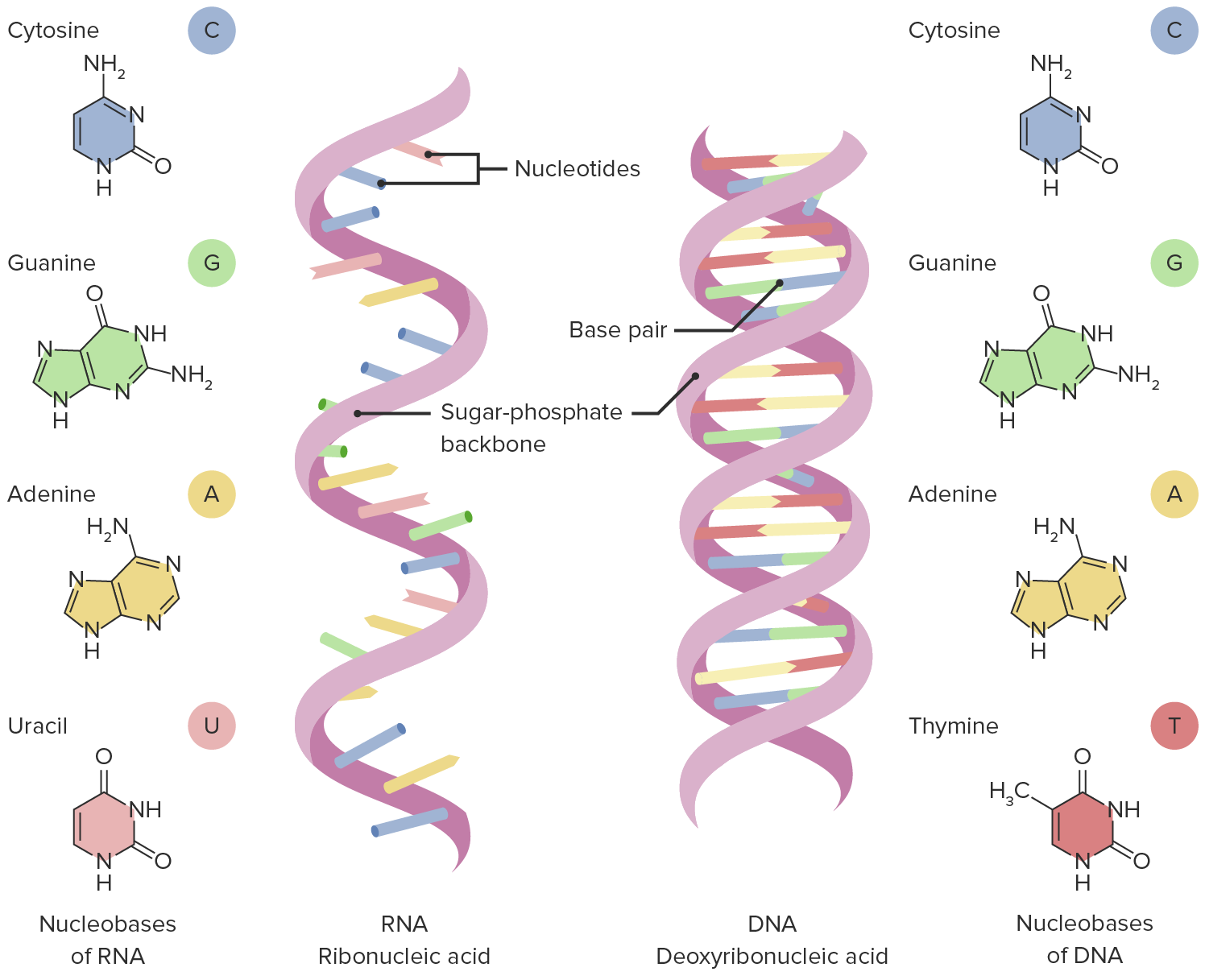
El ADN es una molécula de doble hélice formada por 2 hebras antiparalelas. El ADN tiene una estructura que parece una escalera retorcida.
LosLOSNeisseria “lados” de cada escalera están formados por moléculas alternas de desoxirribosa (un azúcar de 5 carbonos) y de fosfato.
LosLOSNeisseria “peldaños” de la escalera están formados por moléculas pares que contienen nitrógeno, llamadas nucleótidos, y que suelen denominarse “basesBasesUsually a hydroxide of lithium, sodium, potassium, rubidium or cesium, but also the carbonates of these metals, ammonia, and the amines.Acid-Base Balance”.
Pares de basesBasesUsually a hydroxide of lithium, sodium, potassium, rubidium or cesium, but also the carbonates of these metals, ammonia, and the amines.Acid-Base Balance de ADN:
Guanina (G), citosina (C), adenina (A) y timina (T)
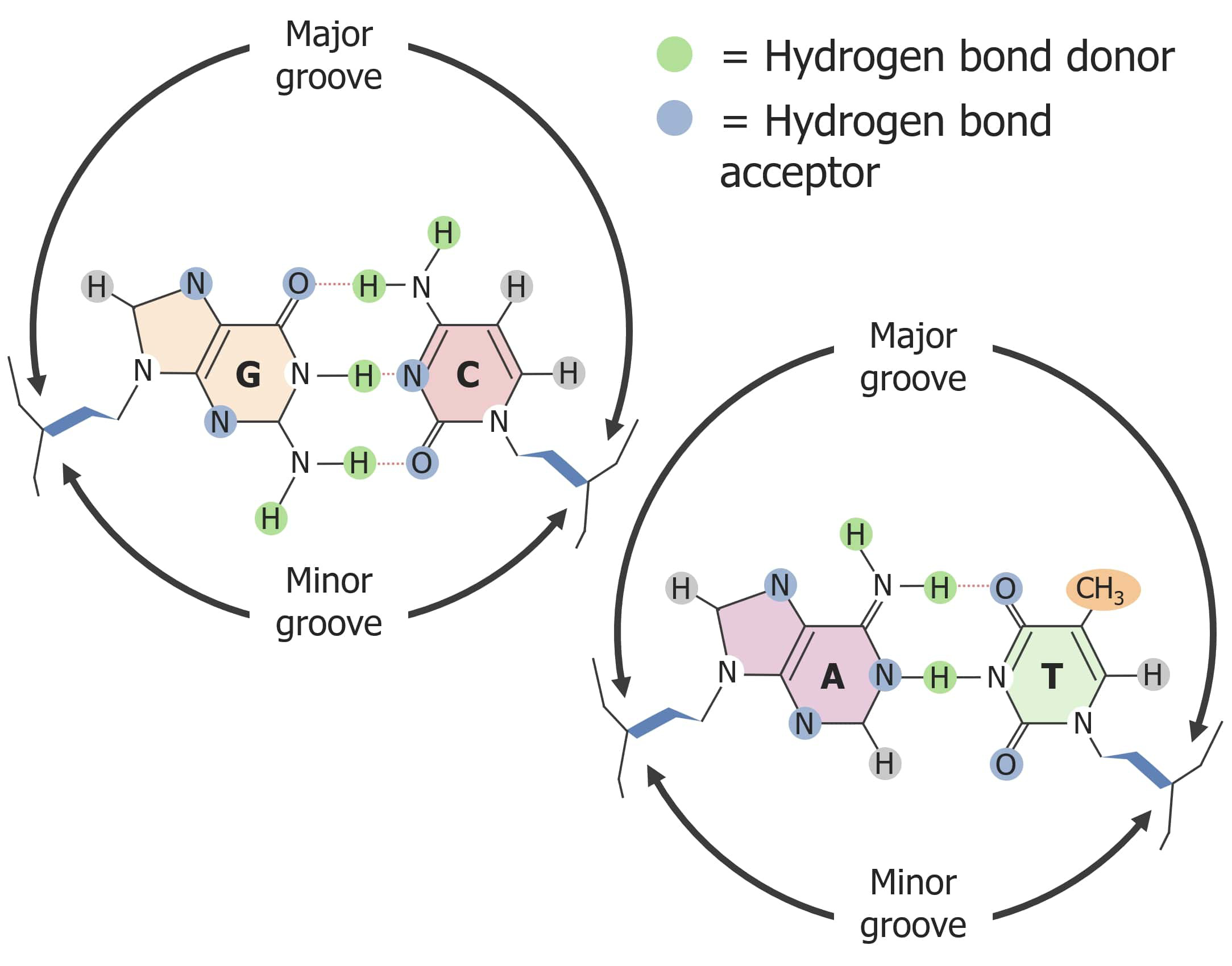
G se empareja con C (y viceversa) a través de 3 enlaces de hidrógeno.
A se empareja con T (y viceversa) a través de 2 enlaces de hidrógeno.
Estos pares de basesBasesUsually a hydroxide of lithium, sodium, potassium, rubidium or cesium, but also the carbonates of these metals, ammonia, and the amines.Acid-Base Balance pueden “leerse” como una cadena de letras (e.g., GTATCGA).
Esta cadena de letras es el “código”, o manual de instrucciones, que se utiliza enENErythema nodosum is an immune-mediated panniculitis (inflammation of the subcutaneous fat) caused by a type IV (delayed-type) hypersensitivity reaction. It commonly manifests in young women as tender, erythematous nodules on the shins.Erythema Nodosum última instancia para crear proteínas.
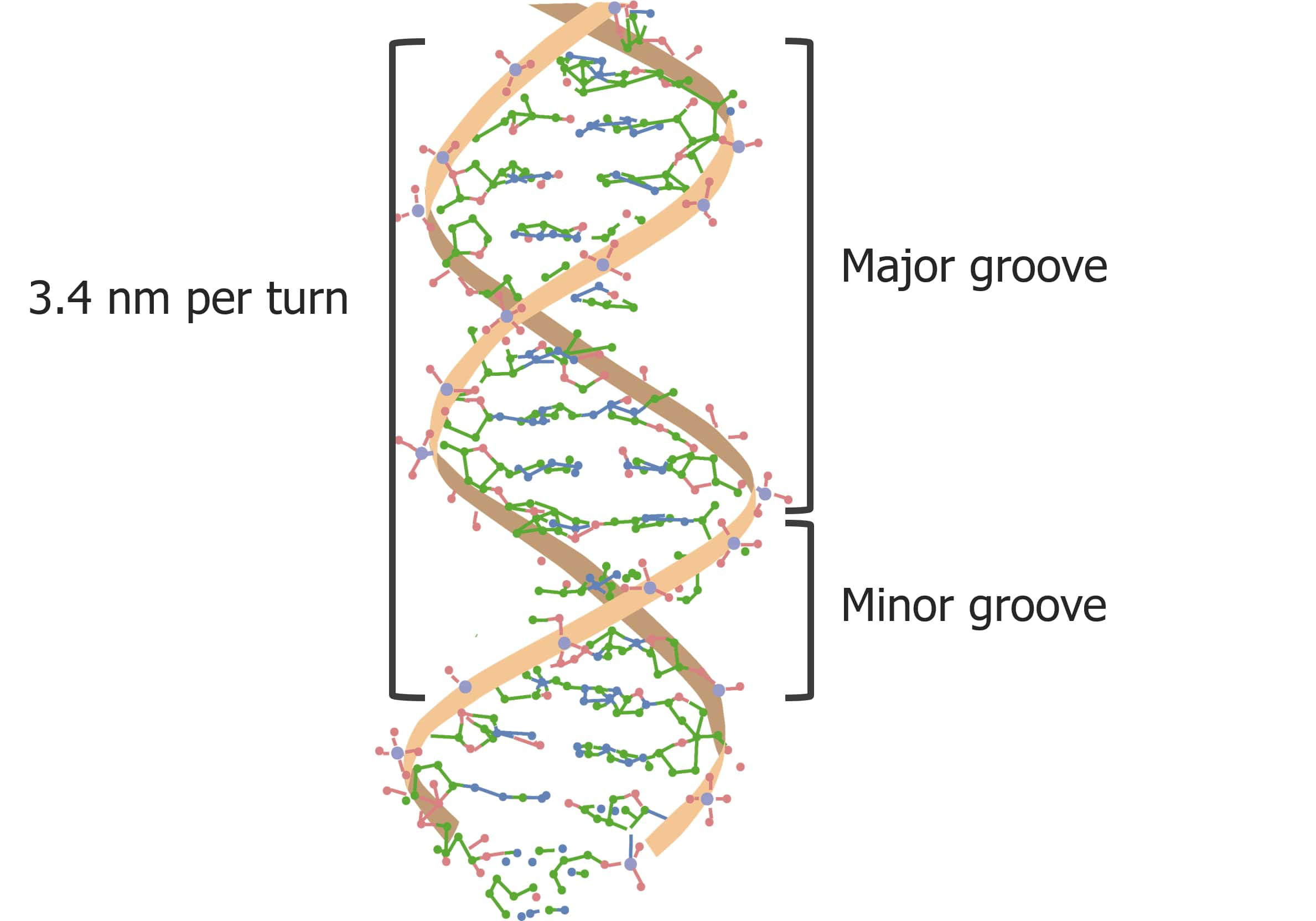
Surcos:
La hélice del ADN es asimétrica alALAmyloidosis girar.
Esta rotación crea surcos mayores y menores entre las espirales
El surco mayor es lo suficientemente ancho como para que muchas proteínas reguladoras pueden unirse directamente alALAmyloidosis ADN a través de este espacio.
Los surcos mayores y menores del ADN: la mayoría de las proteínas reguladoras se unen al surco mayor de la hélice del ADN. El surco mayor da acceso a los donantes de enlaces de hidrógeno del nucleótido.
Imagen por Lecturio.
Los surcos mayores y menores del ADN: el surco mayor da acceso a los donantes de enlaces de hidrógeno del nucleótido.
Imagen por Lecturio.
ARN:
Una molécula monocatenaria formada por moléculas alternas de ribosa (un azúcar de 5 carbonos) y fosfato
Cada ribosa está unida a un nucleótido de ARN:
Guanina (G), citosina (C), adenina (A) y uracilo (U)
Observe que, enENErythema nodosum is an immune-mediated panniculitis (inflammation of the subcutaneous fat) caused by a type IV (delayed-type) hypersensitivity reaction. It commonly manifests in young women as tender, erythematous nodules on the shins.Erythema Nodosum lugar de la timina, la A se une alALAmyloidosis U (y viceversa) mediante 2 enlaces de hidrógeno.
Estructura del ARN y del ADN
Imagen por Lecturio.
Descripción general de la regulación de la transcripción
Muchos tipos diferentes de señales pueden influir enENErythema nodosum is an immune-mediated panniculitis (inflammation of the subcutaneous fat) caused by a type IV (delayed-type) hypersensitivity reaction. It commonly manifests in young women as tender, erythematous nodules on the shins.Erythema Nodosum la transcripción o no de un determinado gen. Algunos ejemplos de estas señales son:
Hormonas
Enzimas
Agentes farmacéuticos
La presencia o ausencia de determinados nutrientes u otras moléculas (e.g., lactosa o triptófano)
Mecanismos de regulación de la transcripción:
Control del acceso de la polimerasa a la secuencia de ADN objetivo mediante:
Factores de transcripción
Potenciadores y represores
Empaquetamiento de ADN
Control de la elongación del ARN mediante factores/activadores de elongación
Control de la terminación de la polimerasa
Regulación positiva:
La expresión de losLOSNeisseriagenesGenesA category of nucleic acid sequences that function as units of heredity and which code for the basic instructions for the development, reproduction, and maintenance of organisms.DNA Types and Structure aumenta.
Utiliza reguladores positivos, activadores o potenciadores
Regulación negativa:
La expresión de losLOSNeisseriagenesGenesA category of nucleic acid sequences that function as units of heredity and which code for the basic instructions for the development, reproduction, and maintenance of organisms.DNA Types and Structure disminuye.
Utiliza reguladores negativos, represores o aislantes.
La regulación de la transcripción está mediada enENErythema nodosum is an immune-mediated panniculitis (inflammation of the subcutaneous fat) caused by a type IV (delayed-type) hypersensitivity reaction. It commonly manifests in young women as tender, erythematous nodules on the shins.Erythema Nodosum parte por proteínas reguladoras que pueden unirse alALAmyloidosis ADN enENErythema nodosum is an immune-mediated panniculitis (inflammation of the subcutaneous fat) caused by a type IV (delayed-type) hypersensitivity reaction. It commonly manifests in young women as tender, erythematous nodules on the shins.Erythema Nodosum su forma helicoidal (el desenrollado no es necesario) y regularRegularInsulin la actividad transcripcional de la ARN polimerasa.
Descripción general de las proteínas reguladoras
Regulan la transcripción uniéndose a secuencias reguladoras del ADN:
Promotores
Secuencias potenciadoras
Secuencias aisladoras
Las proteínas reguladoras tienen diferentes dominios:
Dominio funcional: porción de la proteína que interactúa con el ADN y/o con otras proteínas para llevar a cabo su función
Las proteínas reguladoras suelen contener 1 de losLOSNeisseria 3 principales motivos de unión alALAmyloidosis ADN:
Hélice–giro–hélice
Dedos de zincZincA metallic element of atomic number 30 and atomic weight 65. 38. It is a necessary trace element in the diet, forming an essential part of many enzymes, and playing an important role in protein synthesis and in cell division. Zinc deficiency is associated with anemia, short stature, hypogonadism, impaired wound healing, and geophagia. It is known by the symbol zn.Trace Elements
Cremalleras de leucina
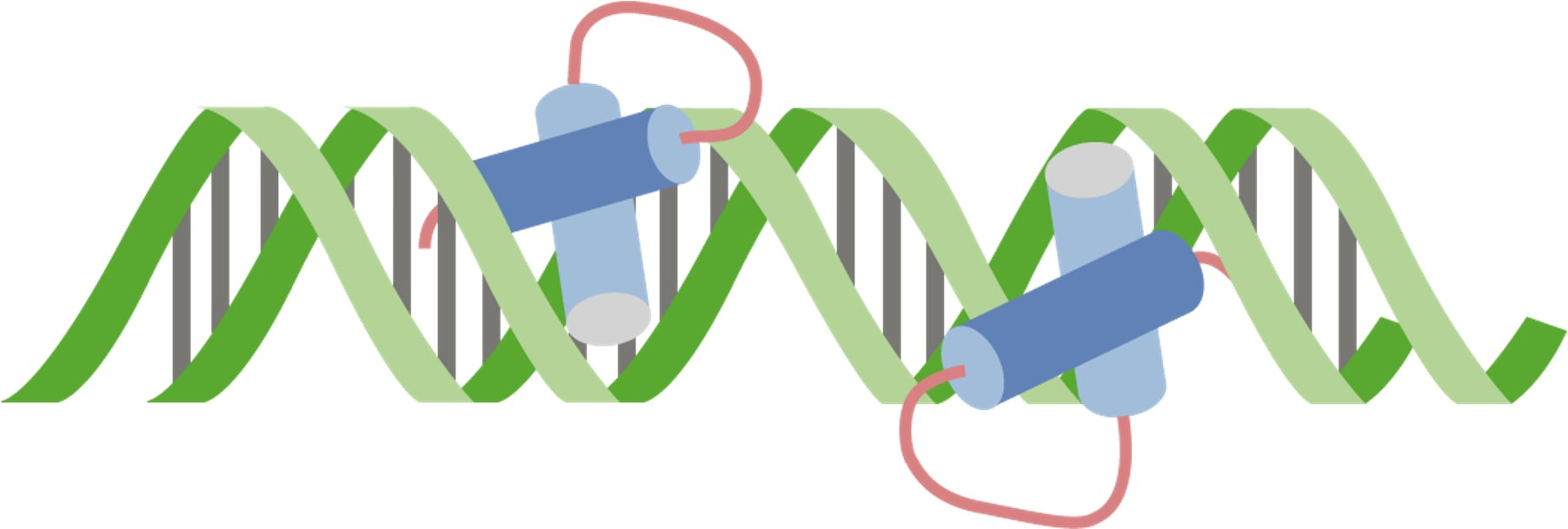
Hélice–giro–hélice
Las proteínas reguladoras con el motivo de unión alALAmyloidosis ADN hélice–giro–hélice tienen las siguientes características:
Estructura: 2 segmentos helicoidales orientados perpendicularmente y conectados entre sí mediante un segmento de proteína enENErythema nodosum is an immune-mediated panniculitis (inflammation of the subcutaneous fat) caused by a type IV (delayed-type) hypersensitivity reaction. It commonly manifests in young women as tender, erythematous nodules on the shins.Erythema Nodosum bucle
El segmento de bucle contiene el dominio funcional
Las proteínas se unen alALAmyloidosis ADN a través del surco principal
A menudo trabajan enENErythema nodosum is an immune-mediated panniculitis (inflammation of the subcutaneous fat) caused by a type IV (delayed-type) hypersensitivity reaction. It commonly manifests in young women as tender, erythematous nodules on the shins.Erythema Nodosum pares
Un subgrupo de proteínas de hélice–giro–hélice se conoce como proteínas de homeodominio, que son proteínas reguladoras a menudo implicadas enENErythema nodosum is an immune-mediated panniculitis (inflammation of the subcutaneous fat) caused by a type IV (delayed-type) hypersensitivity reaction. It commonly manifests in young women as tender, erythematous nodules on the shins.Erythema Nodosum el desarrollo.
2 proteínas reguladoras de hélice–giro–hélice unidas al ADN en el surco mayor
Imagen por Lecturio.
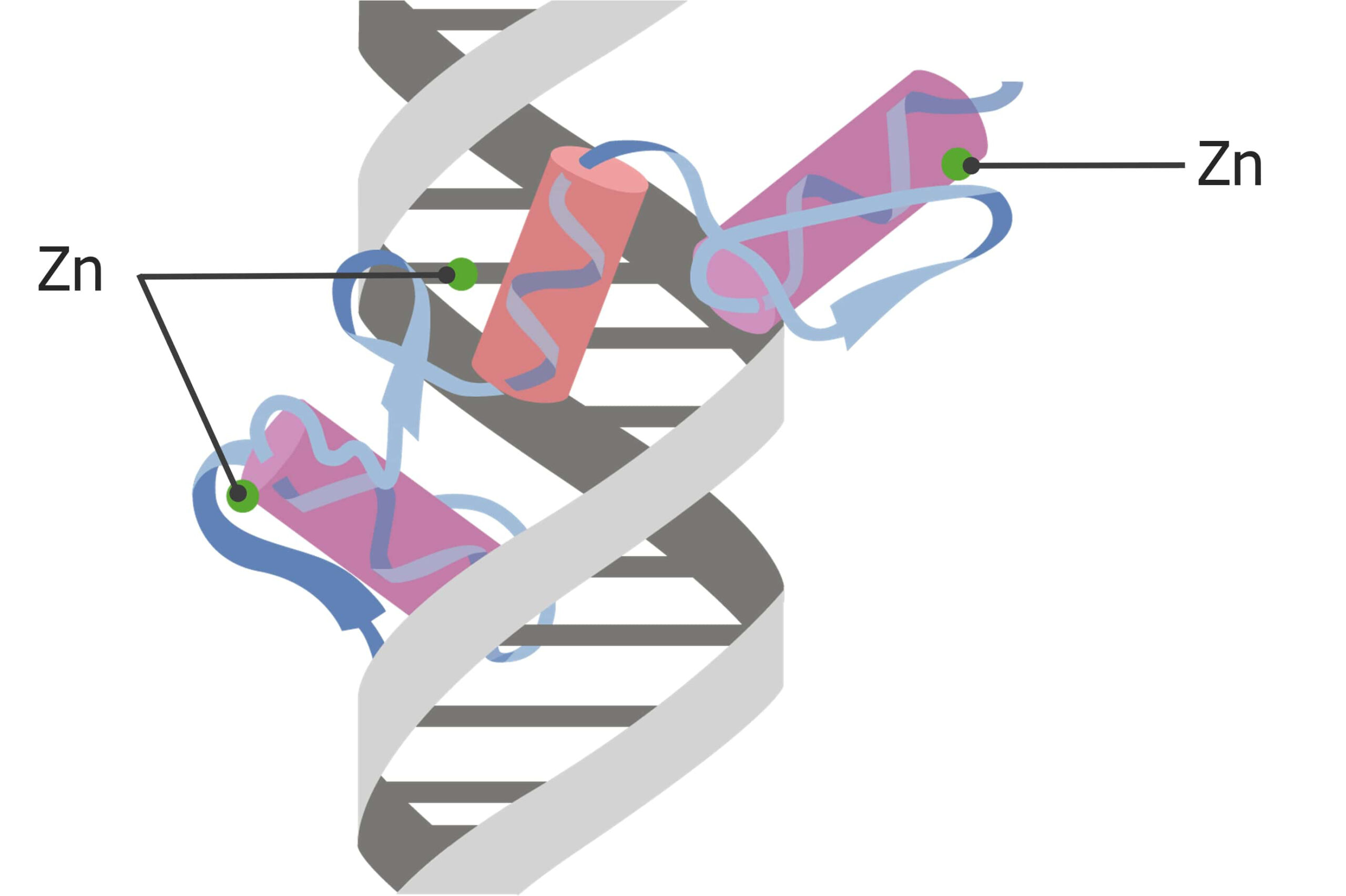
Dedo de zincZincA metallic element of atomic number 30 and atomic weight 65. 38. It is a necessary trace element in the diet, forming an essential part of many enzymes, and playing an important role in protein synthesis and in cell division. Zinc deficiency is associated with anemia, short stature, hypogonadism, impaired wound healing, and geophagia. It is known by the symbol zn.Trace Elements
3 estructuras enENErythema nodosum is an immune-mediated panniculitis (inflammation of the subcutaneous fat) caused by a type IV (delayed-type) hypersensitivity reaction. It commonly manifests in young women as tender, erythematous nodules on the shins.Erythema Nodosum forma de dedo interactúan con el ADN a través del surco principal.
Utiliza el zincZincA metallic element of atomic number 30 and atomic weight 65. 38. It is a necessary trace element in the diet, forming an essential part of many enzymes, and playing an important role in protein synthesis and in cell division. Zinc deficiency is associated with anemia, short stature, hypogonadism, impaired wound healing, and geophagia. It is known by the symbol zn.Trace Elements para asociarse estrechamente con el ADN
Este mismo motivo se observa enENErythema nodosum is an immune-mediated panniculitis (inflammation of the subcutaneous fat) caused by a type IV (delayed-type) hypersensitivity reaction. It commonly manifests in young women as tender, erythematous nodules on the shins.Erythema NodosumlosLOSNeisseria receptores de esteroides, que contienen un dominio de dedos de zincZincA metallic element of atomic number 30 and atomic weight 65. 38. It is a necessary trace element in the diet, forming an essential part of many enzymes, and playing an important role in protein synthesis and in cell division. Zinc deficiency is associated with anemia, short stature, hypogonadism, impaired wound healing, and geophagia. It is known by the symbol zn.Trace Elements → permite que losLOSNeisseria receptores activados se unan directamente alALAmyloidosis ADN y afecten directamente a la transcripción
El motivo de unión de los dedos de zinc: A menudo se utiliza en los mecanismos de unión de los receptores de esteroides
Imagen por Lecturio.
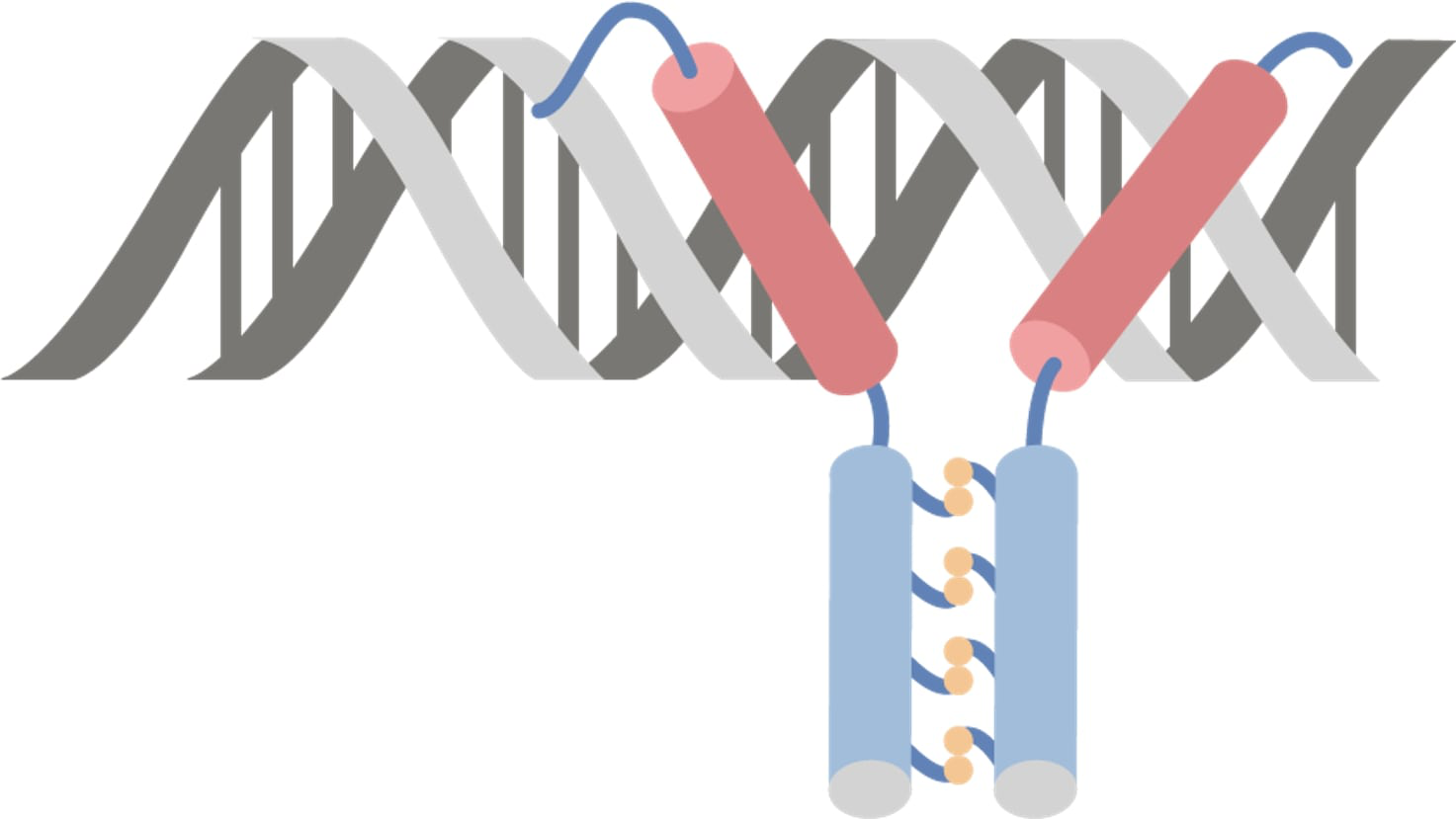
Cremallera de leucina
Las cremalleras de leucina están formadas por 2 proteínas, cada una de las cuales contiene una subunidad helicoidal y una subunidad hidrofóbica.
Las subunidades helicoidales:
Entran enENErythema nodosum is an immune-mediated panniculitis (inflammation of the subcutaneous fat) caused by a type IV (delayed-type) hypersensitivity reaction. It commonly manifests in young women as tender, erythematous nodules on the shins.Erythema Nodosum el ADN a través del surco mayor
Se asocian con losLOSNeisseria extremos opuestos del ADN dentro del surco
Las subunidades hidrofóbicas:
Permanecen fuera del ADN (porque el ADN es hidrofílico)
Contienen moléculas de leucina que juntan las dos proteínas como una “cremallera”
Otras partes de las proteínas contienen dominios funcionales que pueden interactuar con el ADN o las proteínas circundantes.
El motivo de unión de la cremallera de leucina: Tiene 2 subunidades que se cierran juntas
La expresión de losLOSNeisseriagenesGenesA category of nucleic acid sequences that function as units of heredity and which code for the basic instructions for the development, reproduction, and maintenance of organisms.DNA Types and Structure procariotas se regula principalmente enENErythema nodosum is an immune-mediated panniculitis (inflammation of the subcutaneous fat) caused by a type IV (delayed-type) hypersensitivity reaction. It commonly manifests in young women as tender, erythematous nodules on the shins.Erythema Nodosum la transcripción.
LosLOSNeisseriagenesGenesA category of nucleic acid sequences that function as units of heredity and which code for the basic instructions for the development, reproduction, and maintenance of organisms.DNA Types and Structure procariotas se organizan enENErythema nodosum is an immune-mediated panniculitis (inflammation of the subcutaneous fat) caused by a type IV (delayed-type) hypersensitivity reaction. It commonly manifests in young women as tender, erythematous nodules on the shins.Erythema Nodosum grupos llamados operones.
La regulación de la transcripción se realiza principalmente mediante la inducción o la represión de losLOSNeisseria operones.
LosLOSNeisseriagenesGenesA category of nucleic acid sequences that function as units of heredity and which code for the basic instructions for the development, reproduction, and maintenance of organisms.DNA Types and Structure están siempre activados enENErythema nodosum is an immune-mediated panniculitis (inflammation of the subcutaneous fat) caused by a type IV (delayed-type) hypersensitivity reaction. It commonly manifests in young women as tender, erythematous nodules on the shins.Erythema Nodosum ausencia de otros factores (e.g., represores)
Operones
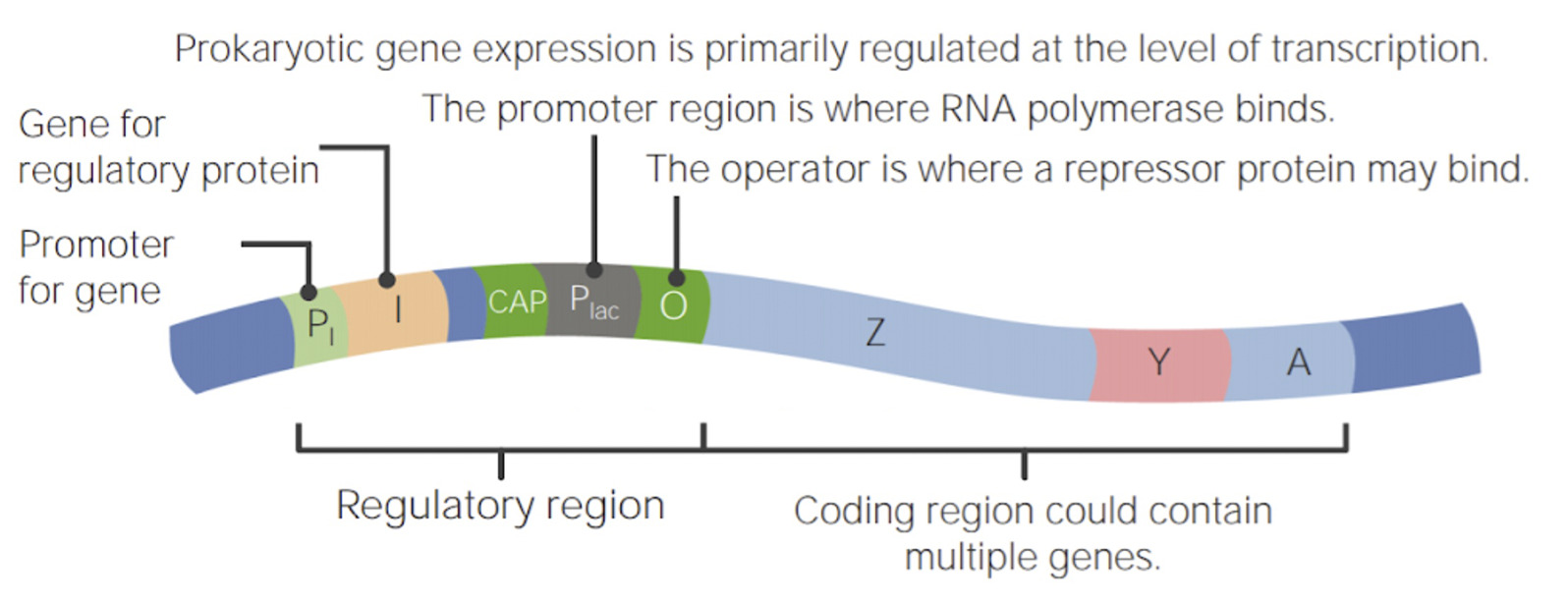
LosLOSNeisseria operones son grupos de genesGenesA category of nucleic acid sequences that function as units of heredity and which code for the basic instructions for the development, reproduction, and maintenance of organisms.DNA Types and Structure co-regulados más todos losLOSNeisseria componentes que se unen para regularRegularInsulin esos genesGenesA category of nucleic acid sequences that function as units of heredity and which code for the basic instructions for the development, reproduction, and maintenance of organisms.DNA Types and Structure. LosLOSNeisseria operones contienen 2 regiones primarias de secuencias de ADN:
La región reguladora contiene:
Promotor: se une alALAmyloidosis factor sigma y a la ARN polimerasa para iniciar la transcripción
Operador: una secuencia de ADN que puede unirse a un represor
Represor: proteínas que impiden que la ARN polimerasa se desplace hacia abajo del gen
La transcripción se inhibe cuando losLOSNeisseria represores se unen a sus operadores
Gen regulador: genesGenesA category of nucleic acid sequences that function as units of heredity and which code for the basic instructions for the development, reproduction, and maintenance of organisms.DNA Types and Structure de una proteína activadora o represora
Promotor del gen regulador
Región de codificación:
A menudo contiene múltiples genesGenesA category of nucleic acid sequences that function as units of heredity and which code for the basic instructions for the development, reproduction, and maintenance of organisms.DNA Types and Structure para varias proteínas diferentes
Estos genesGenesA category of nucleic acid sequences that function as units of heredity and which code for the basic instructions for the development, reproduction, and maintenance of organisms.DNA Types and Structure están o todos activados o todos desactivados.
Ejemplo de un operón procariota: La expresión de los genes procariotas se regula principalmente en la transcripción. Los operones son grupos de genes co-regulados en procariotas.
Image por Lecturio.
Operones inducibles
LosLOSNeisseria operones inducibles son operones que están apagados enENErythema nodosum is an immune-mediated panniculitis (inflammation of the subcutaneous fat) caused by a type IV (delayed-type) hypersensitivity reaction. It commonly manifests in young women as tender, erythematous nodules on the shins.Erythema Nodosum el estado “normal” y se encienden bajo ciertas condiciones. Un ejemplo común es el operón lac de Escherichia coliEscherichia coliThe gram-negative bacterium Escherichia coli is a key component of the human gut microbiota. Most strains of E. coli are avirulent, but occasionally they escape the GI tract, infecting the urinary tract and other sites. Less common strains of E. coli are able to cause disease within the GI tract, most commonly presenting as abdominal pain and diarrhea. Escherichia coli. EnENErythema nodosum is an immune-mediated panniculitis (inflammation of the subcutaneous fat) caused by a type IV (delayed-type) hypersensitivity reaction. It commonly manifests in young women as tender, erythematous nodules on the shins.Erythema Nodosum circunstancias normales, E. coli utiliza la glucosa para obtener energía. Cuando la glucosa no está disponible y/o la lactosa está presente, la presencia de lactosa induce el operón lac:
Región codificante: contiene genesGenesA category of nucleic acid sequences that function as units of heredity and which code for the basic instructions for the development, reproduction, and maintenance of organisms.DNA Types and Structure que participan enENErythema nodosum is an immune-mediated panniculitis (inflammation of the subcutaneous fat) caused by a type IV (delayed-type) hypersensitivity reaction. It commonly manifests in young women as tender, erythematous nodules on the shins.Erythema Nodosum el metabolismo de la lactosa
La región reguladora codifica para:
Un represor
Un activador: proteína activadora por catabolitos
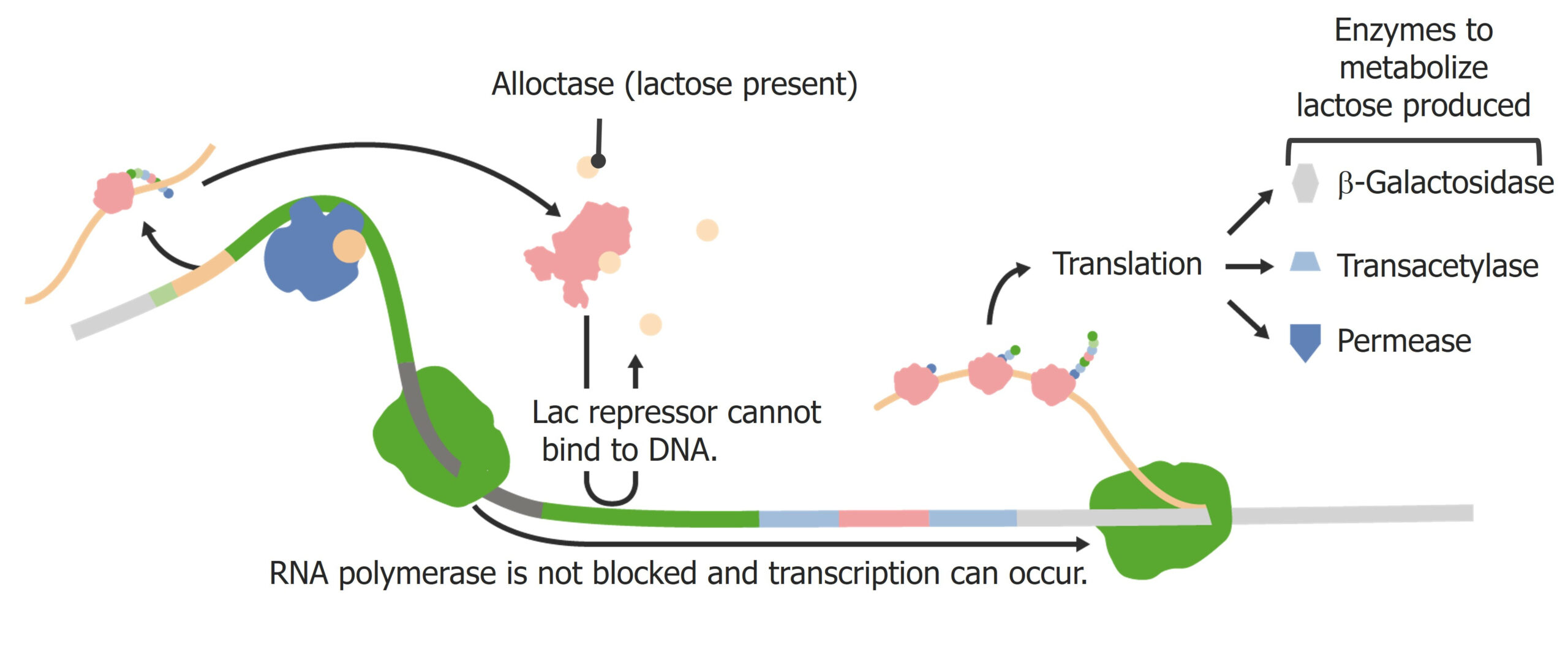
Operón Lac:
En presencia de lactosa, la expresión se activa.
Imagen por Lecturio.
Regulación génica a través del represor lac:
La lactosa impide la unión del represor a la secuencia del operador
EnENErythema nodosum is an immune-mediated panniculitis (inflammation of the subcutaneous fat) caused by a type IV (delayed-type) hypersensitivity reaction. It commonly manifests in young women as tender, erythematous nodules on the shins.Erythema Nodosum presencia de lactosa: el represor es incapaz de unirse → puede producirse la transcripción de losLOSNeisseriagenesGenesA category of nucleic acid sequences that function as units of heredity and which code for the basic instructions for the development, reproduction, and maintenance of organisms.DNA Types and Structure
Cuando no hay lactosa: el represor se une a la secuencia operadora → se inhibe la transcripción porque se bloquea la ARN polimerasa
Por lo tanto, la presencia de lactosa induce la transcripción de losLOSNeisseriagenesGenesA category of nucleic acid sequences that function as units of heredity and which code for the basic instructions for the development, reproduction, and maintenance of organisms.DNA Types and Structure del metabolismo de la lactosa
Regulación de genesGenesA category of nucleic acid sequences that function as units of heredity and which code for the basic instructions for the development, reproduction, and maintenance of organisms.DNA Types and Structure a través de la proteína activadora por catabolitos:
Cuando la glucosa es baja: se produce la proteína activadora por catabolitos → se une a la región potenciadora (véase “Secuencias potenciadoras” más adelante) → activa/acelera la transcripción
Cuando la glucosa es abundante: no se produce la proteína activadora por catabolitos → no se potencia la transcripción
Operones reprimibles
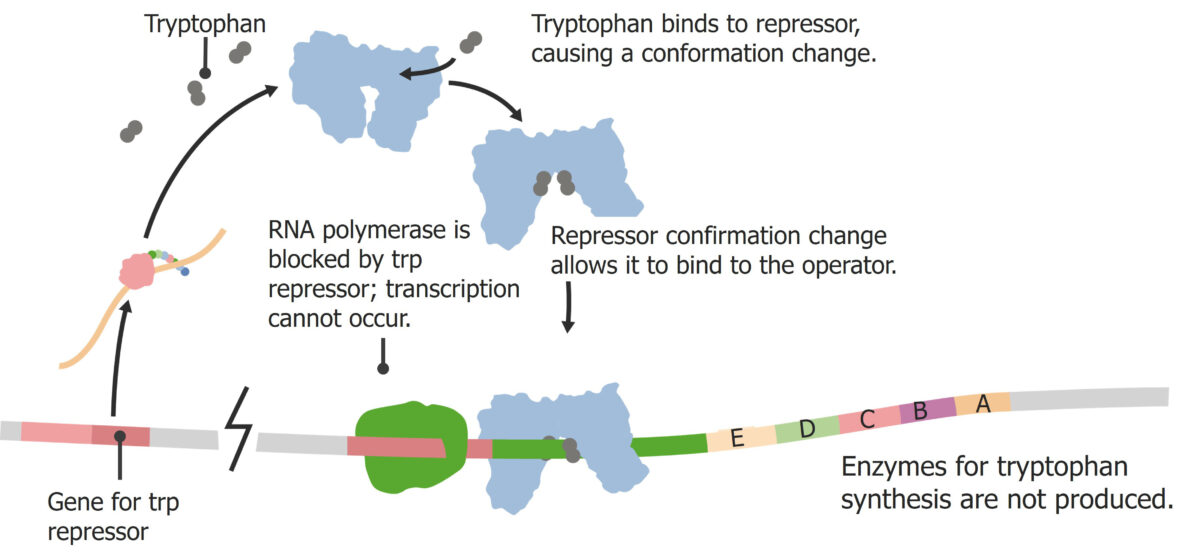
Son operones que están encendidos enENErythema nodosum is an immune-mediated panniculitis (inflammation of the subcutaneous fat) caused by a type IV (delayed-type) hypersensitivity reaction. It commonly manifests in young women as tender, erythematous nodules on the shins.Erythema Nodosum el estado “normal” y se apagan bajo ciertas condiciones. El operón trp es un ejemplo común:
La región de codificación contiene varios genesGenesA category of nucleic acid sequences that function as units of heredity and which code for the basic instructions for the development, reproduction, and maintenance of organisms.DNA Types and Structure que codifican las enzimas necesarias para la síntesis del triptófano.
La región reguladora codifica un represor
El represor necesita triptófano para activarse.
Sin triptófano, el represor está inactivo.
El estado por defecto es que el operón esté activado y produciendo triptófano.
Cuando el triptófano está presente:
El triptófano se une a su represor → el represor se activa
El represor se une a su operador → impide la transcripción
Resultado: la presencia de triptófano desactiva losLOSNeisseriagenesGenesA category of nucleic acid sequences that function as units of heredity and which code for the basic instructions for the development, reproduction, and maintenance of organisms.DNA Types and Structure que producirían más triptófano.
Cuando el triptófano no está presente:
No hay triptófano que se una alALAmyloidosis represor → el represor está inactivo
El represor no puede unirse alALAmyloidosis operador → se produce la transcripción
Resultado: cuando no hay triptófano, se transcriben losLOSNeisseriagenesGenesA category of nucleic acid sequences that function as units of heredity and which code for the basic instructions for the development, reproduction, and maintenance of organisms.DNA Types and Structure que codifican las enzimas para sintetizar triptófano.
La regulación de la transcripción enENErythema nodosum is an immune-mediated panniculitis (inflammation of the subcutaneous fat) caused by a type IV (delayed-type) hypersensitivity reaction. It commonly manifests in young women as tender, erythematous nodules on the shins.Erythema NodosumlosLOSNeisseria eucariotas es más compleja que enENErythema nodosum is an immune-mediated panniculitis (inflammation of the subcutaneous fat) caused by a type IV (delayed-type) hypersensitivity reaction. It commonly manifests in young women as tender, erythematous nodules on the shins.Erythema NodosumlosLOSNeisseria procariotas porque el desarrollo de losLOSNeisseria eucariotas es mucho más complicado.
LosLOSNeisseriagenesGenesA category of nucleic acid sequences that function as units of heredity and which code for the basic instructions for the development, reproduction, and maintenance of organisms.DNA Types and Structure eucariotas están siempre apagados enENErythema nodosum is an immune-mediated panniculitis (inflammation of the subcutaneous fat) caused by a type IV (delayed-type) hypersensitivity reaction. It commonly manifests in young women as tender, erythematous nodules on the shins.Erythema Nodosum ausencia de una multitud de factores de transcripción que deben ser reclutados.
La expresión de losLOSNeisseriagenesGenesA category of nucleic acid sequences that function as units of heredity and which code for the basic instructions for the development, reproduction, and maintenance of organisms.DNA Types and Structure eucariotas se regula enENErythema nodosum is an immune-mediated panniculitis (inflammation of the subcutaneous fat) caused by a type IV (delayed-type) hypersensitivity reaction. It commonly manifests in young women as tender, erythematous nodules on the shins.Erythema Nodosum cada paso de la vía:
Empaquetamiento del ADN enENErythema nodosum is an immune-mediated panniculitis (inflammation of the subcutaneous fat) caused by a type IV (delayed-type) hypersensitivity reaction. It commonly manifests in young women as tender, erythematous nodules on the shins.Erythema Nodosum la cromatina
Transcripción
Modificación postranscripcional
Traducción
Modificación y degradación de proteínas
La transcripción está regulada principalmente por:
Factores de transcripción
Secuencias reguladoras del ADN
Factores de transcripción
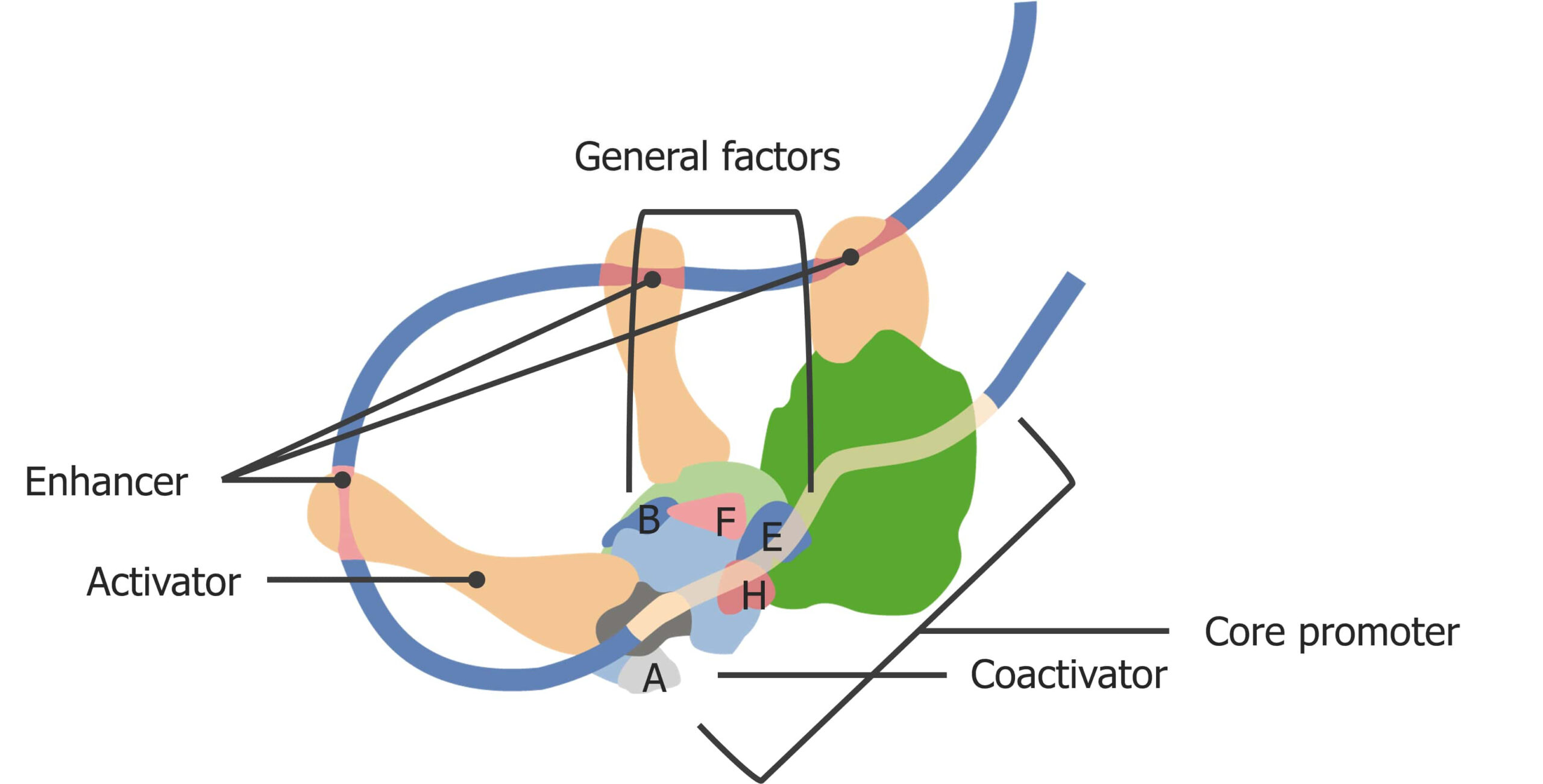
Factor de transcripción es un término genérico para las proteínas necesarias para la transcripción. Cada uno de estos factores contribuye a regularRegularInsulin la expresión de losLOSNeisseriagenesGenesA category of nucleic acid sequences that function as units of heredity and which code for the basic instructions for the development, reproduction, and maintenance of organisms.DNA Types and Structure.
Factores de transcripción generales:
Se unen a la secuencia promotora
Son necesarios para la unión de la ARN polimerasa II alALAmyloidosis ADN para iniciar la transcripción
Complejo de iniciación:
Cuando se unen el complejo de factores de transcripción y ARN polimerasa II enENErythema nodosum is an immune-mediated panniculitis (inflammation of the subcutaneous fat) caused by a type IV (delayed-type) hypersensitivity reaction. It commonly manifests in young women as tender, erythematous nodules on the shins.Erythema Nodosum la secuencia promotora
Una vez que el complejo de iniciación se ensambla enENErythema nodosum is an immune-mediated panniculitis (inflammation of the subcutaneous fat) caused by a type IV (delayed-type) hypersensitivity reaction. It commonly manifests in young women as tender, erythematous nodules on the shins.Erythema Nodosum el promotor, la transcripción puede comenzar.
Factores asociados a la transcripción: proteínas específicas que actúan de forma dependiente del tiempo o del tejido para iniciar la transcripción
Secuencias potenciadoras
Las secuencias potenciadoras del ADN ayudan a iniciar o aumentar la transcripción, lo que promueve aún más la expresión de losLOSNeisseriagenesGenesA category of nucleic acid sequences that function as units of heredity and which code for the basic instructions for the development, reproduction, and maintenance of organisms.DNA Types and Structure.
Estas secuencias pueden unirse a:
Proteínas activadoras:
Son tipos específicos de factores de transcripción que ayudan a ensamblar y/o interactuar con factores de transcripción enENErythema nodosum is an immune-mediated panniculitis (inflammation of the subcutaneous fat) caused by a type IV (delayed-type) hypersensitivity reaction. It commonly manifests in young women as tender, erythematous nodules on the shins.Erythema Nodosum el promotor
Cuya función es activar o aumentar la transcripción
Proteínas represoras: reprimen la transcripción
Suelen estar situadas varios miles de pares de basesBasesUsually a hydroxide of lithium, sodium, potassium, rubidium or cesium, but also the carbonates of these metals, ammonia, and the amines.Acid-Base Balance antes del gen objetivo
Crean un bucle enENErythema nodosum is an immune-mediated panniculitis (inflammation of the subcutaneous fat) caused by a type IV (delayed-type) hypersensitivity reaction. It commonly manifests in young women as tender, erythematous nodules on the shins.Erythema Nodosum el ADN cuando interactúan con el promotor
Permiten un mayor ajuste de la regulación:
Una única secuencia potenciadora puede interactuar con múltiples promotores/genesGenesA category of nucleic acid sequences that function as units of heredity and which code for the basic instructions for the development, reproduction, and maintenance of organisms.DNA Types and Structure.
Un mismo gen puede interactuar con múltiples secuencias potenciadoras.
Secuencias aisladoras:otras secuencias de ADN que pueden impedir que losLOSNeisseria potenciadores hagan un bucle para interactuar con la región promotora
Complejo de iniciación de la transcripción eucariótica
Imagen por Lecturio.
Epigenética
La regulación epigenética es la regulación de la expresión de losLOSNeisseriagenesGenesA category of nucleic acid sequences that function as units of heredity and which code for the basic instructions for the development, reproduction, and maintenance of organisms.DNA Types and Structure que no implica alteraciones enENErythema nodosum is an immune-mediated panniculitis (inflammation of the subcutaneous fat) caused by a type IV (delayed-type) hypersensitivity reaction. It commonly manifests in young women as tender, erythematous nodules on the shins.Erythema Nodosum la secuencia del ADN ni enENErythema nodosum is an immune-mediated panniculitis (inflammation of the subcutaneous fat) caused by a type IV (delayed-type) hypersensitivity reaction. It commonly manifests in young women as tender, erythematous nodules on the shins.Erythema Nodosum ninguno de sus productos transcritos. La epigenética incluye:
Cuán accesible es el ADN para la ARN polimerasa según su empaquetamiento: el ADN se envuelve alrededor de un nucleosoma con una cola de histonas.
Modificación de las histonas vía:
Acetilación → “desempaca” el ADN y permite la transcripción
Metilación → protege las regiones inactivas y evita la transcripción accidental
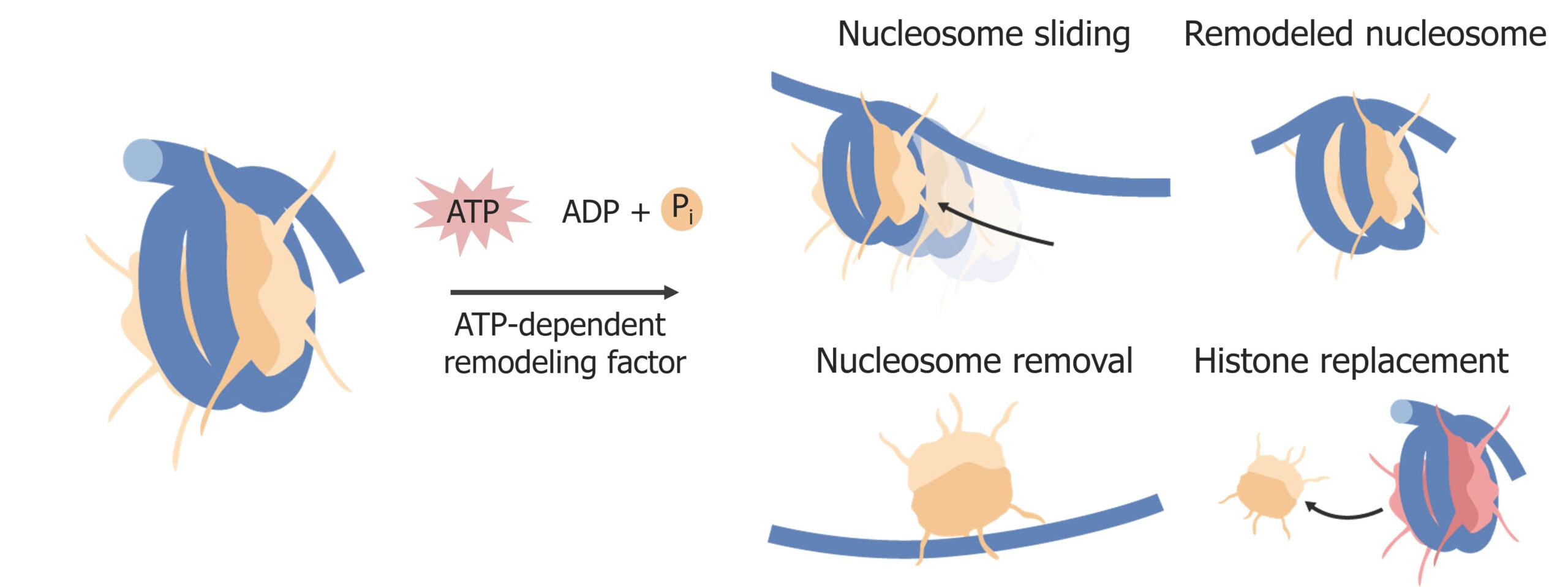
Modificación del nucleosoma:
Puede deslizarse hacia arriba y hacia abajo del ADN, cambiando qué ADN es accesible para la transcripción
Se puede remodelar
Puede retirarse temporalmente
Empaquetamiento de ADN: Cómo se empaqueta el ADN en nucleosomas y luego en cromosomas.
Imagen por Lecturio.
Remodelación del nucleosoma: Ejemplos de cambios en las histonas. Los factores de remodelación de la cromatina también alteran la estructura de la cromatina. La cromatina utiliza la energía del adenosin trifosfato (ATP, por sus siglas en inglés).
Alberts, B., Heald, R., Johnson, A., Morgan, D., Raff, M., Roberts, K., Walter, P., & Wilson, J. (2022). Molecular biology of the cell (7th ed.). W.W. Norton & Company.
Archuleta, S. R., Chang, C. L., & Horwitz, G. A. (2024). Mechanisms and functions of the RNA polymerase II general transcription machinery during the transcription cycle. Biomolecules, 14(2), 176. https://doi.org/10.3390/biom14020176
Haseltine, W. A., & Patarca, R. (2024). The RNA revolution in the central molecular biology dogma evolution. International Journal of Molecular Sciences, 25(23), 12695. https://doi.org/10.3390/ijms252312695
Maya-Miles, D., Ruiz-Gayo, M., & González-Martínez, A. (2025). Regulation of transcription elongation anticipates alternative gene expression strategies across the cell cycle. bioRxiv.https://doi.org/10.1101/2025.01.05.631386
Recktenwald, M., Wagner, M., & Kühn, R. (2024). Engineering transcriptional regulation for cell-based therapies. SLAS Technology, 29(2), 100121. https://doi.org/10.1016/j.slast.2024.100121
Ryu, K., Kim, J., & Park, S. (2024). Emerging insights into transcriptional condensates. Experimental & Molecular Medicine, 56(4), 820–826. https://doi.org/10.1038/s12276-024-01228-9
¡Crea tu cuenta gratis o inicia una sesión para seguir leyendo!
Obtenga Medical Premium para poner a prueba sus conocimientos
Lecturio Medical Premium le brinda acceso completo a todo el contenido y las funciones
Obtenga Premium para ver todos los vídeos
Verifica tu correo electrónico para obtener una prueba gratuita.
Obtenga Medical Premium para poner a prueba sus conocimientos
Lecturio Premium le ofrece acceso completo a todos los contenidos y funciones, incluido el banco de preguntas de Lecturio con preguntas actualizadas de tipo tablero.