Domina Conceptos Médicos

Estudia para la escuela de medicina y tus examenes con Lecturio.

Eritrocitos: Histología

Los LOS Neisseria eritrocitos, o glóbulos rojos, son las células más abundantes de la sangre. Si bien los LOS Neisseria eritrocitos en EN Erythema nodosum is an immune-mediated panniculitis (inflammation of the subcutaneous fat) caused by a type IV (delayed-type) hypersensitivity reaction. It commonly manifests in young women as tender, erythematous nodules on the shins. Erythema Nodosum el feto se producen inicialmente en EN Erythema nodosum is an immune-mediated panniculitis (inflammation of the subcutaneous fat) caused by a type IV (delayed-type) hypersensitivity reaction. It commonly manifests in young women as tender, erythematous nodules on the shins. Erythema Nodosum el saco vitelino y luego en EN Erythema nodosum is an immune-mediated panniculitis (inflammation of the subcutaneous fat) caused by a type IV (delayed-type) hypersensitivity reaction. It commonly manifests in young women as tender, erythematous nodules on the shins. Erythema Nodosum el hígado, la médula ósea es el principal lugar de producción. La eritropoyesis comienza con las células madre hematopoyéticas, que se convierten en EN Erythema nodosum is an immune-mediated panniculitis (inflammation of the subcutaneous fat) caused by a type IV (delayed-type) hypersensitivity reaction. It commonly manifests in young women as tender, erythematous nodules on the shins. Erythema Nodosum progenitores comprometidos con el linaje y se diferencian en EN Erythema nodosum is an immune-mediated panniculitis (inflammation of the subcutaneous fat) caused by a type IV (delayed-type) hypersensitivity reaction. It commonly manifests in young women as tender, erythematous nodules on the shins. Erythema Nodosum eritrocitos maduros. El proceso se produce por etapas, y la extrusión de los LOS Neisseria núcleos y los LOS Neisseria orgánulos se produce antes de la maduración. Así, los LOS Neisseria eritrocitos maduros carecen de núcleo y tienen una forma bicóncava. Los LOS Neisseria eritrocitos transportan hemoglobina y su forma permite un transporte eficaz del oxígeno. Cada día se producen miles de millones de eritrocitos, ya que su vida media es de aproximadamente 120 días. Los LOS Neisseria eritrocitos que cumplen con su ciclo son eliminados por los LOS Neisseria macrófagos del bazo, el hígado y la médula ósea.

Last updated: Dec 18, 2025

Editorial responsibility: Stanley Oiseth, Lindsay Jones, Evelin Maza

Descripción General

Definición y descripción

Los LOS Neisseria eritrocitos, también llamados glóbulos rojos, son estructuras terminalmente diferenciadas que carecen de núcleo, pero que están llenas de hemoglobina portadora de oxígeno. Los LOS Neisseria eritrocitos son las células más abundantes de la sangre.
  • Diámetro: 7,5 μm
  • Forma bicóncava:
    • Da a los LOS Neisseria eritrocitos una alta relación superficie-volumen
    • Establece la mayor parte de la hemoglobina a poca distancia de la superficie celular, facilitando el transporte eficaz de oxígeno
  • Vida media: 120 días

Estructura

  • Estructura bicóncava flexible:
    • Se dobla fácilmente, permitiendo el paso a través de pequeños capilares
    • Las proteínas de la membrana, como la espectrina y la anquirina, estabilizan la membrana para mantener la forma y la elasticidad de los LOS Neisseria eritrocitos.
  • Componentes:
    • No hay núcleos (sin núcleos, las proteínas defectuosas no pueden ser reemplazadas)
    • Sin la mayoría de los LOS Neisseria orgánulos
    • Durante la eritropoyesis, que tiene lugar en EN Erythema nodosum is an immune-mediated panniculitis (inflammation of the subcutaneous fat) caused by a type IV (delayed-type) hypersensitivity reaction. It commonly manifests in young women as tender, erythematous nodules on the shins. Erythema Nodosum la médula ósea roja, los LOS Neisseria precursores pierden núcleos y orgánulos antes de ser liberados a la circulación.
  • Los LOS Neisseria eritrocitos senescentes o deformados son eliminados por los LOS Neisseria macrófagos del hígado, el bazo y la médula ósea.
  • Procesamiento de los LOS Neisseria componentes después de la degradación:
    • Globina (de la hemoglobina): se descompone en EN Erythema nodosum is an immune-mediated panniculitis (inflammation of the subcutaneous fat) caused by a type IV (delayed-type) hypersensitivity reaction. It commonly manifests in young women as tender, erythematous nodules on the shins. Erythema Nodosum aminoácidos y es reutilizada por la médula ósea para nuevos eritrocitos
    • Hierro: se almacena en EN Erythema nodosum is an immune-mediated panniculitis (inflammation of the subcutaneous fat) caused by a type IV (delayed-type) hypersensitivity reaction. It commonly manifests in young women as tender, erythematous nodules on the shins. Erythema Nodosum el hígado o el bazo o se reutiliza para nuevos eritrocitos en EN Erythema nodosum is an immune-mediated panniculitis (inflammation of the subcutaneous fat) caused by a type IV (delayed-type) hypersensitivity reaction. It commonly manifests in young women as tender, erythematous nodules on the shins. Erythema Nodosum la médula ósea
    • Hemo (porción sin hierro): se convierte en EN Erythema nodosum is an immune-mediated panniculitis (inflammation of the subcutaneous fat) caused by a type IV (delayed-type) hypersensitivity reaction. It commonly manifests in young women as tender, erythematous nodules on the shins. Erythema Nodosum biliverdina y posteriormente en EN Erythema nodosum is an immune-mediated panniculitis (inflammation of the subcutaneous fat) caused by a type IV (delayed-type) hypersensitivity reaction. It commonly manifests in young women as tender, erythematous nodules on the shins. Erythema Nodosum bilirrubina
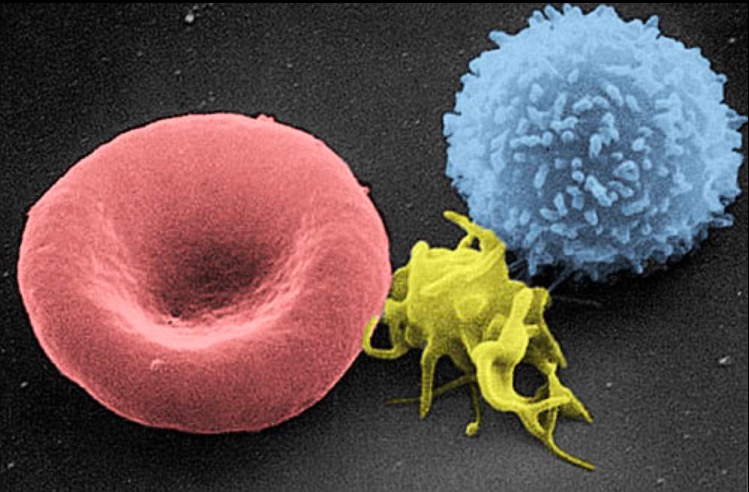
Micrografía electrónica de células sanguíneas

Micrografía electrónica de barrido de una célula sanguínea:
De izquierda a derecha: eritrocito humano, trombocito (plaqueta) y leucocito
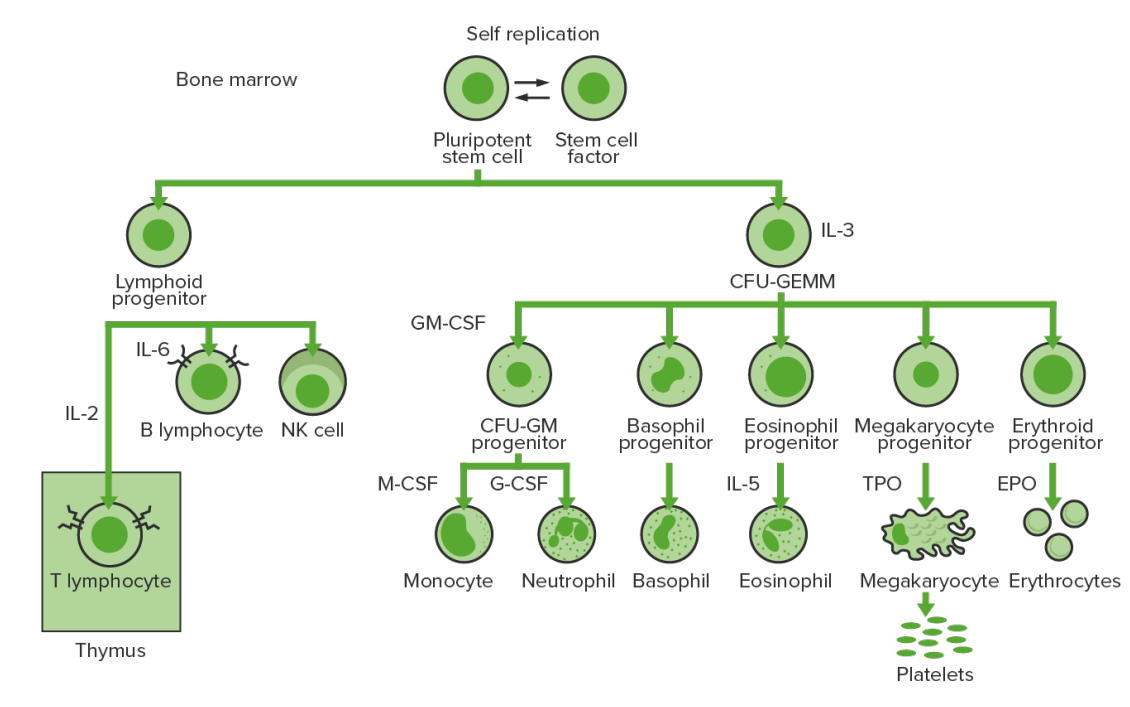
Imagen: “Electron micrograph of blood cells” por Electron Microscopy Facility at The National Cancer Institute at Frederick. Licencia: Dominio Público

Eritropoyesis

Producción de eritrocitos

  • Hematopoyesis:
    • Del 1er al AL Amyloidosis 2do mes en EN Erythema nodosum is an immune-mediated panniculitis (inflammation of the subcutaneous fat) caused by a type IV (delayed-type) hypersensitivity reaction. It commonly manifests in young women as tender, erythematous nodules on the shins. Erythema Nodosum el útero: mesodermo del saco vitelino
    • Hacia el 2do mes, la hematopoyesis se traslada al AL Amyloidosis hígado (y al AL Amyloidosis bazo).
    • Hacia el 5to mes, la hematopoyesis se produce en EN Erythema nodosum is an immune-mediated panniculitis (inflammation of the subcutaneous fat) caused by a type IV (delayed-type) hypersensitivity reaction. It commonly manifests in young women as tender, erythematous nodules on the shins. Erythema Nodosum la médula ósea y esta se convierte en EN Erythema nodosum is an immune-mediated panniculitis (inflammation of the subcutaneous fat) caused by a type IV (delayed-type) hypersensitivity reaction. It commonly manifests in young women as tender, erythematous nodules on the shins. Erythema Nodosum la fuente predominante de células sanguíneas.
  • Al AL Amyloidosis igual que ocurre con otras células sanguíneas, la eritropoyesis comienza con las células madre hematopoyéticas multipotentes.
  • Células madre hematopoyéticas multipotentes → células progenitoras multipotentes → progenitoras mieloides comunes → unidad formadora de colonias eritroides en EN Erythema nodosum is an immune-mediated panniculitis (inflammation of the subcutaneous fat) caused by a type IV (delayed-type) hypersensitivity reaction. It commonly manifests in young women as tender, erythematous nodules on the shins. Erythema Nodosum ramillete → maduración de eritrocitos
Hematopoyesis de la médula ósea

Hematopoyesis de la médula ósea: proliferación y diferenciación de los elementos formados de la sangre.
CFU-GEMM: unidad formadora de colonias de granulocitos, eritrocitos, monocitos y megacariocitos
CFU-GM: unidad formadora de colonias–granulocitos–macrófagos
GM-CSF: factor estimulante de colonias de granulocitos y macrófagos
M-CSF: factor estimulante de colonias de macrófagos
G-CSF: factor estimulante de colonias de granulocitos
NK: Linfocito Natural Killer
TPO: trombopoyetina
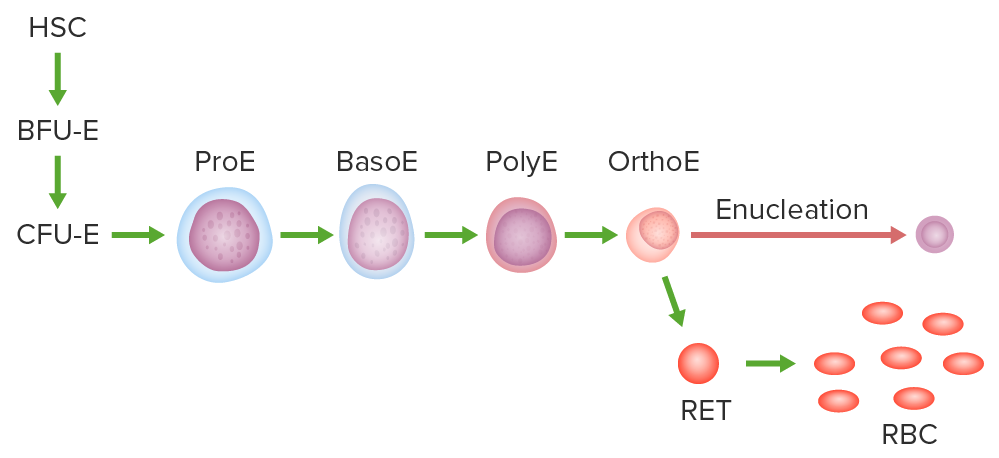
Imagen por Lecturio. Licencia: CC BY-NC-SA 4.0

Etapas de la diferenciación eritrocitaria

  1. Proeritroblasto:
    • Núcleo grande, central, de coloración pálida, con 1–2 nucleolos grandes
    • Los LOS Neisseria polirribosomas (que proporcionan una leve basofilia) en EN Erythema nodosum is an immune-mediated panniculitis (inflammation of the subcutaneous fat) caused by a type IV (delayed-type) hypersensitivity reaction. It commonly manifests in young women as tender, erythematous nodules on the shins. Erythema Nodosum el citoplasma sintetizan la hemoglobina.
    • 14–20 μm de diámetro
  2. Eritroblasto basófilo:
    • Azul oscuro (basofilia más intensa), célula más pequeña que el proeritroblasto
    • Núcleos más pequeños y cromatina irregular
    • 13–16 μm de diámetro
  3. Eritroblasto policromatófilo:
    • Mezcla de afinidades de tinción: basófila (de los LOS Neisseria polirribosomas) y acidófila (de la hemoglobina creciente)
    • Núcleos con cromatina en EN Erythema nodosum is an immune-mediated panniculitis (inflammation of the subcutaneous fat) caused by a type IV (delayed-type) hypersensitivity reaction. It commonly manifests in young women as tender, erythematous nodules on the shins. Erythema Nodosum damero
    • 12–15 μm de diámetro
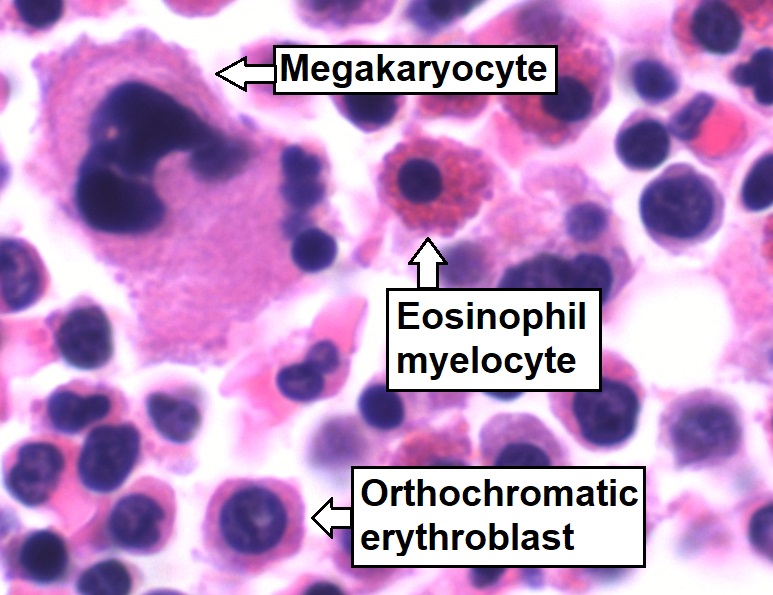
  4. Eritroblasto ortocromático (normoblasto):
    • Citoplasma acidófilo, rastros de basofilia
    • Pequeños núcleos excéntricos con cromatina condensada → termina con extrusión de núcleos degenerados o picnóticos
    • 8–10 μm de diámetro
  5. Reticulocitos:
    • Casi similar al AL Amyloidosis eritrocito maduro
    • Difícil de identificar sin la tinción supravital
    • Si se tiñe con azul de cresilo brillante, los LOS Neisseria polirribosomas residuales crean un precipitado citoplasmático de color azul.
    • La maduración a eritrocito se produce en EN Erythema nodosum is an immune-mediated panniculitis (inflammation of the subcutaneous fat) caused by a type IV (delayed-type) hypersensitivity reaction. It commonly manifests in young women as tender, erythematous nodules on the shins. Erythema Nodosum 24–48 horas.
    • Digestión enzimática o expulsión de orgánulos
  6. Eritrocito maduro:
    • Sin núcleos
    • Con forma bicóncava

Regulación

Tabla: Regulación de la eritropoyesis
Citoquinas y factores de crecimiento Actividades Fuente
Factor de Células Madre (SCF, por sus siglas en EN Erythema nodosum is an immune-mediated panniculitis (inflammation of the subcutaneous fat) caused by a type IV (delayed-type) hypersensitivity reaction. It commonly manifests in young women as tender, erythematous nodules on the shins. Erythema Nodosum inglés) Estimula todas las células progenitoras hematopoyéticas Células estromales de la médula ósea
GM-CSF GM-CSF An acidic glycoprotein of mw 23 kda with internal disulfide bonds. The protein is produced in response to a number of inflammatory mediators by mesenchymal cells present in the hemopoietic environment and at peripheral sites of inflammation. GM-CSF is able to stimulate the production of neutrophilic granulocytes, macrophages, and mixed granulocyte-macrophage colonies from bone marrow cells and can stimulate the formation of eosinophil colonies from fetal liver progenitor cells. GM-CSF can also stimulate some functional activities in mature granulocytes and macrophages. White Myeloid Cells: Histology Estimula las células progenitoras mieloides Células endoteliales, células T
EPO EPO Glycoprotein hormone, secreted chiefly by the kidney in the adult and the liver in the fetus, that acts on erythroid stem cells of the bone marrow to stimulate proliferation and differentiation. Erythrocytes: Histology Estimula la eritropoyesis, incluida la diferenciación Riñón, hígado
IL-3 Mitógeno para todas las células progenitoras de granulocitos y megacariocitos/eritrocitos Células T colaboradoras
EPO: eritropoyetina
GM-CSF: factor estimulante de colonias de granulocitos y macrófagos
SCF: factor de células madre

Otros factores:

  • Hierro
  • Vitamina B12
  • Factor intrínseco
  • Ácido fólico
  • Nivel de oxígeno

Relevancia Clínica

  • Anemia Anemia Anemia is a condition in which individuals have low Hb levels, which can arise from various causes. Anemia is accompanied by a reduced number of RBCs and may manifest with fatigue, shortness of breath, pallor, and weakness. Subtypes are classified by the size of RBCs, chronicity, and etiology. Anemia: Overview and Types: disminución del número total de eritrocitos, de la hemoglobina o de la masa de eritrocitos circulantes. La anemia Anemia Anemia is a condition in which individuals have low Hb levels, which can arise from various causes. Anemia is accompanied by a reduced number of RBCs and may manifest with fatigue, shortness of breath, pallor, and weakness. Subtypes are classified by the size of RBCs, chronicity, and etiology. Anemia: Overview and Types suele reflejarse en EN Erythema nodosum is an immune-mediated panniculitis (inflammation of the subcutaneous fat) caused by a type IV (delayed-type) hypersensitivity reaction. It commonly manifests in young women as tender, erythematous nodules on the shins. Erythema Nodosum una disminución de la hemoglobina y el hematocrito, que puede deberse a la reducción de la hematopoyesis, la hemólisis o la pérdida de sangre.
  • Anemia Anemia Anemia is a condition in which individuals have low Hb levels, which can arise from various causes. Anemia is accompanied by a reduced number of RBCs and may manifest with fatigue, shortness of breath, pallor, and weakness. Subtypes are classified by the size of RBCs, chronicity, and etiology. Anemia: Overview and Types hemolítica: anemia Anemia Anemia is a condition in which individuals have low Hb levels, which can arise from various causes. Anemia is accompanied by a reduced number of RBCs and may manifest with fatigue, shortness of breath, pallor, and weakness. Subtypes are classified by the size of RBCs, chronicity, and etiology. Anemia: Overview and Types debida a la destrucción o eliminación prematura de eritrocitos. La anemia Anemia Anemia is a condition in which individuals have low Hb levels, which can arise from various causes. Anemia is accompanied by a reduced number of RBCs and may manifest with fatigue, shortness of breath, pallor, and weakness. Subtypes are classified by the size of RBCs, chronicity, and etiology. Anemia: Overview and Types hemolítica puede caracterizarse por un aumento de la eliminación por parte del bazo (hemólisis extravascular) o por el daño causado por un estrechamiento de la luz vascular (hemólisis intravascular). El aclaramiento esplénico (hemólisis extravascular) puede deberse a anomalías intrínsecas de los LOS Neisseria eritrocitos (membrana, enzima, hemoglobina) o al AL Amyloidosis recubrimiento extrínseco por parte del sistema inmunitario (e.g., incompatibilidad ABO).
  • Talasemia: causa hereditaria de anemia Anemia Anemia is a condition in which individuals have low Hb levels, which can arise from various causes. Anemia is accompanied by a reduced number of RBCs and may manifest with fatigue, shortness of breath, pallor, and weakness. Subtypes are classified by the size of RBCs, chronicity, and etiology. Anemia: Overview and Types microcítica e hipocrómica. La talasemia es una deficiencia en EN Erythema nodosum is an immune-mediated panniculitis (inflammation of the subcutaneous fat) caused by a type IV (delayed-type) hypersensitivity reaction. It commonly manifests in young women as tender, erythematous nodules on the shins. Erythema Nodosum la cadena de globina alfa (⍺) o beta (𝛽) que da lugar a una hemoglobinopatía. La presentación de la talasemia depende del número de cadenas defectuosas presentes. La consiguiente anemia Anemia Anemia is a condition in which individuals have low Hb levels, which can arise from various causes. Anemia is accompanied by a reduced number of RBCs and may manifest with fatigue, shortness of breath, pallor, and weakness. Subtypes are classified by the size of RBCs, chronicity, and etiology. Anemia: Overview and Types hemolítica provoca síntomas sistémicos graves, haciendo que los LOS Neisseria pacientes más afectados dependan de las transfusiones.
  • Anemia Anemia Anemia is a condition in which individuals have low Hb levels, which can arise from various causes. Anemia is accompanied by a reduced number of RBCs and may manifest with fatigue, shortness of breath, pallor, and weakness. Subtypes are classified by the size of RBCs, chronicity, and etiology. Anemia: Overview and Types megaloblástica: surge debido a una alteración de la síntesis de ácidos nucleicos en EN Erythema nodosum is an immune-mediated panniculitis (inflammation of the subcutaneous fat) caused by a type IV (delayed-type) hypersensitivity reaction. It commonly manifests in young women as tender, erythematous nodules on the shins. Erythema Nodosum los LOS Neisseria precursores eritroides. Esta alteración conduce a una producción ineficaz de eritrocitos y a la hemólisis intramedular. La anemia Anemia Anemia is a condition in which individuals have low Hb levels, which can arise from various causes. Anemia is accompanied by a reduced number of RBCs and may manifest with fatigue, shortness of breath, pallor, and weakness. Subtypes are classified by the size of RBCs, chronicity, and etiology. Anemia: Overview and Types megaloblástica se caracteriza por la presencia de células grandes con maduración nuclear detenida. Las causas más comunes son las deficiencias de vitamina B12 y de ácido fólico, que pueden deberse a una baja ingesta dietética, a condiciones subyacentes de malabsorción y medicamentos. La presentación clínica incluye síntomas anémicos y gastrointestinales con manifestaciones neurológicas que se observan con más frecuencia en EN Erythema nodosum is an immune-mediated panniculitis (inflammation of the subcutaneous fat) caused by a type IV (delayed-type) hypersensitivity reaction. It commonly manifests in young women as tender, erythematous nodules on the shins. Erythema Nodosum la deficiencia de vitamina B12.
  • Anemia Anemia Anemia is a condition in which individuals have low Hb levels, which can arise from various causes. Anemia is accompanied by a reduced number of RBCs and may manifest with fatigue, shortness of breath, pallor, and weakness. Subtypes are classified by the size of RBCs, chronicity, and etiology. Anemia: Overview and Types aplásica: enfermedad rara que pone en EN Erythema nodosum is an immune-mediated panniculitis (inflammation of the subcutaneous fat) caused by a type IV (delayed-type) hypersensitivity reaction. It commonly manifests in young women as tender, erythematous nodules on the shins. Erythema Nodosum peligro la vida, caracterizada por pancitopenia e hipocelularidad de la médula ósea, lo que refleja un daño en EN Erythema nodosum is an immune-mediated panniculitis (inflammation of the subcutaneous fat) caused by a type IV (delayed-type) hypersensitivity reaction. It commonly manifests in young women as tender, erythematous nodules on the shins. Erythema Nodosum las células madre hematopoyéticas. La mayoría de los LOS Neisseria casos de anemia Anemia Anemia is a condition in which individuals have low Hb levels, which can arise from various causes. Anemia is accompanied by a reduced number of RBCs and may manifest with fatigue, shortness of breath, pallor, and weakness. Subtypes are classified by the size of RBCs, chronicity, and etiology. Anemia: Overview and Types aplásica son adquiridos y causados por el daño autoinmune a las células madre hematopoyéticas multipotentes. Entre las causas conocidas de las anemias aplásicas adquiridas se encuentran los LOS Neisseria medicamentos y las sustancias químicas, las dosis elevadas de radiación en EN Erythema nodosum is an immune-mediated panniculitis (inflammation of the subcutaneous fat) caused by a type IV (delayed-type) hypersensitivity reaction. It commonly manifests in young women as tender, erythematous nodules on the shins. Erythema Nodosum todo el cuerpo, las infecciones víricas, las enfermedades inmunitarias y el embarazo. Los LOS Neisseria síndromes hereditarios o constitucionales asociados a la anemia Anemia Anemia is a condition in which individuals have low Hb levels, which can arise from various causes. Anemia is accompanied by a reduced number of RBCs and may manifest with fatigue, shortness of breath, pallor, and weakness. Subtypes are classified by the size of RBCs, chronicity, and etiology. Anemia: Overview and Types aplásica incluyen la anemia Anemia Anemia is a condition in which individuals have low Hb levels, which can arise from various causes. Anemia is accompanied by a reduced number of RBCs and may manifest with fatigue, shortness of breath, pallor, and weakness. Subtypes are classified by the size of RBCs, chronicity, and etiology. Anemia: Overview and Types de Fanconi, la disqueratosis congénita y el síndrome de Down.

Referencias

  1. Hattangadi, S. M., et al. (2011). From stem cell to red cell: regulation of erythropoiesis at multiple levels by multiple proteins, RNAs, and chromatin modifications. Blood 118:6258–6268. https://doi.org/10.1182/blood-2011-07-356006 
  2. Mohandas, N. (2021). Structure and composition of the erythrocyte. In Kaushansky, K., et al. (Eds.), Williams Hematology, 10th ed.
  3. Mescher A.L. (Ed.). (2021). Blood. In Mescher A.L. (Ed.), Junqueira’s Basic Histology Text and Atlas (16th ed.) https://accessmedicine.mhmedical.com/content.aspx?bookid=3047&sectionid=255121436
  4. Paulsen D.F. (Ed.). (2010). Hematopoiesis. Chapter 13 of Histology & Cell Biology: Examination & Board Review, 5th ed. https://accessmedicine.mhmedical.com/content.aspx?bookid=563&sectionid=42045308
  5. Singh, V. K., et al. (2014). Manufacturing blood ex vivo: A futuristic approach to deal with the supply and safety concerns. Frontiers in Cell and Developmental Biology, 2, Article 26. https://doi.org/10.3389/fcell.2014.00026
  6. Sposi, N. M. (2015). Interaction between erythropoiesis and iron metabolism in human β-thalassemia: Recent advances and new therapeutic approaches. In Inherited Hemoglobin Disorders. IntechOpen. https://doi.org/10.5772/61716

¡Crea tu cuenta gratis o inicia una sesión para seguir leyendo!

Regístrate ahora y obtén acceso gratuito a Lecturio con páginas de concepto, videos médicos y cuestionarios para tu educación médica.

User Reviews

Que tengas una sesión de estudio alegre y navideña 🎁 Ahorra 50% en todos los planes >>

Details