
Domina Conceptos Médicos

Estudia para la escuela de medicina y tus examenes con Lecturio.

Cannabinoides

Los LOS Neisseria cannabinoides son una clase de compuestos que interactúan con los LOS Neisseria receptores cannabinoides. Los LOS Neisseria 3 tipos de cannabinoides son los LOS Neisseria fitocannabinoides (derivados naturalmente de las plantas), los LOS Neisseria endocannabinoides (endógenos) y los LOS Neisseria cannabinoides sintéticos (producidos artificialmente). Los LOS Neisseria endocannabinoides son neurotransmisores neuropéptidos endógenos que se encuentran en EN Erythema nodosum is an immune-mediated panniculitis (inflammation of the subcutaneous fat) caused by a type IV (delayed-type) hypersensitivity reaction. It commonly manifests in young women as tender, erythematous nodules on the shins. Erythema Nodosum el sistema nervioso humano. Los LOS Neisseria cannabinoides tienen un efecto psicotrópico, lo que conduce a su uso recreativo frecuente, pero en EN Erythema nodosum is an immune-mediated panniculitis (inflammation of the subcutaneous fat) caused by a type IV (delayed-type) hypersensitivity reaction. It commonly manifests in young women as tender, erythematous nodules on the shins. Erythema Nodosum vista de sus efectos únicos en EN Erythema nodosum is an immune-mediated panniculitis (inflammation of the subcutaneous fat) caused by a type IV (delayed-type) hypersensitivity reaction. It commonly manifests in young women as tender, erythematous nodules on the shins. Erythema Nodosum el SNC pueden tener indicaciones como medicamentos. Los LOS Neisseria cannabinoides recetados tratan el dolor Dolor Inflammation, las náuseas, los LOS Neisseria vómitos y los LOS Neisseria trastornos convulsivos y también sirven como estimulantes del apetito.

Last updated: Dec 15, 2025

Editorial responsibility: Stanley Oiseth, Lindsay Jones, Evelin Maza

Estructura Química y Farmacodinamia

Estructura química

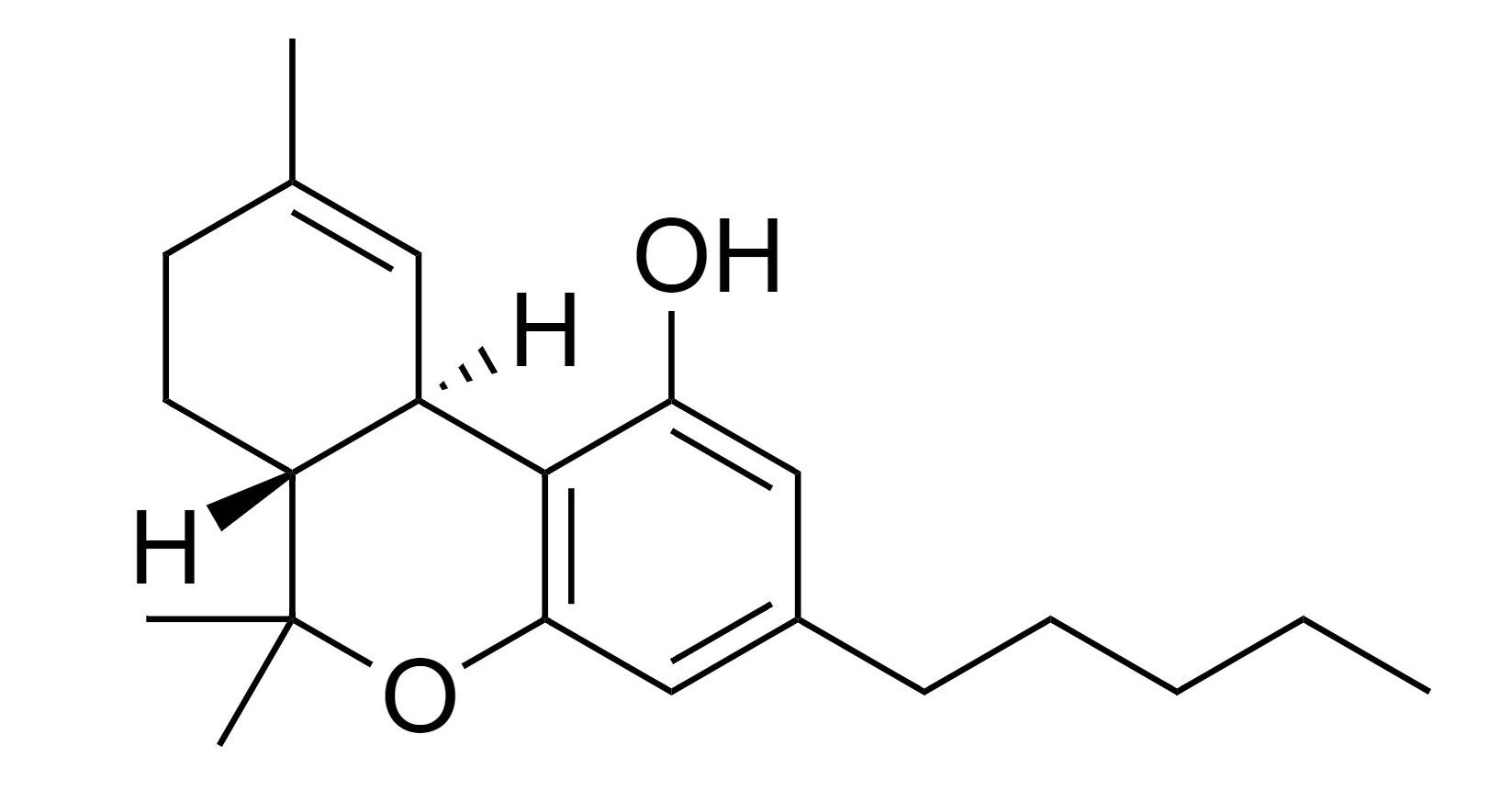
El tetrahidrocannabinol es el componente psicoactivo del cannabis:
  • El tetrahidrocannabinol es un lípido.
  • Terpenoide aromático (terpeno modificado con ausencia de un grupo metilo o un átomo de oxígeno agregado)
Estructura del THC

Estructura del tetrahidrocannabinol: componente psicoactivo del cannabis

Imagen: “THC” por Harbin. Licencia: Dominio Público

Mecanismo de acción

  • Los LOS Neisseria receptores de cannabinoides son metabotrópicos (acoplados a proteína G) y actúan a través de segundos mensajeros para inducir múltiples respuestas celulares.
  • Los LOS Neisseria cannabinoides se unen y activan el receptor Receptor Receptors are proteins located either on the surface of or within a cell that can bind to signaling molecules known as ligands (e.g., hormones) and cause some type of response within the cell. Receptors cannabinoide tipo 1 y el receptor Receptor Receptors are proteins located either on the surface of or within a cell that can bind to signaling molecules known as ligands (e.g., hormones) and cause some type of response within the cell. Receptors cannabinoide tipo 2 (CB2):
    • Receptores cannabinoides tipo 1: regulan la neurotransmisión de glutamato y de ácido gamma aminobutírico ( GABA GABA The most common inhibitory neurotransmitter in the central nervous system. Receptors and Neurotransmitters of the CNS, por sus siglas en EN Erythema nodosum is an immune-mediated panniculitis (inflammation of the subcutaneous fat) caused by a type IV (delayed-type) hypersensitivity reaction. It commonly manifests in young women as tender, erythematous nodules on the shins. Erythema Nodosum inglés) (localizados en EN Erythema nodosum is an immune-mediated panniculitis (inflammation of the subcutaneous fat) caused by a type IV (delayed-type) hypersensitivity reaction. It commonly manifests in young women as tender, erythematous nodules on the shins. Erythema Nodosum el sistema nervioso central (SNC) y en EN Erythema nodosum is an immune-mediated panniculitis (inflammation of the subcutaneous fat) caused by a type IV (delayed-type) hypersensitivity reaction. It commonly manifests in young women as tender, erythematous nodules on the shins. Erythema Nodosum tejidos periféricos)
    • Receptores cannabinoide tipo 1: receptores acoplados a proteína Gαi ampliamente expresados en EN Erythema nodosum is an immune-mediated panniculitis (inflammation of the subcutaneous fat) caused by a type IV (delayed-type) hypersensitivity reaction. It commonly manifests in young women as tender, erythematous nodules on the shins. Erythema Nodosum mayor cantidad en EN Erythema nodosum is an immune-mediated panniculitis (inflammation of the subcutaneous fat) caused by a type IV (delayed-type) hypersensitivity reaction. It commonly manifests in young women as tender, erythematous nodules on the shins. Erythema Nodosum el cerebro:
      • La subunidad Gαi → subunidad α α Alpha is the chance of testing positive by a diagnostic test among those without the condition, causing a type I error or a “false positive.” Statistical Power de la proteína G que inhibe la adenililciclasa
      • Subunidades ꞵ y 𝛾 liberadas de Gαi: activan los LOS Neisseria canales de K +, inhiben los LOS Neisseria canales de Ca CA Condylomata acuminata are a clinical manifestation of genital HPV infection. Condylomata acuminata are described as raised, pearly, flesh-colored, papular, cauliflower-like lesions seen in the anogenital region that may cause itching, pain, or bleeding. Condylomata Acuminata (Genital Warts) 2+
    • Receptores CB2: regulan el dolor Dolor Inflammation y la emesis (ubicados en EN Erythema nodosum is an immune-mediated panniculitis (inflammation of the subcutaneous fat) caused by a type IV (delayed-type) hypersensitivity reaction. It commonly manifests in young women as tender, erythematous nodules on the shins. Erythema Nodosum las células inmunes)
    • La activación del receptor Receptor Receptors are proteins located either on the surface of or within a cell that can bind to signaling molecules known as ligands (e.g., hormones) and cause some type of response within the cell. Receptors CB causa ↓ en EN Erythema nodosum is an immune-mediated panniculitis (inflammation of the subcutaneous fat) caused by a type IV (delayed-type) hypersensitivity reaction. It commonly manifests in young women as tender, erythematous nodules on the shins. Erythema Nodosum la liberación de neurotransmisores a través de los LOS Neisseria siguientes mecanismos:
      • Inhibición de la adenililciclasa presináptica → inactivación de la proteína quinasa presináptica A
      • Activación de la proteína quinasa activada por mitógenos presinápticos
      • Inhibición de los LOS Neisseria canales de Ca CA Condylomata acuminata are a clinical manifestation of genital HPV infection. Condylomata acuminata are described as raised, pearly, flesh-colored, papular, cauliflower-like lesions seen in the anogenital region that may cause itching, pain, or bleeding. Condylomata Acuminata (Genital Warts) 2+ presinápticos dependientes de voltaje → ↓ influjo de Ca CA Condylomata acuminata are a clinical manifestation of genital HPV infection. Condylomata acuminata are described as raised, pearly, flesh-colored, papular, cauliflower-like lesions seen in the anogenital region that may cause itching, pain, or bleeding. Condylomata Acuminata (Genital Warts) 2+
      • Activación de los LOS Neisseria canales presinápticos de K + rectificadores hacia adentro → ↑ eflujo de K +

Tetrahidrocannabinol

  • Agonista presináptico del receptor Receptor Receptors are proteins located either on the surface of or within a cell that can bind to signaling molecules known as ligands (e.g., hormones) and cause some type of response within the cell. Receptors cannabinoide tipo 1
  • El tetrahidrocannabinol prolonga la activación de los LOS Neisseria receptores cannabinoides tipo 1 provocando una inhibición continua de la liberación de neurotransmisores de las terminales nerviosas presinápticas GABAérgicas y glutamatérgicas que expresan los LOS Neisseria receptores cannabinoides tipo 1:
    • El tetrahidrocannabinol no imita los LOS Neisseria efectos de los LOS Neisseria endocannabinoides liberados de manera local (e.g., anandamida, 2-araquidonoilglicerol (2-AG)).
    • El tetrahidrocannabinol no induce la síntesis de anandamida y 2-AG.
  • El tetrahidrocannabinol se une a los LOS Neisseria receptores CB1 en EN Erythema nodosum is an immune-mediated panniculitis (inflammation of the subcutaneous fat) caused by a type IV (delayed-type) hypersensitivity reaction. It commonly manifests in young women as tender, erythematous nodules on the shins. Erythema Nodosum las interneuronas GABAérgicas inhibidoras en EN Erythema nodosum is an immune-mediated panniculitis (inflammation of the subcutaneous fat) caused by a type IV (delayed-type) hypersensitivity reaction. It commonly manifests in young women as tender, erythematous nodules on the shins. Erythema Nodosum el área tegmental ventricular, lo que provoca una disminución de la liberación de GABA GABA The most common inhibitory neurotransmitter in the central nervous system. Receptors and Neurotransmitters of the CNS y la desinhibición de las neuronas dopaminérgicas → ↑ dopamina

Efectos fisiológicos

Los LOS Neisseria cannabinoides se unen a los LOS Neisseria receptores centrales y periféricos:
  • La activación de los LOS Neisseria receptores periféricos conducen a:
    • Xerostomía
    • Taquicardia
    • Hipotensión
    • Disminución del esfuerzo respiratorio.
  • Los LOS Neisseria cannabinoides se unen a los LOS Neisseria receptores cannabinoides en EN Erythema nodosum is an immune-mediated panniculitis (inflammation of the subcutaneous fat) caused by a type IV (delayed-type) hypersensitivity reaction. It commonly manifests in young women as tender, erythematous nodules on the shins. Erythema Nodosum varias áreas del SNC causando:
    • Hipocampo: deterioro de la memoria a corto plazo
    • Neocórtex: deterioro del juicio y cambios en EN Erythema nodosum is an immune-mediated panniculitis (inflammation of the subcutaneous fat) caused by a type IV (delayed-type) hypersensitivity reaction. It commonly manifests in young women as tender, erythematous nodules on the shins. Erythema Nodosum las sensaciones
    • Hipotálamo: aumento del apetito
    • Amígdala: paranoia
    • Tronco encefálico: efecto antiemético
    • Médula espinal: efecto analgésico
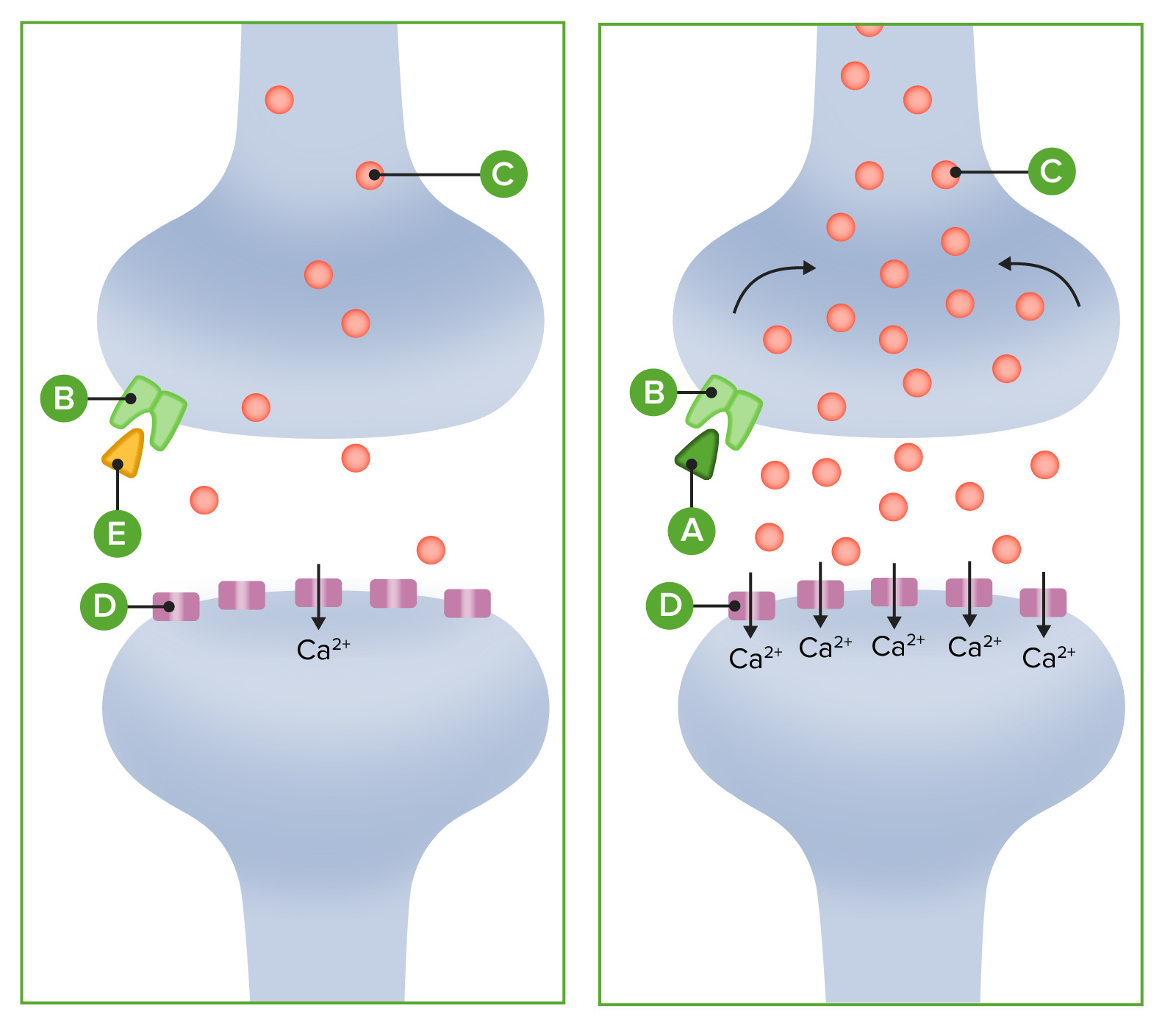
Los cannabinoides forman una conexión con los receptores cannabinoides

Los cannabinoides forman una conexión con los receptores cannabinoides:
Los neurotransmisores (incluida la dopamina) fluyen hacia la hendidura sináptica, lo que hace que el calcio se bombee hacia la neurona postsináptica en niveles más altos que los observados en los estímulos naturales normales. Debido a esta mayor cantidad de neurotransmisores, ocurre el “subidón” asociado con el cannabis. Actuando a través de los receptores cannabinoides, el tetrahidrocannabinol activa el sistema de recompensa del cerebro. El tetrahidrocannabinol también altera el funcionamiento del cerebelo y los ganglios basales, que regulan el equilibrio, la postura, la coordinación y el tiempo de reacción.
El 1er diagrama muestra la actividad normal y el segundo diagrama muestra la actividad con la adición de tetrahidrocannabinol.
A: THC
B: receptores CB1
C: neurotransmisores
D: receptores postsinápticos
E: cannabinoide

Imagen por Lecturio.

Farmacocinética

Absorción

  • La cinética de los LOS Neisseria cannabinoides difiere según la vía de administración y su formulación.
  • La cinética varía para los LOS Neisseria cannabinoides no aprobados por la Food and Drug Administration (FDA, por sus siglas en EN Erythema nodosum is an immune-mediated panniculitis (inflammation of the subcutaneous fat) caused by a type IV (delayed-type) hypersensitivity reaction. It commonly manifests in young women as tender, erythematous nodules on the shins. Erythema Nodosum inglés) (e.g., fumar cannabis, cannabis comestible):
    • Administracion oral:
      • Inicio tardío (30–90 minutos)
      • Baja biodisponibilidad debido al AL Amyloidosis metabolismo/eliminación hepática del 1er paso.
    • Aerosolización: El cannabis fumado es absorbido en EN Erythema nodosum is an immune-mediated panniculitis (inflammation of the subcutaneous fat) caused by a type IV (delayed-type) hypersensitivity reaction. It commonly manifests in young women as tender, erythematous nodules on the shins. Erythema Nodosum segundos.

Metabolismo

  • Metabolizado en EN Erythema nodosum is an immune-mediated panniculitis (inflammation of the subcutaneous fat) caused by a type IV (delayed-type) hypersensitivity reaction. It commonly manifests in young women as tender, erythematous nodules on the shins. Erythema Nodosum el hígado.
  • Algunos cannabinoides se almacenan en EN Erythema nodosum is an immune-mediated panniculitis (inflammation of the subcutaneous fat) caused by a type IV (delayed-type) hypersensitivity reaction. It commonly manifests in young women as tender, erythematous nodules on the shins. Erythema Nodosum el tejido graso.
  • A menudo es metabolizado por el sistema del citocromo P450 (particularmente CYP2C9 CYP2C9 A cytochrome p-450 subtype that has specificity for acidic xenobiotics. It oxidizes a broad range of important clinical drugs that fall under the categories of nonsteroidal anti-inflammatory agents; hypoglycemic agents; anticoagulants; and diuretics. Anticoagulants):
    • Los LOS Neisseria inhibidores del CYP2C9 CYP2C9 A cytochrome p-450 subtype that has specificity for acidic xenobiotics. It oxidizes a broad range of important clinical drugs that fall under the categories of nonsteroidal anti-inflammatory agents; hypoglycemic agents; anticoagulants; and diuretics. Anticoagulants previenen su metabolismo.
    • El uso de inhibidores del CYP2C9 CYP2C9 A cytochrome p-450 subtype that has specificity for acidic xenobiotics. It oxidizes a broad range of important clinical drugs that fall under the categories of nonsteroidal anti-inflammatory agents; hypoglycemic agents; anticoagulants; and diuretics. Anticoagulants conducen a una intoxicación de manera prolongada.
  • Los LOS Neisseria hidrocarburos producidos por la combustión de la marihuana inhiben el CYP1A2.
  • El dronabinol Dronabinol A psychoactive compound extracted from the resin of cannabis sativa (marihuana, hashish). The isomer delta-9-tetrahydrocannabinol (thc) is considered the most active form, producing characteristic mood and perceptual changes associated with this compound. Cannabinoids se une en EN Erythema nodosum is an immune-mediated panniculitis (inflammation of the subcutaneous fat) caused by a type IV (delayed-type) hypersensitivity reaction. It commonly manifests in young women as tender, erythematous nodules on the shins. Erythema Nodosum gran medida a las proteínas plasmáticas (pudiendo afectar a otros medicamentos que se unen a proteínas).
  • El tetrahidrocannabinol es un sustrato del CYP2C9 CYP2C9 A cytochrome p-450 subtype that has specificity for acidic xenobiotics. It oxidizes a broad range of important clinical drugs that fall under the categories of nonsteroidal anti-inflammatory agents; hypoglycemic agents; anticoagulants; and diuretics. Anticoagulants y CYP3A4 CYP3A4 Class 3 Antiarrhythmic Drugs (Potassium Channel Blockers).
  • El cannabidiol Cannabidiol Compound isolated from cannabis sativa extract. Cannabinoids es un sustrato del CYP2C19 y CYP3A4 CYP3A4 Class 3 Antiarrhythmic Drugs (Potassium Channel Blockers).
  • Los LOS Neisseria medicamentos metabolizados por el CYP1A2 se metabolizan más rápidamente después del consumo de cannabinoides (e.g., olanzapina).

Excreción

  • Los LOS Neisseria cannabinoides se excretan en EN Erythema nodosum is an immune-mediated panniculitis (inflammation of the subcutaneous fat) caused by a type IV (delayed-type) hypersensitivity reaction. It commonly manifests in young women as tender, erythematous nodules on the shins. Erythema Nodosum las heces y la orina.
  • Los LOS Neisseria cannabinoides se excretan después de su hidroxilación y carboxilación.
  • La mayoría de los LOS Neisseria cannabinoides se excretan 5 días después de su consumo.

Interacciones medicamentosas

Otras posibles interacciones medicamentosas con los LOS Neisseria cannabinoides incluyen:

  • Warfarina: mayor riesgo de hemorragia
  • Clobazam: mayor riesgo de toxicidad por benzodiacepinas
  • Medicamentos depresores: sedación excesiva, depresión.

Clasificación

  • 3 formas de cannabinoides:
    • Fitocannabinoides: de origen natural
    • Endocannabinoides: endógenos
    • Cannabinoides sintéticos: artificiales
  • Medicamentos cannabinoides aprobados por la FDA:
    • Productos del tetrahidrocannabinol sintético en EN Erythema nodosum is an immune-mediated panniculitis (inflammation of the subcutaneous fat) caused by a type IV (delayed-type) hypersensitivity reaction. It commonly manifests in young women as tender, erythematous nodules on the shins. Erythema Nodosum cápsulas y soluciones orales:
      • Dronabinol Dronabinol A psychoactive compound extracted from the resin of cannabis sativa (marihuana, hashish). The isomer delta-9-tetrahydrocannabinol (thc) is considered the most active form, producing characteristic mood and perceptual changes associated with this compound. Cannabinoids
      • Nabilona
    • Producto del extracto de cannabidiol Cannabidiol Compound isolated from cannabis sativa extract. Cannabinoids (solución oral): cannabidiol Cannabidiol Compound isolated from cannabis sativa extract. Cannabinoids
  • Consideraciones legales:
    • La marihuana y los LOS Neisseria cannabinoides están clasificados como sustancias controladas de la Lista I por la FDA de los LOS Neisseria Estados Unidos y la Drug Enforcement Administration de los LOS Neisseria Estados Unidos (DEA, por sus siglas en EN Erythema nodosum is an immune-mediated panniculitis (inflammation of the subcutaneous fat) caused by a type IV (delayed-type) hypersensitivity reaction. It commonly manifests in young women as tender, erythematous nodules on the shins. Erythema Nodosum inglés).
    • Las regulaciones sobre la marihuana medicinal y recreativa difieren entre las leyes estatales y federales.
    • Muchos estados han legalizado o despenalizado la marihuana.
Tabla: Formas medicamentosas e indicaciones de los LOS Neisseria cannabinoides prescritos
Medicamento Notas sobre las formas medicamentosas Indicaciones
Dronabinol Dronabinol A psychoactive compound extracted from the resin of cannabis sativa (marihuana, hashish). The isomer delta-9-tetrahydrocannabinol (thc) is considered the most active form, producing characteristic mood and perceptual changes associated with this compound. Cannabinoids :
  • Cápsula oral Marinol®
  • Solución oral Syndros®
  • Marinol® contiene aceite de ajonjolí (solvente) → impide la extracción y purificación de tetrahidrocannabinol por abuso
  • Syndros® contiene 50% de etanol.
  • Caquexia en EN Erythema nodosum is an immune-mediated panniculitis (inflammation of the subcutaneous fat) caused by a type IV (delayed-type) hypersensitivity reaction. It commonly manifests in young women as tender, erythematous nodules on the shins. Erythema Nodosum personas con SIDA
  • Náuseas y vómitos refractarios inducidos por quimioterapia
  • La American Society of Clinical Oncology (ASCO, por sus siglas en EN Erythema nodosum is an immune-mediated panniculitis (inflammation of the subcutaneous fat) caused by a type IV (delayed-type) hypersensitivity reaction. It commonly manifests in young women as tender, erythematous nodules on the shins. Erythema Nodosum inglés) recomienda el dronabinol Dronabinol A psychoactive compound extracted from the resin of cannabis sativa (marihuana, hashish). The isomer delta-9-tetrahydrocannabinol (thc) is considered the most active form, producing characteristic mood and perceptual changes associated with this compound. Cannabinoids o la nabilona sobre la marihuana medicinal.
Nabilona : cápsula oral Cesamet® /
  • Náuseas y vómitos refractarios inducidos por quimioterapia
  • ASCO recomienda dronabinol Dronabinol A psychoactive compound extracted from the resin of cannabis sativa (marihuana, hashish). The isomer delta-9-tetrahydrocannabinol (thc) is considered the most active form, producing characteristic mood and perceptual changes associated with this compound. Cannabinoids o nabilona sobre la marihuana medicinal.
Cannabidiol Cannabidiol Compound isolated from cannabis sativa extract. Cannabinoids : solución oral Epidiolex®
  • Es posible convertir químicamente el cannabidiol Cannabidiol Compound isolated from cannabis sativa extract. Cannabinoids en EN Erythema nodosum is an immune-mediated panniculitis (inflammation of the subcutaneous fat) caused by a type IV (delayed-type) hypersensitivity reaction. It commonly manifests in young women as tender, erythematous nodules on the shins. Erythema Nodosum tetrahidrocannabinol
  • La solución Epidiolex® contiene aceite de ajonjolí (solvente) → impide la extracción y purificación del cannabidiol Cannabidiol Compound isolated from cannabis sativa extract. Cannabinoids a tetrahidrocannabinol
Convulsiones refractarias de inicio en EN Erythema nodosum is an immune-mediated panniculitis (inflammation of the subcutaneous fat) caused by a type IV (delayed-type) hypersensitivity reaction. It commonly manifests in young women as tender, erythematous nodules on the shins. Erythema Nodosum la niñez en EN Erythema nodosum is an immune-mediated panniculitis (inflammation of the subcutaneous fat) caused by a type IV (delayed-type) hypersensitivity reaction. It commonly manifests in young women as tender, erythematous nodules on the shins. Erythema Nodosum individuos ≥ 2 años debido a:
  • Síndrome de Dravet
  • Síndrome de Lennox-Gastaut

Métodos de ingestión

  • Pastillas y cápsulas
  • Aceites de hachís
  • Goma de mascar
  • “Dabbing”
  • Plumas
  • Cristales de ácido tetrahidrocannabinólico
  • Bongs
  • Vaporizadores
  • Aceites de canna
  • Cuencos/burbujeadores
  • Aerosoles
  • Refresco de tetrahidrocannabinol
  • Porros/fasos
  • Bebidas
  • Jarabes
  • Tinturas
  • Cremas
  • Sales de baño
  • Comestibles
  • Parches
  • Descarb
  • Aceites/mantequillas

Indicaciones

  • La marihuana medicinal en EN Erythema nodosum is an immune-mediated panniculitis (inflammation of the subcutaneous fat) caused by a type IV (delayed-type) hypersensitivity reaction. It commonly manifests in young women as tender, erythematous nodules on the shins. Erythema Nodosum los LOS Neisseria Estados Unidos está principalmente autorizada para el tratamiento de:
    • Ansiedad
    • Espasticidad en EN Erythema nodosum is an immune-mediated panniculitis (inflammation of the subcutaneous fat) caused by a type IV (delayed-type) hypersensitivity reaction. It commonly manifests in young women as tender, erythematous nodules on the shins. Erythema Nodosum la esclerosis lateral amiotrófica (enfermedad de Lou Gehrig) y la esclerosis múltiple
    • Dolor Dolor Inflammation crónico/ dolor Dolor Inflammation por cáncer
    • Caquexia o síndromes de emaciación (e.g., VIH / SIDA, cáncer)
    • Enfermedad inflamatoria intestinal
    • Insomnio
    • Náuseas
    • Enfermedad de Parkinson
    • Trastornos por estrés postraumático
    • Trastornos convulsivos
    • Paliación del dolor Dolor Inflammation en EN Erythema nodosum is an immune-mediated panniculitis (inflammation of the subcutaneous fat) caused by a type IV (delayed-type) hypersensitivity reaction. It commonly manifests in young women as tender, erythematous nodules on the shins. Erythema Nodosum enfermedades terminales
  • Existen varios medicamentos cannabinoides con indicaciones específicas:
    • Nabiximol: dolor Dolor Inflammation relacionado con la esclerosis múltiple y el cáncer
    • Dronabinol Dronabinol A psychoactive compound extracted from the resin of cannabis sativa (marihuana, hashish). The isomer delta-9-tetrahydrocannabinol (thc) is considered the most active form, producing characteristic mood and perceptual changes associated with this compound. Cannabinoids (Marinol):
      • Disminución del apetito
      • Apnea del sueño
      • Anorexia Anorexia The lack or loss of appetite accompanied by an aversion to food and the inability to eat. It is the defining characteristic of the disorder anorexia nervosa. Anorexia Nervosa causada por el VIH/SIDA
      • Náuseas y vómitos inducidos por quimioterapia
    • Epidiolex®: síndromes epilépticos (síndrome de Dravet, síndrome de Lennox-Gastaut)

Efectos Secundarios y Contraindicaciones

Efectos secundarios

Tetrahidrocannabinol ( Dronabinol Dronabinol A psychoactive compound extracted from the resin of cannabis sativa (marihuana, hashish). The isomer delta-9-tetrahydrocannabinol (thc) is considered the most active form, producing characteristic mood and perceptual changes associated with this compound. Cannabinoids y Nabilona):

  • SNC:
    • ↑ Apetito
    • Mareo
    • Cefalea
    • Euforia
    • Alteraciones en EN Erythema nodosum is an immune-mediated panniculitis (inflammation of the subcutaneous fat) caused by a type IV (delayed-type) hypersensitivity reaction. It commonly manifests in young women as tender, erythematous nodules on the shins. Erythema Nodosum la concentración
    • Somnolencia
    • Aumento de la sensación de dolor Dolor Inflammation
    • Ataxia Ataxia Impairment of the ability to perform smoothly coordinated voluntary movements. This condition may affect the limbs, trunk, eyes, pharynx, larynx, and other structures. Ataxia may result from impaired sensory or motor function. Sensory ataxia may result from posterior column injury or peripheral nerve diseases. Motor ataxia may be associated with cerebellar diseases; cerebral cortex diseases; thalamic diseases; basal ganglia diseases; injury to the red nucleus; and other conditions. Ataxia-telangiectasia
    • Despersonalización
  • Gastrointestinales:

Cannabidiol Cannabidiol Compound isolated from cannabis sativa extract. Cannabinoids (Epidiolex®):

  • SNC:
    • ↓ Apetito
    • Fatiga
    • Letargo, sedación
  • Gastrointestinales:
    • Diarrea
    • Vómito
  • Hepáticos / metabólicos: ↑ enzimas hepáticas

Síndrome de hiperemesis cannabinoide

  • Síndrome de vómitos cíclicos ocasionados por el consumo de cannabis
  • Los LOS Neisseria síntomas incluyen náuseas, vómitos y dolor Dolor Inflammation abdominal que ocurren de forma cíclica en EN Erythema nodosum is an immune-mediated panniculitis (inflammation of the subcutaneous fat) caused by a type IV (delayed-type) hypersensitivity reaction. It commonly manifests in young women as tender, erythematous nodules on the shins. Erythema Nodosum el contexto del consumo habitual de cannabis/marihuana.
  • Se observa en EN Erythema nodosum is an immune-mediated panniculitis (inflammation of the subcutaneous fat) caused by a type IV (delayed-type) hypersensitivity reaction. It commonly manifests in young women as tender, erythematous nodules on the shins. Erythema Nodosum personas que consumen cannabis semanalmente durante al AL Amyloidosis menos 1 año
  • La fisiopatología es poco clara
  • Las personas toman duchas/baños calientes compulsivamente para ayudar a aliviar los LOS Neisseria síntomas:
    • Se especula que la sustancia P está involucrada en EN Erythema nodosum is an immune-mediated panniculitis (inflammation of the subcutaneous fat) caused by a type IV (delayed-type) hypersensitivity reaction. It commonly manifests in young women as tender, erythematous nodules on the shins. Erythema Nodosum la fisiopatología.
    • La crema de capsaicina tópica agota la sustancia P después de la aplicación repetida en EN Erythema nodosum is an immune-mediated panniculitis (inflammation of the subcutaneous fat) caused by a type IV (delayed-type) hypersensitivity reaction. It commonly manifests in young women as tender, erythematous nodules on the shins. Erythema Nodosum la piel y se ha HA Hemolytic anemia (HA) is the term given to a large group of anemias that are caused by the premature destruction/hemolysis of circulating red blood cells (RBCs). Hemolysis can occur within (intravascular hemolysis) or outside the blood vessels (extravascular hemolysis). Hemolytic Anemia demostrado que alivia los LOS Neisseria síntomas.
  • Tratamiento de las náuseas y vómitos:
    • Las benzodiacepinas ( lorazepam Lorazepam A benzodiazepine used as an anti-anxiety agent with few side effects. It also has hypnotic, anticonvulsant, and considerable sedative properties and has been proposed as a preanesthetic agent. Benzodiazepines) o el haloperidol Haloperidol A phenyl-piperidinyl-butyrophenone that is used primarily to treat schizophrenia and other psychoses. It is also used in schizoaffective disorder, delusional disorders, ballism, and tourette syndrome (a drug of choice) and occasionally as adjunctive therapy in intellectual disability and the chorea of huntington disease. It is a potent antiemetic and is used in the treatment of intractable hiccups. First-Generation Antipsychotics parecen ser más eficaces que los LOS Neisseria antieméticos convencionales (e.g., ondansetrón, metoclopramida).
    • No se debe utilizar opioides.
  • Es necesario dejar de consumir el cannabis para resolver por completo el síndrome (puede llevar semanas).
Fases del síndrome de hiperemesis cannabinoide

Fases del síndrome de hiperemesis cannabinoide

Imagen por Lecturio.

Contraindicaciones e interacciones medicamentosas

Tabla: Contraindicaciones e interacciones medicamentosas de los LOS Neisseria cannabinoides.
Medicamentos Advertencias Contraindicaciones Interacciones medicamentosas
Dronabinol Dronabinol A psychoactive compound extracted from the resin of cannabis sativa (marihuana, hashish). The isomer delta-9-tetrahydrocannabinol (thc) is considered the most active form, producing characteristic mood and perceptual changes associated with this compound. Cannabinoids
  • Cardiovasculares:
    • Síncope
    • Taquicardia
  • SNC:
    • Alteración en EN Erythema nodosum is an immune-mediated panniculitis (inflammation of the subcutaneous fat) caused by a type IV (delayed-type) hypersensitivity reaction. It commonly manifests in young women as tender, erythematous nodules on the shins. Erythema Nodosum la percepción
    • Exacerbación de la manía
    • Exacerbación de la esquizofrenia
    • Paranoia
    • Psicosis desenmascarada
  • Gastrointestinales:
    • Síndrome de hiperemesis cannabinoide
    • Náuseas intensas, vómitos
  • Embarazo y lactancia: no recomendado para mujeres que están embarazadas, en EN Erythema nodosum is an immune-mediated panniculitis (inflammation of the subcutaneous fat) caused by a type IV (delayed-type) hypersensitivity reaction. It commonly manifests in young women as tender, erythematous nodules on the shins. Erythema Nodosum periodo de lactancia o que planean quedar embarazadas, ya que los LOS Neisseria cannabinoides atraviesan la placenta Placenta A highly vascularized mammalian fetal-maternal organ and major site of transport of oxygen, nutrients, and fetal waste products. It includes a fetal portion (chorionic villi) derived from trophoblasts and a maternal portion (decidua) derived from the uterine endometrium. The placenta produces an array of steroid, protein and peptide hormones (placental hormones). Placenta, Umbilical Cord, and Amniotic Cavity.
  • Generales:
    • Trastornos del alcohol
    • Hipersensibilidad al AL Amyloidosis alcohol
    • Trastornos por abuso de sustancias
  • Cápsula de dronabinol Dronabinol A psychoactive compound extracted from the resin of cannabis sativa (marihuana, hashish). The isomer delta-9-tetrahydrocannabinol (thc) is considered the most active form, producing characteristic mood and perceptual changes associated with this compound. Cannabinoids: alergia al AL Amyloidosis aceite de semilla de ajonjolí
  • Solución oral de dronabinol Dronabinol A psychoactive compound extracted from the resin of cannabis sativa (marihuana, hashish). The isomer delta-9-tetrahydrocannabinol (thc) is considered the most active form, producing characteristic mood and perceptual changes associated with this compound. Cannabinoids: terapia actual o reciente (dentro de los LOS Neisseria 14 días) con productos que contengan disulfiram o metronidazol
  • El dronabinol Dronabinol A psychoactive compound extracted from the resin of cannabis sativa (marihuana, hashish). The isomer delta-9-tetrahydrocannabinol (thc) is considered the most active form, producing characteristic mood and perceptual changes associated with this compound. Cannabinoids puede desplazar a otros medicamentos altamente unidos a proteínas → ↑ efectos secundarios (e.g., ciclosporina, warfarina)
  • Depresores del SNC:
    • Alcohol
    • Anticolinérgicos
    • Efavirenz Efavirenz Anti-HIV Drugs
    • Hipnóticos
    • Opioides
    • Sedantes (e.g., benzodiacepinas, barbitúricos)
  • Inhibidores del CYP2C9 CYP2C9 A cytochrome p-450 subtype that has specificity for acidic xenobiotics. It oxidizes a broad range of important clinical drugs that fall under the categories of nonsteroidal anti-inflammatory agents; hypoglycemic agents; anticoagulants; and diuretics. Anticoagulants (puede ser necesario ↓ la dosis de tetrahidrocannabinol)
  • Inductores del CYP2C9 CYP2C9 A cytochrome p-450 subtype that has specificity for acidic xenobiotics. It oxidizes a broad range of important clinical drugs that fall under the categories of nonsteroidal anti-inflammatory agents; hypoglycemic agents; anticoagulants; and diuretics. Anticoagulants (puede ser necesario ↑ dosis de tetrahidrocannabinol)
  • Inhibidores del CYP3A4 CYP3A4 Class 3 Antiarrhythmic Drugs (Potassium Channel Blockers) (puede ser necesario ↓ la dosis de tetrahidrocannabinol)
  • Inductores del CYP3A4 CYP3A4 Class 3 Antiarrhythmic Drugs (Potassium Channel Blockers) (puede ser necesario ↑ dosis de tetrahidrocannabinol)
Nabilona /
  • Trastornos por consumo de alcohol
  • Trastornos por abuso de sustancias
Depresores del SNC
Cannabidiol Cannabidiol Compound isolated from cannabis sativa extract. Cannabinoids (Epidiolex®)
  • SNC: sedación, somnolencia (disminuye con el uso continuo)
  • ↑ Riesgo de hepatotoxicidad con:
    • Ácido valproico
    • Clobazam
    • Medicamentos hepatotóxicos
Alergia al AL Amyloidosis aceite de ajonjolí

Referencias

  1. Fryer, A.D., Christopoulos, A., Nathanson, N.M. (Eds.) (2012). Muscarinic Receptors. Handbook of Experimental Pharmacology, vol 208. Springer: Berlin, Heidelberg. https://doi.org/10.1007/978-3-642-23274-9
  2. Curry, S.C., et al. (2019). Neurotransmitters and Neuromodulators. In Nelson, L.S., et al. (Eds.), Goldfrank’s Toxicologic Emergencies, 11e. New York, NY: McGraw-Hill.
  3. Lapoint, J.M. (2019). Cannabinoids. In Nelson, L.S., et al. (Eds.), Goldfrank’s Toxicologic Emergencies, 11e. New York, NY: McGraw-Hill.
  4. Gray, R.A., Whalley, B.J. (2020). The proposed mechanisms of action of CBD in epilepsy. Epileptic Disord. 22 (S1), 10-15. https://pubmed.ncbi.nlm.nih.gov/32053110/
  5. Schmitz, N., Richert, L. (2020). Pharmacists and the future of cannabis medicine. J Am Pharm Assoc. 60 (1), 207–211. https://doi.org/10.1016/j.japh.2019.11.007
  6. Hesketh, P.J., et al. (2017). Antiemetics: American Society of Clinical Oncology Clinical Practice Guideline Update. J Clin Oncol. 35, 3240–3261. https://doi.org/10.1200/JCO.2017.74.4789
  7. Federation of State Medical Boards. (2016). Model guidelines for the Recommendation of Marijuana in Patient Care. https://www.fsmb.org/siteassets/advocacy/policies/model-guidelines-for-the-recommendation-of-marijuana-in-patient-care.pdf
  8. The Marijuana Policy Project. (2020). Marijuana Policy Reform Legislation. https://www.mpp.org/issues/legislation/key-marijuana-policy-reform/
  9. Morano, A., et al. (2020). Cannabinoids in the Treatment of Epilepsy: Current Status and Future Prospects. Neuropsychiatr Dis Treat. 16, 381–396. https://doi.org/10.2147/ndt.s203782
  10. Devinsky, O., et al. (2017). Trial of Cannabidiol for Drug-Resistant Seizures in the Dravet Syndrome. N Engl J Med. 376, 2011-2020. https://doi.org/10.1056/NEJMoa1611618
  11. Lapoint, J., et al. (2018). Cannabinoid Hyperemesis Syndrome: Public Health Implications and a Novel Model Treatment Guideline. West J Emerg Med. 19 (2), 380–386. https://doi.org/10.5811/westjem.2017.11.36368
  12. Bahji, A., et al. (2020). Prevalence of Cannabis Withdrawal Symptoms Among People With Regular or Dependent Use of Cannabinoids: a systematic review and meta-analysis. JAMA Netw Open. 3 (4), e202370. https://doi.org/10.1001/jamanetworkopen.2020.2370
  13. McCracken, J.L., et al. (2017). Diagnosis and Management of Asthma in Adults: A Review. JAMA. 318 (3), 279–290. https://doi.org/10.1001/jama.2017.8372
  14. Mehta, G.R., et al. (2016). Chronic obstructive pulmonary disease: A guide for the primary care physician. Dis Mon. 62 (6), 164-187. https://doi.org/10.1016/j.disamonth.2016.03.002

¡Crea tu cuenta gratis o inicia una sesión para seguir leyendo!

Regístrate ahora y obtén acceso gratuito a Lecturio con páginas de concepto, videos médicos y cuestionarios para tu educación médica.

User Reviews

Details