
Domina Conceptos Médicos

Estudia para la escuela de medicina y tus examenes con Lecturio.

Enfermedad de Krabbe

La enfermedad de Krabbe, también conocida como leucodistrofia de células globoides o lipidosis de galactosilceramida, es un raro trastorno autosómico recesivo que afecta el almacenamiento lisosómico, causado por una deficiencia de la enzima galactocerebrosidasa. La acumulación de galactocerebrósido provoca la destrucción de las células productoras de mielina en EN Erythema nodosum is an immune-mediated panniculitis (inflammation of the subcutaneous fat) caused by a type IV (delayed-type) hypersensitivity reaction. It commonly manifests in young women as tender, erythematous nodules on the shins. Erythema Nodosum todo el sistema nervioso periférico y central, lo que conduce a la desmielinización y a los LOS Neisseria síntomas clínicos. La enfermedad se clasifica en EN Erythema nodosum is an immune-mediated panniculitis (inflammation of the subcutaneous fat) caused by a type IV (delayed-type) hypersensitivity reaction. It commonly manifests in young women as tender, erythematous nodules on the shins. Erythema Nodosum subtipos de inicio infantil (clásico) y de inicio tardío. Las manifestaciones clínicas de la enfermedad de Krabbe clásica incluyen: irritabilidad, hipertonía, dificultad para alimentarse, retraso en EN Erythema nodosum is an immune-mediated panniculitis (inflammation of the subcutaneous fat) caused by a type IV (delayed-type) hypersensitivity reaction. It commonly manifests in young women as tender, erythematous nodules on the shins. Erythema Nodosum el desarrollo y rápida neurodegeneración. La muerte se produce por una infección, o por insuficiencia respiratoria. El diagnóstico se realiza midiendo la actividad enzimática. No existe cura para la leucodistrofia de células globoides. El tratamiento es de soporte. El trasplante de células madre es una opción para algunos lactantes.

Last updated: Apr 23, 2025
Editorial responsibility: Stanley Oiseth, Lindsay Jones, Evelin Maza

Descripción General

Epidemiología

  • Incidencia:
    • 1 caso por cada 250 000 nacimientos en EN Erythema nodosum is an immune-mediated panniculitis (inflammation of the subcutaneous fat) caused by a type IV (delayed-type) hypersensitivity reaction. It commonly manifests in young women as tender, erythematous nodules on the shins. Erythema Nodosum Estados Unidos
    • 1 caso por cada 100 000 nacimientos en EN Erythema nodosum is an immune-mediated panniculitis (inflammation of the subcutaneous fat) caused by a type IV (delayed-type) hypersensitivity reaction. It commonly manifests in young women as tender, erythematous nodules on the shins. Erythema Nodosum Europa
  • Ambos sexos se ven afectados por igual.
  • Panétnico, pero se observa una mayor incidencia en EN Erythema nodosum is an immune-mediated panniculitis (inflammation of the subcutaneous fat) caused by a type IV (delayed-type) hypersensitivity reaction. It commonly manifests in young women as tender, erythematous nodules on the shins. Erythema Nodosum:
    • Ascendencia europea
    • Comunidad drusa en EN Erythema nodosum is an immune-mediated panniculitis (inflammation of the subcutaneous fat) caused by a type IV (delayed-type) hypersensitivity reaction. It commonly manifests in young women as tender, erythematous nodules on the shins. Erythema Nodosum Israel

Etiología

  • Un trastorno de almacenamiento lisosómico
  • Herencia autosómica recesiva
  • Mutación del gen de la galactocerebrosidasa ( GALC GALC An enzyme that hydrolyzes galactose from ceramide monohexosides. Deficiency of this enzyme may cause globoid cell leukodystrophy. Krabbe Disease) en EN Erythema nodosum is an immune-mediated panniculitis (inflammation of the subcutaneous fat) caused by a type IV (delayed-type) hypersensitivity reaction. It commonly manifests in young women as tender, erythematous nodules on the shins. Erythema Nodosum el cromosoma 14q31
  • Produce una deficiencia de la enzima galactocerebrosidasa

Fisiopatología

  • Muchos aspectos de la fisiopatología siguen siendo desconocidos.
  • La acumulación de galactocerebrósido es tóxica para:
    • Oligodendrocitos en EN Erythema nodosum is an immune-mediated panniculitis (inflammation of the subcutaneous fat) caused by a type IV (delayed-type) hypersensitivity reaction. It commonly manifests in young women as tender, erythematous nodules on the shins. Erythema Nodosum el SNC
    • Células de Schwann en EN Erythema nodosum is an immune-mediated panniculitis (inflammation of the subcutaneous fat) caused by a type IV (delayed-type) hypersensitivity reaction. It commonly manifests in young women as tender, erythematous nodules on the shins. Erythema Nodosum el sistema nervioso periférico (SNP)
  • Resulta en EN Erythema nodosum is an immune-mediated panniculitis (inflammation of the subcutaneous fat) caused by a type IV (delayed-type) hypersensitivity reaction. It commonly manifests in young women as tender, erythematous nodules on the shins. Erythema Nodosum la desmielinización y las manifestaciones neurológicas
  • Los LOS Neisseria hallazgos patológicos incluyen:
    • Células globoides (característico): macrófagos anormales y multinucleados
    • Pérdida generalizada de mielina
    • Ausencia de oligodendroglias

Diagrama de la vía de almacenamiento lisosomal

La vía de almacenamiento lisosómico:
La enfermedad de Krabbe, es el resultado de la deficiencia de la enzima galactocerebrosidasa (paso 5) y la subsiguiente acumulación de galactocerebrósido.

Imagen por Lecturio.

Presentación Clínica

Progresión en EN Erythema nodosum is an immune-mediated panniculitis (inflammation of the subcutaneous fat) caused by a type IV (delayed-type) hypersensitivity reaction. It commonly manifests in young women as tender, erythematous nodules on the shins. Erythema Nodosum el tiempo

  • Infantil (clásica):
  • Subtipos de inicio tardío:
    • Inicio a los LOS Neisseria ≥ 13 meses de edad y subdivididos en EN Erythema nodosum is an immune-mediated panniculitis (inflammation of the subcutaneous fat) caused by a type IV (delayed-type) hypersensitivity reaction. It commonly manifests in young women as tender, erythematous nodules on the shins. Erythema Nodosum:
      • Infantil tardío
      • Juvenil
      • Adulto
    • La progresión de la enfermedad es variable Variable Variables represent information about something that can change. The design of the measurement scales, or of the methods for obtaining information, will determine the data gathered and the characteristics of that data. As a result, a variable can be qualitative or quantitative, and may be further classified into subgroups. Types of Variables (generalmente más rápida en EN Erythema nodosum is an immune-mediated panniculitis (inflammation of the subcutaneous fat) caused by a type IV (delayed-type) hypersensitivity reaction. It commonly manifests in young women as tender, erythematous nodules on the shins. Erythema Nodosum los LOS Neisseria subtipos de inicio más joven).

Signos y síntomas

La forma clásica, infantil, progresa a través de las siguientes etapas:
  • Estadio 1:
    • Irritabilidad (síntoma inicial más común)
    • Dificultades de alimentación
    • Retraso en EN Erythema nodosum is an immune-mediated panniculitis (inflammation of the subcutaneous fat) caused by a type IV (delayed-type) hypersensitivity reaction. It commonly manifests in young women as tender, erythematous nodules on the shins. Erythema Nodosum el desarrollo
    • Vómitos
    • Reflujo gastroesofágico
    • Hipertonía, rigidez
    • Hiperestesia auditiva, táctil y visual
    • Neuropatía periférica
    • Hiperpirexia
  • Estadio 2:
    • Hiporreflexia o hiperreflexia
    • Atrofia óptica y ceguera
    • Opistótono (espasmo muscular que provoca un arqueo hacia atrás de la cabeza, el cuello y la columna vertebral)
    • Convulsiones (refractarias a anticonvulsivos)
    • Deterioro psicomotor (rápido y grave)
  • Estadio 3:
    • Sordera
    • Postura descerebrada
    • Espasticidad severa
    • La muerte suele deberse a una infección o a una insuficiencia respiratoria.

Diagnóstico y Tratamiento

Diagnóstico

  • El tamizaje prenatal es habitual en EN Erythema nodosum is an immune-mediated panniculitis (inflammation of the subcutaneous fat) caused by a type IV (delayed-type) hypersensitivity reaction. It commonly manifests in young women as tender, erythematous nodules on the shins. Erythema Nodosum algunos lugares.
  • Pruebas de diagnóstico:
    • Medición de la actividad de la galactocerebrosidasa:
      • A menudo, se comprueba en EN Erythema nodosum is an immune-mediated panniculitis (inflammation of the subcutaneous fat) caused by a type IV (delayed-type) hypersensitivity reaction. It commonly manifests in young women as tender, erythematous nodules on the shins. Erythema Nodosum los LOS Neisseria leucocitos de la sangre o en EN Erythema nodosum is an immune-mediated panniculitis (inflammation of the subcutaneous fat) caused by a type IV (delayed-type) hypersensitivity reaction. It commonly manifests in young women as tender, erythematous nodules on the shins. Erythema Nodosum los LOS Neisseria fibroblastos cutáneos
      • Una galactocerebrosidasa baja o ausente confirma el diagnóstico.
    • También se pueden realizar pruebas genéticas moleculares para detectar la mutación genética.
  • Las pruebas adicionales pueden mostrar:
    • ↑ Niveles de proteínas del LCR
    • Evidencia de desmielinización en EN Erythema nodosum is an immune-mediated panniculitis (inflammation of the subcutaneous fat) caused by a type IV (delayed-type) hypersensitivity reaction. It commonly manifests in young women as tender, erythematous nodules on the shins. Erythema Nodosum la neuroimagenología
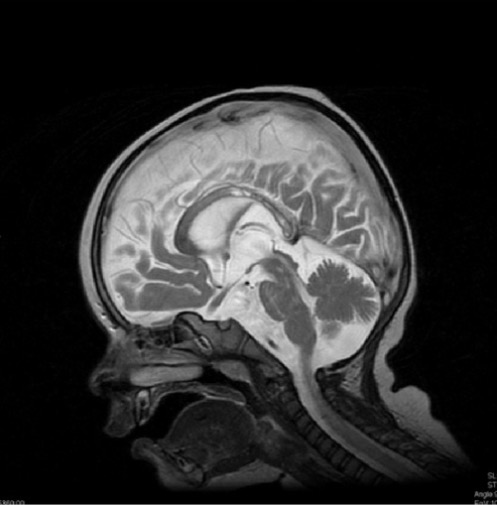
La leucodistrofia de células globoides en las imágenes

Un niño de 13 meses con desmielinización difusa (hiperintensidad) del cuerpo calloso en la RM, característica de la enfermedad de Krabbe.

Imagen: “Krabbe disease on imaging” por Department of Diagnostic Imaging, Institute of Mother and Child, ul. Kasprzaka, 17a, 01-211 Warsaw, Poland. Licencia: CC BY 3.0

Tratamiento

  • No hay cura para la enfermedad de Krabbe.
  • El tratamiento es de soporte, centrado en EN Erythema nodosum is an immune-mediated panniculitis (inflammation of the subcutaneous fat) caused by a type IV (delayed-type) hypersensitivity reaction. It commonly manifests in young women as tender, erythematous nodules on the shins. Erythema Nodosum el control de los LOS Neisseria síntomas.
  • El trasplante de células madre es una opción para los LOS Neisseria lactantes que tamizan positivo y aún no han desarrollado síntomas.

Diagnóstico Diferencial

  • Enfermedad de Gaucher: trastorno de almacenamiento lisosómico causado por una deficiencia de la actividad enzimática de la glucocerebrosidasa, que provoca la acumulación de glucocerebrósido. La enfermedad de Gaucher infantil se presenta dentro de los LOS Neisseria 6 meses de vida con una neurodegeneración progresiva, pérdida de habilidades motoras, hipotonía, hepatoesplenomegalia, dificultades de alimentación y muerte antes de los LOS Neisseria 3 años. El diagnóstico se realiza con la medición de la actividad de la betaglucosidasa ácida y se confirma con el análisis genético. El tratamiento es de soporte.
  • Enfermedad de Fabry: trastorno de almacenamiento lisosómico causado por la deficiencia de alfa-galactosidasa A, que da lugar a la deposición de glicofosfolípidos en el endotelio vascular y en las células del músculo liso. Las manifestaciones clínicas incluyen acroparestesias, lesiones cutáneas violáceas, disminución de la sudoración, complicaciones cerebrovasculares y cardiovasculares y enfermedad renal. El diagnóstico se realiza con la actividad de la enzima alfa galactosidasa A. El tratamiento es de soporte y puede incluir terapia de reemplazo enzimático y de estimulación enzimática (“terapia chaperona”).
  • Enfermedad de Niemann-Pick tipo A: trastorno de almacenamiento lisosómico causado por la deficiencia de la enzima esfingomielinasa ácida. La enfermedad se caracteriza por una neurodegeneración progresiva que comienza a los LOS Neisseria pocos meses de vida y resulta en EN Erythema nodosum is an immune-mediated panniculitis (inflammation of the subcutaneous fat) caused by a type IV (delayed-type) hypersensitivity reaction. It commonly manifests in young women as tender, erythematous nodules on the shins. Erythema Nodosum la muerte a los LOS Neisseria 3 años. Las manifestaciones clínicas incluyen una mancha macular de color rojo cereza, dificultad para alimentarse, pérdida de habilidades motoras, hipotonía y organomegalia. El diagnóstico incluye la medición de la actividad de la enzima esfingomielinasa y las pruebas genéticas. El tratamiento es de soporte.
  • Enfermedad de Tay-Sachs: trastorno autosómico recesivo que afecta el almacenamiento lisosómico, causado por mutaciones en EN Erythema nodosum is an immune-mediated panniculitis (inflammation of the subcutaneous fat) caused by a type IV (delayed-type) hypersensitivity reaction. It commonly manifests in young women as tender, erythematous nodules on the shins. Erythema Nodosum el gen de la hexosaminidasa A (HEXA), que provoca una neurodegeneración progresiva. Las manifestaciones clínicas incluyen una rápida degeneración de las capacidades cognitivas y neuromusculares, ceguera progresiva y una mancha macular de color rojo cereza en EN Erythema nodosum is an immune-mediated panniculitis (inflammation of the subcutaneous fat) caused by a type IV (delayed-type) hypersensitivity reaction. It commonly manifests in young women as tender, erythematous nodules on the shins. Erythema Nodosum el examen físico. El diagnóstico se realiza con pruebas de actividad enzimática y análisis genéticos moleculares. El tratamiento es de soporte.
  • Enfermedad de Sandhoff: trastorno de almacenamiento lisosómico causado por una deficiencia en EN Erythema nodosum is an immune-mediated panniculitis (inflammation of the subcutaneous fat) caused by a type IV (delayed-type) hypersensitivity reaction. It commonly manifests in young women as tender, erythematous nodules on the shins. Erythema Nodosum los LOS Neisseria genes Genes A category of nucleic acid sequences that function as units of heredity and which code for the basic instructions for the development, reproduction, and maintenance of organisms. DNA Types and Structure de hexosaminidasa A y B. La enfermedad de Sandhoff juvenil se caracteriza por una neurodegeneración progresiva que comienza a los LOS Neisseria 6 meses de edad. Las manifestaciones clínicas incluyen organomegalia, anomalías esqueléticas, hiperacusia, mancha roja macular, ceguera y convulsiones. El diagnóstico se realiza mediante la medición de la hexosaminidasa A y B, y también el análisis genético. El tratamiento es de soporte.
  • Enfermedad de Pompe (enfermedad de almacenamiento de glucógeno II): trastorno lisosómico y de almacenamiento de glucógeno causado por la deficiencia de alfa glucosidasa ácida. Existen 3 tipos de enfermedad de Pompe, con inicios y presentaciones variables. Las manifestaciones clínicas incluyen retraso en EN Erythema nodosum is an immune-mediated panniculitis (inflammation of the subcutaneous fat) caused by a type IV (delayed-type) hypersensitivity reaction. It commonly manifests in young women as tender, erythematous nodules on the shins. Erythema Nodosum el desarrollo, dificultad para alimentarse, hipotonía, debilidad muscular progresiva, miocardiopatía hipertrófica e insuficiencia respiratoria. El diagnóstico se realiza mediante la medición de la actividad enzimática y el análisis genético molecular. El tratamiento incluye medidas de soporte y reemplazo enzimático.

Referencias

  1. Dangouloff, T., Broutet, M., Gonzalez, S., & Mayer, M. (2025). Newborn screening and rapid genomic diagnosis of neuromuscular diseases. Journal of Neuromuscular Diseases, 12(2), 157–172. https://doi.org/10.1177/22143602241296286
  2. Erskine, D., Keogh, M. J., & Gorman, G. S. (2025). Sphingolipidoses: Expanding the spectrum of α-synucleinopathies. Journal of Neural Transmission. https://doi.org/10.1007/s00702-025-02925-z
  3. Gnanakumar, A., Patel, R. S., & Byrne, B. J. (2025). Polyneuropathy in neonates with Krabbe disease (P5-6.009). Neurology, 104(7_Supplement_1), 4674. https://doi.org/10.1212/WNL.0000000000211836
  4. Mandia, D., Romano, S., & Pasi, M. (2025). Genetic diseases misdiagnosed as multiple sclerosis: Observational study and review of literature. Multiple Sclerosis and Related Disorders, 106439. https://doi.org/10.1016/j.msard.2025.106439
  5. McCarron, E. P., Zafar, M., & Kinsella, J. A. (2025). Natural history and diagnostic findings in an adult man diagnosed with attenuated Krabbe disease. American Journal of Medical Genetics Part A, e64031. https://doi.org/10.1002/ajmg.a.64031
  6. Ream, M. A., Kingsbury, T. J., & Gelb, B. D. (2025). Evidence and recommendation for infantile Krabbe disease newborn screening. Pediatrics, 155(4), e2024069152. https://doi.org/10.1542/peds.2024-069152
  7. Sun, Y., Wang, Z., & Li, H. (2025). Late-onset Krabbe disease: Case report of two patients in a Chinese family and literature review. Molecular Genetics & Genomic Medicine, 13(2), e70065. https://doi.org/10.1002/mgg3.70065
  8. Sutter, P. A., Diaz, J. R., & Houlden, H. (2025). Neuroimmunology in globoid cell leukodystrophy: A comprehensive review including treatments, models, and neuroimmune mechanisms underlying neuropathology. Journal of Neuroimmunology, 402, 578573. https://doi.org/10.1016/j.jneuroim.2025.578573
  9. Wenger, D. A., & Luzi, P. (2025). Chapter 39 – Krabbe disease: Globoid cell leukodystrophy. In R. N. Rosenberg & J. M. Pascual (Eds.), Rosenberg’s molecular and genetic basis of neurological and psychiatric disease (7th ed., pp. 593–603). Academic Press. https://doi.org/10.1016/B978-0-443-19041-4.00043-1
  10. Wolf, N. I., van der Knaap, M. S., & Eichler, F. S. (2025). Treatment of leukodystrophies: Advances and challenges. European Journal of Paediatric Neurology, 56, 46–50. https://doi.org/10.1016/j.ejpn.2025.03.016

¡Crea tu cuenta gratis o inicia una sesión para seguir leyendo!

Regístrate ahora y obtén acceso gratuito a Lecturio con páginas de concepto, videos médicos y cuestionarios para tu educación médica.

User Reviews

Details