Domina Conceptos Médicos

Estudia para la escuela de medicina y tus examenes con Lecturio.

Aspiración De Cuerpo Extraño

La aspiración de un cuerpo extraño puede provocar asfixia y muerte al AL Amyloidosis obstruir el flujo de aire en EN Erythema nodosum is an immune-mediated panniculitis (inflammation of the subcutaneous fat) caused by a type IV (delayed-type) hypersensitivity reaction. It commonly manifests in young women as tender, erythematous nodules on the shins. Erythema Nodosum la laringe o la tráquea. Los LOS Neisseria cuerpos extraños también pueden alojarse más profundamente en EN Erythema nodosum is an immune-mediated panniculitis (inflammation of the subcutaneous fat) caused by a type IV (delayed-type) hypersensitivity reaction. It commonly manifests in young women as tender, erythematous nodules on the shins. Erythema Nodosum los LOS Neisseria bronquios; esto puede no afectar la respiración, pero puede causar infección o erosión de las paredes bronquiales. Los LOS Neisseria cuerpos extraños son aspirados con más frecuencia por los LOS Neisseria niños, que pueden presentarse con tos TOS Thoracic outlet syndrome (TOS) is a broad term used for a spectrum of syndromes related to the general region of the thoracic outlet, which involves the compression or irritation of elements of the brachial plexus, subclavian artery, or subclavian vein. Thoracic Outlet Syndrome o sibilancias. Como los LOS Neisseria cuerpos extraños rara vez son visibles en EN Erythema nodosum is an immune-mediated panniculitis (inflammation of the subcutaneous fat) caused by a type IV (delayed-type) hypersensitivity reaction. It commonly manifests in young women as tender, erythematous nodules on the shins. Erythema Nodosum la radiografía, se deben emplear otras modalidades de imagenología, como la tomografía computarizada o la broncoscopia flexible, cuando los LOS Neisseria síntomas y la sospecha clínica lo soliciten. La frecuencia relativa con la que se aspiran varios objetos varía según la demografía del paciente. La pronta eliminación del cuerpo extraño es el tratamiento definitivo.

Last updated: Dec 15, 2025

Editorial responsibility: Stanley Oiseth, Lindsay Jones, Evelin Maza

Descripción General

Epidemiología

  • 80% de los LOS Neisseria casos ocurren en EN Erythema nodosum is an immune-mediated panniculitis (inflammation of the subcutaneous fat) caused by a type IV (delayed-type) hypersensitivity reaction. It commonly manifests in young women as tender, erythematous nodules on the shins. Erythema Nodosum pacientes < 15 años
  • 80% de los LOS Neisseria casos pediátricos < 3 años
  • Causa común de muerte: mortalidad más alta en EN Erythema nodosum is an immune-mediated panniculitis (inflammation of the subcutaneous fat) caused by a type IV (delayed-type) hypersensitivity reaction. It commonly manifests in young women as tender, erythematous nodules on the shins. Erythema Nodosum pacientes < 1 año de edad y > 75 años de edad

Etiología

Los LOS Neisseria cuerpos extraños aspirados varían según la edad.

  • Los LOS Neisseria alimentos son la sustancia más común en EN Erythema nodosum is an immune-mediated panniculitis (inflammation of the subcutaneous fat) caused by a type IV (delayed-type) hypersensitivity reaction. It commonly manifests in young women as tender, erythematous nodules on the shins. Erythema Nodosum lactantes y niños pequeños:
    • Nueces (35%–50% de todos los LOS Neisseria cuerpos extraños)
    • Semillas
    • Palomitas de maiz
    • Verduras crudas (zanahorias, apio, etc ETC The electron transport chain (ETC) sends electrons through a series of proteins, which generate an electrochemical proton gradient that produces energy in the form of adenosine triphosphate (ATP). Electron Transport Chain (ETC).)
    • Perros calientes
  • Los LOS Neisseria objetos pequeños son más comunes en EN Erythema nodosum is an immune-mediated panniculitis (inflammation of the subcutaneous fat) caused by a type IV (delayed-type) hypersensitivity reaction. It commonly manifests in young women as tender, erythematous nodules on the shins. Erythema Nodosum niños mayores:
    • Joyería (30%)
    • Monedas (10%)
    • Juguetes
    • Pilas de botón
    • Rosario
  • Adultos:
    • Inorgánico:
      • Clavos o alfileres en EN Erythema nodosum is an immune-mediated panniculitis (inflammation of the subcutaneous fat) caused by a type IV (delayed-type) hypersensitivity reaction. It commonly manifests in young women as tender, erythematous nodules on the shins. Erythema Nodosum la boca que se tragan accidentalmente
      • Restos dentales desalojados durante un procedimiento dental
      • Herramientas de traqueostomía
    • Orgánico: alimentos varios

Fisiopatología

  • Obstrucción de la vía aérea superior:
    • Más común en EN Erythema nodosum is an immune-mediated panniculitis (inflammation of the subcutaneous fat) caused by a type IV (delayed-type) hypersensitivity reaction. It commonly manifests in young women as tender, erythematous nodules on the shins. Erythema Nodosum niños por el relativo estrechamiento anatómico del árbol traqueobronquial
    • En EN Erythema nodosum is an immune-mediated panniculitis (inflammation of the subcutaneous fat) caused by a type IV (delayed-type) hypersensitivity reaction. It commonly manifests in young women as tender, erythematous nodules on the shins. Erythema Nodosum la mayoría de los LOS Neisseria casos pediátricos, los LOS Neisseria alimentos u objetos grandes son visibles en EN Erythema nodosum is an immune-mediated panniculitis (inflammation of the subcutaneous fat) caused by a type IV (delayed-type) hypersensitivity reaction. It commonly manifests in young women as tender, erythematous nodules on the shins. Erythema Nodosum la orofaringe.
  • Obstrucción de la vía aérea inferior:
    • Efecto de válvula de bola:
      • Permite la entrada de aire con la inspiración
      • Evita la salida de aire al AL Amyloidosis expirar
      • Resulta en EN Erythema nodosum is an immune-mediated panniculitis (inflammation of the subcutaneous fat) caused by a type IV (delayed-type) hypersensitivity reaction. It commonly manifests in young women as tender, erythematous nodules on the shins. Erythema Nodosum hiperinsuflación de 1 o más lóbulos
    • Cuando un objeto se sitúa en EN Erythema nodosum is an immune-mediated panniculitis (inflammation of the subcutaneous fat) caused by a type IV (delayed-type) hypersensitivity reaction. It commonly manifests in young women as tender, erythematous nodules on the shins. Erythema Nodosum el bronquio:
      • Las sibilancias pueden ser unilaterales.
      • Disminución de los LOS Neisseria sonidos respiratorios

Signos y síntomas

  • Tos TOS Thoracic outlet syndrome (TOS) is a broad term used for a spectrum of syndromes related to the general region of the thoracic outlet, which involves the compression or irritation of elements of the brachial plexus, subclavian artery, or subclavian vein. Thoracic Outlet Syndrome de inicio repentino, cianosis, dificultad respiratoria
  • Ataque inicial seguido de:
    • Tos TOS Thoracic outlet syndrome (TOS) is a broad term used for a spectrum of syndromes related to the general region of the thoracic outlet, which involves the compression or irritation of elements of the brachial plexus, subclavian artery, or subclavian vein. Thoracic Outlet Syndrome
    • Estridor (si se aloja en EN Erythema nodosum is an immune-mediated panniculitis (inflammation of the subcutaneous fat) caused by a type IV (delayed-type) hypersensitivity reaction. It commonly manifests in young women as tender, erythematous nodules on the shins. Erythema Nodosum la tráquea)
    • Sibilancias (si se alojan en EN Erythema nodosum is an immune-mediated panniculitis (inflammation of the subcutaneous fat) caused by a type IV (delayed-type) hypersensitivity reaction. It commonly manifests in young women as tender, erythematous nodules on the shins. Erythema Nodosum bronquios)
    • Dificultad respiratoria
  • Fiebre: hallazgo tardío relacionado con absceso o neumonía
  • Hipoxia: La saturación no mejora al AL Amyloidosis proporcionar oxígeno suplementario.
  • En EN Erythema nodosum is an immune-mediated panniculitis (inflammation of the subcutaneous fat) caused by a type IV (delayed-type) hypersensitivity reaction. It commonly manifests in young women as tender, erythematous nodules on the shins. Erythema Nodosum el 50% de los LOS Neisseria casos no se nota el episodio de aspiración; las complicaciones debidas a presentaciones tardías incluyen las siguientes:
    • El paciente puede tener tos TOS Thoracic outlet syndrome (TOS) is a broad term used for a spectrum of syndromes related to the general region of the thoracic outlet, which involves the compression or irritation of elements of the brachial plexus, subclavian artery, or subclavian vein. Thoracic Outlet Syndrome y fiebre.
    • Las baterías retenidas pueden causar erosión de las superficies mucosas.
    • Los LOS Neisseria abscesos pulmonares pueden formarse alrededor de cuerpos extraños no detectados.

Diagnóstico

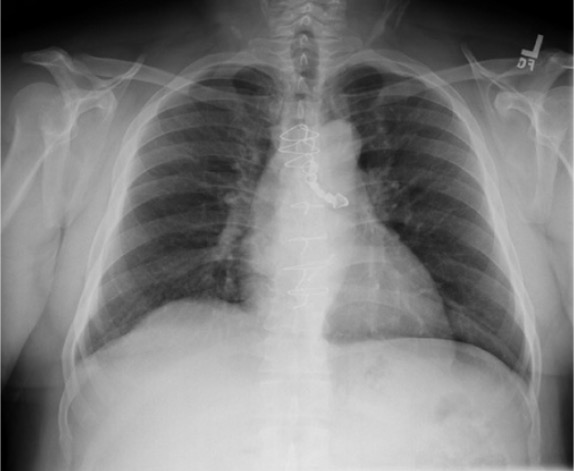
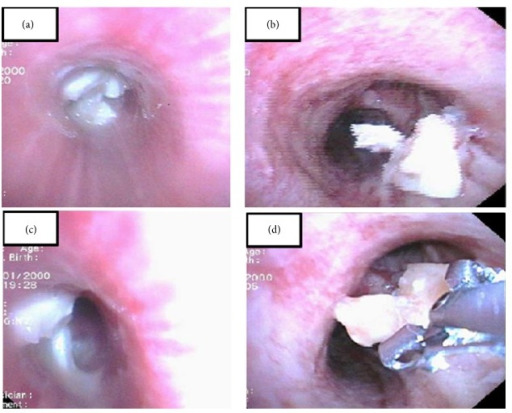
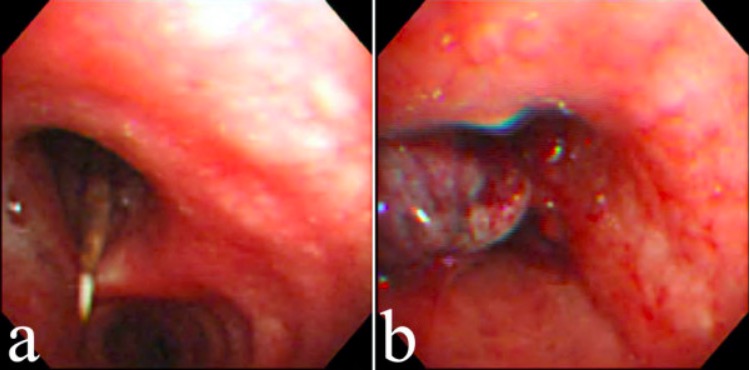
La mayoría de los LOS Neisseria casos involucran materiales que no son visibles en EN Erythema nodosum is an immune-mediated panniculitis (inflammation of the subcutaneous fat) caused by a type IV (delayed-type) hypersensitivity reaction. It commonly manifests in young women as tender, erythematous nodules on the shins. Erythema Nodosum las radiografías (e.g., alimentos, madera y plástico). En EN Erythema nodosum is an immune-mediated panniculitis (inflammation of the subcutaneous fat) caused by a type IV (delayed-type) hypersensitivity reaction. It commonly manifests in young women as tender, erythematous nodules on the shins. Erythema Nodosum estos casos, las características del aspecto pulmonar pueden sugerir un cuerpo extraño. La tomografía computarizada (TC) o la broncoscopia pueden confirmar la sospecha.
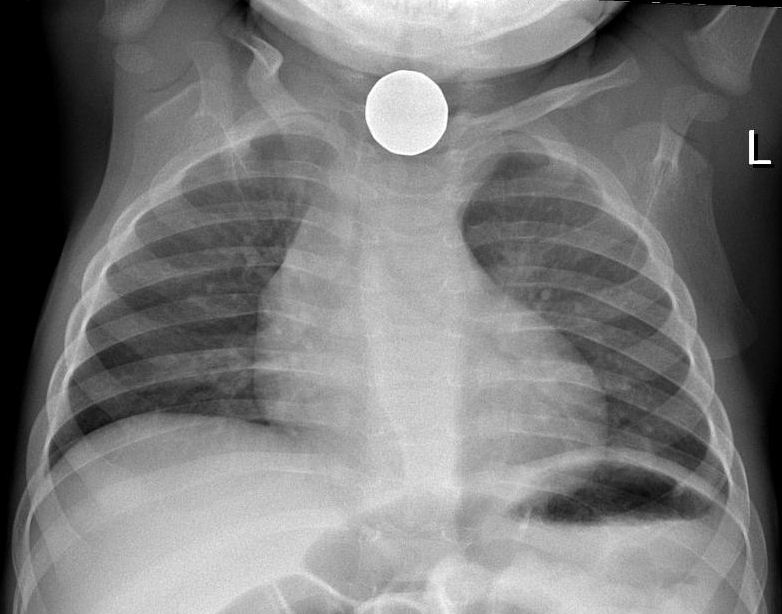
  • Radiografías: radiografías laterales de cuello y tórax
    • Solo son visibles los LOS Neisseria objetos radiopacos (metal, hueso, etc ETC The electron transport chain (ETC) sends electrons through a series of proteins, which generate an electrochemical proton gradient that produces energy in the form of adenosine triphosphate (ATP). Electron Transport Chain (ETC).).
    • La radiografía normal no descarta aspiración de cuerpos extraños.
    • Signos de cuerpos extraños invisibles en EN Erythema nodosum is an immune-mediated panniculitis (inflammation of the subcutaneous fat) caused by a type IV (delayed-type) hypersensitivity reaction. It commonly manifests in young women as tender, erythematous nodules on the shins. Erythema Nodosum la radiografía:
      • Desplazamiento del mediastino lejos del lado de cuerpos extraños
      • Colapso (atelectasia) de un solo lóbulo
      • Hiperinsuflación de segmento de pulmón
      • Neumonía focal
  • Broncoscopia: La broncoscopia rígida permite la recuperación de cuerpos extraños (la flexible es solo diagnóstica).
  • TC:
    • Se usa si la radiografía es negativa, pero el paciente es sintomático
    • Se utiliza en EN Erythema nodosum is an immune-mediated panniculitis (inflammation of the subcutaneous fat) caused by a type IV (delayed-type) hypersensitivity reaction. It commonly manifests in young women as tender, erythematous nodules on the shins. Erythema Nodosum casos con muy baja sospecha clínica, ya que la broncoscopia logra los LOS Neisseria mismos resultados diagnósticos y da oportunidad de tratamiento

Tratamiento

La obstrucción de la vía aérea requiere una acción inmediata dado el alto riesgo de asfixia.
  • Casos potencialmente mortales con obstrucción completa de las vía aérea:
    • Mire la orofaringe e intente eliminar el cuerpo extraño visible con el dedo (no se recomienda el dedo a ciegas).
    • Golpes en EN Erythema nodosum is an immune-mediated panniculitis (inflammation of the subcutaneous fat) caused by a type IV (delayed-type) hypersensitivity reaction. It commonly manifests in young women as tender, erythematous nodules on the shins. Erythema Nodosum la espalda para niños < 1 año de edad
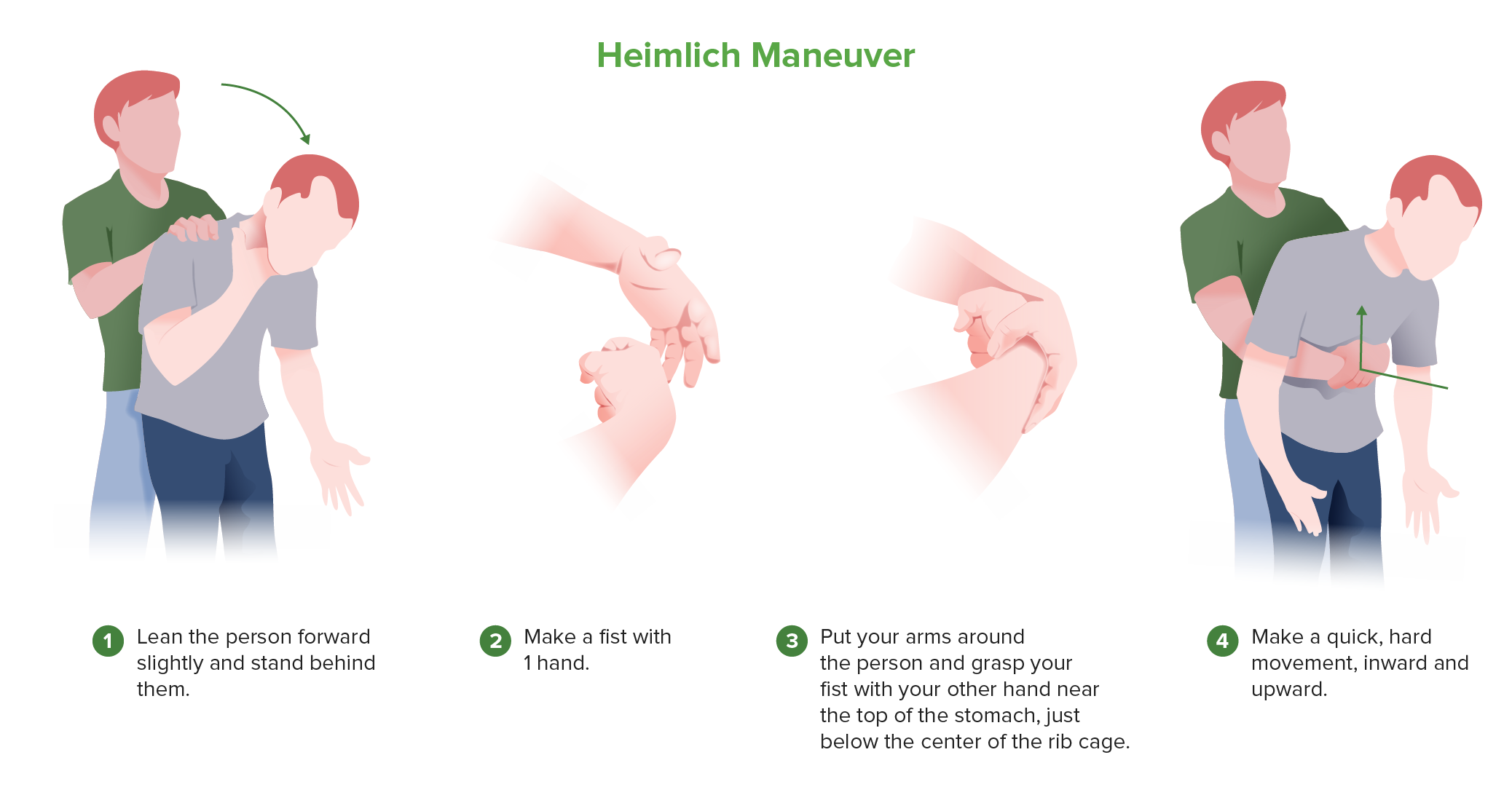
    • Maniobra de Heimlich para niños mayores o adultos
    • Es posible que se requiera una cricotiroidotomía de emergencia si el cuerpo extraño se aloja por encima de la laringe y el paciente tiene un paro respiratorio.
    • Durante la intubación, el cuerpo extraño aspirado se puede empujar hacia los LOS Neisseria bronquios para evitar la oclusión completa de la vía aérea.
  • Casos estables:
    • Los LOS Neisseria objetos que obstruyen la vía aérea o pueden provocar daños en EN Erythema nodosum is an immune-mediated panniculitis (inflammation of the subcutaneous fat) caused by a type IV (delayed-type) hypersensitivity reaction. It commonly manifests in young women as tender, erythematous nodules on the shins. Erythema Nodosum la mucosa deben retirarse rápidamente.
    • La broncoscopia (se prefiere la rígida a la flexible) es el método de elección cuando el cuerpo extraño supera la orofaringe.
Heimlich maneuver

Maniobra de Heimlich
En un paciente que se asfixia o en un paciente inconsciente en el que las respiraciones de rescate no proporcionan una ventilación adecuada, se debe considerar la posibilidad de una obstrucción de las vías respiratorias con un objeto extraño. La maniobra de Heimlich funciona produciendo presión positiva en los pulmones, expulsando con fuerza cualquier cuerpo extraño en la vía aérea superior.

Imagen por Lecturio.

Relevancia Clínica

  • Obstrucción de la vía aérea: obstrucción parcial o total de la vía aérea. Se clasifica en EN Erythema nodosum is an immune-mediated panniculitis (inflammation of the subcutaneous fat) caused by a type IV (delayed-type) hypersensitivity reaction. It commonly manifests in young women as tender, erythematous nodules on the shins. Erythema Nodosum obstrucciones de la vía aérea superior o inferior. Puede ser causada por cuerpos extraños, masas o infección. El tratamiento se basa en EN Erythema nodosum is an immune-mediated panniculitis (inflammation of the subcutaneous fat) caused by a type IV (delayed-type) hypersensitivity reaction. It commonly manifests in young women as tender, erythematous nodules on the shins. Erythema Nodosum las causas de la obstrucción.
  • Neumonía en EN Erythema nodosum is an immune-mediated panniculitis (inflammation of the subcutaneous fat) caused by a type IV (delayed-type) hypersensitivity reaction. It commonly manifests in young women as tender, erythematous nodules on the shins. Erythema Nodosum niños: infección del parénquima pulmonar, diagnosticada clínicamente con signos y síntomas de dificultad respiratoria e inflamación. La radiografía de tórax puede ser de apoyo. El tratamiento consiste en EN Erythema nodosum is an immune-mediated panniculitis (inflammation of the subcutaneous fat) caused by a type IV (delayed-type) hypersensitivity reaction. It commonly manifests in young women as tender, erythematous nodules on the shins. Erythema Nodosum una terapia antimicrobiana basada en EN Erythema nodosum is an immune-mediated panniculitis (inflammation of the subcutaneous fat) caused by a type IV (delayed-type) hypersensitivity reaction. It commonly manifests in young women as tender, erythematous nodules on the shins. Erythema Nodosum el patógeno sospechoso. Generalmente, el paciente tiene un buen pronóstico.
  • Insuficiencia respiratoria: oxigenación inadecuada de la sangre o inadecuada ventilación (eliminación de CO2) o ambas. El tratamiento implica el tratamiento de la causa subyacente, la administración de oxígeno y, si es necesario, la ventilación mecánica.
  • Bronquitis crónica: caracterizada por tos TOS Thoracic outlet syndrome (TOS) is a broad term used for a spectrum of syndromes related to the general region of the thoracic outlet, which involves the compression or irritation of elements of the brachial plexus, subclavian artery, or subclavian vein. Thoracic Outlet Syndrome > 3 meses en EN Erythema nodosum is an immune-mediated panniculitis (inflammation of the subcutaneous fat) caused by a type IV (delayed-type) hypersensitivity reaction. It commonly manifests in young women as tender, erythematous nodules on the shins. Erythema Nodosum > 2 años consecutivos. Las vías aéreas centrales y periféricas están involucradas en EN Erythema nodosum is an immune-mediated panniculitis (inflammation of the subcutaneous fat) caused by a type IV (delayed-type) hypersensitivity reaction. It commonly manifests in young women as tender, erythematous nodules on the shins. Erythema Nodosum la fisiopatología de la enfermedad.

Referencias

  1. Committee on Injury, Violence, and Poison Prevention. (2010). Prevention of choking among children. Pediatrics, 125(3), 601-607. https://doi.org/10.1542/peds.2009-2862
  2. Boyd, M., Chatterjee, A., Chiles, C., & Chin, R., Jr. (2009). Tracheobronchial foreign body aspiration in adults. Southern Medical Journal, 102(2), 171-174. https://doi.org/10.1097/SMJ.0b013e318193c9c8
  3. Lund, M. E. (2013). Foreign body removal. In Principles and Practice of Interventional Pulmonology (pp. 477–488).

¡Crea tu cuenta gratis o inicia una sesión para seguir leyendo!

Regístrate ahora y obtén acceso gratuito a Lecturio con páginas de concepto, videos médicos y cuestionarios para tu educación médica.

User Reviews

Que tengas una sesión de estudio alegre y navideña 🎁 Ahorra 50% en todos los planes >>

Details