
The highest-yield osteopathic manipulative medicine (OMM) topics for the COMLEX are somatic dysfunction and its T.A.R.T. diagnostic criteria, the core treatment techniques (muscle energy, high-velocity low-amplitude, counterstrain, soft tissue, and myofascial release), Chapman points and viscerosomatic reflexes, and the spinal-mechanics principles that govern how the spine moves. OMM is the content that makes the COMLEX unique, because none of it appears on the USMLE, and it is the area DO students most often under-prepare. This guide covers what to know and how it shows up on the exam.
Why OMM Is COMLEX-Unique
Osteopathic principles and manipulative medicine run through every level of the COMLEX-USA sequence, from Level 1 through Level 3. Because the USMLE does not test OMM at all, DO students who also sit the USMLE often let osteopathic content slide, then find it is the difference between a comfortable COMLEX result and a shaky one. Treat OMM as its own discipline that you keep active all year, not something to cram in the final weeks.
Somatic Dysfunction and T.A.R.T.
Somatic dysfunction is the cornerstone of osteopathic diagnosis. It is defined as impaired or altered function of the body framework: the skeletal, arthrodial, and myofascial structures and their related vascular, lymphatic, and neural elements.
You identify somatic dysfunction using four physical findings, remembered by the acronym T.A.R.T.:
- Tissue texture changes
- Asymmetry
- Restriction of motion
- Tenderness
You do not need all four to be present, and exam questions typically describe a pattern of these findings in a patient scenario rather than requiring the full set. Recognizing that pattern is a recurring point type, so knowing T.A.R.T. cold is the foundation everything else builds on.
The Core OMM Techniques
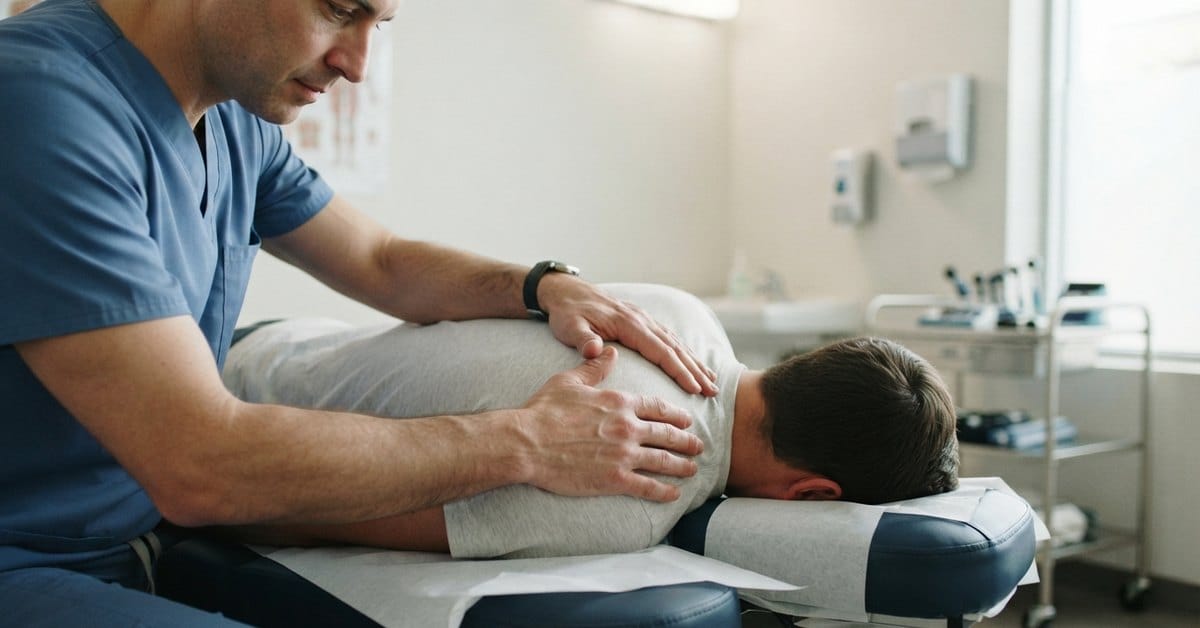
COMLEX questions reward knowing what each technique is, whether it is direct or indirect, and when it is indicated or contraindicated. These are the high-yield modalities to master:
Created by Kai | Incify Pte Ltd
| Technique | Direct / Indirect | Key idea |
| Muscle Energy | Direct | Patient actively contracts against the physician’s counterforce to restore motion |
| High-Velocity Low-Amplitude (HVLA) | Direct | A short, quick thrust through the restrictive barrier to restore joint motion |
| Counterstrain | Indirect | Move to a position of ease around a tender point and hold it (commonly about 90 seconds) |
| Soft Tissue | Direct | Stretching, kneading, and pressure applied to muscle and fascia |
| Myofascial Release | Direct or indirect | Engage fascial restriction and follow the tissue’s response |
| Facilitated Positional Release | Indirect | Position of ease plus an activating force to release dysfunction |
| Cranial (OCMM) | Indirect | Works with the primary respiratory mechanism |
For each, be ready to match the technique to a clinical scenario and to recognize contraindications, especially for HVLA (for example, avoiding thrust techniques where there is instability, fracture risk, or certain vascular concerns).
Chapman Points and Viscerosomatic Reflexes
Osteopathic theory connects the internal organs (viscera) to the musculoskeletal system through autonomic pathways. Two high-yield expressions of this show up repeatedly:
- Viscerosomatic reflexes: dysfunction in an organ can produce palpable changes at the spinal segments that share its autonomic supply, which is why an osteopathic structural exam can hint at visceral problems.
- Chapman points: predictable anterior and posterior reflex points associated with specific organs, used as diagnostic clues.
You do not need to memorize every point, but you should understand the concept and the common organ associations well enough to reason through a vignette.
Spinal Mechanics: Fryette’s Principles
Spinal-motion questions rely on the Fryette principles, which describe how sidebending and rotation couple in the spine:
- Type I (neutral): in a neutral position, sidebending and rotation occur to opposite sides, and this involves groups of vertebrae.
- Type II (non-neutral): in flexion or extension, sidebending and rotation occur to the same side, typically at a single segment.
- A third principle notes that introducing motion in one plane reduces motion available in the other planes.
Being able to translate a described position into the expected coupling is a recurring, learnable point type.
How OMM Shows Up on the Exam
OMM is not a walled-off section. It is integrated across the COMLEX Blueprint and often embedded in clinical vignettes, so a question may ask you to diagnose somatic dysfunction, choose the appropriate technique, or apply osteopathic reasoning to a patient presentation. Study to the official COMLEX-USA Blueprint, practice OMM within clinical context rather than as isolated flashcards, and keep hands-on technique understanding fresh.
Resources for OMM
- COMLEX-USA Blueprint: confirms how osteopathic principles are represented across the exam.
- Lecturio’s Osteopathic Manipulative Medicine course: Lecturio’s OMM course pairs the theory of key OMM topics with video tutorials for practical, hands-on techniques, which is the format most students need to actually retain OMM. It sits alongside Lecturio’s broader COMLEX Level 1 preparation so you can study OMM in the context of the whole exam.
Master OMM for the COMLEX with Lecturio
OMM rewards students who treat it as its own discipline and practice it in clinical context. Study OMM with Lecturio: clear explanations of the key concepts plus hands-on technique tutorials, built for the content the COMLEX tests and the USMLE never will.
Frequently Asked Questions
What is the highest-yield OMM topic for the COMLEX? Somatic dysfunction and its T.A.R.T. diagnostic criteria. It is the foundation of osteopathic diagnosis and underlies most OMM questions.
Is OMM on every level of the COMLEX? Yes. Osteopathic principles and OMM are assessed across Level 1, Level 2-CE, and Level 3, increasingly within clinical scenarios at the higher levels.
Does the USMLE test OMM? No. OMM is unique to the COMLEX, which is why DO students taking both exams still need dedicated osteopathic review.
What does T.A.R.T. stand for? Tissue texture changes, Asymmetry, Restriction of motion, and Tenderness: the four findings used to identify somatic dysfunction.